
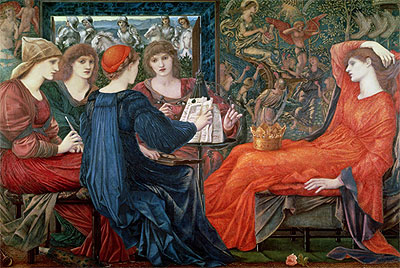
Laus Veneris, 1868 Sir Edward Burne-Jones (1833-1898)
Location: Laing Art Gallery Newcastle-upon-Tyne UKOriginal Size: 122 x 183 cm
Own a museum-quality reproduction of Laus Veneris by Burne-Jones (1868), exclusively hand-painted in oils on linen canvas by European artists with academic training. Each masterpiece is created with meticulous craftsmanship, capturing the exceptional quality and authentic brushwork of the original painting.
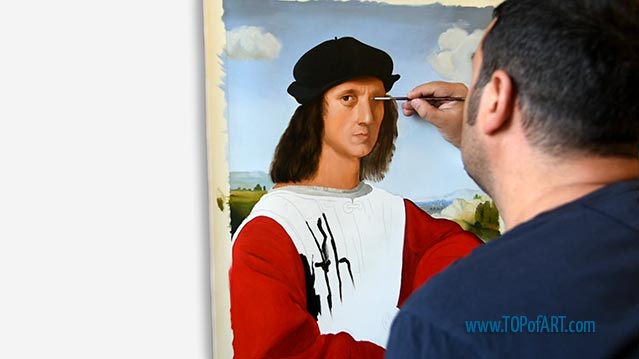
Oil Painting Reproduction
If you want a different size than the offered
Description
Painted by European Аrtists with Academic Education
Museum Quality
+ 4 cm (1.6") Margins for Stretching
Creation Time: 8-9 Weeks
Creation Process
We create our paintings with museum quality and covering the highest academic standards. Once we get your order, it will be entirely hand-painted with oil on canvas. All the materials we use are the highest level, being totally artist graded painting materials and linen canvas.
We will add 1.6" (4 cm) additional blank canvas all over the painting for stretching.
High quality and detailing in every inch are time consuming. The reproduction of Sir Edward Burne-Jones also needs time to dry in order to be completely ready for shipping, as this is crucial to not be damaged during transportation.
Based on the size, level of detail and complexity we need 8-9 weeks to complete the process.
In case the delivery date needs to be extended in time, or we are overloaded with requests, there will be an email sent to you sharing the new timelines of production and delivery.
TOPofART wants to remind you to keep patient, in order to get you the highest quality, being our mission to fulfill your expectations.
We not stretch and frame our oil paintings due to several reasons:
Painting reproduction is a high quality expensive product, which we cannot risk to damage by sending it being stretched.
Also, there are postal restrictions, regarding the size of the shipment.
Additionally, due to the dimensions of the stretched canvas, the shipment price may exceed the price of the product itself.
You can stretch and frame your painting in your local frame-shop.
Delivery
Once the painting Laus Veneris is ready and dry, it will be shipped to your delivery address. The canvas will be rolled-up in a secure postal tube.
We offer free shipping as well as paid express transportation services.
After adding your artwork to the shopping cart, you will be able to check the delivery price using the Estimate Shipping and Tax tool.
Museum Quality
The paintings we create are only of museum quality. Our academy graduated artists will never allow a compromise in the quality and detail of the ordered painting. TOPofART do not work, and will never allow ourselves to work with low quality studios from the Far East. We are based in Europe, and quality is our highest priority.
Additional Information

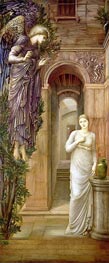
The Annunciation 1879
$5447
$63.85
Sir Edward Burne-Jones
Original Size:250 x 104.5 cm
Merseyside Maritime Museum, Liverpool, UK

The Mill c.1872/80
$2775
$63.85
Sir Edward Burne-Jones
Original Size:90.9 x 197.6 cm
Victoria and Albert Museum, London, UK
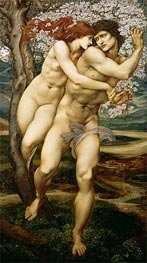
The Tree of Forgiveness c.1881/82
$3201
$64.39
Sir Edward Burne-Jones
Original Size:190.5 x 106.7 cm
Lady Lever Art Gallery, Port Sunlight, UK
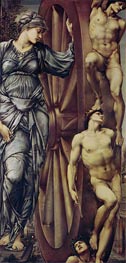
The Wheel of Fortune c.1875/83
$4067
$63.85
Sir Edward Burne-Jones
Original Size:199 x 100 cm
Musee d'Orsay, Paris, France
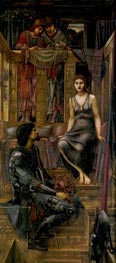
King Cophetua and the Beggar Maid 1884
$4851
$63.85
Sir Edward Burne-Jones
Original Size:293.4 x 135.9 cm
Tate Gallery, London, UK