Startseite / Künstler / Diego Rodriguez de Silva Velazquez /
The Waterseller of Seville - Handgemalte Reproduktion
Technik:
Titel:
Künstler:
Standort:
SKU:
Titel:
Künstler:
Standort:
SKU:
Handgemalte Reproduktion mit Öl auf Leinwand
The Waterseller of Seville c.1620
Diego Rodriguez de Silva VelazquezWellington Museum London United Kingdom
VDZ-1022-1050
Ihre Auswahl ist:
Handgemalte Reproduktion
$$754.00
...:
Alt Ausse: ......
Summe: $0
Alt Ausse: ......
Format Wählen:
Alt Ausse Wählen:
Handgemalten Kunstreproduktionen versandt werden im Post-Röhrchen gerollt.
original-format des gemäldes: 41.7/32.3 zoll
original-format des gemäldes: 106/82 centimeters
Wie Rahmen Ihre Kunstreproduktion?:
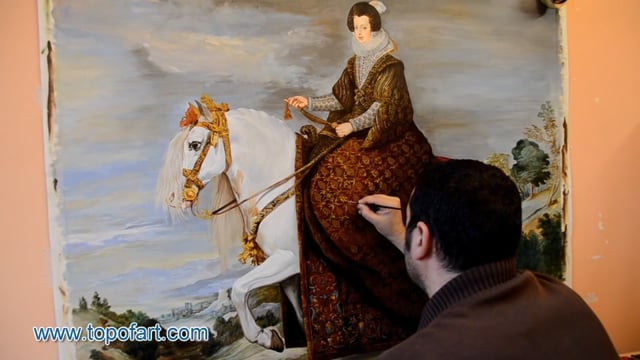
Wir können Ihre Gemälde-Reproduktion wie das Museumsoriginal altaussehend und spröde machen.
Das Effekt der Veralterung verleiht dem Bild eine unvergleichliche Anmut, Autentizität und Adel. Mit diesem Aussehen können die Handgemalte Kunstreproduktionen jedem Interieur einen einzigartigen, neuen Stil geben.
Der Prozess der Veralterung des Bildes ist völlig mit der Technologie der Ölmalerei kompatibel und beschädigt auf keine Weise ihre Oberfläche. Da das Effekt der Veralterung ein Firmengeheimnis ist, hoffen wir, dass Sie die Vorenthaltung weiterer Informationen über die Beschreibung der Technologie verzeihen.
Siehe Beispiele von Gemälde-Reproduktionen in unserem Studio gealtert und spröde.
Das Effekt der Veralterung verleiht dem Bild eine unvergleichliche Anmut, Autentizität und Adel. Mit diesem Aussehen können die Handgemalte Kunstreproduktionen jedem Interieur einen einzigartigen, neuen Stil geben.
Der Prozess der Veralterung des Bildes ist völlig mit der Technologie der Ölmalerei kompatibel und beschädigt auf keine Weise ihre Oberfläche. Da das Effekt der Veralterung ein Firmengeheimnis ist, hoffen wir, dass Sie die Vorenthaltung weiterer Informationen über die Beschreibung der Technologie verzeihen.
Siehe Beispiele von Gemälde-Reproduktionen in unserem Studio gealtert und spröde.
Gemälde Infos
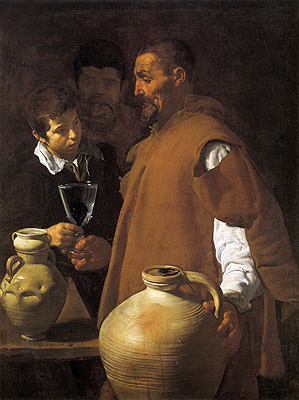
The Waterseller of Seville epitomizes all that Velazquez set out to achieve in the genre paintings. It is widely said to be the greatest of all his Seville paintings.
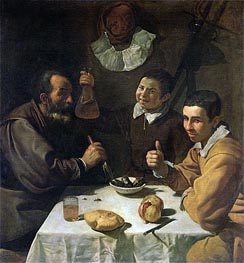
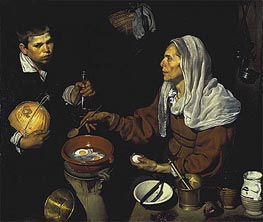
The subject of the painting is the waterseller. This was a common trade for the lower classes in Velazquez's Seville. The jars and the topic of victuals recall the paintings called bodegon. The seller has two customers: a young boy, possibly painted from the same model as used for the boys in The Lunch and Old Woman Cooking Eggs, and a young man in the background shadows, (time has caused him to fade somewhat - he is clearer in the Uffizi version).
In the foreground sit the seller's gigantic pots of water, glistening with streams of running water. So large and rounded, they almost protrude out of the painting into the observer's space. The seller hands a freshly poured glass of water to the boy. In it sits a fig, a perfumer intended to make the water taste fresher - something still done in Seville today.
The still, calm scene - a typical quality of his genre scenes and, indeed, much of Velazquez's work - is remarkable for the depiction of the seller. His pensive face, battered by its direct exposure to sunlight, deeply scarred with the wrinkles of age, speaks of long years of experience. His short shaved hair and old plain clothes give him the appearance of a monk, or a saint, or an eccentric philosopher. He gazes into nothing, indicating deep thought, almost unaware of those around him. It is unnecessary for him to focus on his job, he is elsewhere: in a world inaccessible to both us and the boy.
In this picture, we see evidence of Velazquez's deep respect for the poor. He entitles the elderly seller to immense dignity, despite his lowly place in society. This attitude captures the essence of the bodegones - the idea that the simple, elemental nature of poverty is profound, effective in depicting higher subjects and morals such as biblical stories (e.g. Christ in the House of Martha and Mary).
Another proponent of this idea was Caravaggio, who significantly influenced this painting. Caravaggio was perhaps the most famous champion of the poor, going against the idealistic trends of Mannerism and the Renaissance and painting saints and divine beings as fallible cripples and prostitutes. Whilst not as aggressively provocative as Caravaggio, Velazquez does not by any means idealize his subject. Rather, he aims to represent it in a way that is precisely faithful to life. He captures the imperfections of the seller's pots, the saturations of dampness on their sides, the glistening of the light on the small drops of water and the glass, and the realistic expressions of the characters.
In the context of Velazquez's development as an artist, The Waterseller of Seville is a milestone. At this early point in his career he is already beginning to exhibit the technique of his later creations. His insight into the person of the seller is symptomatic of his insight into the subjects of his great portraits, and his precise rendition of the small details of reality demonstrate his famous understanding of human perception. These were both qualities which would distinguish him as one of the great European masters, and lead Manet to crown him "The Painter of Painters".
History of the painting
The painting has a long and colourful history. It was originally housed in the Royal Spanish Collection but stolen by Joseph Bonaparte at the time of the Napoleonic wars. The Duke of Wellington later won it - and 82 other paintings - back at the Battle of Vittoria. The King of Spain allowed him to keep them in return for beating the French. Wellington brought the painting back to England where it remains to this day, in Apsley House, his former home.
Other versions of The Waterseller of Seville
The Waterseller exists in three forms: the Wellington Museum version (above - the more famous and important of the three), the Uffizi version and the Walters version. The Uffizi version, painted as many as two to four years earlier, has a rather more burlesque feel with the seller wearing an ornate red hat. This may be more in line with his contemporaries' expectations due to the comical and devious image of the waterseller given in picaresque novels of the time.
The Walters version takes yet another angle on the waterseller. In this he appears almost despairing in his expression, perhaps to the extent of appearing farcical. The brilliant colours used are the most extreme of the three (with the pots taking on an altogether more shiny appearance). However, as in the Uffizi version, the characters lack the depth of personality present in the Wellington version.
The subject of the painting is the waterseller. This was a common trade for the lower classes in Velazquez's Seville. The jars and the topic of victuals recall the paintings called bodegon. The seller has two customers: a young boy, possibly painted from the same model as used for the boys in The Lunch and Old Woman Cooking Eggs, and a young man in the background shadows, (time has caused him to fade somewhat - he is clearer in the Uffizi version).
In the foreground sit the seller's gigantic pots of water, glistening with streams of running water. So large and rounded, they almost protrude out of the painting into the observer's space. The seller hands a freshly poured glass of water to the boy. In it sits a fig, a perfumer intended to make the water taste fresher - something still done in Seville today.
The still, calm scene - a typical quality of his genre scenes and, indeed, much of Velazquez's work - is remarkable for the depiction of the seller. His pensive face, battered by its direct exposure to sunlight, deeply scarred with the wrinkles of age, speaks of long years of experience. His short shaved hair and old plain clothes give him the appearance of a monk, or a saint, or an eccentric philosopher. He gazes into nothing, indicating deep thought, almost unaware of those around him. It is unnecessary for him to focus on his job, he is elsewhere: in a world inaccessible to both us and the boy.
In this picture, we see evidence of Velazquez's deep respect for the poor. He entitles the elderly seller to immense dignity, despite his lowly place in society. This attitude captures the essence of the bodegones - the idea that the simple, elemental nature of poverty is profound, effective in depicting higher subjects and morals such as biblical stories (e.g. Christ in the House of Martha and Mary).
Another proponent of this idea was Caravaggio, who significantly influenced this painting. Caravaggio was perhaps the most famous champion of the poor, going against the idealistic trends of Mannerism and the Renaissance and painting saints and divine beings as fallible cripples and prostitutes. Whilst not as aggressively provocative as Caravaggio, Velazquez does not by any means idealize his subject. Rather, he aims to represent it in a way that is precisely faithful to life. He captures the imperfections of the seller's pots, the saturations of dampness on their sides, the glistening of the light on the small drops of water and the glass, and the realistic expressions of the characters.
In the context of Velazquez's development as an artist, The Waterseller of Seville is a milestone. At this early point in his career he is already beginning to exhibit the technique of his later creations. His insight into the person of the seller is symptomatic of his insight into the subjects of his great portraits, and his precise rendition of the small details of reality demonstrate his famous understanding of human perception. These were both qualities which would distinguish him as one of the great European masters, and lead Manet to crown him "The Painter of Painters".
History of the painting
The painting has a long and colourful history. It was originally housed in the Royal Spanish Collection but stolen by Joseph Bonaparte at the time of the Napoleonic wars. The Duke of Wellington later won it - and 82 other paintings - back at the Battle of Vittoria. The King of Spain allowed him to keep them in return for beating the French. Wellington brought the painting back to England where it remains to this day, in Apsley House, his former home.
Other versions of The Waterseller of Seville
The Waterseller exists in three forms: the Wellington Museum version (above - the more famous and important of the three), the Uffizi version and the Walters version. The Uffizi version, painted as many as two to four years earlier, has a rather more burlesque feel with the seller wearing an ornate red hat. This may be more in line with his contemporaries' expectations due to the comical and devious image of the waterseller given in picaresque novels of the time.
The Walters version takes yet another angle on the waterseller. In this he appears almost despairing in his expression, perhaps to the extent of appearing farcical. The brilliant colours used are the most extreme of the three (with the pots taking on an altogether more shiny appearance). However, as in the Uffizi version, the characters lack the depth of personality present in the Wellington version.
Gemälden im Lager | Innenausstattung | Konfidentialität | Terms & Conditions | Return Policy | Seite-Karte | Links
TOPofART sind in Handgemalten Reproduktionen und Leinwand Kunstdruck spezialisiert und andere Kunstwerke medias: Aquarellpapier, Gravieren Papier, Pastell Papier, Pappe. Stellt interne und externe Rahmung und Strecken für Gemälde-Reproduktion bestellt.