
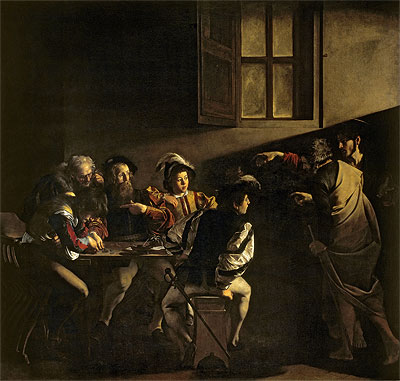
Berufung des Hl. Matthäus, 1599 Michelangelo Merisi da Caravaggio (1571-1610)
Standort: San Luigi dei Francesi Rome ItalyOriginalmaß: 328 x 348 cm
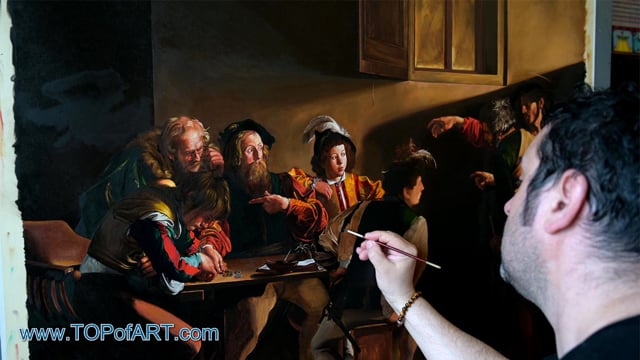 Berufung des Hl. Matthäus - Video
Ein Blick in unser Atelier: Reproduktionen von Ölgemälden in Museumsqualität
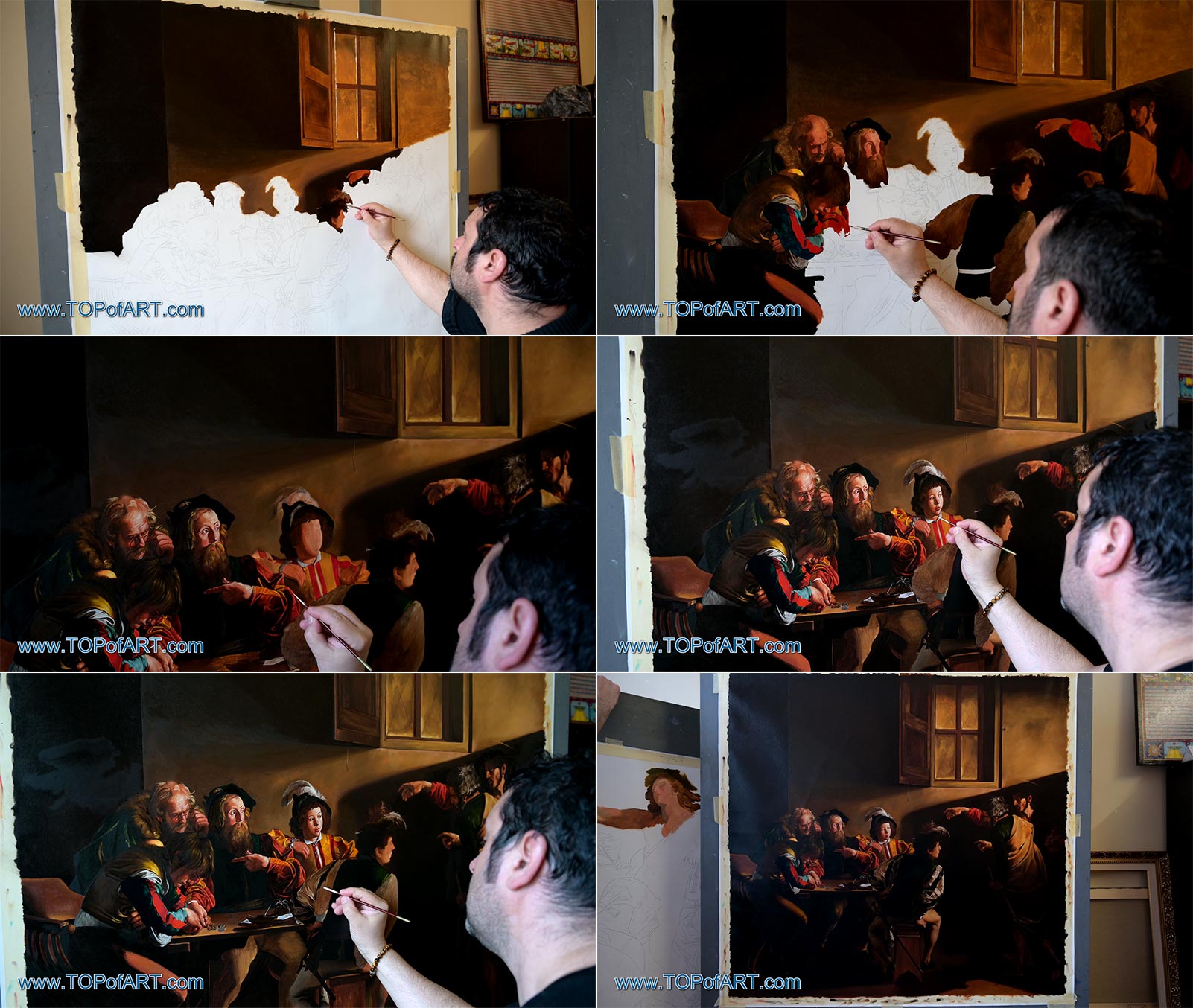
Sehen Sie sich ein Video an, das die Entstehung einer handgemalten Reproduktion der Berufung des Hl. Matthäus von Caravaggio in unserem TOPofART-Studio zeigt. Erleben Sie den schrittweisen Prozess, wie unsere Künstler dieses Meisterwerk zum Leben erwecken.
Ölgemälde Reproduktion
Wenn Sie eine andere Größe als die angebotene wünschen
Beschreibung
Gemalt von europäischen Künstlern mit akademischer Ausbildung
Museumsqualität
+ 4 cm Spielraum zum Dehnen
Erstellungszeit: 10-14 Wochen
Erstellungsprozess
Wir schaffen unsere Gemälde in Museumsqualität und unter Berücksichtigung höchster akademischer Standards. Die Gemälde-Reproduktion wird vollständig mit Ölfarben auf eine leere Leinwand gemalt. Wir fügen zusätzlich 4 cm leeren Abstand über die angebotene Gröβe hinzu, welche für strecken der Leinwand auf den Keilrahmen benutzt werden.
Die Schaffung Ihrer Michelangelo Merisi da Caravaggio nimmt Zeit in Anspruch. Das Bild sollte nicht zu schnell gemalt werden, man sollte keinen Fristen hinterherjagen. Das Bild benötigt Zeit, um hohe Qualität und Detailtreue zu erreichen, sowie um vollständig versandbereit zu trocknen. Abhängig vom Aufwand, von der Detailgetreue und Bildgröße, brauchen wir 10-14 Wochen, um das Bild fertig zu stellen.
Wenn eine Änderung in Bezug auf die Frist notwendig sein sollte, oder sollte Ihre Bestellung in einer für uns äuβerst belebten Periode aufgegeben werden, werden wir Sie per E-Mail über die, von uns für Ihre Reproduktion gebrauchte Zeit, informiert.
Wir rahmen unsere Ölgemälde-Reproduktionen nicht ein. Die Ölgemälde sind ein kostenaufwendiges Produkt, und die Gefahr einer Beschädigung eines im Rahmen gespannten Gemäldes während des Transportes ist äuβerst hoch.
Außerdem gibt es postalische Beschränkungen bezüglich der Größe der Sendung.
Darüber hinaus kann der Versandpreis aufgrund der Abmessungen der gespannten Leinwand den Preis des Produkts selbst übersteigen.
Sie können Ihr Gemälde in Ihrem örtlichen Rahmengeschäft aufspannen und einrahmen.
Versand
Sobald das Gemälde Berufung des Hl. Matthäus fertig und trocken ist, wird es an Ihre Lieferadresse versendet.
Wir bieten kostenlosen Versand sowie kostenpflichtige Express-Transportdienste an.
Die Leinwand es eingerollt, in einem festen und sicheren Versandrohr. Sie können den Versandpreis mit dem Tool Geschätzte Steuern und Versandgebühren überprüfen.
Museumsqualität
TOPofART Gemälden stellen wir nur mit Museumsqualität her. Unsere Künstler mit akademischer Ausbildung lassen keine Kompromisse in Bezug auf die Qualität und der Detailtreue des bestellten Gemäldes zu. Wir pflegen keine Zusammenarbeit und werden nie eine solche mit Ateliers mit niedriger Qualität aus dem Fernen Osten zulassen. Wir sind in Europa ansässig, und Qualität ist unsere leitende Priorität.

1 Reviews
5.00 Gesamtbewertung

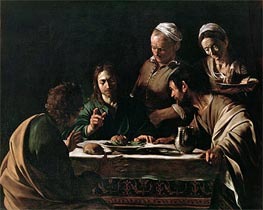
Supper at Emmaus 1606
$3545
$59.70
Michelangelo Merisi da Caravaggio
Originalmaß:141 x 175 cm
Pinacoteca di Brera, Milan, Italy
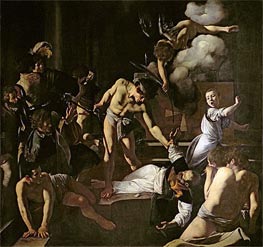
The Martyrdom of St. Matthew c.1599/00
$10118
$78.69
Michelangelo Merisi da Caravaggio
Originalmaß:328 x 348 cm
San Luigi dei Francesi, Rome, Italy
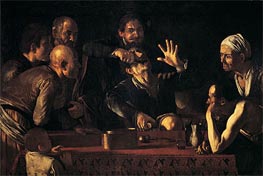
The Tooth Extraction c.1610
$5904
$49.66
Michelangelo Merisi da Caravaggio
Originalmaß:139.5 x 194.5 cm
Galleria degli Uffizi, Florence, Italy

Adoration of the Shepherds 1609
$5249
$49.80
Michelangelo Merisi da Caravaggio
Originalmaß:314 x 211 cm
Museo Nazionale, Messina, Italy
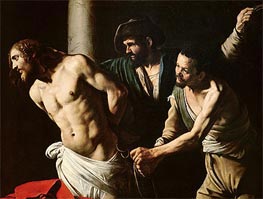
The Flagellation of Christ c.1605/07
$3414
$49.24
Michelangelo Merisi da Caravaggio
Originalmaß:134 x 175.5 cm
Musee des Beaux-Arts, Rouen, France