Technik:
Titel:
Künstler:
Standort:
SKU:
Titel:
Künstler:
Standort:
SKU:
Handgemalte Reproduktion mit Öl auf Leinwand
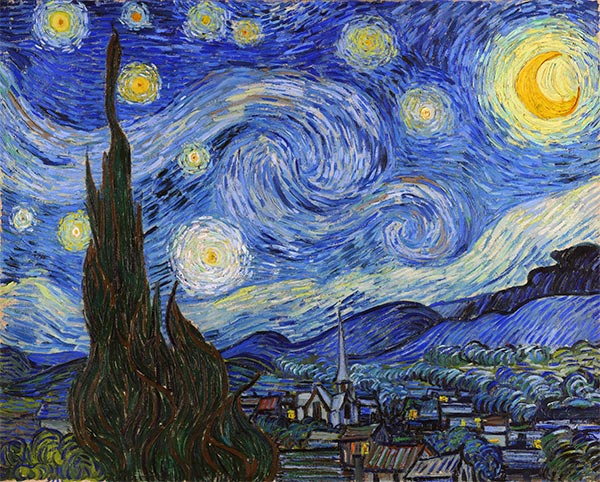
Sternennacht 1889
Vincent van GoghMuseum of Modern Art New York USA
VVG-1101-1133
Ihre Auswahl ist:
Handgemalte Reproduktion
$$399.00
...:
Alt Ausse: ......
Summe: $0
Alt Ausse: ......
Format Wählen:
Alt Ausse Wählen:
Handgemalten Kunstreproduktionen versandt werden im Post-Röhrchen gerollt.
original-format des gemäldes: 29/36.3 zoll
original-format des gemäldes: 74/92 centimeters
Wie Rahmen Ihre Kunstreproduktion?:
Wir können Ihre Gemälde-Reproduktion wie das Museumsoriginal altaussehend und spröde machen.
Das Effekt der Veralterung verleiht dem Bild eine unvergleichliche Anmut, Autentizität und Adel. Mit diesem Aussehen können die Handgemalte Kunstreproduktionen jedem Interieur einen einzigartigen, neuen Stil geben.
Der Prozess der Veralterung des Bildes ist völlig mit der Technologie der Ölmalerei kompatibel und beschädigt auf keine Weise ihre Oberfläche. Da das Effekt der Veralterung ein Firmengeheimnis ist, hoffen wir, dass Sie die Vorenthaltung weiterer Informationen über die Beschreibung der Technologie verzeihen.
Siehe Beispiele von Gemälde-Reproduktionen in unserem Studio gealtert und spröde.
Das Effekt der Veralterung verleiht dem Bild eine unvergleichliche Anmut, Autentizität und Adel. Mit diesem Aussehen können die Handgemalte Kunstreproduktionen jedem Interieur einen einzigartigen, neuen Stil geben.
Der Prozess der Veralterung des Bildes ist völlig mit der Technologie der Ölmalerei kompatibel und beschädigt auf keine Weise ihre Oberfläche. Da das Effekt der Veralterung ein Firmengeheimnis ist, hoffen wir, dass Sie die Vorenthaltung weiterer Informationen über die Beschreibung der Technologie verzeihen.
Siehe Beispiele von Gemälde-Reproduktionen in unserem Studio gealtert und spröde.
Gemälde Infos
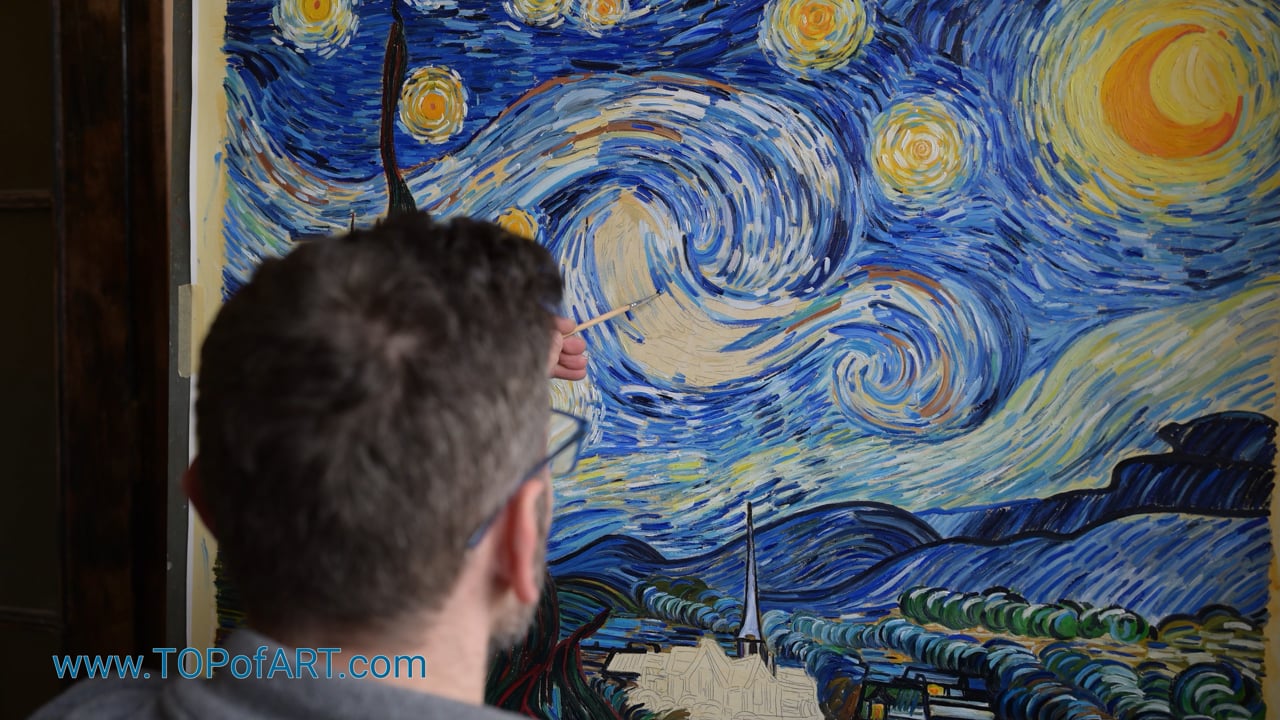
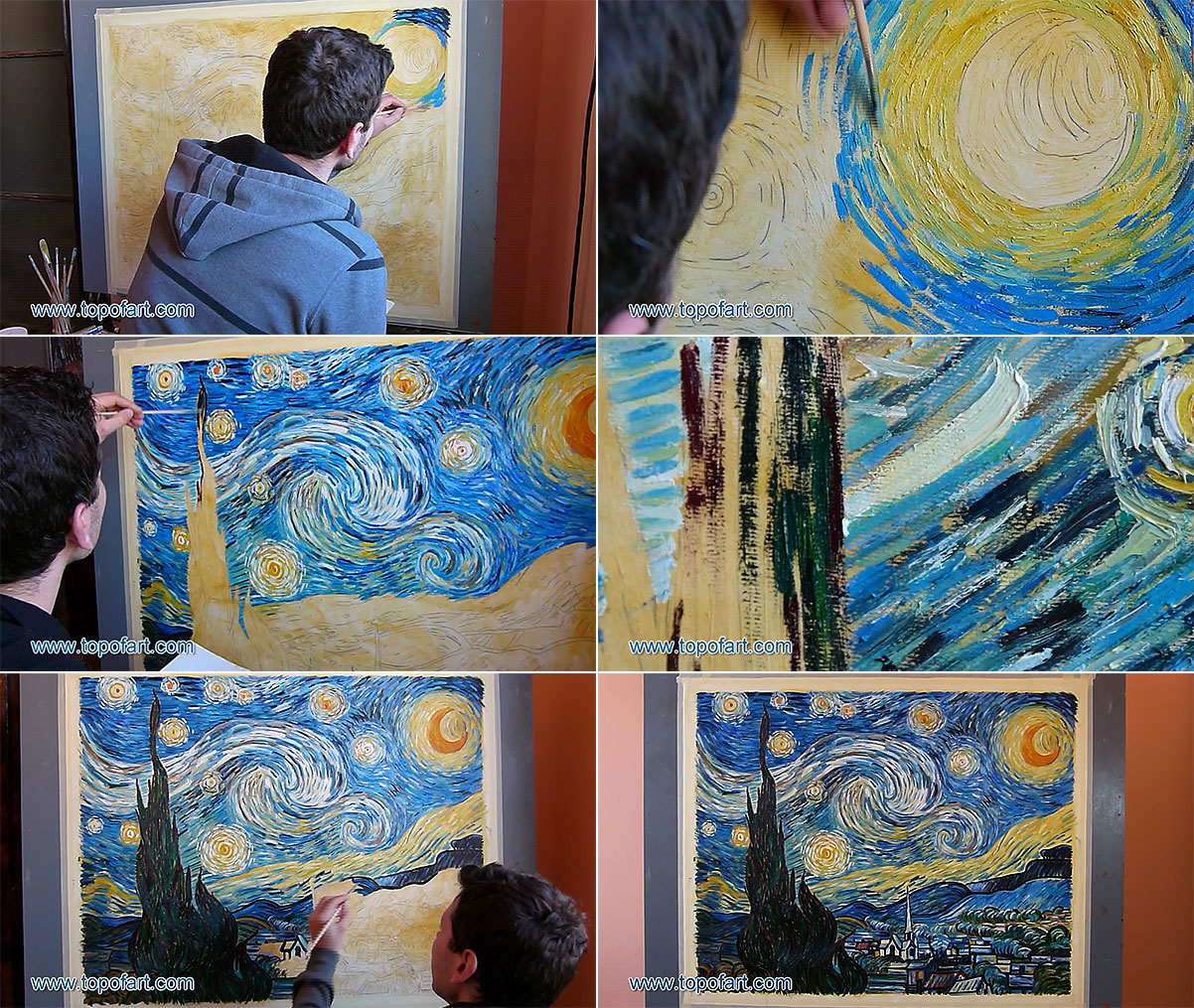
Below you can see hand-painted creation video of "Starry Night" with oil on canvas
The Starry Night is a painting by Dutch post-impressionist artist Vincent van Gogh. The painting depicts the view outside his sanitarium room window at night, although it was painted from memory during the day. Since 1941 it has been in the permanent collection of the Museum of Modern Art in New York City. Widely hailed as his magnum opus, the painting has been reproduced many times and is one of his most renowned paintings.
Genesis
In September 1888, while van Gogh was staying in Arles, he executed a painting commonly known as Starry Night Over the Rhone and later he incorporated a pen drawing in a set of a dozen based on recent paintings.
In mid-September 1889, following a heavy crisis which lasted from mid-July to the last days of August, he thought to include this "Study of the Night" in the next batch of works to be sent to his brother, Theo, in Paris. In order to reduce the shipping costs, he withheld three of the studies ("above-mentioned - Poppies - Night Effect - Moonrise"). These three went to Paris with the shipment to follow. As Theo did not immediately report its arrival, Vincent inquired again and finally received Theo's commentary on his recent work.
Subject matter
The center part shows the village of Saint-Remy under a swirling sky, in a view from the asylum towards north. The Alpilles far to the right fit to this view, but there is little rapport of the actual scene with the intermediary hills which seem to be derived from a different part of the surroundings, south of the asylum. The cypress tree to the left was added into the composition. Of note, is the fact van Gogh had already, during his time in Arles, repositioned Ursa Major from the north to the south in his painting Starry Night Over the Rhone.
Recent commentaries
As pointed out by Simon Singh in his book Big Bang, The Starry Night has striking similarities to a sketch of the Whirlpool Galaxy, drawn by Lord Rosse 44 years before van Gogh's work.
The painting has been compared to an astronomical photograph of a star named V838 Monocerotis, taken by the Hubble in 2004. The clouds of gas surrounding the star resemble the swirling patterns van Gogh used in this painting.
Art historian Joachim Pissarro cites The Starry Night as an exemplar of the artist's fascination with the nocturnal.
Aims and ends
Van Gogh was perhaps not so happy with this painting. In a letter to Theo from Saint-Remy he wrote:
"The first four canvases are studies without the effect of a whole that the others have... The olives with white clouds and background of mountains, also the moonrise and the night effect, these are exaggerations from the point of view of arrangement, their lines are warped as that of old wood."
Later in this letter, Vincent referred once more to the painting:
"In all this batch I think nothing at all good save the field of wheat, the mountain, the orchard, the olives with the blue hills and the portrait and the entrance to the Quarry, and the rest says nothing to me, because it lacks individual intention and feeling in the lines. Where these lines are close and deliberate it begins to be a picture, even if it is exaggerated. That is a little what Bernard and Gauguin feel, they do not ask the correct shape of a tree at all, but they insist absolutely that one can say if the shape is round or square - and my word, they are right, exasperated as they are by certain people's photographic and empty perfection. Certainly they will not ask the correct tone of the mountains, but they will say: In the Name of God, the mountains were blue, were they? Then chuck on some blue and don't go telling me that it was a blue rather like this or that, it was blue, wasn't it? Good - make them blue and it's enough! Gauguin is sometimes like a genius when he explains this, but as for the genius Gauguin has, he is very timid about showing it, and it is touching the way he likes to say something really useful to the young. How strange he is all the same."
Legacy
The painting was the inspiration for French composer Henri Dutilleux's orchestral work Timbres, Espace, Mouvement, American poet Anne Sexton's poem "The Starry Night", Canadian composer Giancarlo Scalia's piano composition Starry Night and for Don McLean's song "Vincent", which is also known by its opening words, "Starry, Starry Night." Jack's Mannequin and Something Corporate singer Andrew McMahon has a tattoo of the painting on his arm. The painting has been recreated in the 3d world Second Life by artist Robbie Dingo, and the recreation was filmed and set to Don McLean's song. The painting also made an appearance and had an important role in the fifth season episode "Starry Night" of Boy Meets World.
The Starry Night is a painting by Dutch post-impressionist artist Vincent van Gogh. The painting depicts the view outside his sanitarium room window at night, although it was painted from memory during the day. Since 1941 it has been in the permanent collection of the Museum of Modern Art in New York City. Widely hailed as his magnum opus, the painting has been reproduced many times and is one of his most renowned paintings.
Genesis
In September 1888, while van Gogh was staying in Arles, he executed a painting commonly known as Starry Night Over the Rhone and later he incorporated a pen drawing in a set of a dozen based on recent paintings.
In mid-September 1889, following a heavy crisis which lasted from mid-July to the last days of August, he thought to include this "Study of the Night" in the next batch of works to be sent to his brother, Theo, in Paris. In order to reduce the shipping costs, he withheld three of the studies ("above-mentioned - Poppies - Night Effect - Moonrise"). These three went to Paris with the shipment to follow. As Theo did not immediately report its arrival, Vincent inquired again and finally received Theo's commentary on his recent work.
Subject matter
The center part shows the village of Saint-Remy under a swirling sky, in a view from the asylum towards north. The Alpilles far to the right fit to this view, but there is little rapport of the actual scene with the intermediary hills which seem to be derived from a different part of the surroundings, south of the asylum. The cypress tree to the left was added into the composition. Of note, is the fact van Gogh had already, during his time in Arles, repositioned Ursa Major from the north to the south in his painting Starry Night Over the Rhone.
Recent commentaries
As pointed out by Simon Singh in his book Big Bang, The Starry Night has striking similarities to a sketch of the Whirlpool Galaxy, drawn by Lord Rosse 44 years before van Gogh's work.
The painting has been compared to an astronomical photograph of a star named V838 Monocerotis, taken by the Hubble in 2004. The clouds of gas surrounding the star resemble the swirling patterns van Gogh used in this painting.
Art historian Joachim Pissarro cites The Starry Night as an exemplar of the artist's fascination with the nocturnal.
Aims and ends
Van Gogh was perhaps not so happy with this painting. In a letter to Theo from Saint-Remy he wrote:
"The first four canvases are studies without the effect of a whole that the others have... The olives with white clouds and background of mountains, also the moonrise and the night effect, these are exaggerations from the point of view of arrangement, their lines are warped as that of old wood."
Later in this letter, Vincent referred once more to the painting:
"In all this batch I think nothing at all good save the field of wheat, the mountain, the orchard, the olives with the blue hills and the portrait and the entrance to the Quarry, and the rest says nothing to me, because it lacks individual intention and feeling in the lines. Where these lines are close and deliberate it begins to be a picture, even if it is exaggerated. That is a little what Bernard and Gauguin feel, they do not ask the correct shape of a tree at all, but they insist absolutely that one can say if the shape is round or square - and my word, they are right, exasperated as they are by certain people's photographic and empty perfection. Certainly they will not ask the correct tone of the mountains, but they will say: In the Name of God, the mountains were blue, were they? Then chuck on some blue and don't go telling me that it was a blue rather like this or that, it was blue, wasn't it? Good - make them blue and it's enough! Gauguin is sometimes like a genius when he explains this, but as for the genius Gauguin has, he is very timid about showing it, and it is touching the way he likes to say something really useful to the young. How strange he is all the same."
Legacy
The painting was the inspiration for French composer Henri Dutilleux's orchestral work Timbres, Espace, Mouvement, American poet Anne Sexton's poem "The Starry Night", Canadian composer Giancarlo Scalia's piano composition Starry Night and for Don McLean's song "Vincent", which is also known by its opening words, "Starry, Starry Night." Jack's Mannequin and Something Corporate singer Andrew McMahon has a tattoo of the painting on his arm. The painting has been recreated in the 3d world Second Life by artist Robbie Dingo, and the recreation was filmed and set to Don McLean's song. The painting also made an appearance and had an important role in the fifth season episode "Starry Night" of Boy Meets World.
Gemälden im Lager | Innenausstattung | Konfidentialität | Terms & Conditions | Return Policy | Seite-Karte | Links
TOPofART sind in Handgemalten Reproduktionen und Leinwand Kunstdruck spezialisiert und andere Kunstwerke medias: Aquarellpapier, Gravieren Papier, Pastell Papier, Pappe. Stellt interne und externe Rahmung und Strecken für Gemälde-Reproduktion bestellt.