
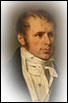
Jan Frans van Dael Painting Reproductions 1 of 1
1764-1840
Flemish Baroque/Rococo Painter
In Paris, among the official rooms of empire and restoration, Jan Frans van Dael made flowers carry an unusual weight. Born in Antwerp on 27 May 1764 and dead in Paris on 20 March 1840, he was a Flemish painter and lithographer who turned the still life of flowers and fruit into something both exacting and ceremonious.
His beginnings were practical rather than ornamental. The son of a joiner, he studied architectural drawing at the Antwerp Academy and won its first prizes for architecture in 1784 and 1785. That early discipline mattered. One senses in his mature paintings the habits of an architectural mind - order, measured spacing, a respect for structure before embellishment. Even when petals seem to spill forward, the composition does not loosen. It holds.
In 1786 he left for Paris, the city in which his career would fully unfold and in which he would remain professionally active for the rest of his life. There he lived in the artists' lodgings at the Louvre, in close proximity to Piat Joseph Sauvage, Gerard van Spaendonck, and Pierre-Joseph Redouté. Such a setting offered more than companionship. It placed him in a rare atmosphere of exchange, where decorative practice, botanical precision, and courtly ambition met each other daily. Before painting became his central occupation, he worked as a decorator on projects at the châteaux of Saint-Cloud, Bellevue, and Chantilly. That experience left its trace. Van Dael never entirely abandoned the decorative instinct; he refined it.
Curiously, painting itself was self-taught. Under the prompting example of van Spaendonck, he moved toward flower painting, and there he found the form that suited him best. The shift was decisive. From 1793 to 1833 he exhibited regularly at the Paris Salon, and he also sent work to Salons in the Low Countries. Regular public showing over four decades suggests not only endurance but confidence - the confidence of an artist who knew precisely what field he had entered and how to distinguish himself within it. Jan Frans van Dael did not seek novelty through violence or eccentricity. He sought it through finish, selection, and scale.
His success in Paris was unmistakable. Commissions came from Empress Josephine, who owned five of his works, from Marie-Louise Bonaparte, and later from the restored Bourbon monarchy under Louis XVIII and Charles X. Few careers pass so smoothly across political upheaval. Van Dael managed it because his paintings answered desires that outlasted regime change: luxury, cultivation, botanical curiosity, and the reassuring idea that nature could be arranged into permanence. He was also made a member of the Academies of Antwerp and Amsterdam, distinctions that confirmed his standing beyond France even though France remained his working ground.
What, then, did he paint? Mostly still lifes of flowers and fruit, sometimes with a landscape in the background, and occasionally other subjects - a few religious and allegorical compositions, some portraits, a handful of pure landscapes. Yet the floral still life remained his true language. In that language he stood firmly within the Flemish and Dutch tradition, recalling painters such as Roelandt Savery and, through his collecting, the great seventeenth-century names he admired: Jan Davidsz. de Heem, Abraham Mignon, Rachel Ruysch, and Jan van Huysum. But Van Dael was no mere continuer. His compositions kept the sobriety and close observation of northern flower painting while enlarging it with a French sense of decorative monumentality. The bouquet is not simply observed; it is staged.
Look closely and the painter's method emerges. He is thought to have studied many species from life, and the contemporary botanist van Hulthem noted that he grew flowers in his own garden to use as models. That detail is revealing. It suggests patience not only in execution but in preparation, a painter arranging the conditions of truth before beginning the fiction of arrangement. He laid a smooth gesso ground on his canvases, enabling a hard, luminous surface that recalls the jewel-like finish of seventeenth-century panel painting. At the same time, he moved away from darker older models through a lighter palette - pinks, blues, and yellows carrying more air, more elegance, more Paris. Perhaps that is where Jan Frans van Dael feels most distinctive: not in rejecting the past, but in brightening it.
Several works show the range of his imagination. Julie’s Tomb, painted in 1804 for the Château de Malmaison, places flowers and fruit before a tomb and turns still life into meditation. Life and death meet there without melodrama; abundance stands before extinction, and neither cancels the other. In 1828 he painted The House of the Artist, now in the Museum Boijmans Van Beuningen in Rotterdam, a view of his own residence described as a small masterpiece. Such a subject feels telling. After years spent perfecting composed abundance, he looked at the place that contained his labour. Small objects, too, received his art: some still lifes were used to decorate boxes, and examples survive in the Fitzwilliam Museum. The scale may shrink, but the care does not.
He also taught. Philippe-Jacques van Bree's 1816 interior of Van Dael's studio at the Sorbonne preserves the image of an artist at the centre of a working circle, and from 1806 to 1813 Van Dael enjoyed the status of a state-protected artist with a studio there. Among his pupils were Jean Benner-Fries, Elise Bruyère, Laurent Coste, Henriëtte Geertruida Knip, Adèle Riché, Jean Ulrich Tournier, and others. Teaching seems entirely consistent with his art: disciplined, exact, generous with knowledge of surfaces and forms. He collected the work of fellow flower painters as well, which suggests a man attentive to lineage, rivalry, and remembrance in equal measure.
Van Dael spent his whole active career in France and died in Paris in 1840. He was buried at Père Lachaise beside his friend van Spaendonck, an ending that feels quietly apt. His paintings still offer more than ornamental pleasure. They show how precision can become emotion, how arrangement can carry thought, and how a still life may hold history inside its silence. Today, when speed is often mistaken for vitality, his art reminds us of another value altogether - sustained looking.
His beginnings were practical rather than ornamental. The son of a joiner, he studied architectural drawing at the Antwerp Academy and won its first prizes for architecture in 1784 and 1785. That early discipline mattered. One senses in his mature paintings the habits of an architectural mind - order, measured spacing, a respect for structure before embellishment. Even when petals seem to spill forward, the composition does not loosen. It holds.
In 1786 he left for Paris, the city in which his career would fully unfold and in which he would remain professionally active for the rest of his life. There he lived in the artists' lodgings at the Louvre, in close proximity to Piat Joseph Sauvage, Gerard van Spaendonck, and Pierre-Joseph Redouté. Such a setting offered more than companionship. It placed him in a rare atmosphere of exchange, where decorative practice, botanical precision, and courtly ambition met each other daily. Before painting became his central occupation, he worked as a decorator on projects at the châteaux of Saint-Cloud, Bellevue, and Chantilly. That experience left its trace. Van Dael never entirely abandoned the decorative instinct; he refined it.
Curiously, painting itself was self-taught. Under the prompting example of van Spaendonck, he moved toward flower painting, and there he found the form that suited him best. The shift was decisive. From 1793 to 1833 he exhibited regularly at the Paris Salon, and he also sent work to Salons in the Low Countries. Regular public showing over four decades suggests not only endurance but confidence - the confidence of an artist who knew precisely what field he had entered and how to distinguish himself within it. Jan Frans van Dael did not seek novelty through violence or eccentricity. He sought it through finish, selection, and scale.
His success in Paris was unmistakable. Commissions came from Empress Josephine, who owned five of his works, from Marie-Louise Bonaparte, and later from the restored Bourbon monarchy under Louis XVIII and Charles X. Few careers pass so smoothly across political upheaval. Van Dael managed it because his paintings answered desires that outlasted regime change: luxury, cultivation, botanical curiosity, and the reassuring idea that nature could be arranged into permanence. He was also made a member of the Academies of Antwerp and Amsterdam, distinctions that confirmed his standing beyond France even though France remained his working ground.
What, then, did he paint? Mostly still lifes of flowers and fruit, sometimes with a landscape in the background, and occasionally other subjects - a few religious and allegorical compositions, some portraits, a handful of pure landscapes. Yet the floral still life remained his true language. In that language he stood firmly within the Flemish and Dutch tradition, recalling painters such as Roelandt Savery and, through his collecting, the great seventeenth-century names he admired: Jan Davidsz. de Heem, Abraham Mignon, Rachel Ruysch, and Jan van Huysum. But Van Dael was no mere continuer. His compositions kept the sobriety and close observation of northern flower painting while enlarging it with a French sense of decorative monumentality. The bouquet is not simply observed; it is staged.
Look closely and the painter's method emerges. He is thought to have studied many species from life, and the contemporary botanist van Hulthem noted that he grew flowers in his own garden to use as models. That detail is revealing. It suggests patience not only in execution but in preparation, a painter arranging the conditions of truth before beginning the fiction of arrangement. He laid a smooth gesso ground on his canvases, enabling a hard, luminous surface that recalls the jewel-like finish of seventeenth-century panel painting. At the same time, he moved away from darker older models through a lighter palette - pinks, blues, and yellows carrying more air, more elegance, more Paris. Perhaps that is where Jan Frans van Dael feels most distinctive: not in rejecting the past, but in brightening it.
Several works show the range of his imagination. Julie’s Tomb, painted in 1804 for the Château de Malmaison, places flowers and fruit before a tomb and turns still life into meditation. Life and death meet there without melodrama; abundance stands before extinction, and neither cancels the other. In 1828 he painted The House of the Artist, now in the Museum Boijmans Van Beuningen in Rotterdam, a view of his own residence described as a small masterpiece. Such a subject feels telling. After years spent perfecting composed abundance, he looked at the place that contained his labour. Small objects, too, received his art: some still lifes were used to decorate boxes, and examples survive in the Fitzwilliam Museum. The scale may shrink, but the care does not.
He also taught. Philippe-Jacques van Bree's 1816 interior of Van Dael's studio at the Sorbonne preserves the image of an artist at the centre of a working circle, and from 1806 to 1813 Van Dael enjoyed the status of a state-protected artist with a studio there. Among his pupils were Jean Benner-Fries, Elise Bruyère, Laurent Coste, Henriëtte Geertruida Knip, Adèle Riché, Jean Ulrich Tournier, and others. Teaching seems entirely consistent with his art: disciplined, exact, generous with knowledge of surfaces and forms. He collected the work of fellow flower painters as well, which suggests a man attentive to lineage, rivalry, and remembrance in equal measure.
Van Dael spent his whole active career in France and died in Paris in 1840. He was buried at Père Lachaise beside his friend van Spaendonck, an ending that feels quietly apt. His paintings still offer more than ornamental pleasure. They show how precision can become emotion, how arrangement can carry thought, and how a still life may hold history inside its silence. Today, when speed is often mistaken for vitality, his art reminds us of another value altogether - sustained looking.
12 Jan Frans van Dael Paintings
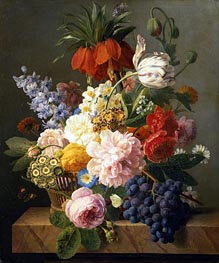
Still Life with Flowers and Fruit 1827
Oil Painting
$5503
$5503
Canvas Print
$64.80
$64.80
SKU: DVJ-4865
Jan Frans van Dael
Original Size: 63 x 52 cm
Musee des Beaux-Arts, Rouen, France
Jan Frans van Dael
Original Size: 63 x 52 cm
Musee des Beaux-Arts, Rouen, France
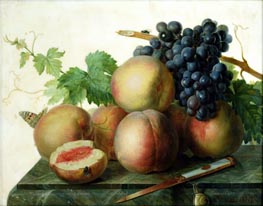
Still Life with Peaches and Grapes on Marble n.d.
Oil Painting
$2590
$2590
SKU: DVJ-4866
Jan Frans van Dael
Original Size: unknown
Musee des Beaux-Arts, Orleans, France
Jan Frans van Dael
Original Size: unknown
Musee des Beaux-Arts, Orleans, France
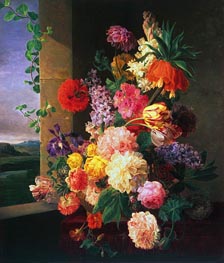
Flowers Before a Window 1789
Oil Painting
$8309
$8309
Canvas Print
$83.56
$83.56
SKU: DVJ-4867
Jan Frans van Dael
Original Size: 92.4 x 79.4 cm
Fine Arts Museums of San Francisco, California, USA
Jan Frans van Dael
Original Size: 92.4 x 79.4 cm
Fine Arts Museums of San Francisco, California, USA
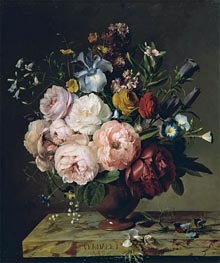
A Vase of Flowers on a Ledge 1817
Oil Painting
$5331
$5331
Canvas Print
$83.30
$83.30
SKU: DVJ-4868
Jan Frans van Dael
Original Size: 55.3 x 46.4 cm
Fitzwilliam Museum, Cambridge, UK
Jan Frans van Dael
Original Size: 55.3 x 46.4 cm
Fitzwilliam Museum, Cambridge, UK
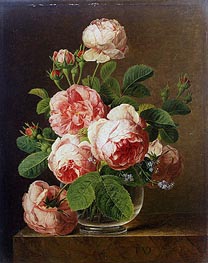
Still Life of Roses in a Glass Vase n.d.
Oil Painting
$3335
$3335
SKU: DVJ-4869
Jan Frans van Dael
Original Size: unknown
Private Collection
Jan Frans van Dael
Original Size: unknown
Private Collection
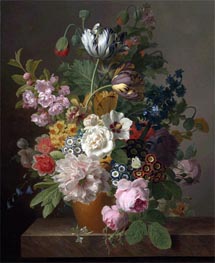
Still Life of Flowers n.d.
Oil Painting
$9103
$9103
Canvas Print
$80.35
$80.35
SKU: DVJ-4870
Jan Frans van Dael
Original Size: 73 x 60 cm
Private Collection
Jan Frans van Dael
Original Size: 73 x 60 cm
Private Collection
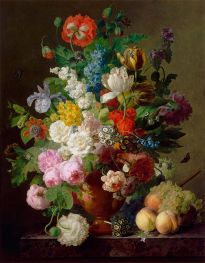
Vase of Flowers, Grapes and Peaches 1810
Oil Painting
$10372
$10372
Canvas Print
$77.49
$77.49
SKU: DVJ-16397
Jan Frans van Dael
Original Size: 99 x 79 cm
Louvre Museum, Paris, France
Jan Frans van Dael
Original Size: 99 x 79 cm
Louvre Museum, Paris, France
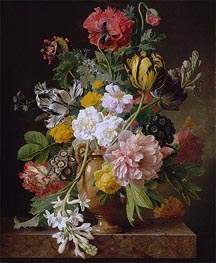
The Broken Tuberose 1807
Oil Painting
$6407
$6407
Canvas Print
$80.70
$80.70
SKU: DVJ-16398
Jan Frans van Dael
Original Size: 65 x 51 cm
Musee des Beaux Arts, Lyon, France
Jan Frans van Dael
Original Size: 65 x 51 cm
Musee des Beaux Arts, Lyon, France
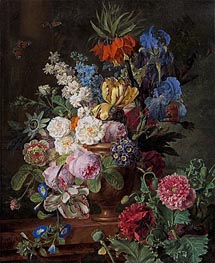
Flowers in Urn on a Stone Ledge c.1794/95
Oil Painting
$10349
$10349
Canvas Print
$79.99
$79.99
SKU: DVJ-16399
Jan Frans van Dael
Original Size: 74 x 60.5 cm
Private Collection
Jan Frans van Dael
Original Size: 74 x 60.5 cm
Private Collection
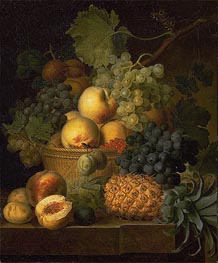
Basket of Fruit c.1801/02
Oil Painting
$3812
$3812
Canvas Print
$64.80
$64.80
SKU: DVJ-16400
Jan Frans van Dael
Original Size: 61 x 51 cm
Hermitage Museum, St. Petersburg, Russia
Jan Frans van Dael
Original Size: 61 x 51 cm
Hermitage Museum, St. Petersburg, Russia
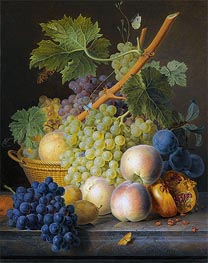
Still Life with Basket of Grapes and Peaches 1809
Oil Painting
$3821
$3821
Canvas Print
$75.03
$75.03
SKU: DVJ-16401
Jan Frans van Dael
Original Size: 54 x 42.8 cm
Private Collection
Jan Frans van Dael
Original Size: 54 x 42.8 cm
Private Collection
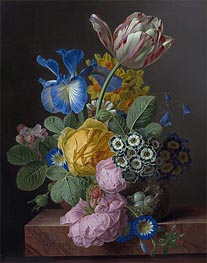
A Vase of Flowers with a Bird's Nest on a Marble Ledge 1820
Oil Painting
$3313
$3313
Canvas Print
$64.80
$64.80
SKU: DVJ-16402
Jan Frans van Dael
Original Size: 41 x 32.5 cm
Private Collection
Jan Frans van Dael
Original Size: 41 x 32.5 cm
Private Collection