
Secession, Symbolism & Art Deco Artists Index
Alphabetical Index of the Great Masters of Secession, Symbolism & Art Deco
The Vienna Secession was a movement of artists, designers, and architects that emerged in Vienna, Austria in 1897. The group was founded by a group of young artists who sought to break away from the conservative academic style of the Vienna Künstlerhaus, the city's established art institution.
The artists of the Vienna Secession sought to create a new, modern style that incorporated elements of Art Nouveau, Symbolism, and other contemporary artistic movements. They believed that art should be an integral part of everyday life, and sought to promote the idea of "Gesamtkunstwerk" (total artwork), which sought to unify all aspects of art and design into a cohesive whole.
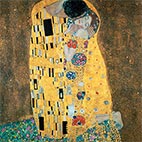
The Vienna Secession was notable for its emphasis on the unity of art and design. The group's exhibitions featured not only paintings and sculptures, but also furniture, textiles, and other decorative arts. The group's most famous member was Gustav Klimt, whose sensual, decorative style was a major influence on the Secessionist movement.
Other notable members of the Vienna Secession included architects Joseph Maria Olbrich and Otto Wagner, and artists Koloman Moser and Egon Schiele. The group's headquarters, known as the Secession Building, was designed by Olbrich and featured a distinctive gold-leaf dome, known as the "Golden Cabbage."
The Vienna Secession had a significant impact on the development of modern art and design. The group's emphasis on the unity of art and design, and their rejection of traditional academicism, influenced the development of the Art Nouveau and Art Deco styles. The group's emphasis on the decorative arts also influenced the development of the Wiener Werkstätte, a cooperative of artists and designers who produced high-quality decorative objects in the Secessionist style.
Symbolism is an artistic and literary movement that emerged in the late 19th century and lasted until the early 20th century. The Symbolist movement emphasized the use of symbols to represent abstract ideas, emotions, or states of mind, rather than depicting realistic images. Symbolist artists sought to convey a sense of mystery, spirituality, and inner meaning in their works, often incorporating themes from mythology, dreams, and the occult.
The Symbolist movement emerged as a reaction against the dominant artistic styles of the time, such as Realism and Impressionism. Symbolist artists sought to move away from the rational and empirical approach of these styles, and instead embrace a more subjective and intuitive approach to art.
Symbolist artists often used vivid colors, exaggerated forms, and rich textures to create works that were highly emotional and evocative. They also frequently used literary sources as inspiration for their works, drawing on the poetry and mythology of writers such as Charles Baudelaire, Arthur Rimbaud, and Stéphane Mallarmé.
Some of the most notable Symbolist artists include Gustave Moreau, Odilon Redon, and Fernand Khnopff. Symbolism had a profound influence on the development of modern art, particularly on the development of Expressionism, Surrealism, and Abstract art.
Art Deco is an artistic and design style that emerged in the 1920s and 1930s, and reached its peak in the 1930s and 1940s. It was characterized by its sleek, geometric forms, bright colors, and use of new materials such as chrome, glass, and plastic. Art Deco was influenced by a range of styles, including Cubism, Futurism, and the decorative arts of the Ancient Egyptians and Native Americans.
Art Deco was popularized by the International Exposition of Modern Decorative and Industrial Arts, held in Paris in 1925, which was intended to showcase the latest trends in design and art. The style quickly spread throughout the world, particularly in architecture, interior design, and fashion.
Art Deco was notable for its emphasis on luxury and modernity, and it often incorporated elements of industrial design into its works. Art Deco designers frequently used geometric shapes, such as triangles, circles, and squares, to create intricate patterns and designs. They also used bold, contrasting colors to create a sense of drama and visual impact.
Some of the most notable Art Deco artists include Tamara de Lempicka, and Gerda Wegener.
Art Deco had a significant impact on the development of modern design and architecture. Its emphasis on modernity, luxury, and innovation inspired designers to create new and exciting works that continue to influence contemporary design today.
The artists of the Vienna Secession sought to create a new, modern style that incorporated elements of Art Nouveau, Symbolism, and other contemporary artistic movements. They believed that art should be an integral part of everyday life, and sought to promote the idea of "Gesamtkunstwerk" (total artwork), which sought to unify all aspects of art and design into a cohesive whole.
The Vienna Secession was notable for its emphasis on the unity of art and design. The group's exhibitions featured not only paintings and sculptures, but also furniture, textiles, and other decorative arts. The group's most famous member was Gustav Klimt, whose sensual, decorative style was a major influence on the Secessionist movement.
Other notable members of the Vienna Secession included architects Joseph Maria Olbrich and Otto Wagner, and artists Koloman Moser and Egon Schiele. The group's headquarters, known as the Secession Building, was designed by Olbrich and featured a distinctive gold-leaf dome, known as the "Golden Cabbage."
The Vienna Secession had a significant impact on the development of modern art and design. The group's emphasis on the unity of art and design, and their rejection of traditional academicism, influenced the development of the Art Nouveau and Art Deco styles. The group's emphasis on the decorative arts also influenced the development of the Wiener Werkstätte, a cooperative of artists and designers who produced high-quality decorative objects in the Secessionist style.
Symbolism is an artistic and literary movement that emerged in the late 19th century and lasted until the early 20th century. The Symbolist movement emphasized the use of symbols to represent abstract ideas, emotions, or states of mind, rather than depicting realistic images. Symbolist artists sought to convey a sense of mystery, spirituality, and inner meaning in their works, often incorporating themes from mythology, dreams, and the occult.
The Symbolist movement emerged as a reaction against the dominant artistic styles of the time, such as Realism and Impressionism. Symbolist artists sought to move away from the rational and empirical approach of these styles, and instead embrace a more subjective and intuitive approach to art.
Symbolist artists often used vivid colors, exaggerated forms, and rich textures to create works that were highly emotional and evocative. They also frequently used literary sources as inspiration for their works, drawing on the poetry and mythology of writers such as Charles Baudelaire, Arthur Rimbaud, and Stéphane Mallarmé.
Some of the most notable Symbolist artists include Gustave Moreau, Odilon Redon, and Fernand Khnopff. Symbolism had a profound influence on the development of modern art, particularly on the development of Expressionism, Surrealism, and Abstract art.
Art Deco is an artistic and design style that emerged in the 1920s and 1930s, and reached its peak in the 1930s and 1940s. It was characterized by its sleek, geometric forms, bright colors, and use of new materials such as chrome, glass, and plastic. Art Deco was influenced by a range of styles, including Cubism, Futurism, and the decorative arts of the Ancient Egyptians and Native Americans.
Art Deco was popularized by the International Exposition of Modern Decorative and Industrial Arts, held in Paris in 1925, which was intended to showcase the latest trends in design and art. The style quickly spread throughout the world, particularly in architecture, interior design, and fashion.
Art Deco was notable for its emphasis on luxury and modernity, and it often incorporated elements of industrial design into its works. Art Deco designers frequently used geometric shapes, such as triangles, circles, and squares, to create intricate patterns and designs. They also used bold, contrasting colors to create a sense of drama and visual impact.
Some of the most notable Art Deco artists include Tamara de Lempicka, and Gerda Wegener.
Art Deco had a significant impact on the development of modern design and architecture. Its emphasis on modernity, luxury, and innovation inspired designers to create new and exciting works that continue to influence contemporary design today.