


-
List of recently added paintings in our art reproductions catalogue.
Recently Added Paintings
-
Index of the most popular masterpieces. Top 100 favourite painting reproductions.
Top 100 Paintings
-
Artist of the Week
Burne-Jones (1833-1898)
You can have a Monet or Renoir in your own home or office which can be exactly like the original masterpiece in the museum. TOPofART reproductions are your opportunity that comes as near to the original masterpiece as possible!
Our artworks are absolutely and completely hand-painted with oil on a blank linen canvas. Everybody in our team of artists is an exceptional master in his own field, and this makes it possible for us reproduce our paintings to the level of perfection and style of the old masters. Of course, these skills have been acquired by us after a long educational, academic, and creative period, and that is the reason why our artworks exhibit not just the exact drawing, color, and detail of the original, but they also express the human element, the spirit and sensation of the old masters.
We have recorded on video the process of reproduction of hundreds of paintings created in our TOPofART studio. You can watch these videos and be persuaded in the high quality of our work. We are not wholesalers, and we do not have varying levels of quality like our competitors. Our studio works with a small team of artists of the finest quality without saving on precision, level of detail, and materials.
Our artworks are absolutely and completely hand-painted with oil on a blank linen canvas. Everybody in our team of artists is an exceptional master in his own field, and this makes it possible for us reproduce our paintings to the level of perfection and style of the old masters. Of course, these skills have been acquired by us after a long educational, academic, and creative period, and that is the reason why our artworks exhibit not just the exact drawing, color, and detail of the original, but they also express the human element, the spirit and sensation of the old masters.
We have recorded on video the process of reproduction of hundreds of paintings created in our TOPofART studio. You can watch these videos and be persuaded in the high quality of our work. We are not wholesalers, and we do not have varying levels of quality like our competitors. Our studio works with a small team of artists of the finest quality without saving on precision, level of detail, and materials.
Paintings of the Day
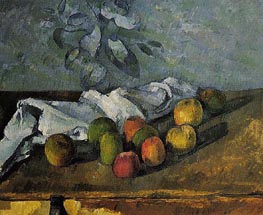
SKU: CEZ-603
Paul Cezanne
Original Size: 49.2 x 60.3 cm
Private Collection
Paul Cezanne
Original Size: 49.2 x 60.3 cm
Private Collection
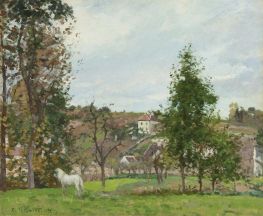
Landscape with a White Horse in a Meadow 1872
Camille Jacob Pissarro
Oil Painting
$455
$455
Canvas Print
$63.30
$63.30
SKU: PIC-2261
Camille Jacob Pissarro
Original Size: 46.5 x 55 cm
Private Collection
Camille Jacob Pissarro
Original Size: 46.5 x 55 cm
Private Collection
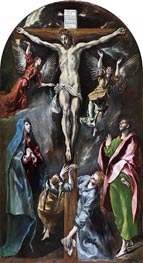
SKU: GEL-16753
Domenikos Theotokopoulos El Greco
Original Size: 312 x 169 cm
Prado Museum Madrid Spain
Domenikos Theotokopoulos El Greco
Original Size: 312 x 169 cm
Prado Museum Madrid Spain
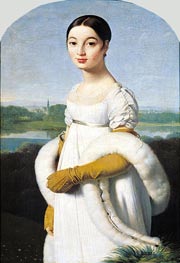
Portrait of Mademoiselle Caroline Riviere 1805
Jean Auguste Dominique Ingres
Oil Painting
$1657
$1657
Canvas Print
$49.40
$49.40
SKU: JAI-7479
Jean Auguste Dominique Ingres
Original Size: 100 x 70 cm
Louvre Museum Paris France
Jean Auguste Dominique Ingres
Original Size: 100 x 70 cm
Louvre Museum Paris France