
Still Life Painting Reproductions - Page 36
Still-life painting is a genre devoted primarily to inanimate objects, including fruit, flowers, vessels, books, musical instruments, and food, arranged to explore form, material, light, and meaning. Its subjects may suggest abundance, private habits, learning, or the passage of time. A still life can be sumptuous or austere, meticulously illusionistic or openly experimental. As a category defined by its subject matter, it extends across artistic movements and centuries.
The painter usually has considerable control over the arrangement. Moving a cup, turning a plate, or allowing a cloth to fall beyond a table’s edge can alter the balance of the entire picture. Light differentiates transparent glass, dull earthenware, and polished metal; the spaces between objects matter as much as their silhouettes. In trompe-l’œil painting, carefully coordinated scale, shadows, and shallow space can make an object appear to project beyond the painted surface into the viewer’s surroundings.
Images of food and household objects appeared in ancient Roman wall paintings and mosaics. In medieval and Renaissance Europe, flowers, vessels, and books often accompanied religious figures, carrying meanings tied to the larger scene. During the 16th century, Pieter Aertsen and Joachim Beuckelaer enlarged displays of food and kitchenware until they dominated many compositions. Around 1600, independent still-life painting developed in several European centers, allowing objects to become the principal subject of a painting.
Caravaggio’s “Basket of Fruit” (around 1600, Pinacoteca Ambrosiana, Milan) brings a wicker basket close to the viewer against a plain, light background. Blemished fruit and drying leaves make the passage of time perceptible within an apparently stable arrangement. In Spain, Juan Sánchez Cotán gave everyday produce an exacting spatial order. His “Quince, Cabbage, Melon, and Cucumber” (c. 1602, San Diego Museum of Art) places suspended and resting forms against the darkness of a recess. Sharp illumination and measured intervals give each object a distinct weight and presence. This restrained approach became one important strand within the varied tradition of the Spanish bodegón.
The 17th-century Netherlands supported a flourishing market for still life and increasingly specialized painters. Pieter Claesz and Willem Claesz. Heda worked with restrained palettes, drawing subtle distinctions between food, glass, pewter, and linen. More lavish arrangements by Willem Kalf gathered imported porcelain, citrus fruit, and costly metalwork. These paintings register the reach of trade and the appeal of possessions. The gleam of a vessel or the curling peel of a lemon could demonstrate painterly skill while contributing to an image of cultivated taste and material abundance.
Flower painting developed its own specialists, including Jan Brueghel the Elder, Ambrosius Bosschaert, and Rachel Ruysch. A painted bouquet could combine species that flowered in different seasons, bringing separate observations into a constructed whole. In Ruysch’s “Vase with Flowers” (1700, Mauritshuis, The Hague), the blooms have begun to wilt. The gaps between stems and petals give the arrangement depth, while light selects particular blossoms from the dark background. Botanical precision and compositional invention remain closely interdependent: even the most convincing bouquet can be an elaborate pictorial construction.
The vanitas still life made mortality and the limits of worldly achievement central concerns. Skulls, hourglasses, extinguished candles, and fragile bubbles could evoke the brevity of life; books and musical instruments could associate learning and pleasure with passing time. Such meanings depended on the combination of objects and the painting’s context. A flower or drinking vessel had no single, universal interpretation. Visual pleasure and reflection on transience could coexist within the same carefully arranged image.
In 18th-century France, Jean Siméon Chardin gave domestic objects a measured gravity through color, texture, and the relationships between forms. “The Ray” (1728, Musée du Louvre, Paris) juxtaposes a suspended fish with kitchen utensils and a cat whose alert presence heightens the stillness around it. The painting was one of the two works with which Chardin gained admission to the Royal Academy of Painting and Sculpture in 1728. His smaller arrangements of vessels and food also showed how modest subjects could sustain close attention through the weight of a shape or the transition between light and shadow.
During the 19th century, still life provided a setting for increasingly personal approaches to handling paint. Édouard Manet gave flowers and food a directness sustained by decisive touches and tonal contrasts. Henri Fantin-Latour explored bouquets through concentrated observation and carefully balanced color. Vincent van Gogh intensified the yellow of his sunflower paintings through variations of hue and pronounced paint texture, giving the familiar floral subject an insistent physical presence.
Paul Cézanne made still life central to his investigation of pictorial space. In “The Basket of Apples” (c. 1893, Art Institute of Chicago), tilted forms and displaced table edges unsettle a single, fixed viewpoint, while repeated curves and color relationships hold the composition together. The cloth creates ridges and hollows around the fruit, making the tabletop an intricate spatial field. Familiar objects become a means of examining how painted color can establish volume, depth, and balance without concealing the construction of the image.
In the early 20th century, Pablo Picasso and Georges Braque used bottles, glasses, and musical instruments to develop Cubism, breaking objects into intersecting planes and rethinking their relationship with surrounding space. Henri Matisse explored the interaction of objects, broad areas of color, and patterned fabrics. Giorgio Morandi repeatedly returned to groups of bottles, boxes, and vessels, attending to small differences in height, spacing, and muted tone. In his paintings, an interval between two objects can carry as much visual weight as either object itself, making the arrangement an exact study of proximity, separation, and balance.
page 36 of 74


Still Life with Roses and Asters in a Glass 1877
Henri Fantin-LatourOil Painting
$734
$734
Canvas Print
$60.80
$60.80
SKU: LHF-12691
Henri Fantin-Latour
Original Size: 33.5 x 27.3 cm
Philadelphia Museum of Art, USA
Henri Fantin-Latour
Original Size: 33.5 x 27.3 cm
Philadelphia Museum of Art, USA

SKU: LHF-12690
Henri Fantin-Latour
Original Size: 50.8 x 44.5 cm
Fine Arts Museums of San Francisco, USA
Henri Fantin-Latour
Original Size: 50.8 x 44.5 cm
Fine Arts Museums of San Francisco, USA

SKU: LHF-12689
Henri Fantin-Latour
Original Size: 43.2 x 48.3 cm
Fine Arts Museums of San Francisco, USA
Henri Fantin-Latour
Original Size: 43.2 x 48.3 cm
Fine Arts Museums of San Francisco, USA

SKU: LHF-12688
Henri Fantin-Latour
Original Size: 35.6 x 29.2 cm
Fine Arts Museums of San Francisco, USA
Henri Fantin-Latour
Original Size: 35.6 x 29.2 cm
Fine Arts Museums of San Francisco, USA

SKU: LHF-12687
Henri Fantin-Latour
Original Size: 55.9 x 53.3 cm
Fine Arts Museums of San Francisco, USA
Henri Fantin-Latour
Original Size: 55.9 x 53.3 cm
Fine Arts Museums of San Francisco, USA

SKU: LHF-12686
Henri Fantin-Latour
Original Size: 34.6 x 27.6 cm
Fine Arts Museums of San Francisco, USA
Henri Fantin-Latour
Original Size: 34.6 x 27.6 cm
Fine Arts Museums of San Francisco, USA

Still Life with Vase of Hawthorn, Bowl of ... 1872
Henri Fantin-LatourOil Painting
$1238
$1238
Canvas Print
$85.94
$85.94
SKU: LHF-12685
Henri Fantin-Latour
Original Size: 59.7 x 55.2 cm
Dallas Museum of Art, USA
Henri Fantin-Latour
Original Size: 59.7 x 55.2 cm
Dallas Museum of Art, USA


SKU: LHF-12680
Henri Fantin-Latour
Original Size: 48 x 59 cm
Musée des Beaux-Arts de Tournai, Belgium
Henri Fantin-Latour
Original Size: 48 x 59 cm
Musée des Beaux-Arts de Tournai, Belgium

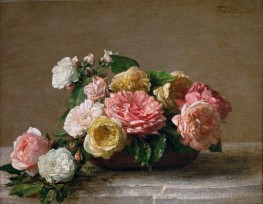

SKU: LHF-12669
Henri Fantin-Latour
Original Size: 34.6 x 41.6 cm
Metropolitan Museum of Art, New York, USA
Henri Fantin-Latour
Original Size: 34.6 x 41.6 cm
Metropolitan Museum of Art, New York, USA
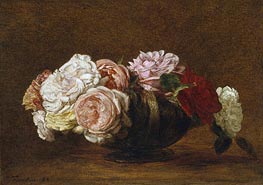
SKU: LHF-12668
Henri Fantin-Latour
Original Size: 29.8 x 41.6 cm
Metropolitan Museum of Art, New York, USA
Henri Fantin-Latour
Original Size: 29.8 x 41.6 cm
Metropolitan Museum of Art, New York, USA

SKU: LHF-12667
Henri Fantin-Latour
Original Size: 22.9 x 28.3 cm
Metropolitan Museum of Art, New York, USA
Henri Fantin-Latour
Original Size: 22.9 x 28.3 cm
Metropolitan Museum of Art, New York, USA

SKU: LHF-12666
Henri Fantin-Latour
Original Size: 47 x 56.5 cm
Metropolitan Museum of Art, New York, USA
Henri Fantin-Latour
Original Size: 47 x 56.5 cm
Metropolitan Museum of Art, New York, USA

SKU: LHF-12665
Henri Fantin-Latour
Original Size: 50.8 x 61.9 cm
Metropolitan Museum of Art, New York, USA
Henri Fantin-Latour
Original Size: 50.8 x 61.9 cm
Metropolitan Museum of Art, New York, USA

SKU: LHF-12664
Henri Fantin-Latour
Original Size: 56.8 x 54.9 cm
Metropolitan Museum of Art, New York, USA
Henri Fantin-Latour
Original Size: 56.8 x 54.9 cm
Metropolitan Museum of Art, New York, USA

SKU: LHF-12663
Henri Fantin-Latour
Original Size: 73 x 60 cm
Metropolitan Museum of Art, New York, USA
Henri Fantin-Latour
Original Size: 73 x 60 cm
Metropolitan Museum of Art, New York, USA

SKU: LHF-12662
Henri Fantin-Latour
Original Size: 59.7 x 45.7 cm
Metropolitan Museum of Art, New York, USA
Henri Fantin-Latour
Original Size: 59.7 x 45.7 cm
Metropolitan Museum of Art, New York, USA


