
August Macke Painting Reproductions 1 of 3
1887-1914
German Expressionist Painter
A sense of clarity runs through August Robert Ludwig Macke’s brief life, as if time itself had been compressed and sharpened for him. Born in 1887 and killed in 1914, he belonged to a generation that experienced modernity as promise and rupture almost simultaneously. German by nationality, European by temperament, Macke moved swiftly through the artistic currents of his moment, absorbing them without ever surrendering his own visual calm. His paintings offer a world in balance, even as history rushed toward catastrophe.
Meschede in Westphalia was not an obvious beginning for an artist so attuned to light and color, yet Macke’s early environment shaped his attentiveness. The family relocated first to Cologne and later to Bonn, cities whose cultural life was more varied and whose institutions provided the young painter with wider horizons. At school he formed friendships that would endure, particularly with Hans Thuar and later Walter Gerhardt. Through Gerhardt’s sister Elisabeth, whom he married in 1909, Macke gained not only emotional stability but a domestic setting that supported sustained artistic work.
Visual impressions mattered early on. Japanese woodblock prints, encountered through the Thuar household, introduced a flattened pictorial space and a decorative clarity that never entirely left him. A visit to Basel in 1900 brought him face to face with the paintings of Arnold Böcklin, whose symbolic landscapes suggested that imagination could coexist with structure. These experiences did not lead to immediate conclusions, yet they formed a visual vocabulary that Macke would later refine rather than abandon.
After his father’s death in 1904, Macke entered the Kunstakademie Düsseldorf. Academic discipline offered him technical grounding, but the institution itself proved restrictive. More formative were the activities that surrounded it - evening classes in graphic design, stage and costume work at the Schauspielhaus, and travel. Northern Italy, the Netherlands, Belgium, and Britain provided firsthand encounters with painting traditions unavailable in textbooks. Each journey expanded his sense of what painting might hold.
Paris in 1907 marked a turning point. There, Macke encountered Impressionism not as theory but as lived surface and atmosphere. Color became lighter, contours less emphatic, and scenes more attuned to modern life. A brief stay in Berlin followed, where he worked in Lovis Corinth’s studio. Corinth’s muscular handling of paint contrasted with French optical delicacy, and the tension between these approaches sharpened Macke’s own decisions.
By the end of the decade, his paintings reflected a synthesis rather than allegiance. Post-Impressionist structure met Fauvist color, yet neither overwhelmed the other. Street scenes, figures in parks, shop interiors - all appear animated but contained. Everyday modernity became his subject, not as spectacle but as rhythm. People stroll, converse, browse. Nothing dramatic occurs, and that is precisely the point.
A decisive encounter occurred in 1910 through his friendship with Franz Marc. Introduced to Wassily Kandinsky, Macke joined the circle that would become Der Blaue Reiter. While he shared the group’s resistance to academic realism, his position remained distinct. Mysticism and abstraction interested him intellectually, yet his paintings stayed anchored in the visible world. He explored symbolic color without relinquishing human presence.
Paris again altered his trajectory in 1912, this time through contact with Robert Delaunay. The chromatic energy of Delaunay’s Orphism opened new possibilities. Color could construct space rather than describe it. Macke responded immediately. Works such as the Shop Windows series fragment urban experience into overlapping planes, echoing Cubist simultaneity while preserving legibility. Movement is implied not through distortion but through juxtaposition.
Travel continued to shape his vision. Periods spent at Lake Thun introduced a quieter, reflective palette, while a journey to Tunisia in April 1914, undertaken with Paul Klee and Louis Moilliet, proved transformative. Light there behaved differently - flatter, more radiant, less burdened by shadow. In paintings from this final phase, color assumes a luminous autonomy. Türkisches Café stands among the most eloquent of these works. Figures sit in quiet proximity, architecture dissolves into color planes, and atmosphere replaces narrative.
Perhaps distance allowed clarity. Tunisia offered neither nostalgia nor urgency, only presence. In these late paintings, Macke’s long negotiation between structure and sensation finds equilibrium. Form remains intelligible, yet color leads perception. The world appears neither symbolic nor analytical, but calmly inhabited.
War shattered that calm. Mobilized shortly after the outbreak of the First World War, Macke was killed in Champagne in September 1914. He was twenty-seven. The final painting associated with him, Farewell, carries a subdued gravity, its mood shaped by knowledge rather than depiction. He was buried in Souain, far from the domestic scenes that had sustained his imagination.
August Macke’s legacy resists tragedy as explanation. His work does not announce loss; it insists on attention. In a period marked by extremes, he chose balance without retreat. Modern life, as he saw it, could be vibrant without being fractured. That vision continues to speak quietly, reminding viewers that harmony is not innocence, but a decision sustained through awareness.
Meschede in Westphalia was not an obvious beginning for an artist so attuned to light and color, yet Macke’s early environment shaped his attentiveness. The family relocated first to Cologne and later to Bonn, cities whose cultural life was more varied and whose institutions provided the young painter with wider horizons. At school he formed friendships that would endure, particularly with Hans Thuar and later Walter Gerhardt. Through Gerhardt’s sister Elisabeth, whom he married in 1909, Macke gained not only emotional stability but a domestic setting that supported sustained artistic work.
Visual impressions mattered early on. Japanese woodblock prints, encountered through the Thuar household, introduced a flattened pictorial space and a decorative clarity that never entirely left him. A visit to Basel in 1900 brought him face to face with the paintings of Arnold Böcklin, whose symbolic landscapes suggested that imagination could coexist with structure. These experiences did not lead to immediate conclusions, yet they formed a visual vocabulary that Macke would later refine rather than abandon.
After his father’s death in 1904, Macke entered the Kunstakademie Düsseldorf. Academic discipline offered him technical grounding, but the institution itself proved restrictive. More formative were the activities that surrounded it - evening classes in graphic design, stage and costume work at the Schauspielhaus, and travel. Northern Italy, the Netherlands, Belgium, and Britain provided firsthand encounters with painting traditions unavailable in textbooks. Each journey expanded his sense of what painting might hold.
Paris in 1907 marked a turning point. There, Macke encountered Impressionism not as theory but as lived surface and atmosphere. Color became lighter, contours less emphatic, and scenes more attuned to modern life. A brief stay in Berlin followed, where he worked in Lovis Corinth’s studio. Corinth’s muscular handling of paint contrasted with French optical delicacy, and the tension between these approaches sharpened Macke’s own decisions.
By the end of the decade, his paintings reflected a synthesis rather than allegiance. Post-Impressionist structure met Fauvist color, yet neither overwhelmed the other. Street scenes, figures in parks, shop interiors - all appear animated but contained. Everyday modernity became his subject, not as spectacle but as rhythm. People stroll, converse, browse. Nothing dramatic occurs, and that is precisely the point.
A decisive encounter occurred in 1910 through his friendship with Franz Marc. Introduced to Wassily Kandinsky, Macke joined the circle that would become Der Blaue Reiter. While he shared the group’s resistance to academic realism, his position remained distinct. Mysticism and abstraction interested him intellectually, yet his paintings stayed anchored in the visible world. He explored symbolic color without relinquishing human presence.
Paris again altered his trajectory in 1912, this time through contact with Robert Delaunay. The chromatic energy of Delaunay’s Orphism opened new possibilities. Color could construct space rather than describe it. Macke responded immediately. Works such as the Shop Windows series fragment urban experience into overlapping planes, echoing Cubist simultaneity while preserving legibility. Movement is implied not through distortion but through juxtaposition.
Travel continued to shape his vision. Periods spent at Lake Thun introduced a quieter, reflective palette, while a journey to Tunisia in April 1914, undertaken with Paul Klee and Louis Moilliet, proved transformative. Light there behaved differently - flatter, more radiant, less burdened by shadow. In paintings from this final phase, color assumes a luminous autonomy. Türkisches Café stands among the most eloquent of these works. Figures sit in quiet proximity, architecture dissolves into color planes, and atmosphere replaces narrative.
Perhaps distance allowed clarity. Tunisia offered neither nostalgia nor urgency, only presence. In these late paintings, Macke’s long negotiation between structure and sensation finds equilibrium. Form remains intelligible, yet color leads perception. The world appears neither symbolic nor analytical, but calmly inhabited.
War shattered that calm. Mobilized shortly after the outbreak of the First World War, Macke was killed in Champagne in September 1914. He was twenty-seven. The final painting associated with him, Farewell, carries a subdued gravity, its mood shaped by knowledge rather than depiction. He was buried in Souain, far from the domestic scenes that had sustained his imagination.
August Macke’s legacy resists tragedy as explanation. His work does not announce loss; it insists on attention. In a period marked by extremes, he chose balance without retreat. Modern life, as he saw it, could be vibrant without being fractured. That vision continues to speak quietly, reminding viewers that harmony is not innocence, but a decision sustained through awareness.
64 August Macke Paintings
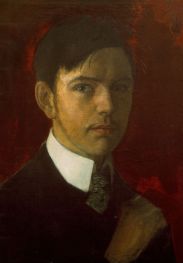
Self-Portrait 1906
Oil Painting
$469
$469
Canvas Print
$63.93
$63.93
SKU: AMK-19940
August Macke
Original Size: 54 x 35 cm
LWL-Museum für Kunst und Kultur, Munster, Germany
August Macke
Original Size: 54 x 35 cm
LWL-Museum für Kunst und Kultur, Munster, Germany
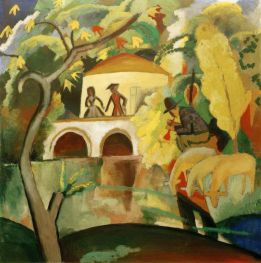
Rococo 1912
Oil Painting
$944
$944
Canvas Print
$96.89
$96.89
SKU: AMK-19941
August Macke
Original Size: 89 x 89 cm
Private Collection
August Macke
Original Size: 89 x 89 cm
Private Collection
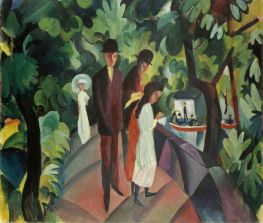
Stroll on the Bridge 1912
Oil Painting
$1093
$1093
Canvas Print
$82.27
$82.27
SKU: AMK-19942
August Macke
Original Size: 86 x 100 cm
Hessisches Landesmuseum, Darmstadt, Germany
August Macke
Original Size: 86 x 100 cm
Hessisches Landesmuseum, Darmstadt, Germany
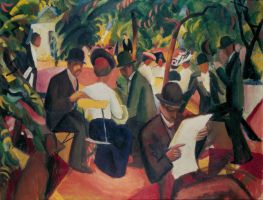
Garden Restaurant 1912
Oil Painting
$1119
$1119
Canvas Print
$73.81
$73.81
SKU: AMK-19943
August Macke
Original Size: 81 x 105 cm
Kunstmuseum, Bern, Switzerland
August Macke
Original Size: 81 x 105 cm
Kunstmuseum, Bern, Switzerland
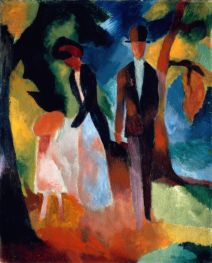
People by a Blue Lake 1913
Oil Painting
$602
$602
Canvas Print
$78.22
$78.22
SKU: AMK-19944
August Macke
Original Size: 60 x 48.5 cm
Staatliche Kunsthalle, Karlsruhe, Germany
August Macke
Original Size: 60 x 48.5 cm
Staatliche Kunsthalle, Karlsruhe, Germany
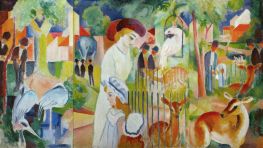
Great Zoological Garden. Triptych 1912
Oil Painting
$2142
$2142
Canvas Print
$63.93
$63.93
SKU: AMK-19945
August Macke
Original Size: 129.5 x 230.5 cm
Museum fur Kunst und Kulturgeschichte, Dortmund, Germany
August Macke
Original Size: 129.5 x 230.5 cm
Museum fur Kunst und Kulturgeschichte, Dortmund, Germany
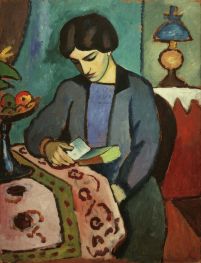
The Wife of the Artist 1912
Oil Painting
$975
$975
Canvas Print
$74.17
$74.17
SKU: AMK-19946
August Macke
Original Size: 105 x 81 cm
Alte Nationalgalerie, Berlin, Germany
August Macke
Original Size: 105 x 81 cm
Alte Nationalgalerie, Berlin, Germany
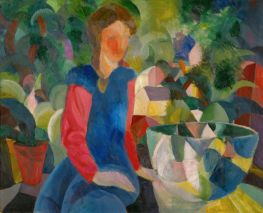
Girl with Fish-Bowl 1914
Oil Painting
$1069
$1069
Canvas Print
$78.39
$78.39
SKU: AMK-19947
August Macke
Original Size: 81 x 100.5 cm
Von der Heydt Museum, Wuppertal, Germany
August Macke
Original Size: 81 x 100.5 cm
Von der Heydt Museum, Wuppertal, Germany
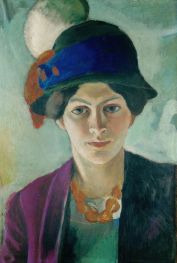
Mrs. Elisabeth Macke with Hat 1909
Oil Painting
$592
$592
Canvas Print
$63.93
$63.93
SKU: AMK-19948
August Macke
Original Size: 49.7 x 34 cm
LWL-Museum für Kunst und Kultur, Munster, Germany
August Macke
Original Size: 49.7 x 34 cm
LWL-Museum für Kunst und Kultur, Munster, Germany
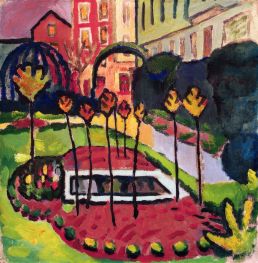
Garden with Pool 1912
Oil Painting
$575
$575
Canvas Print
$81.68
$81.68
SKU: AMK-19949
August Macke
Original Size: 51 x 50 cm
Private Collection
August Macke
Original Size: 51 x 50 cm
Private Collection
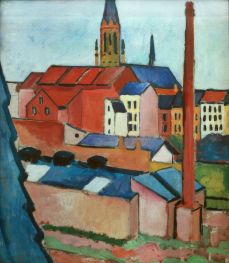
St. Mary's Church with Houses and Chimneys 1911
Oil Painting
$585
$585
Canvas Print
$84.56
$84.56
SKU: AMK-19950
August Macke
Original Size: 66 x 57.5 cm
Städtisches Kunstmuseum, Bonn, Germany
August Macke
Original Size: 66 x 57.5 cm
Städtisches Kunstmuseum, Bonn, Germany
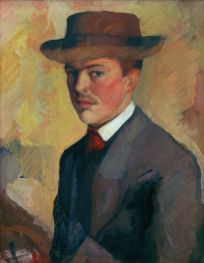
Self-Portrait with Hat 1909
Oil Painting
$577
$577
Canvas Print
$63.93
$63.93
SKU: AMK-19951
August Macke
Original Size: 41 x 32.5 cm
Städtisches Kunstmuseum, Bonn, Germany
August Macke
Original Size: 41 x 32.5 cm
Städtisches Kunstmuseum, Bonn, Germany
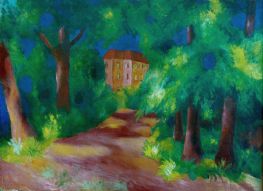
Red House in a Parc 1914
Oil Painting
$790
$790
Canvas Print
$70.46
$70.46
SKU: AMK-19952
August Macke
Original Size: 60 x 82 cm
Städtisches Kunstmuseum, Bonn, Germany
August Macke
Original Size: 60 x 82 cm
Städtisches Kunstmuseum, Bonn, Germany
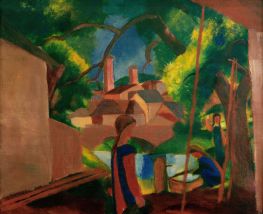
Children by the Fountain with Town in the Background 1914
Oil Painting
$773
$773
Canvas Print
$79.28
$79.28
SKU: AMK-19953
August Macke
Original Size: 62.5 x 75.3 cm
Städtisches Kunstmuseum, Bonn, Germany
August Macke
Original Size: 62.5 x 75.3 cm
Städtisches Kunstmuseum, Bonn, Germany
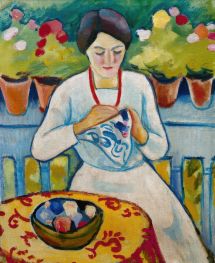
Woman on a Balcony 1910
Oil Painting
$589
$589
Canvas Print
$79.28
$79.28
SKU: AMK-19954
August Macke
Original Size: 61 x 48 cm
Städtisches Kunstmuseum, Bonn, Germany
August Macke
Original Size: 61 x 48 cm
Städtisches Kunstmuseum, Bonn, Germany
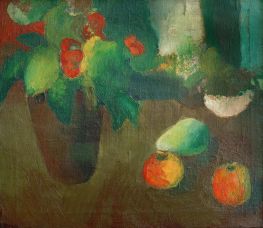
Still Life with Begonia 1914
Oil Painting
$574
$574
Canvas Print
$84.03
$84.03
SKU: AMK-19955
August Macke
Original Size: 48 x 56 cm
Städtisches Kunstmuseum, Bonn, Germany
August Macke
Original Size: 48 x 56 cm
Städtisches Kunstmuseum, Bonn, Germany
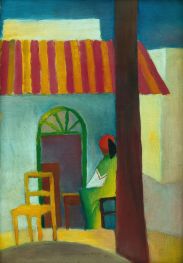
Turkish Cafe I 1914
Oil Painting
$476
$476
Canvas Print
$63.93
$63.93
SKU: AMK-19956
August Macke
Original Size: 35.5 x 25 cm
Städtisches Kunstmuseum, Bonn, Germany
August Macke
Original Size: 35.5 x 25 cm
Städtisches Kunstmuseum, Bonn, Germany
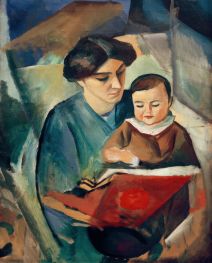
Elisabeth and Walterchen 1912
Oil Painting
$1056
$1056
Canvas Print
$78.04
$78.04
SKU: AMK-19957
August Macke
Original Size: 89 x 71 cm
Städtisches Kunstmuseum, Bonn, Germany
August Macke
Original Size: 89 x 71 cm
Städtisches Kunstmuseum, Bonn, Germany
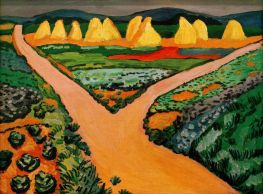
Vegetable Fields 1911
Oil Painting
$655
$655
Canvas Print
$71.70
$71.70
SKU: AMK-19958
August Macke
Original Size: 47.5 x 64 cm
Städtisches Kunstmuseum, Bonn, Germany
August Macke
Original Size: 47.5 x 64 cm
Städtisches Kunstmuseum, Bonn, Germany
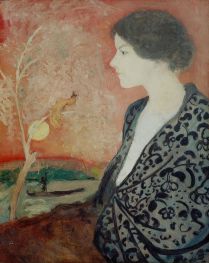
Portrait of Elisabeth Gerhardt 1907
Oil Painting
$610
$610
Canvas Print
$63.93
$63.93
SKU: AMK-19959
August Macke
Original Size: 46 x 36 cm
Private Collection
August Macke
Original Size: 46 x 36 cm
Private Collection
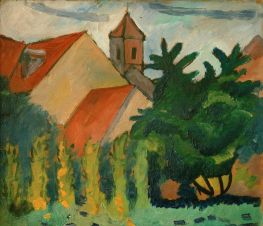
Church in Kandern 1911
Oil Painting
$571
$571
Canvas Print
$63.93
$63.93
SKU: AMK-19960
August Macke
Original Size: 30 x 35 cm
Private Collection
August Macke
Original Size: 30 x 35 cm
Private Collection
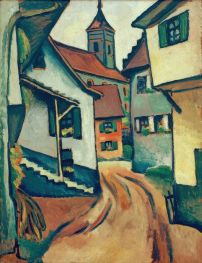
Street with Church in Kandern 1911
Oil Painting
$1087
$1087
Canvas Print
$74.52
$74.52
SKU: AMK-19961
August Macke
Original Size: 103 x 80 cm
Museum für Neue Kunst, Freiburg, Germany
August Macke
Original Size: 103 x 80 cm
Museum für Neue Kunst, Freiburg, Germany
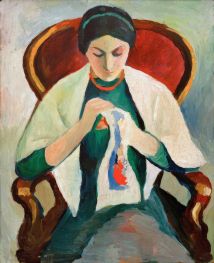
Woman Sitting in Chair, Embroidering 1909
Oil Painting
$585
$585
Canvas Print
$79.28
$79.28
SKU: AMK-19962
August Macke
Original Size: 55 x 45 cm
Kunstmuseum, Mülheim an der Ruhr, Germany
August Macke
Original Size: 55 x 45 cm
Kunstmuseum, Mülheim an der Ruhr, Germany
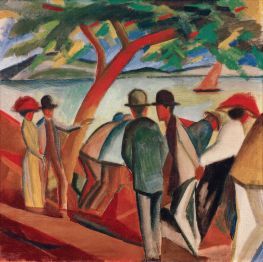
People Strolling along the Lake 1912
Oil Painting
$798
$798
Canvas Print
$96.54
$96.54
SKU: AMK-19963
August Macke
Original Size: 71.4 x 71.2 cm
Private Collection
August Macke
Original Size: 71.4 x 71.2 cm
Private Collection