
Félix Vallotton Painting Reproductions 1 of 12
1865-1925
Swiss Аrtist
A black wedge of shadow - a staircase, a doorway, a curtain drawn too far - can feel, in Félix Vallotton’s hands, like a verdict. Interiors tighten; streets compress; a glance becomes narrative. Swiss by birth and French by choice, Vallotton (December 28, 1865 - December 29, 1925) built an art of lucid distance, whether in paint or in the severe grammar of the woodcut.
Raised in Lausanne in a conservative, Protestant middle-class household, Félix Édouard Vallotton learned early the virtues of discipline and exactness. His father ran a pharmacy before turning to chocolate manufacturing; his mother, Emma, came from a family of furniture makers - a domestic world of measured craft rather than bohemian improvisation. Classical studies at the Collège Cantonal ended in 1882, yet drawing had already become the more insistent education. In Jean-Samson Guignard’s classes - usually reserved for advanced students - the young Vallotton practised close observation with an almost forensic calm, training the eye to report without flattery.
Paris drew him in January 1882, to Rue Jacob in Saint-Germain-des-Prés and the Académie Julian. Under Jules Joseph Lefebvre and Gustave Boulanger he refined a technical assurance that never deserted him, but the real apprenticeship unfolded in the Louvre: Leonardo’s composure, Holbein’s precision, Dürer’s line, Goya’s bite, Manet’s modernity. Ingres, above all, stayed as a lifelong measure - not as a style to imitate, but as a standard of control. That control showed early. In 1885 he exhibited at the Paris Salon, including the Ingresque portrait of Monsieur Ursenbach and a self-portrait that earned an honourable mention. The same year he began a habit that says much about him: a notebook, his Livre de Raison, in which he logged every work with methodical persistence until the tally reached around 1,700 items at his death.
Success, however, did not arrive as comfort. By the late 1880s the portraits became so bluntly realistic that even his teacher Lefebvre bristled, and money tightened when his father could no longer support him. Illness followed - typhoid fever, then depression - and in 1889 he went to Zermatt to recover, painting Alpine landscapes with the same steady eye turned on a different kind of silence. Around this time he met Hélène Chatenay, his companion for roughly a decade, and the domestic note she introduced would later reappear as something far from cosy. Also in 1889 he encountered Japanese prints at the Paris Universal Exposition, and their economy of line and flat masses of tone offered him a new way to compress experience into essentials. He supported himself as an art restorer for the dealer Henri Haro, and wrote criticism for La Gazette de Lausanne from 1890 to 1897 - about thirty articles that kept him alert to the quarrels and fashions of the Paris art world, while he travelled in Europe to Berlin, Prague, and Venice and returned repeatedly to Italy in later years.
Printmaking became his sharpest instrument. Starting in 1891 he stepped away from the official Salon des Artistes and entered the Salon des Indépendants, testing a more modern arena and experimenting with xylography - woodcut - at a moment when the medium seemed ready for revival. A first woodcut portrait of Paul Verlaine announced his gifts, and a crucial method emerged: drawing with precision, then stripping away, simplifying again and again until only the necessary remained. Critics and publishers noticed. Octave Uzanne spoke of a “renaissance” of the woodcut, and commissions arrived from Parisian journals and foreign publications, giving Vallotton a rare thing - financial stability earned through visual intelligence rather than social charm.
In 1892 he joined Les Nabis - Bonnard, Vuillard, Maurice Denis, Ker-Xavier Roussel, and others - though he kept a certain distance, earning the teasing nickname “the foreign Nabi.” Here the painting began to echo the woodcut: flat zones of colour, hard edges, a refusal of soft sentiment. Bathers on a Summer Evening (1892-93) provoked laughter and harsh criticism when shown at the Indépendants, yet the awkwardness was deliberate, a sign that Vallotton was turning away from polite illusion. Moonlight (1895) carries a Symbolist hush, but even there the calm feels watched, measured. Meanwhile, the woodcuts travelled far. For La Revue Blanche, and through the patronage of Thadée Natanson and his wife Misia, Vallotton entered the avant-garde salons where Mallarmé, Proust, Satie, and Debussy circulated - a network that mattered not because it flattered him, but because it sharpened his sense of modern life as a theatre of roles.
Nothing shows that theatre more cruelly, and more honestly, than Intimités (1898), ten interior scenes published by La Revue Blanche. Rooms become traps. Men and women negotiate power with gestures that look casual until you feel the pressure in the air. Broad black-and-white contrasts do the work of psychology; detail is withheld like a secret. Street crowds and political confrontations also drew him - police attacking anarchists, demonstrations, the churn of modern unrest - and during the Dreyfus affair he took a forceful public position, producing satirical woodcuts such as The Age of the Newspaper, printed on the front page of Le Cri de Paris in January 1898. Even technology entered his practice. In 1898 he bought a Kodak No. 2 “Bullet” camera and used photographs as a basis for certain interior paintings; the spaces feel lived-in not because they are described lovingly, but because their geometry is convincing.
Marriage altered the practical conditions of his life. In 1899 Vallotton wed Gabrielle Rodrigues-Hénriques, the widowed daughter of Alexandre Bernheim of the Galerie Bernheim-Jeune, and became stepfather to her three children. After a Swiss honeymoon they moved near the Gare Saint-Lazare, and the new security gradually loosened the grip of print commissions. A special Nabis exhibition at Bernheim-Jeune included ten of his works, and he increasingly devoted himself to painting after 1901. Yet the emotional temperature stayed cool. The interiors - Dinner by Lamplight, with family figures arranged as if by necessity rather than affection - suggest that domestic life interested him as a structure, not a sanctuary.
Recognition grew in the 1900s, though not without barbed commentary. He showed with the Vienna Secession in 1903 and sold works there; the Bernheim gallery gave him a one-man exhibition the same year; the French state purchased a painting for the Luxembourg Museum, Paris’s leading modern museum at the time. He wrote more - criticism, plays (poorly received when staged in 1904 and 1907), and novels, including the semi-autobiographical La Vie meurtrière, begun in 1907 and published after his death. Painting remained central: The Port of Honfleur at Night (1901) catches a harbour’s darkness without romantic blur; Three Women and a Little Girl Playing in the Water (1907) was well received; The Turkish Bath, painted after an Italian trip with Gabrielle, drew praise from Guillaume Apollinaire. Still, some critics complained of dryness. One wrote in 1910 that Vallotton painted “like a policeman,” as if assigned to arrest forms and colours. The remark meant as insult can read, now, as unwilling testimony: he did pursue facts, and he did not let colour sing merely to charm.
War tested that detachment. Naturalised as a French citizen in 1900, Vallotton volunteered at the outbreak of World War I and was rejected because he was forty-eight. So he worked as he could. In 1915-16 he returned to woodcut for the series This is War - his last major prints - using stark contrasts to register modern conflict without heroic blur. In 1917 the Ministry of Fine Arts sent him on a three-week tour of the front lines; the sketches fed paintings such as The Church of Souain in Silhouette, where ruined landscapes are recorded with a cool, almost appalling clarity. He declined the Legion of Honour in 1912, as Bonnard and Vuillard did, and the refusal fits: Vallotton’s art does not ask for medals; it asks to be looked at straight.
Persistent health problems marked his final decade. Winters were spent in Cagnes-sur-Mer in Provence, where he and Gabrielle bought a small house, and summers in Honfleur in Normandy, where they also kept a home. He concentrated on still lifes, on “composite landscapes” constructed in the studio from memory and imagination, and on nudes that can be flamboyantly erotic without inviting easy warmth. In December 1925 he died in Paris, the day after his sixtieth birthday, following cancer surgery. A retrospective followed at the Salon des Indépendants in 1926, and works appeared at the Grand Palais among those of van Gogh, Modigliani, Seurat, and Toulouse-Lautrec - a reminder that he belonged to the modern story even while standing slightly aside from its loudest gestures.
Today, Félix Vallotton continues to feel strangely current. Perhaps solitude gave his line its clarity, and perhaps the Swiss habit of restraint helped him see French modernity without being swallowed by it. Vallotton’s rooms still vibrate with unsaid sentences; his crowds still carry the tension of public life; his blacks and whites still cut to the quick. He does not ask us to admire - he asks us to notice, and to keep noticing, even when the truth is uncomfortable.
Raised in Lausanne in a conservative, Protestant middle-class household, Félix Édouard Vallotton learned early the virtues of discipline and exactness. His father ran a pharmacy before turning to chocolate manufacturing; his mother, Emma, came from a family of furniture makers - a domestic world of measured craft rather than bohemian improvisation. Classical studies at the Collège Cantonal ended in 1882, yet drawing had already become the more insistent education. In Jean-Samson Guignard’s classes - usually reserved for advanced students - the young Vallotton practised close observation with an almost forensic calm, training the eye to report without flattery.
Paris drew him in January 1882, to Rue Jacob in Saint-Germain-des-Prés and the Académie Julian. Under Jules Joseph Lefebvre and Gustave Boulanger he refined a technical assurance that never deserted him, but the real apprenticeship unfolded in the Louvre: Leonardo’s composure, Holbein’s precision, Dürer’s line, Goya’s bite, Manet’s modernity. Ingres, above all, stayed as a lifelong measure - not as a style to imitate, but as a standard of control. That control showed early. In 1885 he exhibited at the Paris Salon, including the Ingresque portrait of Monsieur Ursenbach and a self-portrait that earned an honourable mention. The same year he began a habit that says much about him: a notebook, his Livre de Raison, in which he logged every work with methodical persistence until the tally reached around 1,700 items at his death.
Success, however, did not arrive as comfort. By the late 1880s the portraits became so bluntly realistic that even his teacher Lefebvre bristled, and money tightened when his father could no longer support him. Illness followed - typhoid fever, then depression - and in 1889 he went to Zermatt to recover, painting Alpine landscapes with the same steady eye turned on a different kind of silence. Around this time he met Hélène Chatenay, his companion for roughly a decade, and the domestic note she introduced would later reappear as something far from cosy. Also in 1889 he encountered Japanese prints at the Paris Universal Exposition, and their economy of line and flat masses of tone offered him a new way to compress experience into essentials. He supported himself as an art restorer for the dealer Henri Haro, and wrote criticism for La Gazette de Lausanne from 1890 to 1897 - about thirty articles that kept him alert to the quarrels and fashions of the Paris art world, while he travelled in Europe to Berlin, Prague, and Venice and returned repeatedly to Italy in later years.
Printmaking became his sharpest instrument. Starting in 1891 he stepped away from the official Salon des Artistes and entered the Salon des Indépendants, testing a more modern arena and experimenting with xylography - woodcut - at a moment when the medium seemed ready for revival. A first woodcut portrait of Paul Verlaine announced his gifts, and a crucial method emerged: drawing with precision, then stripping away, simplifying again and again until only the necessary remained. Critics and publishers noticed. Octave Uzanne spoke of a “renaissance” of the woodcut, and commissions arrived from Parisian journals and foreign publications, giving Vallotton a rare thing - financial stability earned through visual intelligence rather than social charm.
In 1892 he joined Les Nabis - Bonnard, Vuillard, Maurice Denis, Ker-Xavier Roussel, and others - though he kept a certain distance, earning the teasing nickname “the foreign Nabi.” Here the painting began to echo the woodcut: flat zones of colour, hard edges, a refusal of soft sentiment. Bathers on a Summer Evening (1892-93) provoked laughter and harsh criticism when shown at the Indépendants, yet the awkwardness was deliberate, a sign that Vallotton was turning away from polite illusion. Moonlight (1895) carries a Symbolist hush, but even there the calm feels watched, measured. Meanwhile, the woodcuts travelled far. For La Revue Blanche, and through the patronage of Thadée Natanson and his wife Misia, Vallotton entered the avant-garde salons where Mallarmé, Proust, Satie, and Debussy circulated - a network that mattered not because it flattered him, but because it sharpened his sense of modern life as a theatre of roles.
Nothing shows that theatre more cruelly, and more honestly, than Intimités (1898), ten interior scenes published by La Revue Blanche. Rooms become traps. Men and women negotiate power with gestures that look casual until you feel the pressure in the air. Broad black-and-white contrasts do the work of psychology; detail is withheld like a secret. Street crowds and political confrontations also drew him - police attacking anarchists, demonstrations, the churn of modern unrest - and during the Dreyfus affair he took a forceful public position, producing satirical woodcuts such as The Age of the Newspaper, printed on the front page of Le Cri de Paris in January 1898. Even technology entered his practice. In 1898 he bought a Kodak No. 2 “Bullet” camera and used photographs as a basis for certain interior paintings; the spaces feel lived-in not because they are described lovingly, but because their geometry is convincing.
Marriage altered the practical conditions of his life. In 1899 Vallotton wed Gabrielle Rodrigues-Hénriques, the widowed daughter of Alexandre Bernheim of the Galerie Bernheim-Jeune, and became stepfather to her three children. After a Swiss honeymoon they moved near the Gare Saint-Lazare, and the new security gradually loosened the grip of print commissions. A special Nabis exhibition at Bernheim-Jeune included ten of his works, and he increasingly devoted himself to painting after 1901. Yet the emotional temperature stayed cool. The interiors - Dinner by Lamplight, with family figures arranged as if by necessity rather than affection - suggest that domestic life interested him as a structure, not a sanctuary.
Recognition grew in the 1900s, though not without barbed commentary. He showed with the Vienna Secession in 1903 and sold works there; the Bernheim gallery gave him a one-man exhibition the same year; the French state purchased a painting for the Luxembourg Museum, Paris’s leading modern museum at the time. He wrote more - criticism, plays (poorly received when staged in 1904 and 1907), and novels, including the semi-autobiographical La Vie meurtrière, begun in 1907 and published after his death. Painting remained central: The Port of Honfleur at Night (1901) catches a harbour’s darkness without romantic blur; Three Women and a Little Girl Playing in the Water (1907) was well received; The Turkish Bath, painted after an Italian trip with Gabrielle, drew praise from Guillaume Apollinaire. Still, some critics complained of dryness. One wrote in 1910 that Vallotton painted “like a policeman,” as if assigned to arrest forms and colours. The remark meant as insult can read, now, as unwilling testimony: he did pursue facts, and he did not let colour sing merely to charm.
War tested that detachment. Naturalised as a French citizen in 1900, Vallotton volunteered at the outbreak of World War I and was rejected because he was forty-eight. So he worked as he could. In 1915-16 he returned to woodcut for the series This is War - his last major prints - using stark contrasts to register modern conflict without heroic blur. In 1917 the Ministry of Fine Arts sent him on a three-week tour of the front lines; the sketches fed paintings such as The Church of Souain in Silhouette, where ruined landscapes are recorded with a cool, almost appalling clarity. He declined the Legion of Honour in 1912, as Bonnard and Vuillard did, and the refusal fits: Vallotton’s art does not ask for medals; it asks to be looked at straight.
Persistent health problems marked his final decade. Winters were spent in Cagnes-sur-Mer in Provence, where he and Gabrielle bought a small house, and summers in Honfleur in Normandy, where they also kept a home. He concentrated on still lifes, on “composite landscapes” constructed in the studio from memory and imagination, and on nudes that can be flamboyantly erotic without inviting easy warmth. In December 1925 he died in Paris, the day after his sixtieth birthday, following cancer surgery. A retrospective followed at the Salon des Indépendants in 1926, and works appeared at the Grand Palais among those of van Gogh, Modigliani, Seurat, and Toulouse-Lautrec - a reminder that he belonged to the modern story even while standing slightly aside from its loudest gestures.
Today, Félix Vallotton continues to feel strangely current. Perhaps solitude gave his line its clarity, and perhaps the Swiss habit of restraint helped him see French modernity without being swallowed by it. Vallotton’s rooms still vibrate with unsaid sentences; his crowds still carry the tension of public life; his blacks and whites still cut to the quick. He does not ask us to admire - he asks us to notice, and to keep noticing, even when the truth is uncomfortable.
267 Félix Vallotton Paintings
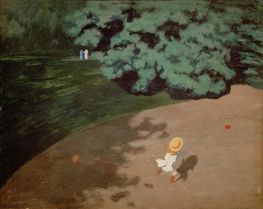
The Red Balloon 1899
Oil Painting
$973
$973
Canvas Print
$76.28
$76.28
SKU: FVA-20014
Félix Vallotton
Original Size: 49.2 x 62 cm
Musee d'Orsay, Paris, France
Félix Vallotton
Original Size: 49.2 x 62 cm
Musee d'Orsay, Paris, France
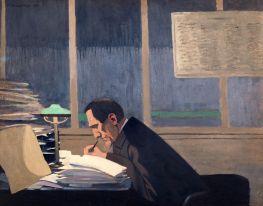
Felix Feneon at the Revue Blanche 1900
Oil Painting
$1259
$1259
Canvas Print
$76.11
$76.11
SKU: FVA-20015
Félix Vallotton
Original Size: unknown
Public Collection
Félix Vallotton
Original Size: unknown
Public Collection
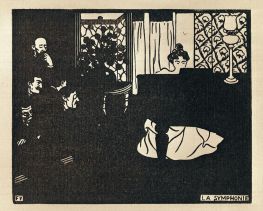
The Symphony 1897
Paper Art Print
$60.12
$60.12
SKU: FVA-20016
Félix Vallotton
Original Size: 22 x 27 cm
Public Collection
Félix Vallotton
Original Size: 22 x 27 cm
Public Collection
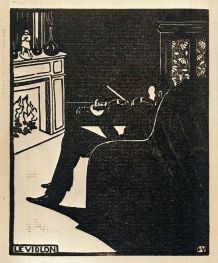
The Violin 1896
Paper Art Print
$60.12
$60.12
SKU: FVA-20017
Félix Vallotton
Original Size: 22.4 x 18 cm
Public Collection
Félix Vallotton
Original Size: 22.4 x 18 cm
Public Collection
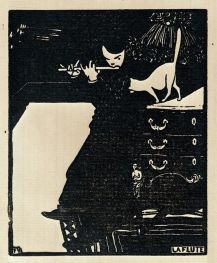
The Flute 1896
Paper Art Print
$60.12
$60.12
SKU: FVA-20018
Félix Vallotton
Original Size: 22.4 x 18 cm
Public Collection
Félix Vallotton
Original Size: 22.4 x 18 cm
Public Collection
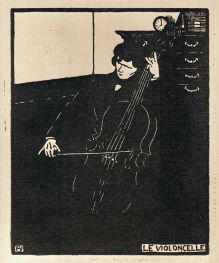
The Cello 1896
Paper Art Print
$60.12
$60.12
SKU: FVA-20019
Félix Vallotton
Original Size: 32.4 x 25.2 cm
Public Collection
Félix Vallotton
Original Size: 32.4 x 25.2 cm
Public Collection
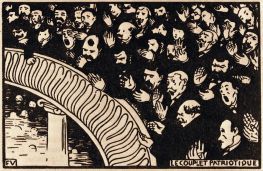
The Patriotic Verse 1893
Paper Art Print
$60.12
$60.12
SKU: FVA-20020
Félix Vallotton
Original Size: 17.6 x 27 cm
Public Collection
Félix Vallotton
Original Size: 17.6 x 27 cm
Public Collection
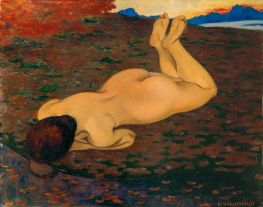
Bather or The Spring 1897
Oil Painting
$954
$954
Canvas Print
$76.98
$76.98
SKU: FVA-20021
Félix Vallotton
Original Size: 48 x 60 cm
Musée d'Art Moderne, Paris, France
Félix Vallotton
Original Size: 48 x 60 cm
Musée d'Art Moderne, Paris, France
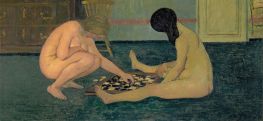
Nude Women Playing Checkers 1897
Oil Painting
$751
$751
Canvas Print
$63.50
$63.50
SKU: FVA-20022
Félix Vallotton
Original Size: 25.5 x 52.5 cm
Public Collection
Félix Vallotton
Original Size: 25.5 x 52.5 cm
Public Collection
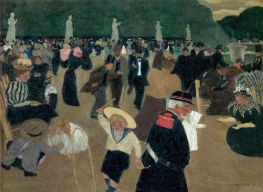
Luxembourg Garden 1895
Oil Painting
$1063
$1063
Canvas Print
$71.21
$71.21
SKU: FVA-20023
Félix Vallotton
Original Size: 54 x 73 cm
Private Collection
Félix Vallotton
Original Size: 54 x 73 cm
Private Collection
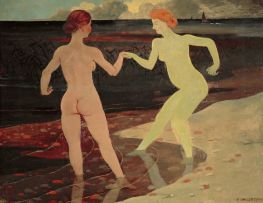
The Mistress and the Servant 2005
Oil Painting
$1012
$1012
Canvas Print
$75.76
$75.76
SKU: FVA-20024
Félix Vallotton
Original Size: 52 x 66 cm
Private Collection
Félix Vallotton
Original Size: 52 x 66 cm
Private Collection
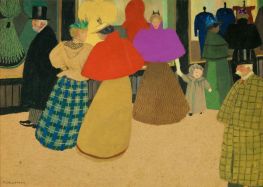
The Passers-by 1895
Oil Painting
$782
$782
Canvas Print
$63.50
$63.50
SKU: FVA-20025
Félix Vallotton
Original Size: 33.2 x 46 cm
Private Collection
Félix Vallotton
Original Size: 33.2 x 46 cm
Private Collection
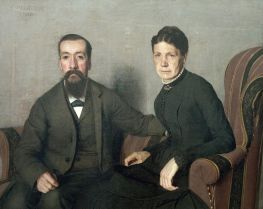
Portrait of the Artist's Parents 1886
Oil Painting
$1599
$1599
Canvas Print
$77.85
$77.85
SKU: FVA-20026
Félix Vallotton
Original Size: 102 x 126 cm
Cantonal Museum of Fine Arts, Lausanne, Switzerland
Félix Vallotton
Original Size: 102 x 126 cm
Cantonal Museum of Fine Arts, Lausanne, Switzerland
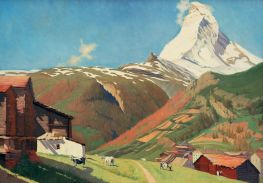
View of Zermatt 1889
Oil Painting
$1356
$1356
Canvas Print
$66.84
$66.84
SKU: FVA-20027
Félix Vallotton
Original Size: 73 x 105 cm
Private Collection
Félix Vallotton
Original Size: 73 x 105 cm
Private Collection
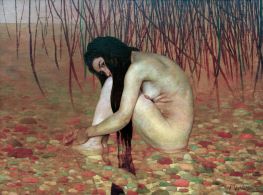
Woman Bathing 1895
Oil Painting
$1555
$1555
Canvas Print
$72.61
$72.61
SKU: FVA-20028
Félix Vallotton
Original Size: 98 x 130 cm
Private Collection
Félix Vallotton
Original Size: 98 x 130 cm
Private Collection
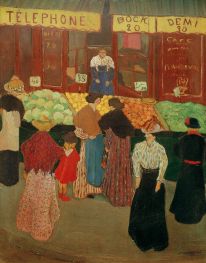
At the Market 1895
Oil Painting
$1057
$1057
Canvas Print
$76.28
$76.28
SKU: FVA-20029
Félix Vallotton
Original Size: 70 x 55.5 cm
Private Collection
Félix Vallotton
Original Size: 70 x 55.5 cm
Private Collection
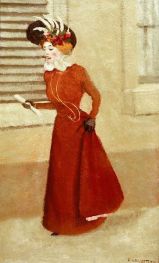
Woman with a Feathered Hat 1895
Oil Painting
$760
$760
Canvas Print
$63.50
$63.50
SKU: FVA-20030
Félix Vallotton
Original Size: 48 x 29 cm
Private Collection
Félix Vallotton
Original Size: 48 x 29 cm
Private Collection
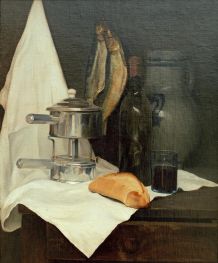
Still Life with Herrings 1887
Oil Painting
$973
$973
Canvas Print
$78.91
$78.91
SKU: FVA-20031
Félix Vallotton
Original Size: 61 x 50 cm
Private Collection
Félix Vallotton
Original Size: 61 x 50 cm
Private Collection
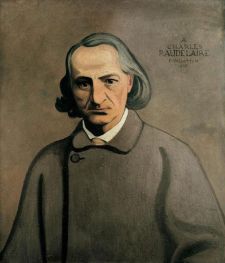
Decorative Portrait of Baudelaire 1901
Oil Painting
$1188
$1188
Canvas Print
$82.75
$82.75
SKU: FVA-20032
Félix Vallotton
Original Size: 79 x 68 cm
Public Collection
Félix Vallotton
Original Size: 79 x 68 cm
Public Collection
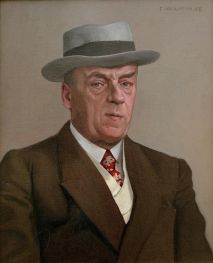
Portrait of Octave Mirbeau 1908
Oil Painting
$973
$973
Canvas Print
$78.91
$78.91
SKU: FVA-20033
Félix Vallotton
Original Size: 61 x 50 cm
Public Collection
Félix Vallotton
Original Size: 61 x 50 cm
Public Collection
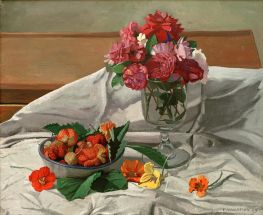
Fleurs et fraises 1920
Oil Painting
$1110
$1110
Canvas Print
$80.48
$80.48
SKU: FVA-20034
Félix Vallotton
Original Size: 61 x 73 cm
Private Collection
Félix Vallotton
Original Size: 61 x 73 cm
Private Collection
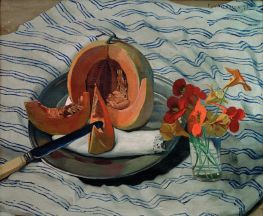
An Open Melon on a Napkin 1924
Oil Painting
$912
$912
Canvas Print
$79.75
$79.75
SKU: FVA-20035
Félix Vallotton
Original Size: 46 x 54.5 cm
Private Collection
Félix Vallotton
Original Size: 46 x 54.5 cm
Private Collection
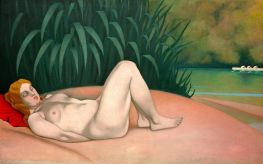
Nude Woman Sleeping by the Water 1921
Oil Painting
$1453
$1453
Canvas Print
$63.50
$63.50
SKU: FVA-20036
Félix Vallotton
Original Size: 122.5 x 193 cm
Public Collection
Félix Vallotton
Original Size: 122.5 x 193 cm
Public Collection
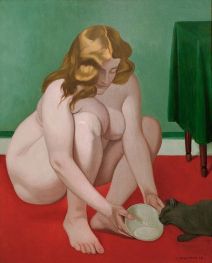
Crouching Woman Offering Milk to a Cat 1919
Oil Painting
$1386
$1386
Canvas Print
$78.04
$78.04
SKU: FVA-20037
Félix Vallotton
Original Size: 100 x 81 cm
Private Collection
Félix Vallotton
Original Size: 100 x 81 cm
Private Collection