
Frida Kahlo Painting Reproductions 1 of 4
1907-1954
Mexican Аrtist
She lay propped in a four-poster bed that had been wheeled into a gallery, turning an opening night into a tableau of endurance and theatre - a scene so perfectly hers it still reads like one of her own compositions. Magdalena Carmen Frida Kahlo y Calderón (6 July 1907 – 13 July 1954) was a Mexican painter whose small, fiercely concentrated pictures - portraits, self-portraits, and allegories - fused autobiography with the visual languages of Mexico. Described variously as part of Surrealism, magical realism, or the post-revolutionary Mexicayotl search for cultural identity, she used a deliberately direct, folk-inflected realism to test questions of selfhood, politics, gender, class, and race, while chronic pain remained her most relentless companion.
Coyoacán, on the edge of Mexico City, held her story close. Kahlo spent much of her life at La Casa Azul - the family home that later became the Frida Kahlo Museum - a place whose walls and garden would eventually feel less like a residence than a private cosmology. Her father, Guillermo Kahlo, was a German-born photographer who had immigrated to Mexico in 1891; her mother, Matilde Calderón y González, came from Oaxaca, with Indigenous and Spanish ancestry. Family life, by Kahlo’s later account, could be heavy with illness and unhappiness, and she grew up amid both tenderness and strain - her father’s patient encouragement on one side, her mother’s severity and religious intensity on the other.
At six, polio changed the shape of her body and the social temperature around it. Her right leg grew thinner and shorter; months of isolation and childhood cruelty followed. Yet disability also sharpened intimacy: Guillermo, himself familiar with vulnerability, drew close, teaching her to look - at nature, at books, at the world’s textures - and bringing her into his photographic practice. Retouching and colouring prints trained the hand and the eye, quietly rehearsing the later discipline of her paint surface, where edges often remain clean and decisions feel irrevocable.
Instead of drifting toward an artist’s atelier, she entered the National Preparatory School in 1922, one of only a small number of girls among thousands of students, with medicine in mind and the natural sciences as her declared path. Mexico’s post-revolutionary intellectual climate mattered: indigenismo and debates about national identity were not abstractions but the air students breathed. With a group of rebellious friends known as the Cachuchas, she read voraciously, argued, staged pranks, and fell in love with Alejandro Gómez Arias. Even then, she began shaping her own legend, claiming 1910 as her birth year to align herself with the revolution - a small act of self-authorship that anticipates the later painterly one.
Then came the accident that split her life into before and after. On 17 September 1925, a streetcar crashed into the wooden bus she was riding, killing passengers and leaving her catastrophically injured. An iron handrail pierced her pelvis; bones fractured; her spine broke in three places; her right leg shattered; the pain did not end when the bleeding stopped. Confined first to hospital and then to bed in a plaster corset, she began to paint with a specially made easel and a mirror placed above her. Start again, she later insisted - paint only what the eyes know. In practice, that “only” became expansive: self-portraiture as anatomy lesson, psychological report, and spiritual accounting all at once.
Draw, test, correct. Early works and letters show her attention moving between European models - Renaissance portrait severity, avant-garde experiments, the crispness associated with New Objectivity and the fractured logic of Cubism - and the pull of Mexican imagery that would soon dominate. Portraits of family and friends gave way to a deeper focus on the face she could study for hours. “I am the subject I know best,” she said in essence, and the self-portrait became her most rigorous instrument: a staged frontal image, often bust-length, with a mask-like calm that dares the viewer to look past it.
Politics and art braided together in her twenties. In 1927 she joined the Mexican Communist Party, moving within circles where activism, aesthetics, and argument were inseparable. In 1928 she met Diego Rivera, already celebrated for his murals; she asked him, bluntly, whether her work had the force to matter. He thought it did. Their marriage in August 1929 - an alliance of passion, rivalry, and mutual mythmaking - made the private life public almost at once. Soon they were travelling: first within Mexico, then to the United States, following Rivera’s commissions and meeting patrons, artists, and photographers who would enter Kahlo’s personal archive of faces.
San Francisco in 1930–31 proved productive. Introduced to figures such as Edward Weston and others in the city’s art world, she painted portraits and a double image of herself and Rivera that quietly asserts parity, not devotion. Yet Detroit in 1932 darkened the palette of experience: health crises, a failed pregnancy and miscarriage, and a growing disgust with what she read as American capitalist display. Here she began to lean into narrative with the clarity of a votive image. In works like Henry Ford Hospital (1932) and Self-Portrait on the Border of Mexico and the United States (1932), the format recalls retablos - small devotional pictures that compress calamity into emblem - while the subject is unavoidably modern: the medicalised body, the disquieting machinery, the split between cultures. Etching and fresco experiments came and went; what remained was her insistence that pain could be rendered without sentimentality.
Back in Mexico City, illness and marriage troubles interrupted production in the mid-1930s, but by 1937 and 1938 her work surged. My Nurse and I (1937), Memory, the Heart (1937), and What the Water Gave Me (1938) show autobiography becoming less literal and more symbolic - realism threaded with fantasy, pre-Columbian echoes alongside Catholic forms. Around this time André Breton visited and claimed her for Surrealism, calling her imagery explosive. Kahlo, characteristically, accepted the attention but distrusted the category, seeing much of Surrealism as bourgeois performance. That tension remains central to how her art is read: her dreamlike combinations may look surreal, yet their roots lie insistently in Mexican culture, myth, and the everyday rituals of belief.
New York in 1938 brought her first solo exhibition, arranged through Julien Levy. Dressed in Mexican attire that American audiences treated as exotica, she attracted both admiration and condescension - the familiar fate of a woman artist refusing the expected scale and subjects. Sales and commissions followed. Paris in 1939 was messier: customs problems, curatorial interference, and Breton’s insistence on surrounding her paintings with market-bought “Mexican” objects. Still, the Louvre purchased The Frame, and Frida Kahlo became the first Mexican artist to enter its collection - a quiet institutional fact that carries real weight beneath the anecdotes.
Divorce from Rivera came in 1939, followed by a rapid sequence of major paintings. The Two Fridas (1939) turns duality into structure: two seated selves, connected yet separate, identity staged as a wound and a bond. By the early 1940s she was participating in exhibitions in Mexico and the United States, with works shown at institutions including the Museum of Modern Art. Teaching mattered too. In 1943 she joined the Escuela Nacional de Pintura, Escultura y Grabado “La Esmeralda,” encouraging students to find subjects in the street and to treat Mexican popular culture as material worthy of serious art. When illness made commuting impossible, classes moved to La Casa Azul, where a small group of devoted students became known as Los Fridos.
Increasing recognition did not soften the body’s demands. By the mid-1940s her spinal condition worsened; a 1945 operation in New York, intended to stabilise her back with graft and steel support, failed. Paintings from these years refuse consolation. In The Broken Column (1944) the body is split, fastened, exposed - the imagery as explicit as a medical diagram, yet staged with the frontal calm of a devotional icon. Without Hope (1945), Tree of Hope, Stand Fast (1946), and The Wounded Deer (1946) press suffering into allegory, as if the only way to survive it was to give it a formal, almost classical clarity. Perhaps solitude gave her brush its stern economy; perhaps it simply removed distractions, leaving only the essential task of looking and enduring.
Her political commitments sharpened again late in life. She rejoined the Communist Party in 1948, and even when largely confined to home after long hospital stays in 1950, she continued to connect art with revolutionary purpose. In 1953 her right leg was amputated at the knee due to gangrene, and depression deepened; dependence on painkillers grew. Yet she staged her Mexican solo debut the same year at Galería Arte Contemporaneo - the opening with her bed transported into the gallery became an emblem of defiance that risks turning her into pure legend. Resist that temptation and the fact remains: she kept working. Late paintings include Marxism Will Give Health to the Sick (c. 1954) and the still life Viva La Vida (1954), where fruit and colour offer a terse, luminous counterpoint to hospital rooms.
On 2 July 1954 she appeared in public at a demonstration against the CIA invasion of Guatemala; soon after, illness surged. She died in La Casa Azul on 13 July 1954, aged forty-seven, officially from pulmonary embolism, with later arguments suggesting a possible overdose - no autopsy settled the question. Her body lay in state at the Palacio de Bellas Artes beneath a Communist flag, then was cremated; her ashes remain at La Casa Azul. Rivera died in 1957, and the house became a museum in 1958, sealing the geography of her life into a destination.
For decades after her death, Kahlo was better known as Rivera’s wife than as a major painter. Rediscovery in the late 1970s by scholars and activists - especially within feminist and Chicano contexts - shifted the lens. By the early 1990s she had become both an art-historical figure and a cultural icon, claimed by feminism and LGBTQ+ communities as a model of self-fashioning and refusal. That popularity brings its own distortions: “Fridamania” can flatten a complex artist into an image, a slogan, a merchandising opportunity. Yet the paintings endure because they are not slogans. Kahlo makes a private body carry public history, and she does it with a discipline that feels almost classical - small panels, sharp outlines, flattened space, symbols that refuse to behave politely. In The Dream (The Bed) (1940), the sleeping figure becomes a stage for mortality; in Self-Portrait with Thorn Necklace and Hummingbird (1940), adornment bites back. Looking today, one recognises not a decorative myth but a painter who turned lived contradiction into structure - and left it there, unsoftened, for us to meet.
Coyoacán, on the edge of Mexico City, held her story close. Kahlo spent much of her life at La Casa Azul - the family home that later became the Frida Kahlo Museum - a place whose walls and garden would eventually feel less like a residence than a private cosmology. Her father, Guillermo Kahlo, was a German-born photographer who had immigrated to Mexico in 1891; her mother, Matilde Calderón y González, came from Oaxaca, with Indigenous and Spanish ancestry. Family life, by Kahlo’s later account, could be heavy with illness and unhappiness, and she grew up amid both tenderness and strain - her father’s patient encouragement on one side, her mother’s severity and religious intensity on the other.
At six, polio changed the shape of her body and the social temperature around it. Her right leg grew thinner and shorter; months of isolation and childhood cruelty followed. Yet disability also sharpened intimacy: Guillermo, himself familiar with vulnerability, drew close, teaching her to look - at nature, at books, at the world’s textures - and bringing her into his photographic practice. Retouching and colouring prints trained the hand and the eye, quietly rehearsing the later discipline of her paint surface, where edges often remain clean and decisions feel irrevocable.
Instead of drifting toward an artist’s atelier, she entered the National Preparatory School in 1922, one of only a small number of girls among thousands of students, with medicine in mind and the natural sciences as her declared path. Mexico’s post-revolutionary intellectual climate mattered: indigenismo and debates about national identity were not abstractions but the air students breathed. With a group of rebellious friends known as the Cachuchas, she read voraciously, argued, staged pranks, and fell in love with Alejandro Gómez Arias. Even then, she began shaping her own legend, claiming 1910 as her birth year to align herself with the revolution - a small act of self-authorship that anticipates the later painterly one.
Then came the accident that split her life into before and after. On 17 September 1925, a streetcar crashed into the wooden bus she was riding, killing passengers and leaving her catastrophically injured. An iron handrail pierced her pelvis; bones fractured; her spine broke in three places; her right leg shattered; the pain did not end when the bleeding stopped. Confined first to hospital and then to bed in a plaster corset, she began to paint with a specially made easel and a mirror placed above her. Start again, she later insisted - paint only what the eyes know. In practice, that “only” became expansive: self-portraiture as anatomy lesson, psychological report, and spiritual accounting all at once.
Draw, test, correct. Early works and letters show her attention moving between European models - Renaissance portrait severity, avant-garde experiments, the crispness associated with New Objectivity and the fractured logic of Cubism - and the pull of Mexican imagery that would soon dominate. Portraits of family and friends gave way to a deeper focus on the face she could study for hours. “I am the subject I know best,” she said in essence, and the self-portrait became her most rigorous instrument: a staged frontal image, often bust-length, with a mask-like calm that dares the viewer to look past it.
Politics and art braided together in her twenties. In 1927 she joined the Mexican Communist Party, moving within circles where activism, aesthetics, and argument were inseparable. In 1928 she met Diego Rivera, already celebrated for his murals; she asked him, bluntly, whether her work had the force to matter. He thought it did. Their marriage in August 1929 - an alliance of passion, rivalry, and mutual mythmaking - made the private life public almost at once. Soon they were travelling: first within Mexico, then to the United States, following Rivera’s commissions and meeting patrons, artists, and photographers who would enter Kahlo’s personal archive of faces.
San Francisco in 1930–31 proved productive. Introduced to figures such as Edward Weston and others in the city’s art world, she painted portraits and a double image of herself and Rivera that quietly asserts parity, not devotion. Yet Detroit in 1932 darkened the palette of experience: health crises, a failed pregnancy and miscarriage, and a growing disgust with what she read as American capitalist display. Here she began to lean into narrative with the clarity of a votive image. In works like Henry Ford Hospital (1932) and Self-Portrait on the Border of Mexico and the United States (1932), the format recalls retablos - small devotional pictures that compress calamity into emblem - while the subject is unavoidably modern: the medicalised body, the disquieting machinery, the split between cultures. Etching and fresco experiments came and went; what remained was her insistence that pain could be rendered without sentimentality.
Back in Mexico City, illness and marriage troubles interrupted production in the mid-1930s, but by 1937 and 1938 her work surged. My Nurse and I (1937), Memory, the Heart (1937), and What the Water Gave Me (1938) show autobiography becoming less literal and more symbolic - realism threaded with fantasy, pre-Columbian echoes alongside Catholic forms. Around this time André Breton visited and claimed her for Surrealism, calling her imagery explosive. Kahlo, characteristically, accepted the attention but distrusted the category, seeing much of Surrealism as bourgeois performance. That tension remains central to how her art is read: her dreamlike combinations may look surreal, yet their roots lie insistently in Mexican culture, myth, and the everyday rituals of belief.
New York in 1938 brought her first solo exhibition, arranged through Julien Levy. Dressed in Mexican attire that American audiences treated as exotica, she attracted both admiration and condescension - the familiar fate of a woman artist refusing the expected scale and subjects. Sales and commissions followed. Paris in 1939 was messier: customs problems, curatorial interference, and Breton’s insistence on surrounding her paintings with market-bought “Mexican” objects. Still, the Louvre purchased The Frame, and Frida Kahlo became the first Mexican artist to enter its collection - a quiet institutional fact that carries real weight beneath the anecdotes.
Divorce from Rivera came in 1939, followed by a rapid sequence of major paintings. The Two Fridas (1939) turns duality into structure: two seated selves, connected yet separate, identity staged as a wound and a bond. By the early 1940s she was participating in exhibitions in Mexico and the United States, with works shown at institutions including the Museum of Modern Art. Teaching mattered too. In 1943 she joined the Escuela Nacional de Pintura, Escultura y Grabado “La Esmeralda,” encouraging students to find subjects in the street and to treat Mexican popular culture as material worthy of serious art. When illness made commuting impossible, classes moved to La Casa Azul, where a small group of devoted students became known as Los Fridos.
Increasing recognition did not soften the body’s demands. By the mid-1940s her spinal condition worsened; a 1945 operation in New York, intended to stabilise her back with graft and steel support, failed. Paintings from these years refuse consolation. In The Broken Column (1944) the body is split, fastened, exposed - the imagery as explicit as a medical diagram, yet staged with the frontal calm of a devotional icon. Without Hope (1945), Tree of Hope, Stand Fast (1946), and The Wounded Deer (1946) press suffering into allegory, as if the only way to survive it was to give it a formal, almost classical clarity. Perhaps solitude gave her brush its stern economy; perhaps it simply removed distractions, leaving only the essential task of looking and enduring.
Her political commitments sharpened again late in life. She rejoined the Communist Party in 1948, and even when largely confined to home after long hospital stays in 1950, she continued to connect art with revolutionary purpose. In 1953 her right leg was amputated at the knee due to gangrene, and depression deepened; dependence on painkillers grew. Yet she staged her Mexican solo debut the same year at Galería Arte Contemporaneo - the opening with her bed transported into the gallery became an emblem of defiance that risks turning her into pure legend. Resist that temptation and the fact remains: she kept working. Late paintings include Marxism Will Give Health to the Sick (c. 1954) and the still life Viva La Vida (1954), where fruit and colour offer a terse, luminous counterpoint to hospital rooms.
On 2 July 1954 she appeared in public at a demonstration against the CIA invasion of Guatemala; soon after, illness surged. She died in La Casa Azul on 13 July 1954, aged forty-seven, officially from pulmonary embolism, with later arguments suggesting a possible overdose - no autopsy settled the question. Her body lay in state at the Palacio de Bellas Artes beneath a Communist flag, then was cremated; her ashes remain at La Casa Azul. Rivera died in 1957, and the house became a museum in 1958, sealing the geography of her life into a destination.
For decades after her death, Kahlo was better known as Rivera’s wife than as a major painter. Rediscovery in the late 1970s by scholars and activists - especially within feminist and Chicano contexts - shifted the lens. By the early 1990s she had become both an art-historical figure and a cultural icon, claimed by feminism and LGBTQ+ communities as a model of self-fashioning and refusal. That popularity brings its own distortions: “Fridamania” can flatten a complex artist into an image, a slogan, a merchandising opportunity. Yet the paintings endure because they are not slogans. Kahlo makes a private body carry public history, and she does it with a discipline that feels almost classical - small panels, sharp outlines, flattened space, symbols that refuse to behave politely. In The Dream (The Bed) (1940), the sleeping figure becomes a stage for mortality; in Self-Portrait with Thorn Necklace and Hummingbird (1940), adornment bites back. Looking today, one recognises not a decorative myth but a painter who turned lived contradiction into structure - and left it there, unsoftened, for us to meet.
75 Frida Kahlo Paintings
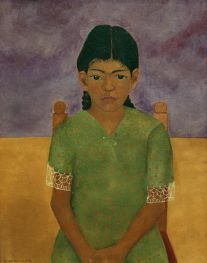
The Girl Virginia 1929
Oil Painting
$1325
$1325
Canvas Print
$75.24
$75.24
SKU: KAH-20592
Frida Kahlo
Original Size: 78 x 61 cm
Public Collection
Frida Kahlo
Original Size: 78 x 61 cm
Public Collection
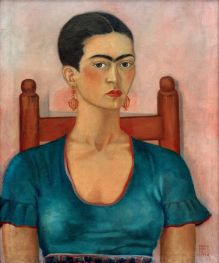
Self-Portrait 1930
Oil Painting
$1198
$1198
Canvas Print
$81.35
$81.35
SKU: KAH-20593
Frida Kahlo
Original Size: 65 x 55 cm
Boston Museum of Fine Arts, Massachusetts, USA
Frida Kahlo
Original Size: 65 x 55 cm
Boston Museum of Fine Arts, Massachusetts, USA
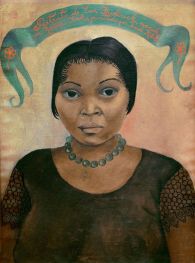
Portrait of Eva Frederick 1931
Oil Painting
$1132
$1132
Canvas Print
$73.31
$73.31
SKU: KAH-20594
Frida Kahlo
Original Size: 63 x 48 cm
Public Collection
Frida Kahlo
Original Size: 63 x 48 cm
Public Collection
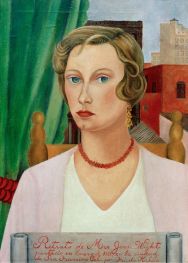
Portrait of Mrs. Jean Wight 1931
Oil Painting
$1117
$1117
Canvas Print
$69.98
$69.98
SKU: KAH-20595
Frida Kahlo
Original Size: 63.2 x 46 cm
Public Collection
Frida Kahlo
Original Size: 63.2 x 46 cm
Public Collection
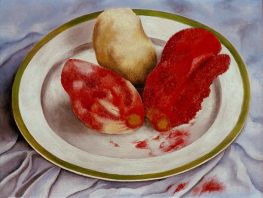
Cactus Fruit 1938
Oil Painting
$661
$661
Canvas Print
$63.50
$63.50
SKU: KAH-20596
Frida Kahlo
Original Size: 24 x 18.5 cm
Private Collection
Frida Kahlo
Original Size: 24 x 18.5 cm
Private Collection
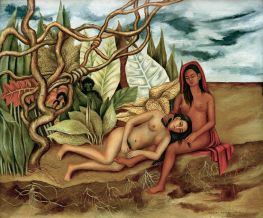
Two Nudes in the Forest 1939
Oil Painting
$751
$751
Canvas Print
$63.50
$63.50
SKU: KAH-20597
Frida Kahlo
Original Size: 25 x 30.2 cm
Private Collection
Frida Kahlo
Original Size: 25 x 30.2 cm
Private Collection
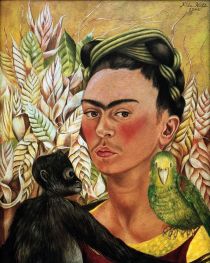
Self Portrait with monkey and parrot 1942
Oil Painting
$1035
$1035
Canvas Print
$73.25
$73.25
SKU: KAH-20598
Frida Kahlo
Original Size: 53.3 x 43.2 cm
Public Collection
Frida Kahlo
Original Size: 53.3 x 43.2 cm
Public Collection
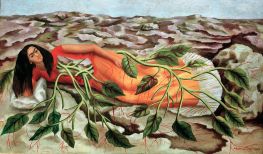
Roots 1943
Oil Painting
$911
$911
Canvas Print
$63.50
$63.50
SKU: KAH-20599
Frida Kahlo
Original Size: 30.5 x 49.9 cm
Private Collection
Frida Kahlo
Original Size: 30.5 x 49.9 cm
Private Collection
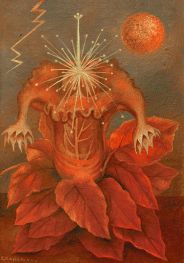
Flower of Life 1944
Oil Painting
$695
$695
Canvas Print
$63.50
$63.50
SKU: KAH-20600
Frida Kahlo
Original Size: 28 x 19.8 cm
Public Collection
Frida Kahlo
Original Size: 28 x 19.8 cm
Public Collection
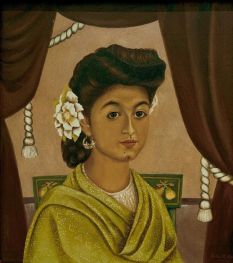
Portrait of Lupita Morillo Safa 1944
Oil Painting
$1110
$1110
Canvas Print
$84.34
$84.34
SKU: KAH-20601
Frida Kahlo
Original Size: 57 x 50 cm
Public Collection
Frida Kahlo
Original Size: 57 x 50 cm
Public Collection
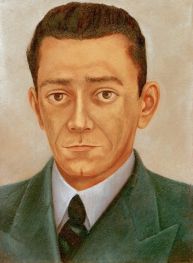
Portrait of Ing. Eduardo Morillo Safa 1944
Oil Painting
$842
$842
Canvas Print
$63.50
$63.50
SKU: KAH-20602
Frida Kahlo
Original Size: 39.5 x 29.5 cm
Public Collection
Frida Kahlo
Original Size: 39.5 x 29.5 cm
Public Collection
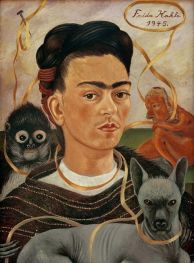
Self-Portrait with little monkeys 1945
Oil Painting
$1048
$1048
Canvas Print
$70.86
$70.86
SKU: KAH-20603
Frida Kahlo
Original Size: 57 x 42 cm
Public Collection
Frida Kahlo
Original Size: 57 x 42 cm
Public Collection
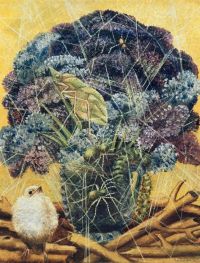
The Chick 1945
Oil Painting
$709
$709
Canvas Print
$63.50
$63.50
SKU: KAH-20604
Frida Kahlo
Original Size: 27.2 x 22 cm
Public Collection
Frida Kahlo
Original Size: 27.2 x 22 cm
Public Collection
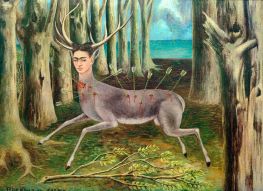
The Wounded Deer (The Little Deer) 1946
Oil Painting
$729
$729
Canvas Print
$63.50
$63.50
SKU: KAH-20605
Frida Kahlo
Original Size: 22.4 x 30 cm
Private Collection
Frida Kahlo
Original Size: 22.4 x 30 cm
Private Collection
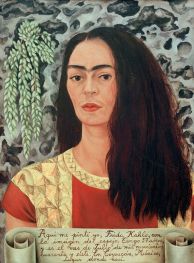
Self-Portrait with Loose Hair 1947
Oil Painting
$1096
$1096
Canvas Print
$71.04
$71.04
SKU: KAH-20606
Frida Kahlo
Original Size: 61 x 45 cm
Private Collection
Frida Kahlo
Original Size: 61 x 45 cm
Private Collection
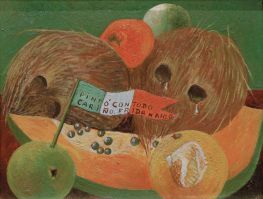
Tear of the Coconut 1951
Oil Painting
$731
$731
Canvas Print
$63.50
$63.50
SKU: KAH-20607
Frida Kahlo
Original Size: 22.9 x 29.8 cm
Public Collection
Frida Kahlo
Original Size: 22.9 x 29.8 cm
Public Collection
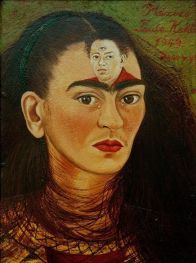
Diego and I 1949
Oil Painting
$714
$714
Canvas Print
$63.50
$63.50
SKU: KAH-20608
Frida Kahlo
Original Size: 28 x 22 cm
Private Collection
Frida Kahlo
Original Size: 28 x 22 cm
Private Collection
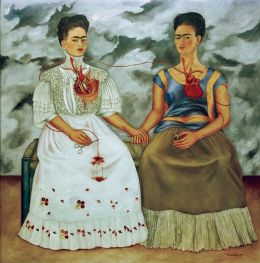
The Two Fridas 1939
Oil Painting
$1768
$1768
Canvas Print
$96.23
$96.23
SKU: KAH-20609
Frida Kahlo
Original Size: 173 x 173 cm
Public Collection
Frida Kahlo
Original Size: 173 x 173 cm
Public Collection
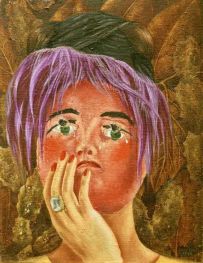
The Mask 1945
Oil Painting
$854
$854
Canvas Print
$63.50
$63.50
SKU: KAH-20610
Frida Kahlo
Original Size: 40 x 30.5 cm
Public Collection
Frida Kahlo
Original Size: 40 x 30.5 cm
Public Collection
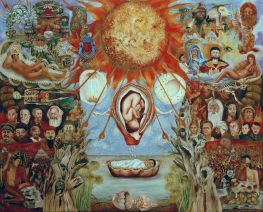
Moses or the seed of Creation 1945
Oil Painting
$1311
$1311
Canvas Print
$77.68
$77.68
SKU: KAH-20611
Frida Kahlo
Original Size: 61 x 75.6 cm
Private Collection
Frida Kahlo
Original Size: 61 x 75.6 cm
Private Collection
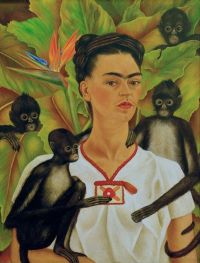
Self-Portrait with Monkeys 1943
Oil Painting
$1362
$1362
Canvas Print
$74.36
$74.36
SKU: KAH-20612
Frida Kahlo
Original Size: 81.5 x 63 cm
Public Collection
Frida Kahlo
Original Size: 81.5 x 63 cm
Public Collection
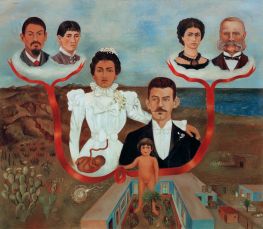
My Grandparents, My Parents, and I 1936
Oil Painting
$821
$821
Canvas Print
$63.50
$63.50
SKU: KAH-20613
Frida Kahlo
Original Size: 30.7 x 34.5 cm
Museum of Modern Art, New York, USA
Frida Kahlo
Original Size: 30.7 x 34.5 cm
Museum of Modern Art, New York, USA
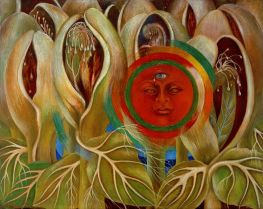
Sun and Life 1947
Oil Painting
$990
$990
Canvas Print
$63.62
$63.62
SKU: KAH-20614
Frida Kahlo
Original Size: 40 x 50 cm
Private Collection
Frida Kahlo
Original Size: 40 x 50 cm
Private Collection
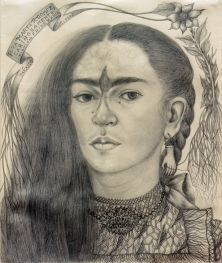
Self-Portrait Dedicated to Marte Gómez 1946
Paper Art Print
$60.12
$60.12
SKU: KAH-20615
Frida Kahlo
Original Size: 38.5 x 32.5 cm
Private Collection
Frida Kahlo
Original Size: 38.5 x 32.5 cm
Private Collection