
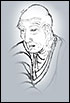
Katsushika Hokusai Painting Reproductions 1 of 14
1760-1849
Japanese Ukiyo-e Printmaker
Ink buckets, a broom used like a brush, and a crowd pressing forward in Edo’s festival air - this is the sort of theatre Katsushika Hokusai understood. Spectacle, yes, but also a declaration: drawing could expand to the scale of public life. Katsushika Hokusai (葛飾 北斎; c. 31 October 1760 - 10 May 1849) worked in Japan’s Edo period as a painter, printmaker, and book illustrator, and he stretched ukiyo-e far beyond its familiar stage of courtesans and kabuki actors.
Japanese by nationality and fiercely local in sensibility, he remained anchored to Edo (modern Tokyo) even when his imagination ranged across provinces, waterfalls, bridges, birds, and the long breath of Mount Fuji. Hokusai’s name - and he changed it with unusual frequency, more than thirty times - became a kind of diary. Each new signature did not merely label an artist; it marked a shift of ambition, subject, or method, as if he refused the comfort of a single settled self.
The first story is one of work rather than romance. His childhood name was Tokitarō, and the district of Katsushika in Edo gave him the geographical tag he later carried into “Katsushika Hokusai”. A family of artisans stood behind him; his father, Nakajima Ise, made mirrors for the shōgun, and that trade included painted designs around reflective surfaces. Perhaps it mattered that a mirror is both object and image - a reminder that representation can be crafted, framed, and sold. At twelve he was sent to a bookshop and lending library, the kind of place where woodcut-printed books circulated as popular entertainment among city readers. At fourteen he apprenticed to a woodcarver. This was not the glamorous side of art, but it placed tools, blocks, and printed pages in his hands before the first flourish of reputation.
By eighteen he entered the studio of Katsukawa Shunshō, head of the Katsukawa school, and the young man’s career stepped into the professional current of ukiyo-e. Under Shunshō he worked in the established idiom - portraits of actors and the floating world’s celebrated figures - and in 1779, using the name Shunrō given by his master, he published his first prints, a series of kabuki actors. Such images relied on sharp design, legible gesture, and a feeling for performance. Yet even then the discipline was training his eye: how to cut a figure into a few decisive lines, how to let pattern carry meaning, how to stage a scene within the constraints of a rectangle.
Marriage and loss arrived early and repeatedly. His first wife died in the early 1790s; he married again in 1797, and that second wife also died after a short time. He had two sons and three daughters. The youngest, Ei - also known as Ōi - grew into an artist and later worked as his assistant, a fact that quietly complicates the image of Hokusai as solitary genius. Domestic life, in other words, did not vanish behind the studio door. It sat nearby, sometimes as support, sometimes as pressure, sometimes as grief.
After Shunshō’s death in 1793, Hokusai’s restlessness sharpened. He began exploring other approaches, including European modes encountered through French and Dutch copper engravings he managed to acquire. This curiosity did not earn him approval. He was expelled from the Katsukawa school by Shunkō, Shunshō’s chief disciple - an episode he later described as humiliating, yet also catalytic. Expulsion can bruise; it can also liberate. In the wake of that break he turned away from the predictable glamour of actors and courtesans and shifted toward landscapes and scenes of everyday life across social levels. Ukiyo-e, in his hands, widened its subject matter and, with it, its audience’s expectations.
Names continued to change as if he were testing the fit of each phase. He associated with the Tawaraya School and used the name “Tawaraya Sōri”, producing surimono - privately commissioned prints for special occasions - and book illustrations for humorous poetry collections (kyōka ehon). In 1798 he passed the Sōri name on to a pupil and set out independently as Hokusai Tomisa, no longer tied to a single school. By 1800 he adopted the name most widely known today, Katsushika Hokusai - “Katsushika” for his birthplace and “Hokusai” meaning “north studio”, in honour of the North Star, significant within his Nichiren Buddhist devotion. That same period brought landscape collections such as Famous Sights of the Eastern Capital and Eight Views of Edo, and it also brought students. He eventually taught around fifty pupils, a reminder that this was not only a personal journey but a small industry of looking and making.
Watch how he marketed his own legend. In 1804 he produced an enormous portrait of Daruma at an Edo festival, said to cover some 200 square metres, painted with a broom and buckets of ink. Later accounts place him before the shōgun Tokugawa Ienari in a contest of pictorial wit: a blue curve on paper, a chicken’s red-painted feet running across it, and the claim that this was the Tatsuta River with red maple leaves floating downstream. The trick works because it is both image and explanation; it flatters the viewer into participating. Startled by such stories, one can forget that he also laboured in less flamboyant forms - the steady work of illustration, book production, and print design where deadlines and craftsmen mattered.
Collaboration tested him. Between 1804 and 1815 he worked with the novelist Takizawa Bakin on illustrated books, including the fantasy Chinsetsu Yumiharizuki (Strange Tales of the Crescent Moon, 1807 - 1811), centred on Minamoto no Tametomo. The partnership ended after thirteen works, and the reasons remain disputed. What is clear is that Hokusai cared intensely about how images were cut and printed. Letters survive in which he criticised blockcutters when their carving drifted from his intentions, even supplying examples of the eyes and noses he wanted. In a medium often treated as popular and reproducible, he insisted on standards that sound almost painterly: the line must feel like his line, even when another hand carved it into wood.
Not all subjects were public. He produced albums of shunga, erotic art, including The Dream of the Fisherman’s Wife from a 1814 book, Kinoe no Komatsu, where a young woman is entwined with two octopuses. It is an image that still unsettles because it is rendered with the same calm authority as a landscape or a flower study. Here ukiyo-e’s worldliness is not coy; it is direct, sometimes strange, and technically exacting.
At fifty-one he adopted the name Taito and entered the period of the Hokusai Manga and instructional drawing books. Beginning in 1812 with Quick Lessons in Simplified Drawing, these manuals served practical purposes - income, teaching, and reputation - while also building an archive of how he saw the world. The first volume of Hokusai Manga appeared in 1814 and succeeded immediately; by 1820 he had produced twelve volumes, with three more published after his death, packed with thousands of drawings: objects, plants, animals, religious figures, and ordinary people, often with a dry humour. Drawings like these are not “lesser” works. They are the bloodstream of an artist who believed observation could be trained into instinct.
In 1817, outside the Hongan-ji Nagoya Betsuin, he painted another colossal Daruma in ink on paper - 18 by 10.8 metres - drawing crowds and earning the nickname “Daruma Master”. The original was destroyed in 1945, but his promotional handbills survived and are preserved at the Nagoya City Museum. That detail matters: Hokusai’s fame was not only made by images, but by the ephemera of advertising and the memory of an event. Art, in his case, travelled through the city like news.
By 1820 he called himself Iitsu, and the work that later travelled furthest began to crystallise. In the early 1830s he produced Thirty-Six Views of Mount Fuji, a series shaped by a domestic travel boom and by his personal fascination with Fuji itself. The Great Wave off Kanagawa and Fine Wind, Clear Morning (often called Red Fuji) anchored the series in public memory. In The Great Wave off Kanagawa we see not a polite marine view but a tensioned geometry: the curve of the wave is both natural force and graphic design, its clawed foam echoing the vulnerable boats beneath. Perspective studies visible in the Manga helped him suggest depth and volume in ways associated with Western pictorial systems, yet the print remains uncompromisingly Japanese in rhythm and line. Popularity led to ten additional prints being added - proof that even a strong series could be expanded when the market demanded it.
Other series followed - A Tour of the Waterfalls of the Provinces, Oceans of Wisdom, Unusual Views of Celebrated Bridges in the Provinces - and he also made detailed flower-and-bird images (kachō-e) such as Poppies and Flock of Chickens. Here the drama is quieter: the crisp contour of a petal, the insistence of a feather’s structure, the patient patterning that turns nature into design. Start by looking at a single line. Then notice how little is wasted. Perhaps solitude gave his brush its clarity, even when the print shops and publishers kept him in constant negotiation.
In 1834 he adopted yet another name: Gakyō Rōjin Manji, “The Old Man Mad About Art”. The title is self-mocking and stubborn at once. In this later period he produced One Hundred Views of Mount Fuji, often considered the summit among his landscape picture books. In the colophon he set down a ruthless self-assessment, describing how only late in life did he begin to grasp the inner structure of living things, and how he hoped that at ninety, one hundred, even one hundred and ten, each line might gain its own life. It reads like ambition refusing to soften into comfort - a belief that observation has no finish line.
Hardship returned with fire. In 1839 a blaze destroyed his studio and much of his work. Younger artists, including Andō Hiroshige, were increasingly popular, and the economic downturn of the mid-1830s affected publishers, leaving projects incomplete - such as One Hundred Poems Explained by a Nurse, never issued in full. Yet age did not turn him inert. At eighty-three he travelled to Obuse in Shinano Province (now Nagano Prefecture) at the invitation of the wealthy farmer Takai Kozan and stayed for several years, producing works including the Masculine Wave and the Feminine Wave. Between 1842 and 1843 he performed what he called “daily exorcisms”, painting Chinese lions (shishi) each morning as talismans against misfortune. Even superstition became a routine of drawing - another way to keep the hand moving, the eye awake.
In early 1849 he still worked, painting The Dragon of Smoke Escaping from Mt Fuji and Tiger in the Snow. On his deathbed he reportedly asked for more time - ten years, then five - to become a “real painter”. He died on 10 May 1849 and was buried at Seikyō-ji in Tokyo’s Taitō Ward. A final haiku imagines him, as a ghost, lightly treading summer fields. The line is modest, almost weightless, and it suits a man who kept changing his name as if he were always beginning again.
Hokusai’s legacy travels in multiple directions. In Japan, his expansion of ukiyo-e’s subjects helped push the form toward landscapes, plants, animals, and the textures of ordinary life; in Europe, his prints later entered the currents of Japonisme and mattered to painters such as Vincent van Gogh and Claude Monet. Yet the most lasting lesson may be simpler: attention can be remade endlessly. Katsushika Hokusai did not treat drawing as a gift bestowed once; he treated it as a practice, a discipline, an appetite. The prints still feel immediate because they were built from work that never settled into complacency. And when one returns to The Great Wave off Kanagawa today, the image does not merely represent nature’s force - it also shows the artist’s own: the insistence that a line, properly placed, can hold a whole world.
Japanese by nationality and fiercely local in sensibility, he remained anchored to Edo (modern Tokyo) even when his imagination ranged across provinces, waterfalls, bridges, birds, and the long breath of Mount Fuji. Hokusai’s name - and he changed it with unusual frequency, more than thirty times - became a kind of diary. Each new signature did not merely label an artist; it marked a shift of ambition, subject, or method, as if he refused the comfort of a single settled self.
The first story is one of work rather than romance. His childhood name was Tokitarō, and the district of Katsushika in Edo gave him the geographical tag he later carried into “Katsushika Hokusai”. A family of artisans stood behind him; his father, Nakajima Ise, made mirrors for the shōgun, and that trade included painted designs around reflective surfaces. Perhaps it mattered that a mirror is both object and image - a reminder that representation can be crafted, framed, and sold. At twelve he was sent to a bookshop and lending library, the kind of place where woodcut-printed books circulated as popular entertainment among city readers. At fourteen he apprenticed to a woodcarver. This was not the glamorous side of art, but it placed tools, blocks, and printed pages in his hands before the first flourish of reputation.
By eighteen he entered the studio of Katsukawa Shunshō, head of the Katsukawa school, and the young man’s career stepped into the professional current of ukiyo-e. Under Shunshō he worked in the established idiom - portraits of actors and the floating world’s celebrated figures - and in 1779, using the name Shunrō given by his master, he published his first prints, a series of kabuki actors. Such images relied on sharp design, legible gesture, and a feeling for performance. Yet even then the discipline was training his eye: how to cut a figure into a few decisive lines, how to let pattern carry meaning, how to stage a scene within the constraints of a rectangle.
Marriage and loss arrived early and repeatedly. His first wife died in the early 1790s; he married again in 1797, and that second wife also died after a short time. He had two sons and three daughters. The youngest, Ei - also known as Ōi - grew into an artist and later worked as his assistant, a fact that quietly complicates the image of Hokusai as solitary genius. Domestic life, in other words, did not vanish behind the studio door. It sat nearby, sometimes as support, sometimes as pressure, sometimes as grief.
After Shunshō’s death in 1793, Hokusai’s restlessness sharpened. He began exploring other approaches, including European modes encountered through French and Dutch copper engravings he managed to acquire. This curiosity did not earn him approval. He was expelled from the Katsukawa school by Shunkō, Shunshō’s chief disciple - an episode he later described as humiliating, yet also catalytic. Expulsion can bruise; it can also liberate. In the wake of that break he turned away from the predictable glamour of actors and courtesans and shifted toward landscapes and scenes of everyday life across social levels. Ukiyo-e, in his hands, widened its subject matter and, with it, its audience’s expectations.
Names continued to change as if he were testing the fit of each phase. He associated with the Tawaraya School and used the name “Tawaraya Sōri”, producing surimono - privately commissioned prints for special occasions - and book illustrations for humorous poetry collections (kyōka ehon). In 1798 he passed the Sōri name on to a pupil and set out independently as Hokusai Tomisa, no longer tied to a single school. By 1800 he adopted the name most widely known today, Katsushika Hokusai - “Katsushika” for his birthplace and “Hokusai” meaning “north studio”, in honour of the North Star, significant within his Nichiren Buddhist devotion. That same period brought landscape collections such as Famous Sights of the Eastern Capital and Eight Views of Edo, and it also brought students. He eventually taught around fifty pupils, a reminder that this was not only a personal journey but a small industry of looking and making.
Watch how he marketed his own legend. In 1804 he produced an enormous portrait of Daruma at an Edo festival, said to cover some 200 square metres, painted with a broom and buckets of ink. Later accounts place him before the shōgun Tokugawa Ienari in a contest of pictorial wit: a blue curve on paper, a chicken’s red-painted feet running across it, and the claim that this was the Tatsuta River with red maple leaves floating downstream. The trick works because it is both image and explanation; it flatters the viewer into participating. Startled by such stories, one can forget that he also laboured in less flamboyant forms - the steady work of illustration, book production, and print design where deadlines and craftsmen mattered.
Collaboration tested him. Between 1804 and 1815 he worked with the novelist Takizawa Bakin on illustrated books, including the fantasy Chinsetsu Yumiharizuki (Strange Tales of the Crescent Moon, 1807 - 1811), centred on Minamoto no Tametomo. The partnership ended after thirteen works, and the reasons remain disputed. What is clear is that Hokusai cared intensely about how images were cut and printed. Letters survive in which he criticised blockcutters when their carving drifted from his intentions, even supplying examples of the eyes and noses he wanted. In a medium often treated as popular and reproducible, he insisted on standards that sound almost painterly: the line must feel like his line, even when another hand carved it into wood.
Not all subjects were public. He produced albums of shunga, erotic art, including The Dream of the Fisherman’s Wife from a 1814 book, Kinoe no Komatsu, where a young woman is entwined with two octopuses. It is an image that still unsettles because it is rendered with the same calm authority as a landscape or a flower study. Here ukiyo-e’s worldliness is not coy; it is direct, sometimes strange, and technically exacting.
At fifty-one he adopted the name Taito and entered the period of the Hokusai Manga and instructional drawing books. Beginning in 1812 with Quick Lessons in Simplified Drawing, these manuals served practical purposes - income, teaching, and reputation - while also building an archive of how he saw the world. The first volume of Hokusai Manga appeared in 1814 and succeeded immediately; by 1820 he had produced twelve volumes, with three more published after his death, packed with thousands of drawings: objects, plants, animals, religious figures, and ordinary people, often with a dry humour. Drawings like these are not “lesser” works. They are the bloodstream of an artist who believed observation could be trained into instinct.
In 1817, outside the Hongan-ji Nagoya Betsuin, he painted another colossal Daruma in ink on paper - 18 by 10.8 metres - drawing crowds and earning the nickname “Daruma Master”. The original was destroyed in 1945, but his promotional handbills survived and are preserved at the Nagoya City Museum. That detail matters: Hokusai’s fame was not only made by images, but by the ephemera of advertising and the memory of an event. Art, in his case, travelled through the city like news.
By 1820 he called himself Iitsu, and the work that later travelled furthest began to crystallise. In the early 1830s he produced Thirty-Six Views of Mount Fuji, a series shaped by a domestic travel boom and by his personal fascination with Fuji itself. The Great Wave off Kanagawa and Fine Wind, Clear Morning (often called Red Fuji) anchored the series in public memory. In The Great Wave off Kanagawa we see not a polite marine view but a tensioned geometry: the curve of the wave is both natural force and graphic design, its clawed foam echoing the vulnerable boats beneath. Perspective studies visible in the Manga helped him suggest depth and volume in ways associated with Western pictorial systems, yet the print remains uncompromisingly Japanese in rhythm and line. Popularity led to ten additional prints being added - proof that even a strong series could be expanded when the market demanded it.
Other series followed - A Tour of the Waterfalls of the Provinces, Oceans of Wisdom, Unusual Views of Celebrated Bridges in the Provinces - and he also made detailed flower-and-bird images (kachō-e) such as Poppies and Flock of Chickens. Here the drama is quieter: the crisp contour of a petal, the insistence of a feather’s structure, the patient patterning that turns nature into design. Start by looking at a single line. Then notice how little is wasted. Perhaps solitude gave his brush its clarity, even when the print shops and publishers kept him in constant negotiation.
In 1834 he adopted yet another name: Gakyō Rōjin Manji, “The Old Man Mad About Art”. The title is self-mocking and stubborn at once. In this later period he produced One Hundred Views of Mount Fuji, often considered the summit among his landscape picture books. In the colophon he set down a ruthless self-assessment, describing how only late in life did he begin to grasp the inner structure of living things, and how he hoped that at ninety, one hundred, even one hundred and ten, each line might gain its own life. It reads like ambition refusing to soften into comfort - a belief that observation has no finish line.
Hardship returned with fire. In 1839 a blaze destroyed his studio and much of his work. Younger artists, including Andō Hiroshige, were increasingly popular, and the economic downturn of the mid-1830s affected publishers, leaving projects incomplete - such as One Hundred Poems Explained by a Nurse, never issued in full. Yet age did not turn him inert. At eighty-three he travelled to Obuse in Shinano Province (now Nagano Prefecture) at the invitation of the wealthy farmer Takai Kozan and stayed for several years, producing works including the Masculine Wave and the Feminine Wave. Between 1842 and 1843 he performed what he called “daily exorcisms”, painting Chinese lions (shishi) each morning as talismans against misfortune. Even superstition became a routine of drawing - another way to keep the hand moving, the eye awake.
In early 1849 he still worked, painting The Dragon of Smoke Escaping from Mt Fuji and Tiger in the Snow. On his deathbed he reportedly asked for more time - ten years, then five - to become a “real painter”. He died on 10 May 1849 and was buried at Seikyō-ji in Tokyo’s Taitō Ward. A final haiku imagines him, as a ghost, lightly treading summer fields. The line is modest, almost weightless, and it suits a man who kept changing his name as if he were always beginning again.
Hokusai’s legacy travels in multiple directions. In Japan, his expansion of ukiyo-e’s subjects helped push the form toward landscapes, plants, animals, and the textures of ordinary life; in Europe, his prints later entered the currents of Japonisme and mattered to painters such as Vincent van Gogh and Claude Monet. Yet the most lasting lesson may be simpler: attention can be remade endlessly. Katsushika Hokusai did not treat drawing as a gift bestowed once; he treated it as a practice, a discipline, an appetite. The prints still feel immediate because they were built from work that never settled into complacency. And when one returns to The Great Wave off Kanagawa today, the image does not merely represent nature’s force - it also shows the artist’s own: the insistence that a line, properly placed, can hold a whole world.
319 Hokusai Paintings
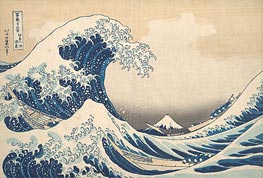
The Great Wave at Kanagawa c.1830/32
Paper Art Print
$60.17
$60.17
SKU: HOK-16581
Katsushika Hokusai
Original Size: 25.4 x 38 cm
Metropolitan Museum of Art, New York, USA
Katsushika Hokusai
Original Size: 25.4 x 38 cm
Metropolitan Museum of Art, New York, USA
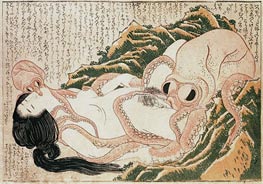
The Dream of the Fisherman's Wife 1814
Paper Art Print
$60.17
$60.17
SKU: HOK-16582
Katsushika Hokusai
Original Size: 18.9 x 26.6 cm
Public Collection
Katsushika Hokusai
Original Size: 18.9 x 26.6 cm
Public Collection
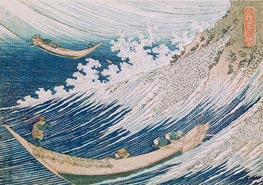
Two Small Fishing Boats at Sea n.d.
Paper Art Print
$60.17
$60.17
SKU: HOK-16684
Katsushika Hokusai
Original Size: unknown
Public Collection
Katsushika Hokusai
Original Size: unknown
Public Collection
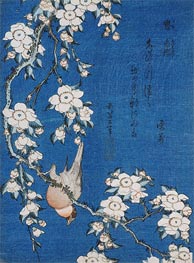
Bullfinch and Weeping Cherry Blossoms from Serie ... 1834
Paper Art Print
$60.17
$60.17
SKU: HOK-16685
Katsushika Hokusai
Original Size: 25.3 x 18.8 cm
Alte Nationalgalerie, Berlin, Germany
Katsushika Hokusai
Original Size: 25.3 x 18.8 cm
Alte Nationalgalerie, Berlin, Germany
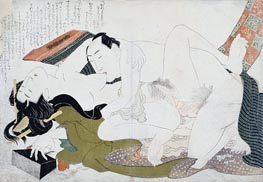
Examples of Loving Couples (Tsuhi no Hinagata) c.1814
Paper Art Print
$60.17
$60.17
SKU: HOK-16686
Katsushika Hokusai
Original Size: 25 x 36.6 cm
Public Collection
Katsushika Hokusai
Original Size: 25 x 36.6 cm
Public Collection
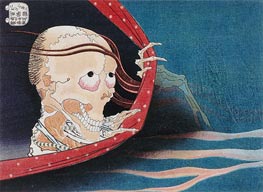
Ghost of Kohada Koheiji 1931
Paper Art Print
$60.17
$60.17
SKU: HOK-16687
Katsushika Hokusai
Original Size: 18.5 x 25.8 cm
Public Collection
Katsushika Hokusai
Original Size: 18.5 x 25.8 cm
Public Collection
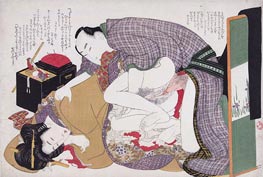
Love Couple at Sewing Box c.1812/14
Paper Art Print
$60.17
$60.17
SKU: HOK-16688
Katsushika Hokusai
Original Size: 26.5 x 39.4 cm
Rijksmuseum, Amsterdam, Netherlands
Katsushika Hokusai
Original Size: 26.5 x 39.4 cm
Rijksmuseum, Amsterdam, Netherlands
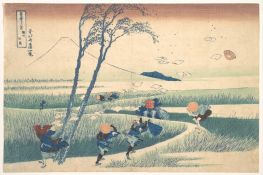
Ejiri in Suruga Province 1830
Paper Art Print
$60.17
$60.17
SKU: HOK-20280
Katsushika Hokusai
Original Size: 25.1 x 37.5 cm
Metropolitan Museum of Art, New York, USA
Katsushika Hokusai
Original Size: 25.1 x 37.5 cm
Metropolitan Museum of Art, New York, USA
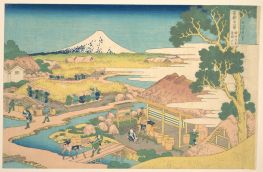
Fuji from the Katakura Tea Fields in Suruga 1820
Paper Art Print
$60.17
$60.17
SKU: HOK-20281
Katsushika Hokusai
Original Size: 24.4 x 37.5 cm
Metropolitan Museum of Art, New York, USA
Katsushika Hokusai
Original Size: 24.4 x 37.5 cm
Metropolitan Museum of Art, New York, USA
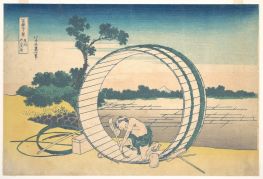
Fujimigahara in Owari Province 1830
Paper Art Print
$60.17
$60.17
SKU: HOK-20282
Katsushika Hokusai
Original Size: 25.6 x 37.8 cm
Metropolitan Museum of Art, New York, USA
Katsushika Hokusai
Original Size: 25.6 x 37.8 cm
Metropolitan Museum of Art, New York, USA
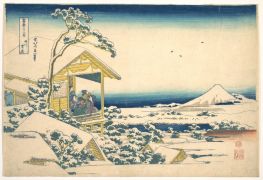
Morning after the Snow at Koishikawa in Edo 1820
Paper Art Print
$60.17
$60.17
SKU: HOK-20283
Katsushika Hokusai
Original Size: 25.7 x 38.1 cm
Metropolitan Museum of Art, New York, USA
Katsushika Hokusai
Original Size: 25.7 x 38.1 cm
Metropolitan Museum of Art, New York, USA
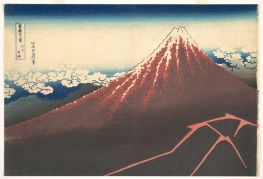
Storm below Mount Fuji 1830
Paper Art Print
$60.17
$60.17
SKU: HOK-20284
Katsushika Hokusai
Original Size: 25.4 x 37.5 cm
Metropolitan Museum of Art, New York, USA
Katsushika Hokusai
Original Size: 25.4 x 37.5 cm
Metropolitan Museum of Art, New York, USA
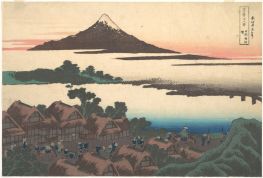
Dawn at Isawa in Kai Province 1820
Paper Art Print
$60.17
$60.17
SKU: HOK-20285
Katsushika Hokusai
Original Size: 25.1 x 37.1 cm
Metropolitan Museum of Art, New York, USA
Katsushika Hokusai
Original Size: 25.1 x 37.1 cm
Metropolitan Museum of Art, New York, USA
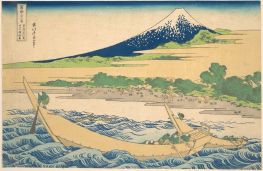
Tago Bay near Ejiri on the Tokaido 1830
Paper Art Print
$60.17
$60.17
SKU: HOK-20286
Katsushika Hokusai
Original Size: 24.8 x 37.5 cm
Metropolitan Museum of Art, New York, USA
Katsushika Hokusai
Original Size: 24.8 x 37.5 cm
Metropolitan Museum of Art, New York, USA
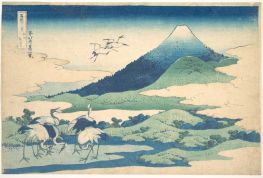
Umezawa Manor in Sagami Province 1830
Paper Art Print
$60.17
$60.17
SKU: HOK-20287
Katsushika Hokusai
Original Size: 25.7 x 38.1 cm
Metropolitan Museum of Art, New York, USA
Katsushika Hokusai
Original Size: 25.7 x 38.1 cm
Metropolitan Museum of Art, New York, USA
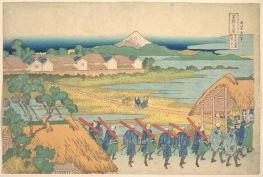
Fuji Seen in the Distance from Senju Pleasure Quarter 1820
Paper Art Print
$60.17
$60.17
SKU: HOK-20288
Katsushika Hokusai
Original Size: 26 x 38.7 cm
Metropolitan Museum of Art, New York, USA
Katsushika Hokusai
Original Size: 26 x 38.7 cm
Metropolitan Museum of Art, New York, USA
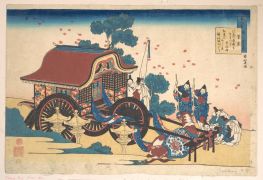
Poem by Kanke 1829
Paper Art Print
$60.17
$60.17
SKU: HOK-20289
Katsushika Hokusai
Original Size: 25.4 x 37.1 cm
Metropolitan Museum of Art, New York, USA
Katsushika Hokusai
Original Size: 25.4 x 37.1 cm
Metropolitan Museum of Art, New York, USA
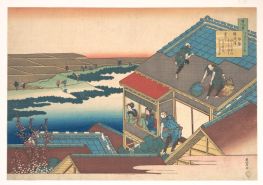
Poem by Ise 1839
Paper Art Print
$60.17
$60.17
SKU: HOK-20290
Katsushika Hokusai
Original Size: 26.8 x 38 cm
Metropolitan Museum of Art, New York, USA
Katsushika Hokusai
Original Size: 26.8 x 38 cm
Metropolitan Museum of Art, New York, USA
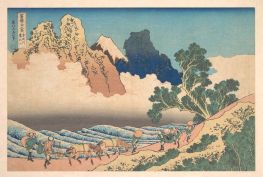
View from the Other Side of Fuji from the Minobu River 1820
Paper Art Print
$60.17
$60.17
SKU: HOK-20291
Katsushika Hokusai
Original Size: 25.1 x 37.5 cm
Metropolitan Museum of Art, New York, USA
Katsushika Hokusai
Original Size: 25.1 x 37.5 cm
Metropolitan Museum of Art, New York, USA
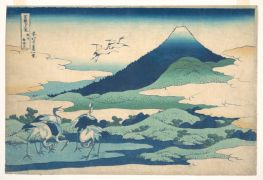
“Umezawa Manor in Sagami Province,” 1820
Paper Art Print
$60.17
$60.17
SKU: HOK-20292
Katsushika Hokusai
Original Size: 25.7 x 38.4 cm
Metropolitan Museum of Art, New York, USA
Katsushika Hokusai
Original Size: 25.7 x 38.4 cm
Metropolitan Museum of Art, New York, USA
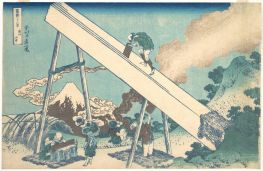
In the Mountains of Totomi Province 1830
Paper Art Print
$60.17
$60.17
SKU: HOK-20293
Katsushika Hokusai
Original Size: 24.4 x 37.9 cm
Metropolitan Museum of Art, New York, USA
Katsushika Hokusai
Original Size: 24.4 x 37.9 cm
Metropolitan Museum of Art, New York, USA
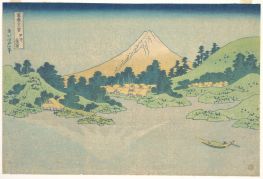
Reflection in Lake at Misaka in Kai Province 1820
Paper Art Print
$60.17
$60.17
SKU: HOK-20294
Katsushika Hokusai
Original Size: 24.9 x 37 cm
Metropolitan Museum of Art, New York, USA
Katsushika Hokusai
Original Size: 24.9 x 37 cm
Metropolitan Museum of Art, New York, USA
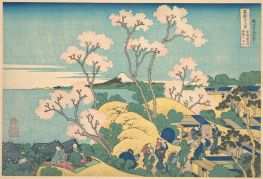
Fuji from Gotenyama on the Tokaido at Shinagawa 1820
Paper Art Print
$60.17
$60.17
SKU: HOK-20295
Katsushika Hokusai
Original Size: 25.9 x 38 cm
Metropolitan Museum of Art, New York, USA
Katsushika Hokusai
Original Size: 25.9 x 38 cm
Metropolitan Museum of Art, New York, USA
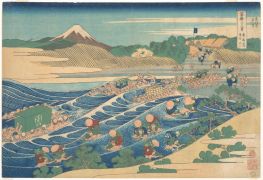
Fuji Seen from Kanaya on the Tokaido 1820
Paper Art Print
$60.17
$60.17
SKU: HOK-20296
Katsushika Hokusai
Original Size: 26.1 x 38 cm
Metropolitan Museum of Art, New York, USA
Katsushika Hokusai
Original Size: 26.1 x 38 cm
Metropolitan Museum of Art, New York, USA