
Johann Liss Painting Reproductions 1 of 1
c.1597-c.1630/31
German Baroque Painter
Johann Liss entered Venetian painting like a sudden flare, working with such intensity that contemporaries remembered not only the speed of his brush but the danger it posed to his health. Johann Liss, also known as Jan Lys, was a German Baroque painter born at Oldenburg in Holstein, probably in about 1590 or 1597, and dead by 1629 or 1630. His career was brief, mobile, and concentrated above all in Venice, where his handling of colour and paint helped open the republic to a more fully Baroque pictorial language.
Little survives in the supplied record about his earliest years beyond his origins in Schleswig-Holstein and an initial artistic education there. According to Arnold Houbraken, Liss later studied with Hendrick Goltzius in Haarlem and Amsterdam. Whether every detail of that account can be reconstructed or not, the route places the young German painter within a northern European culture of accomplished draughtsmanship before his decisive encounter with Italy. Around 1620 he travelled through Paris to Venice, beginning the restless sequence of moves that shaped his mature work.
Soon afterwards, between about 1620 and 1622, Liss moved to Rome. There, the dramatic example of Caravaggio provided an important early point of reference. His Roman pictures concentrated on strong oppositions of illumination and darkness, using light as a force that isolates bodies, heightens gesture, and sharpens narrative tension. In those years he was still working through a language grounded in chiaroscuro and theatrical contrast. Yet Rome did not become his permanent base.
Returning to Venice in the early 1620s changed the direction of his painting. Colour became more expansive, the painted surface more animated, and the brushwork increasingly free. Rather than abandoning the drama of his Roman phase, Liss translated it into a Venetian register, where light could be carried by colour and where paint itself became visibly energetic. This shift placed him beside other foreign-born or non-Venetian painters active in the city, notably Domenico Fetti and Bernardo Strozzi. Together, their work marked some of the earliest serious incursions of Baroque dynamism into a republic whose own great sixteenth-century colour tradition still formed the cultural background.
Liss moved easily between sacred narrative and sensual mythological subject matter. That range is essential to his identity. He could treat biblical devotion with urgency and physical immediacy, yet he was equally at home with subjects that depended on flesh, movement, pleasure, and visual seduction. Across both kinds of painting, his late manner favoured spirited surfaces and loosened strokes. Looking at this final development, one can understand why later observers saw in his handling a distant anticipation of the freer Rococo brushwork associated with the Guardi brothers.
The clearest public statement of his Venetian maturity came in 1627. For the church of San Nicolò da Tolentino, Liss painted the large altarpiece Inspiration of Saint Jerome, a work admired in his own period and central to his surviving reputation. Its importance lay not simply in scale or ecclesiastical setting. By this point, the painter had fused the dramatic lessons of his Roman experience with the chromatic breadth and mobile surface of Venice. Sacred inspiration became a pictorial event, carried by gesture, light, colour, and a brush that no longer needed to conceal its own movement.
Working at such pressure may have carried a personal cost. Houbraken recorded that Liss painted day and night, while Joachim von Sandrart believed the pace endangered his health and urged him to join him in Rome. The anecdote has the force of a studio memory: a painter driving himself beyond reasonable limits during an exceptionally compressed career. Perhaps the urgency visible in his late brushwork was inseparable from the urgency of his working life. That remains only a reflection, but the surviving testimony makes the intensity itself difficult to dismiss.
Then plague altered everything. As disease spread through Venice, Liss fled to Verona, hoping to escape the epidemic. He did not. Sandrart later wrote, in 1675, that Liss had prospered in Venice, returned there quickly, and died with many others during the plague that began in 1629. The exact year of his death is given as 1629 or 1630, but the circumstances are consistently those of premature loss. A painter whose mature style had only just come into focus disappeared at the moment when its possibilities seemed widest.
His influence nevertheless travelled forward through Venetian painting. Sebastiano Ricci, Giovanni Battista Tiepolo, and Giovanni Piazzetta are among the eighteenth-century artists associated with the afterlife of his colouristic freedom and Baroque vitality. Liss did not leave behind a long career or a vast sequence of documented commissions. What mattered was concentration: a short passage from northern training, through Caravaggesque Rome, into a Venetian style of luminous colour, rapid handling, and expressive surface.
The later history of one drawing adds a darker modern chapter to that legacy. In 1939, the drawing Allegory of Christian Faith was among 750 Old Master drawings seized by the Nazis from the home of Arthur Feldmann and his wife. The Feldmanns, who were Jewish, were later murdered in the Holocaust. After the Cleveland Museum of Art acquired the drawing from the dealer Herbert Bier in 1953, the museum eventually reached a settlement with the Feldmann heirs in 2013. The episode reminds us that the history of an artwork does not end with the artist's death; ownership, violence, displacement, and restitution can become part of its meaning in the world.
Today Johann Liss remains compelling because his career seems at once complete and abruptly unfinished. Within only a few years, he absorbed contrasting artistic cultures and transformed them into a language recognisably his own, balancing Caravaggesque darkness against Venetian colour and devotional gravity against sensuous movement. His paintings retain the feeling of decisions made quickly but not casually. That combination of urgency, colour, and painterly freedom gives his work a continuing presence, while the survival and contested histories of individual works remind us how fragile an artistic legacy can be.
Little survives in the supplied record about his earliest years beyond his origins in Schleswig-Holstein and an initial artistic education there. According to Arnold Houbraken, Liss later studied with Hendrick Goltzius in Haarlem and Amsterdam. Whether every detail of that account can be reconstructed or not, the route places the young German painter within a northern European culture of accomplished draughtsmanship before his decisive encounter with Italy. Around 1620 he travelled through Paris to Venice, beginning the restless sequence of moves that shaped his mature work.
Soon afterwards, between about 1620 and 1622, Liss moved to Rome. There, the dramatic example of Caravaggio provided an important early point of reference. His Roman pictures concentrated on strong oppositions of illumination and darkness, using light as a force that isolates bodies, heightens gesture, and sharpens narrative tension. In those years he was still working through a language grounded in chiaroscuro and theatrical contrast. Yet Rome did not become his permanent base.
Returning to Venice in the early 1620s changed the direction of his painting. Colour became more expansive, the painted surface more animated, and the brushwork increasingly free. Rather than abandoning the drama of his Roman phase, Liss translated it into a Venetian register, where light could be carried by colour and where paint itself became visibly energetic. This shift placed him beside other foreign-born or non-Venetian painters active in the city, notably Domenico Fetti and Bernardo Strozzi. Together, their work marked some of the earliest serious incursions of Baroque dynamism into a republic whose own great sixteenth-century colour tradition still formed the cultural background.
Liss moved easily between sacred narrative and sensual mythological subject matter. That range is essential to his identity. He could treat biblical devotion with urgency and physical immediacy, yet he was equally at home with subjects that depended on flesh, movement, pleasure, and visual seduction. Across both kinds of painting, his late manner favoured spirited surfaces and loosened strokes. Looking at this final development, one can understand why later observers saw in his handling a distant anticipation of the freer Rococo brushwork associated with the Guardi brothers.
The clearest public statement of his Venetian maturity came in 1627. For the church of San Nicolò da Tolentino, Liss painted the large altarpiece Inspiration of Saint Jerome, a work admired in his own period and central to his surviving reputation. Its importance lay not simply in scale or ecclesiastical setting. By this point, the painter had fused the dramatic lessons of his Roman experience with the chromatic breadth and mobile surface of Venice. Sacred inspiration became a pictorial event, carried by gesture, light, colour, and a brush that no longer needed to conceal its own movement.
Working at such pressure may have carried a personal cost. Houbraken recorded that Liss painted day and night, while Joachim von Sandrart believed the pace endangered his health and urged him to join him in Rome. The anecdote has the force of a studio memory: a painter driving himself beyond reasonable limits during an exceptionally compressed career. Perhaps the urgency visible in his late brushwork was inseparable from the urgency of his working life. That remains only a reflection, but the surviving testimony makes the intensity itself difficult to dismiss.
Then plague altered everything. As disease spread through Venice, Liss fled to Verona, hoping to escape the epidemic. He did not. Sandrart later wrote, in 1675, that Liss had prospered in Venice, returned there quickly, and died with many others during the plague that began in 1629. The exact year of his death is given as 1629 or 1630, but the circumstances are consistently those of premature loss. A painter whose mature style had only just come into focus disappeared at the moment when its possibilities seemed widest.
His influence nevertheless travelled forward through Venetian painting. Sebastiano Ricci, Giovanni Battista Tiepolo, and Giovanni Piazzetta are among the eighteenth-century artists associated with the afterlife of his colouristic freedom and Baroque vitality. Liss did not leave behind a long career or a vast sequence of documented commissions. What mattered was concentration: a short passage from northern training, through Caravaggesque Rome, into a Venetian style of luminous colour, rapid handling, and expressive surface.
The later history of one drawing adds a darker modern chapter to that legacy. In 1939, the drawing Allegory of Christian Faith was among 750 Old Master drawings seized by the Nazis from the home of Arthur Feldmann and his wife. The Feldmanns, who were Jewish, were later murdered in the Holocaust. After the Cleveland Museum of Art acquired the drawing from the dealer Herbert Bier in 1953, the museum eventually reached a settlement with the Feldmann heirs in 2013. The episode reminds us that the history of an artwork does not end with the artist's death; ownership, violence, displacement, and restitution can become part of its meaning in the world.
Today Johann Liss remains compelling because his career seems at once complete and abruptly unfinished. Within only a few years, he absorbed contrasting artistic cultures and transformed them into a language recognisably his own, balancing Caravaggesque darkness against Venetian colour and devotional gravity against sensuous movement. His paintings retain the feeling of decisions made quickly but not casually. That combination of urgency, colour, and painterly freedom gives his work a continuing presence, while the survival and contested histories of individual works remind us how fragile an artistic legacy can be.
23 Johann Liss Paintings
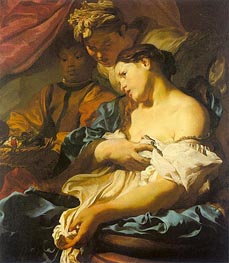
The Death of Cleopatra c.1624/25
Oil Painting
$2308
$2308
Canvas Print
$85.32
$85.32
SKU: LIJ-2533
Johann Liss
Original Size: 97.5 x 85.5 cm
Alte Pinakothek, Munich, Germany
Johann Liss
Original Size: 97.5 x 85.5 cm
Alte Pinakothek, Munich, Germany
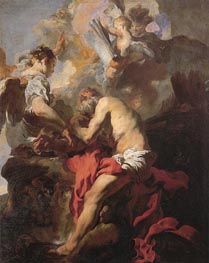
The Vision of St Jerome c.1627
Oil Painting
$3778
$3778
Canvas Print
$78.28
$78.28
SKU: LIJ-3134
Johann Liss
Original Size: 225 x 175 cm
San Nicolo dei Tolentini, Venice, Italy
Johann Liss
Original Size: 225 x 175 cm
San Nicolo dei Tolentini, Venice, Italy
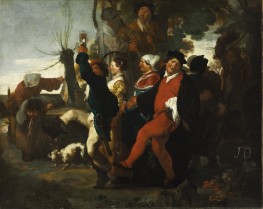
Village Wedding Procession c.1616/19
Oil Painting
$4325
$4325
Canvas Print
$77.23
$77.23
SKU: LIJ-23226
Johann Liss
Original Size: 65.5 x 81.5 cm
Museum of Fine Arts, Budapest, Hungary
Johann Liss
Original Size: 65.5 x 81.5 cm
Museum of Fine Arts, Budapest, Hungary
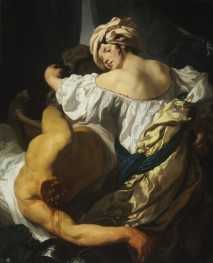
Judith in the Tent of Holofernes c.1624/25
Oil Painting
$3323
$3323
Canvas Print
$78.64
$78.64
SKU: LIJ-23227
Johann Liss
Original Size: 129 x 104 cm
Museum of Fine Arts, Budapest, Hungary
Johann Liss
Original Size: 129 x 104 cm
Museum of Fine Arts, Budapest, Hungary
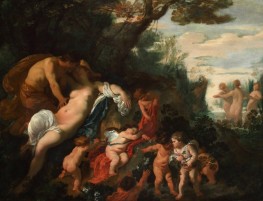
Venus and Adonis 1625
Oil Painting
$4219
$4219
Canvas Print
$74.07
$74.07
SKU: LIJ-23228
Johann Liss
Original Size: 53.5 x 69 cm
Staatliche Kunsthalle, Karlsruhe, Germany
Johann Liss
Original Size: 53.5 x 69 cm
Staatliche Kunsthalle, Karlsruhe, Germany
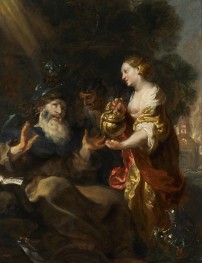
Temptation of Saint Anthony c.1624/25
Oil Painting
$1551
$1551
Canvas Print
$63.85
$63.85
SKU: LIJ-23229
Johann Liss
Original Size: 22 x 16.8 cm
Alte Pinakothek, Munich, Germany
Johann Liss
Original Size: 22 x 16.8 cm
Alte Pinakothek, Munich, Germany
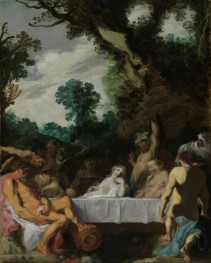
Bacchanalian Feast c.1617
Oil Painting
$1649
$1649
Canvas Print
$63.85
$63.85
SKU: LIJ-23230
Johann Liss
Original Size: 34.2 x 27.3 cm
Fitzwilliam Museum, Cambridge, UK
Johann Liss
Original Size: 34.2 x 27.3 cm
Fitzwilliam Museum, Cambridge, UK
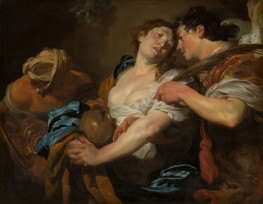
The Temptation of Saint Mary Magdalen 1626
Oil Painting
$5621
$5621
Canvas Print
$75.29
$75.29
SKU: LIJ-23231
Johann Liss
Original Size: 98.8 x 125.8 cm
Metropolitan Museum of Art, New York, USA
Johann Liss
Original Size: 98.8 x 125.8 cm
Metropolitan Museum of Art, New York, USA
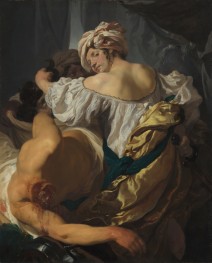
Judith in the Tent of Holofernes 1620s
Oil Painting
$3306
$3306
Canvas Print
$78.11
$78.11
SKU: LIJ-23232
Johann Liss
Original Size: 128.5 x 99 cm
National Gallery, London, UK
Johann Liss
Original Size: 128.5 x 99 cm
National Gallery, London, UK
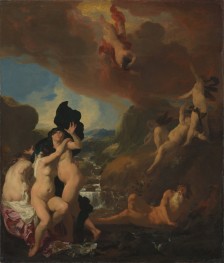
The Fall of Phaeton c.1620/25
Oil Painting
$3354
$3354
Canvas Print
$82.50
$82.50
SKU: LIJ-23233
Johann Liss
Original Size: 126.5 x 110.3 cm
National Gallery, London, UK
Johann Liss
Original Size: 126.5 x 110.3 cm
National Gallery, London, UK
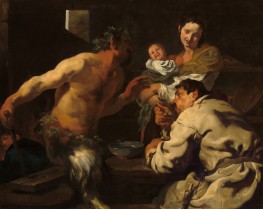
The Satyr and the Peasant c.1623/26
Oil Painting
$3319
$3319
Canvas Print
$77.23
$77.23
SKU: LIJ-23234
Johann Liss
Original Size: 133.3 x 167.4 cm
National Gallery of Art, Washington, USA
Johann Liss
Original Size: 133.3 x 167.4 cm
National Gallery of Art, Washington, USA
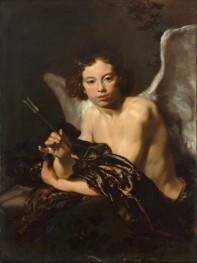
Cupid (Amor) c. 1630
Oil Painting
$2618
$2618
Canvas Print
$72.48
$72.48
SKU: LIJ-23235
Johann Liss
Original Size: 87.7 x 65.7 cm
Cleveland Museum of Art, Ohio, USA
Johann Liss
Original Size: 87.7 x 65.7 cm
Cleveland Museum of Art, Ohio, USA
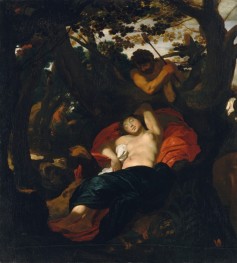
Nymph and Shepherd 1625
Oil Painting
$3372
$3372
Canvas Print
$87.43
$87.43
SKU: LIJ-23236
Johann Liss
Original Size: 104.5 x 94.9 cm
Metropolitan Museum of Art, New York, USA
Johann Liss
Original Size: 104.5 x 94.9 cm
Metropolitan Museum of Art, New York, USA
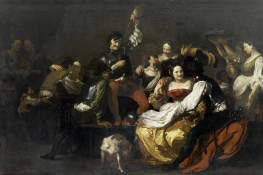
The Prodigal Son with the Prostitutes c.1622/23
Oil Painting
$7868
$7868
Canvas Print
$64.56
$64.56
SKU: LIJ-23237
Johann Liss
Original Size: 160.5 x 240 cm
Germanisches Nationalmuseum, Nuremberg, Germany
Johann Liss
Original Size: 160.5 x 240 cm
Germanisches Nationalmuseum, Nuremberg, Germany
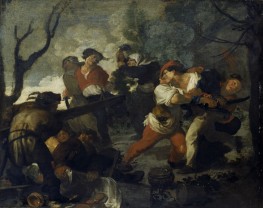
Peasant Brawl c.1616/19
Oil Painting
$3188
$3188
Canvas Print
$76.70
$76.70
SKU: LIJ-23238
Johann Liss
Original Size: 68 x 83 cm
Germanisches Nationalmuseum, Nuremberg, Germany
Johann Liss
Original Size: 68 x 83 cm
Germanisches Nationalmuseum, Nuremberg, Germany
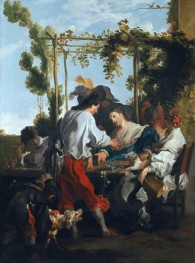
The Morra Game c.1621
Oil Painting
$3102
$3102
Canvas Print
$71.96
$71.96
SKU: LIJ-23239
Johann Liss
Original Size: 75.5 x 56 cm
Gemaldegalerie Alte Meister, Kassel, Germany
Johann Liss
Original Size: 75.5 x 56 cm
Gemaldegalerie Alte Meister, Kassel, Germany
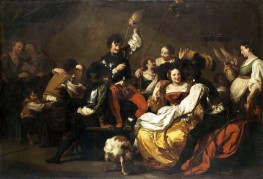
A Banquet of Soldiers and Prostitutes n.d.
Oil Painting
$7875
$7875
Canvas Print
$65.97
$65.97
SKU: LIJ-23240
Johann Liss
Original Size: 164.5 x 242 cm
Gemaldegalerie Alte Meister, Kassel, Germany
Johann Liss
Original Size: 164.5 x 242 cm
Gemaldegalerie Alte Meister, Kassel, Germany
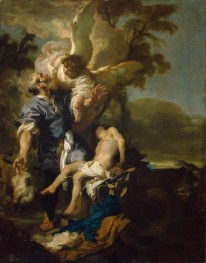
The Sacrifice of Abraham c.1624
Oil Painting
$3212
$3212
Canvas Print
$76.00
$76.00
SKU: LIJ-23241
Johann Liss
Original Size: 88 x 69 cm
Galleria degli Uffizi, Florence, Italy
Johann Liss
Original Size: 88 x 69 cm
Galleria degli Uffizi, Florence, Italy
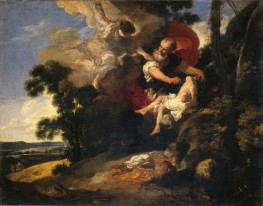
Abraham Sacrifices Isaac c.1624/25
Oil Painting
$3187
$3187
Canvas Print
$76.00
$76.00
SKU: LIJ-23242
Johann Liss
Original Size: 66 x 85 cm
Gallerie dell'Accademia, Venice, Italy
Johann Liss
Original Size: 66 x 85 cm
Gallerie dell'Accademia, Venice, Italy
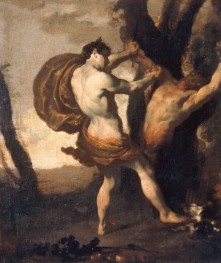
Apollo And Marsyas (The Flaying Of Marsyas) n.d.
Oil Painting
$1842
$1842
Canvas Print
$81.63
$81.63
SKU: LIJ-23243
Johann Liss
Original Size: 58 x 48 cm
Gallerie dell'Accademia, Venice, Italy
Johann Liss
Original Size: 58 x 48 cm
Gallerie dell'Accademia, Venice, Italy
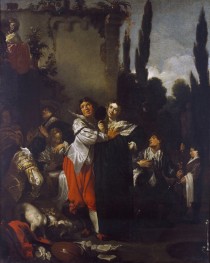
The Prodigal Son n.d.
Oil Painting
$4236
$4236
Canvas Print
$77.40
$77.40
SKU: LIJ-23244
Johann Liss
Original Size: 68 x 58 cm
Gallerie dell'Accademia, Venice, Italy
Johann Liss
Original Size: 68 x 58 cm
Gallerie dell'Accademia, Venice, Italy
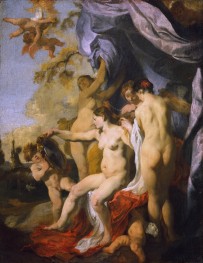
Venus in Front of the Mirror c.1625/26
Oil Painting
$4348
$4348
Canvas Print
$74.95
$74.95
SKU: LIJ-23245
Johann Liss
Original Size: 83 x 69 cm
Galleria degli Uffizi, Florence, Italy
Johann Liss
Original Size: 83 x 69 cm
Galleria degli Uffizi, Florence, Italy
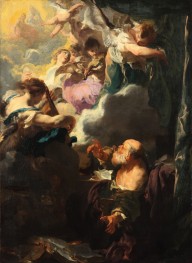
The Rapture of Saint Paul 1627
Oil Painting
$3148
$3148
Canvas Print
$70.90
$70.90
SKU: LIJ-23246
Johann Liss
Original Size: 81.8 x 60.5 cm
Old Masters Gallery, Berlin, Germany
Johann Liss
Original Size: 81.8 x 60.5 cm
Old Masters Gallery, Berlin, Germany