
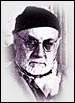
Henri Matisse Painting Reproductions 1 of 15
1869-1954
French Fauvist Painter
“Donatello among the wild beasts,” a critic snapped in Paris in October 1905, faced with paintings that seemed to fling pure colour at the viewer. In that charged room at the Salon d’Automne, Henri Émile Benoît Matisse (31 December 1869 - 3 November 1954) stood revealed as a French painter with a rare nerve for sensation and structure, a draughtsman whose line could be both fluent and decisive. The remark was meant to wound. Instead it named a turning point - for him, and for modern art.
Picture the trajectory: a young man trained for law, then abruptly re-routed by illness into painting. Matisse was born in Le Cateau-Cambrésis in the Nord, the oldest son of a wealthy grain merchant, and he grew up in Bohain-en-Vermandois in Picardie. In 1887 he went to Paris to study law, then returned to work as a court administrator in Le Cateau-Cambrésis. Only in 1889, recovering from appendicitis, did he begin to paint after his mother brought him art supplies. He later called the discovery “a kind of paradise,” a phrase that carries the unmistakable astonishment of someone who has found a vocation late, and all at once. His decision to become an artist disappointed his father deeply, and that tension - between bourgeois order and pictorial risk - never entirely leaves his story.
Back in Paris in 1891, he undertook formal training at the Académie Julian under William-Adolphe Bouguereau and at the École Nationale des Beaux-Arts under Gustave Moreau. Those early years were not a myth of spontaneous genius; they were apprenticeship, work, correction. Still lifes and landscapes in a traditional manner taught him craft, and in the Louvre he copied four paintings by Jean-Baptiste-Siméon Chardin, an admiration that matters because it anchors his modern daring in an old respect for pictorial economy. Other lodestars sat in his mind as he learned - Nicolas Poussin, Antoine Watteau, Édouard Manet - and Japanese art, which offered its own lessons in flattening and emphasis. By 1895 he was painting Woman Reading (La Liseuse), an early proof that attentiveness could be an aesthetic stance rather than a subject.
Then, in 1896, came a catalytic visit to the island of Belle Île off the coast of Brittany, where the Australian painter John Russell introduced him to Impressionism and to the work of Vincent van Gogh, even giving him a Van Gogh drawing. Something in Matisse’s palette and ambition broke open: earth tones yielded to brightness, and colour became not decoration but argument. That same year he exhibited five paintings at the salon of the Société Nationale des Beaux-Arts, and two were purchased by the state - a small fact with large psychological weight for an unknown student. Domestic life was already complex. With the model Caroline Joblau he had a daughter, Marguerite, born in 1894; in 1898 he married Amélie Noellie Parayre, and together they raised Marguerite and later had two sons, Jean (1899) and Pierre (1900). Marguerite and Amélie often posed for him, not as ornaments but as presences through which he tested line and colour against intimacy.
On Camille Pissarro’s advice in 1898, Matisse went to London to study J. M. W. Turner, then travelled on to Corsica. In February 1899 he returned to Paris and worked beside Albert Marquet, meeting André Derain, Jean Puy, and Jules Flandrin. He did what serious painters do - he looked, he collected, he risked money he did not have. Debt followed, because he bought works by painters he admired, hanging in his home a plaster bust by Rodin, a painting by Gauguin, a drawing by Van Gogh, and Cézanne’s Three Bathers. From Cézanne he drew a lasting lesson in pictorial structure and colour - not the glamour of novelty, but a method for holding sensation together. Between 1898 and 1901 he explored Divisionism, adopting a technique associated with Neo-Impressionism after reading Paul Signac’s essay “D’Eugène Delacroix au Néo-impressionisme.” Dots and broken colour were not a mere style - they were a laboratory.
Hardship arrived with a headline. In May 1902 Amélie’s parents were caught up in the Humbert Affair, becoming scapegoats amid public fury, and for a time Matisse was the sole breadwinner for an extended family of seven. During 1902 and 1903 his painting turned comparatively somber and more concerned with form, a shift that also reads as the practical search for saleable work when life presses in. Perhaps the strain sharpened his discipline - not in a romantic way, but in the unshowy resolve of someone who must keep going. Clay offered another route. After making a first attempt at sculpture in 1899 with a copy after Antoine-Louis Barye, he devoted serious energy to working in three dimensions and completed The Slave in 1903, a work that sits in the biography like a reminder: he was never only a colourist, but also a maker of weight and contour.
In 1904 he had his first solo exhibition at Ambroise Vollard’s gallery. It did not succeed, and failure, here, is as factual as any triumph. Yet that same summer, painting in St. Tropez with Paul Signac and Henri-Edmond Cross, his fondness for bright, expressive colour intensified. Luxe, Calme et Volupté, made in that context, stands as a pivot - Neo-Impressionist in method, but already seeking a more direct emotional pitch. A year later he travelled south again and worked with Derain at Collioure, producing paintings with flat shapes and controlled lines, pointillism loosened into something more supple. These are not timid pictures. They simplify in order to insist.
So the Salon d’Automne of 1905 matters because it made the simplification public. Matisse exhibited with a group later called the Fauves - “wild beasts” - in a room where colour ran hot, dissonant, unconcerned with natural description. He showed The Open Window and Woman with a Hat. Louis Vauxcelles, confronting a Renaissance-type sculpture amid what he called an “orgy of pure tones,” coined the phrase “Donatello chez les fauves,” printed on 17 October 1905 in Gil Blas, and a name for a movement was born by accident. Critics attacked - Camille Mauclair complained that “a pot of paint has been flung in the face of the public” - yet attention is a form of oxygen, even when acrid. When Gertrude and Leo Stein bought Woman with a Hat, morale rose. Recognition followed, and he emerged as a leader of the Fauves alongside Derain, friendly rivals with different emphases. Around them gathered Georges Braque, Raoul Dufy, Maurice de Vlaminck. Behind them, in spirit, stood Gustave Moreau, the Symbolist teacher who had urged students to follow vision rather than mere correctness.
After 1906 the brief, official life of Fauvism did not determine his future, and the years 1906 to 1917 brought many of his finest works. He moved among the artistic energies of Montparnasse without quite blending in - conservative in appearance, strict in bourgeois work habits, and nonetheless restless in pictorial invention. Travel fed that restlessness. In 1906 he went to Algeria and studied African art and what his time called Primitivism; in 1910 he saw a large exhibition of Islamic art in Munich and then spent two months in Spain studying Moorish art. Morocco followed in 1912 and again in 1913, and in Tangier he began to treat black as a colour in itself, not simply shadow or outline. The change is palpable in the boldness of intense, unmodulated colour, exemplified by L’Atelier Rouge (1911), where flattened form and decorative pattern become the very grammar of space. A long association with the Russian collector Sergei Shchukin led to major commissions: La Danse, made for him as part of a pair with Music (1910), and an earlier version of La Danse (1909) now in The Museum of Modern Art in New York. Guillaume Apollinaire, writing in 1907, insisted that Matisse’s art was “eminently reasonable,” yet public hostility persisted. Nu bleu (1907) was burned in effigy at the Armory Show in Chicago in 1913 - a grotesque tribute to how strongly the work could provoke.
In 1917 he relocated to a suburb of Nice on the French Riviera. The 1920s brought a more relaxed style and critical acclaim, even as he was praised as an upholder of a classical tradition within French painting - a curious phrase for someone who had once been labelled wild. After 1930 he adopted a bolder simplification of form, and when ill health in his final years prevented him from painting, he turned to cut paper collage, making an important late body of work by other means. Across more than half a century, Henri Matisse remained a painter at heart - yet also a printmaker, sculptor, and draughtsman whose expressive language of colour and drawing never hardened into routine. Alongside Pablo Picasso, he helped define the revolutionary developments of the early twentieth century, not by chasing novelty for its own sake, but by returning again and again to the fundamental question: how much life can colour and line hold? That question still feels contemporary - especially for viewers hungry for clarity without coldness. Perhaps that is why Matisse continues to meet the eye so directly, even when the world around him was noisy with judgment.
Picture the trajectory: a young man trained for law, then abruptly re-routed by illness into painting. Matisse was born in Le Cateau-Cambrésis in the Nord, the oldest son of a wealthy grain merchant, and he grew up in Bohain-en-Vermandois in Picardie. In 1887 he went to Paris to study law, then returned to work as a court administrator in Le Cateau-Cambrésis. Only in 1889, recovering from appendicitis, did he begin to paint after his mother brought him art supplies. He later called the discovery “a kind of paradise,” a phrase that carries the unmistakable astonishment of someone who has found a vocation late, and all at once. His decision to become an artist disappointed his father deeply, and that tension - between bourgeois order and pictorial risk - never entirely leaves his story.
Back in Paris in 1891, he undertook formal training at the Académie Julian under William-Adolphe Bouguereau and at the École Nationale des Beaux-Arts under Gustave Moreau. Those early years were not a myth of spontaneous genius; they were apprenticeship, work, correction. Still lifes and landscapes in a traditional manner taught him craft, and in the Louvre he copied four paintings by Jean-Baptiste-Siméon Chardin, an admiration that matters because it anchors his modern daring in an old respect for pictorial economy. Other lodestars sat in his mind as he learned - Nicolas Poussin, Antoine Watteau, Édouard Manet - and Japanese art, which offered its own lessons in flattening and emphasis. By 1895 he was painting Woman Reading (La Liseuse), an early proof that attentiveness could be an aesthetic stance rather than a subject.
Then, in 1896, came a catalytic visit to the island of Belle Île off the coast of Brittany, where the Australian painter John Russell introduced him to Impressionism and to the work of Vincent van Gogh, even giving him a Van Gogh drawing. Something in Matisse’s palette and ambition broke open: earth tones yielded to brightness, and colour became not decoration but argument. That same year he exhibited five paintings at the salon of the Société Nationale des Beaux-Arts, and two were purchased by the state - a small fact with large psychological weight for an unknown student. Domestic life was already complex. With the model Caroline Joblau he had a daughter, Marguerite, born in 1894; in 1898 he married Amélie Noellie Parayre, and together they raised Marguerite and later had two sons, Jean (1899) and Pierre (1900). Marguerite and Amélie often posed for him, not as ornaments but as presences through which he tested line and colour against intimacy.
On Camille Pissarro’s advice in 1898, Matisse went to London to study J. M. W. Turner, then travelled on to Corsica. In February 1899 he returned to Paris and worked beside Albert Marquet, meeting André Derain, Jean Puy, and Jules Flandrin. He did what serious painters do - he looked, he collected, he risked money he did not have. Debt followed, because he bought works by painters he admired, hanging in his home a plaster bust by Rodin, a painting by Gauguin, a drawing by Van Gogh, and Cézanne’s Three Bathers. From Cézanne he drew a lasting lesson in pictorial structure and colour - not the glamour of novelty, but a method for holding sensation together. Between 1898 and 1901 he explored Divisionism, adopting a technique associated with Neo-Impressionism after reading Paul Signac’s essay “D’Eugène Delacroix au Néo-impressionisme.” Dots and broken colour were not a mere style - they were a laboratory.
Hardship arrived with a headline. In May 1902 Amélie’s parents were caught up in the Humbert Affair, becoming scapegoats amid public fury, and for a time Matisse was the sole breadwinner for an extended family of seven. During 1902 and 1903 his painting turned comparatively somber and more concerned with form, a shift that also reads as the practical search for saleable work when life presses in. Perhaps the strain sharpened his discipline - not in a romantic way, but in the unshowy resolve of someone who must keep going. Clay offered another route. After making a first attempt at sculpture in 1899 with a copy after Antoine-Louis Barye, he devoted serious energy to working in three dimensions and completed The Slave in 1903, a work that sits in the biography like a reminder: he was never only a colourist, but also a maker of weight and contour.
In 1904 he had his first solo exhibition at Ambroise Vollard’s gallery. It did not succeed, and failure, here, is as factual as any triumph. Yet that same summer, painting in St. Tropez with Paul Signac and Henri-Edmond Cross, his fondness for bright, expressive colour intensified. Luxe, Calme et Volupté, made in that context, stands as a pivot - Neo-Impressionist in method, but already seeking a more direct emotional pitch. A year later he travelled south again and worked with Derain at Collioure, producing paintings with flat shapes and controlled lines, pointillism loosened into something more supple. These are not timid pictures. They simplify in order to insist.
So the Salon d’Automne of 1905 matters because it made the simplification public. Matisse exhibited with a group later called the Fauves - “wild beasts” - in a room where colour ran hot, dissonant, unconcerned with natural description. He showed The Open Window and Woman with a Hat. Louis Vauxcelles, confronting a Renaissance-type sculpture amid what he called an “orgy of pure tones,” coined the phrase “Donatello chez les fauves,” printed on 17 October 1905 in Gil Blas, and a name for a movement was born by accident. Critics attacked - Camille Mauclair complained that “a pot of paint has been flung in the face of the public” - yet attention is a form of oxygen, even when acrid. When Gertrude and Leo Stein bought Woman with a Hat, morale rose. Recognition followed, and he emerged as a leader of the Fauves alongside Derain, friendly rivals with different emphases. Around them gathered Georges Braque, Raoul Dufy, Maurice de Vlaminck. Behind them, in spirit, stood Gustave Moreau, the Symbolist teacher who had urged students to follow vision rather than mere correctness.
After 1906 the brief, official life of Fauvism did not determine his future, and the years 1906 to 1917 brought many of his finest works. He moved among the artistic energies of Montparnasse without quite blending in - conservative in appearance, strict in bourgeois work habits, and nonetheless restless in pictorial invention. Travel fed that restlessness. In 1906 he went to Algeria and studied African art and what his time called Primitivism; in 1910 he saw a large exhibition of Islamic art in Munich and then spent two months in Spain studying Moorish art. Morocco followed in 1912 and again in 1913, and in Tangier he began to treat black as a colour in itself, not simply shadow or outline. The change is palpable in the boldness of intense, unmodulated colour, exemplified by L’Atelier Rouge (1911), where flattened form and decorative pattern become the very grammar of space. A long association with the Russian collector Sergei Shchukin led to major commissions: La Danse, made for him as part of a pair with Music (1910), and an earlier version of La Danse (1909) now in The Museum of Modern Art in New York. Guillaume Apollinaire, writing in 1907, insisted that Matisse’s art was “eminently reasonable,” yet public hostility persisted. Nu bleu (1907) was burned in effigy at the Armory Show in Chicago in 1913 - a grotesque tribute to how strongly the work could provoke.
In 1917 he relocated to a suburb of Nice on the French Riviera. The 1920s brought a more relaxed style and critical acclaim, even as he was praised as an upholder of a classical tradition within French painting - a curious phrase for someone who had once been labelled wild. After 1930 he adopted a bolder simplification of form, and when ill health in his final years prevented him from painting, he turned to cut paper collage, making an important late body of work by other means. Across more than half a century, Henri Matisse remained a painter at heart - yet also a printmaker, sculptor, and draughtsman whose expressive language of colour and drawing never hardened into routine. Alongside Pablo Picasso, he helped define the revolutionary developments of the early twentieth century, not by chasing novelty for its own sake, but by returning again and again to the fundamental question: how much life can colour and line hold? That question still feels contemporary - especially for viewers hungry for clarity without coldness. Perhaps that is why Matisse continues to meet the eye so directly, even when the world around him was noisy with judgment.
353 Matisse Paintings
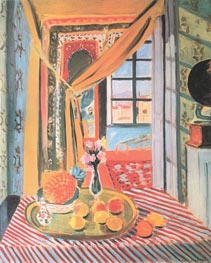
Interior with Phonograph 1924
Oil Painting
$947
$947
Canvas Print
$76.11
$76.11
SKU: MAT-3924
Henri Matisse
Original Size: 100.5 x 80 cm
Pinacoteca Agnelli, Torino, Italy
Henri Matisse
Original Size: 100.5 x 80 cm
Pinacoteca Agnelli, Torino, Italy
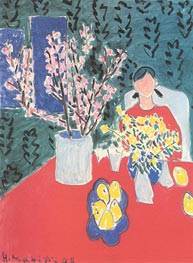
Plum Blossoms, Green Background 1948
Oil Painting
$720
$720
Canvas Print
$73.84
$73.84
SKU: MAT-3925
Henri Matisse
Original Size: 116 x 89 cm
Pinacoteca Agnelli, Torino, Italy
Henri Matisse
Original Size: 116 x 89 cm
Pinacoteca Agnelli, Torino, Italy
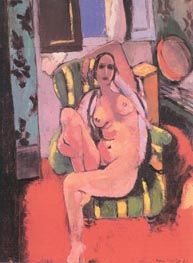
Nude with a Tambourine 1926
Oil Painting
$1164
$1164
Canvas Print
$73.14
$73.14
SKU: MAT-3926
Henri Matisse
Original Size: 74.3 x 55.6 cm
Private Collection
Henri Matisse
Original Size: 74.3 x 55.6 cm
Private Collection
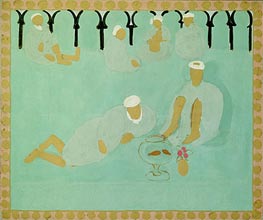
Arabian Coffee House 1913
Oil Painting
$700
$700
Canvas Print
$80.14
$80.14
SKU: MAT-4772
Henri Matisse
Original Size: 176 x 210 cm
Hermitage Museum, St. Petersburg, Russia
Henri Matisse
Original Size: 176 x 210 cm
Hermitage Museum, St. Petersburg, Russia
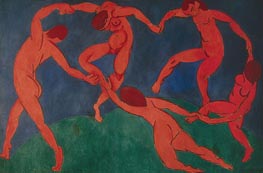
The Dance c.1909/10
Oil Painting
$994
$994
Canvas Print
$63.69
$63.69
SKU: MAT-4773
Henri Matisse
Original Size: 260 x 391 cm
Hermitage Museum, St. Petersburg, Russia
Henri Matisse
Original Size: 260 x 391 cm
Hermitage Museum, St. Petersburg, Russia
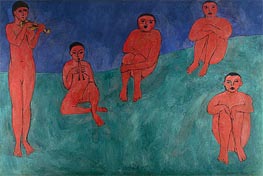
Music 1910
Oil Painting
$994
$994
Canvas Print
$64.39
$64.39
SKU: MAT-4774
Henri Matisse
Original Size: 260 x 389 cm
Hermitage Museum, St. Petersburg, Russia
Henri Matisse
Original Size: 260 x 389 cm
Hermitage Museum, St. Petersburg, Russia
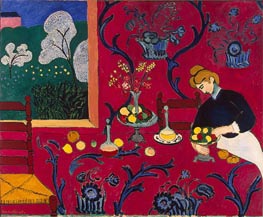
The Red Room (Harmony in Red) 1908
Oil Painting
$943
$943
Canvas Print
$78.55
$78.55
SKU: MAT-4775
Henri Matisse
Original Size: 180 x 220 cm
Hermitage Museum, St. Petersburg, Russia
Henri Matisse
Original Size: 180 x 220 cm
Hermitage Museum, St. Petersburg, Russia
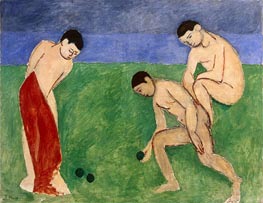
A Game of Bowls 1908
Oil Painting
$1168
$1168
Canvas Print
$74.54
$74.54
SKU: MAT-4776
Henri Matisse
Original Size: 113.5 x 145 cm
Hermitage Museum, St. Petersburg, Russia
Henri Matisse
Original Size: 113.5 x 145 cm
Hermitage Museum, St. Petersburg, Russia
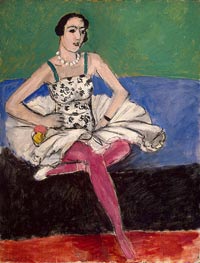
Ballerina c.1927
Oil Painting
$530
$530
Canvas Print
$73.14
$73.14
SKU: MAT-4777
Henri Matisse
Original Size: 65 x 50 cm
Hermitage Museum, St. Petersburg, Russia
Henri Matisse
Original Size: 65 x 50 cm
Hermitage Museum, St. Petersburg, Russia
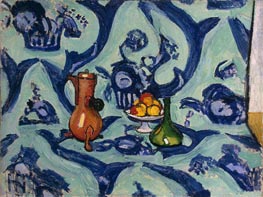
Still Life with Blue Tablecloth 1909
Oil Painting
$1401
$1401
Canvas Print
$73.66
$73.66
SKU: MAT-4778
Henri Matisse
Original Size: 88.5 x 116 cm
Hermitage Museum, St. Petersburg, Russia
Henri Matisse
Original Size: 88.5 x 116 cm
Hermitage Museum, St. Petersburg, Russia
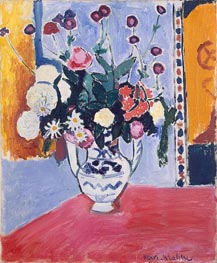
Bouquet (Vase with Two Handles) 1907
Oil Painting
$838
$838
Canvas Print
$79.44
$79.44
SKU: MAT-4779
Henri Matisse
Original Size: 74 x 61 cm
Hermitage Museum, St. Petersburg, Russia
Henri Matisse
Original Size: 74 x 61 cm
Hermitage Museum, St. Petersburg, Russia
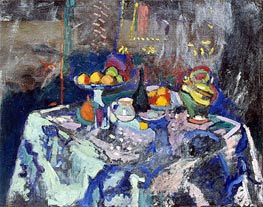
Vase, Bottle and Fruit 1906
Oil Painting
$1275
$1275
Canvas Print
$75.58
$75.58
SKU: MAT-4780
Henri Matisse
Original Size: 73 x 92 cm
Hermitage Museum, St. Petersburg, Russia
Henri Matisse
Original Size: 73 x 92 cm
Hermitage Museum, St. Petersburg, Russia
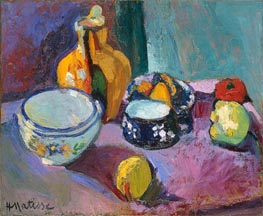
Dishes and Fruit 1901
Oil Painting
$692
$692
Canvas Print
$78.91
$78.91
SKU: MAT-4781
Henri Matisse
Original Size: 51 x 61.5 cm
Hermitage Museum, St. Petersburg, Russia
Henri Matisse
Original Size: 51 x 61.5 cm
Hermitage Museum, St. Petersburg, Russia
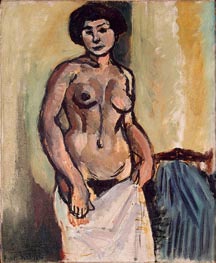
Nude Study 1908
Oil Painting
$807
$807
Canvas Print
$78.74
$78.74
SKU: MAT-4782
Henri Matisse
Original Size: 60.5 x 50 cm
Hermitage Museum, St. Petersburg, Russia
Henri Matisse
Original Size: 60.5 x 50 cm
Hermitage Museum, St. Petersburg, Russia
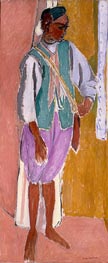
The Moroccan Amido 1912
Oil Painting
$1120
$1120
Canvas Print
$63.50
$63.50
SKU: MAT-4783
Henri Matisse
Original Size: 146.5 x 61.3 cm
Hermitage Museum, St. Petersburg, Russia
Henri Matisse
Original Size: 146.5 x 61.3 cm
Hermitage Museum, St. Petersburg, Russia
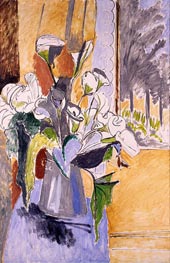
Bouquet of Flowers on a Veranda c.1912
Oil Painting
$815
$815
Canvas Print
$63.51
$63.51
SKU: MAT-4784
Henri Matisse
Original Size: 146 x 97 cm
Hermitage Museum, St. Petersburg, Russia
Henri Matisse
Original Size: 146 x 97 cm
Hermitage Museum, St. Petersburg, Russia
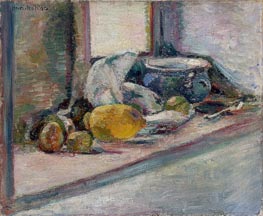
Blue Pot and Lemon 1897
Oil Painting
$645
$645
Canvas Print
$63.50
$63.50
SKU: MAT-4785
Henri Matisse
Original Size: 39 x 46.5 cm
Hermitage Museum, St. Petersburg, Russia
Henri Matisse
Original Size: 39 x 46.5 cm
Hermitage Museum, St. Petersburg, Russia
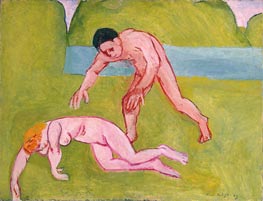
Nymph and Satyr 1908
Oil Painting
$1273
$1273
Canvas Print
$73.48
$73.48
SKU: MAT-4786
Henri Matisse
Original Size: 89 x 116.5 cm
Hermitage Museum, St. Petersburg, Russia
Henri Matisse
Original Size: 89 x 116.5 cm
Hermitage Museum, St. Petersburg, Russia
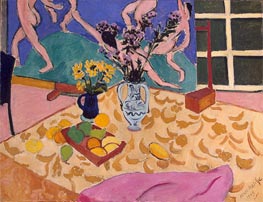
Still Life with The Dance 1909
Oil Painting
$1026
$1026
Canvas Print
$73.31
$73.31
SKU: MAT-4787
Henri Matisse
Original Size: 89.5 x 117.5 cm
Hermitage Museum, St. Petersburg, Russia
Henri Matisse
Original Size: 89.5 x 117.5 cm
Hermitage Museum, St. Petersburg, Russia
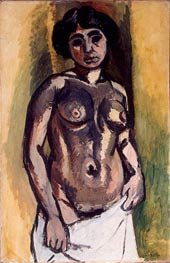
Nude (Black and Gold) 1908
Oil Painting
$1063
$1063
Canvas Print
$63.50
$63.50
SKU: MAT-4788
Henri Matisse
Original Size: 100 x 65 cm
Hermitage Museum, St. Petersburg, Russia
Henri Matisse
Original Size: 100 x 65 cm
Hermitage Museum, St. Petersburg, Russia
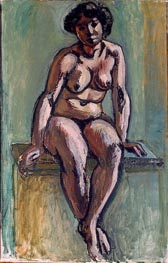
Seated Woman 1908
Oil Painting
$871
$871
Canvas Print
$63.50
$63.50
SKU: MAT-4789
Henri Matisse
Original Size: 80.5 x 52 cm
Hermitage Museum, St. Petersburg, Russia
Henri Matisse
Original Size: 80.5 x 52 cm
Hermitage Museum, St. Petersburg, Russia
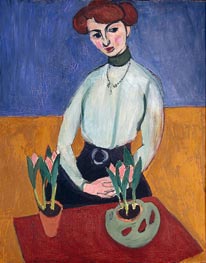
Girl with Tulips 1910
Oil Painting
$842
$842
Canvas Print
$76.11
$76.11
SKU: MAT-4790
Henri Matisse
Original Size: 92 x 73.5 cm
Hermitage Museum, St. Petersburg, Russia
Henri Matisse
Original Size: 92 x 73.5 cm
Hermitage Museum, St. Petersburg, Russia
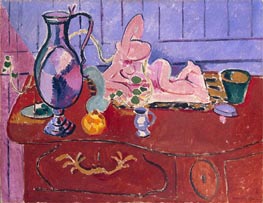
Pink Statuette and Jug on a Red Chest of Drawers 1910
Oil Painting
$1275
$1275
Canvas Print
$73.48
$73.48
SKU: MAT-4791
Henri Matisse
Original Size: 90 x 117 cm
Hermitage Museum, St. Petersburg, Russia
Henri Matisse
Original Size: 90 x 117 cm
Hermitage Museum, St. Petersburg, Russia
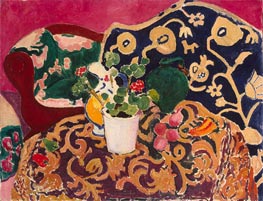
Spanish Still Life c.1910/11
Oil Painting
$1269
$1269
Canvas Print
$73.84
$73.84
SKU: MAT-4792
Henri Matisse
Original Size: 89 x 116 cm
Hermitage Museum, St. Petersburg, Russia
Henri Matisse
Original Size: 89 x 116 cm
Hermitage Museum, St. Petersburg, Russia