
Rosa Bonheur Painting Reproductions 1 of 2
1822-1899
French Realist Painter
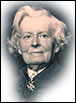
Before many critics knew what to do with a woman who painted on a monumental scale, Rosa Bonheur was already standing in the noise and dust of the horse market, watching muscle, temper, and motion with a practised eye. Born Marie-Rosalie Bonheur in Bordeaux on 16 March 1822 and dead at Thomery on 25 May 1899, she became the great French animalière of the nineteenth century - a realist painter and sculptor whose authority rested on observation rather than sentiment.
Her childhood did not unfold neatly. In 1828 the family left Bordeaux for Paris, where her father, Oscar-Raymond Bonheur, hoped to establish himself, and where the city would give his daughter what provincial life could not: museums, markets, slaughterhouses, and an inexhaustible theatre of animals. Her mother, Sophie Marquis, a piano teacher, taught her to read by linking each letter to an animal she had to choose and draw. It is a lovely and telling detail. For Bonheur, language and image began together, and both were tied to living creatures. School did not suit her. She was disruptive, repeatedly expelled, and a brief attempt to place her with a seamstress failed. When she was twelve, her father took over her training himself. He did more than permit her seriousness; he fed it, bringing live animals into the studio so she could study them at close range.
From there, her education widened with remarkable discipline. She copied from drawing manuals and plaster casts, as any aspiring artist of the period might do, yet she also went out to the fields around Paris, to Villiers near Levallois-Perret, and to the Bois de Boulogne, where sheep, cattle, goats, rabbits, and horses offered infinitely harder lessons than any academic model. At fourteen she began copying in the Louvre. Among the painters she especially admired were Poussin and Rubens, though she also studied Paulus Potter, Frans Pourbus the Younger, Louis Léopold Robert, Salvatore Rosa, and Karel Dujardin. More unusual - and more decisive - was her pursuit of anatomy. In the Paris abattoirs and at the École nationale vétérinaire d'Alfort, she studied osteology, dissected animals, and built a store of precise knowledge that later gave her paintings their weight. Befriending Étienne Geoffroy Saint-Hilaire and Isidore Geoffroy Saint-Hilaire, she moved close to the scientific culture of the age. Bone, tendon, gait, hide, horn - nothing in her pictures feels guessed.
By the late 1840s she was already exhibiting at the Paris Salon, collecting medals and attention, if not yet full acclaim. One early turning point came with Ploughing in the Nivernais, shown at the Salon of 1849 after a state commission and now in the Musée d'Orsay. It is a key work not merely because it advanced her public standing, but because it clarified her pictorial ethics. Bonheur did not treat animals as decorative accessories in a pastoral anecdote. She gave them structure, burden, and presence. In Ploughing in the Nivernais, labour itself becomes visible through the mass and rhythm of the team moving across the land. Realism, here, is not a slogan. It is a contract with physical fact.
Her real public breakthrough arrived with The Horse Fair. Begun in 1851, shown at the Salon in 1853, and completed in 1855, the vast canvas depicted the horse market on the boulevard de l'Hôpital in Paris, near the Pitié-Salpêtrière Hospital visible in the background. At eight by sixteen feet, it announced ambition before anyone even began to discuss its achievement. Critics and collectors argued over it. Some doubted whether a woman could have painted such forceful equine bodies herself; others tried to fold the work into official narratives that Bonheur herself resisted. The debate, though often condescending, enlarged her fame. Ernest Gambart, the powerful dealer who became her promoter, bought the picture in 1855 for forty thousand francs and ensured its exposure in England. There it found an ardent audience. William Rossetti praised it, Queen Victoria examined it, and the work's English career helped secure Bonheur's international standing. A reduced version later entered the National Gallery in London; the larger picture is now one of the treasures of the Metropolitan Museum of Art in New York.
In 1856, travelling in England and Scotland with Nathalie Micas, Bonheur met Queen Victoria, John Ruskin, and leading British artists. The journey mattered. Scotland gave her not only patronage but subject matter. From sketches gathered there came Highland Shepherd in 1859 and The Highland Raid in 1860, works that offered Victorian viewers an image of Highland life already felt to belong to the past. She was, in fact, often more warmly received in Britain than in France. Engravings after her paintings, particularly those made by Charles George Lewis, further widened her public. Reproduction can flatten an artist. In Bonheur's case, it spread her name without entirely draining away her authority, because even translated into print, her command of form remained legible.
Success altered her circumstances. In 1859 she moved to the Château de By near Fontainebleau, where she would live for the rest of her life and where a museum now preserves her memory. Honours followed, though not immediately in proportion to her fame. Empress Eugénie awarded her the Legion of Honour in 1865, and in 1894 she was promoted to Officer of the order, the first woman artist to receive that distinction. She also worked as a sculptor, always with the same insistence on animal truth. Yet public recognition was only part of the story. Just as striking was the way she arranged her life. She chose not to become subordinate to a husband or to any domestic script written by others. Instead, she made herself the breadwinner and the central professional intelligence of her household.
Notably, Bonheur adopted clothing more usually reserved for men - trousers, shirts, ties - because it allowed her to move freely in markets, fields, and places of slaughter where skirts were impractical and dangerous. In Paris this was not a trivial eccentricity. During the 1850s she had to seek police permission to wear trousers while studying sheep and cattle markets. That fact tells us something essential about her courage. She did not dress this way in order to imitate men in any simple sense. Rather, she took for herself a practical freedom society had assigned to them. Her domestic life, too, fell outside convention. She lived for more than forty years with Nathalie Micas, and after Micas's death formed a close partnership with the American painter Anna Elizabeth Klumpke, who later became her sole heir. Modern readers understandably return to these relationships, not because gossip improves biography, but because Bonheur's life openly challenged the arrangements nineteenth-century society expected of women.
Her later years were by no means quiet. In 1889 and 1890 she befriended the American sculptor Cyrus Dallin, and together they went to sketch the animals and performers of Buffalo Bill Cody's Wild West Show near Paris. In 1890 she painted Cody on horseback. Three years later her work appeared at the World's Columbian Exposition in Chicago, both in the Palace of Fine Arts and in the Woman's Building - a fitting double placement for an artist who belonged fully to mainstream artistic culture and yet remained indispensable to women's history. When she died in 1899, she was buried in Père Lachaise beside Nathalie Micas; Klumpke later joined them. Their shared tomb bears the words "Friendship is divine affection," a phrase at once decorous and deeply moving. Soon after Bonheur's death, many previously unseen works were sold at auction in Paris.
Fashion shifted cruelly in the twentieth century, and like many realist painters Bonheur was pushed aside by newer priorities. Yet her reputation never vanished completely. Linda Nochlin restored her to feminist art-historical debate in 1971; the National Museum of Women in the Arts mounted a substantial exhibition of her work in 1989-90; the market later revived, as seen when Monarchs of the Forest sold in 2008 for more than $200,000. Rosa Bonheur continues to matter for reasons larger than recovery alone. She makes animal painting serious without rhetoric, female independence visible without manifesto, and realism intellectually exact without coldness. Perhaps that is the most resonant detail of all: she built freedom not from theory, but from work - from hours spent looking, drawing, dissecting, correcting, and looking again. Today, that stubborn fidelity to the seen world feels not old-fashioned, but radical.
Her childhood did not unfold neatly. In 1828 the family left Bordeaux for Paris, where her father, Oscar-Raymond Bonheur, hoped to establish himself, and where the city would give his daughter what provincial life could not: museums, markets, slaughterhouses, and an inexhaustible theatre of animals. Her mother, Sophie Marquis, a piano teacher, taught her to read by linking each letter to an animal she had to choose and draw. It is a lovely and telling detail. For Bonheur, language and image began together, and both were tied to living creatures. School did not suit her. She was disruptive, repeatedly expelled, and a brief attempt to place her with a seamstress failed. When she was twelve, her father took over her training himself. He did more than permit her seriousness; he fed it, bringing live animals into the studio so she could study them at close range.
From there, her education widened with remarkable discipline. She copied from drawing manuals and plaster casts, as any aspiring artist of the period might do, yet she also went out to the fields around Paris, to Villiers near Levallois-Perret, and to the Bois de Boulogne, where sheep, cattle, goats, rabbits, and horses offered infinitely harder lessons than any academic model. At fourteen she began copying in the Louvre. Among the painters she especially admired were Poussin and Rubens, though she also studied Paulus Potter, Frans Pourbus the Younger, Louis Léopold Robert, Salvatore Rosa, and Karel Dujardin. More unusual - and more decisive - was her pursuit of anatomy. In the Paris abattoirs and at the École nationale vétérinaire d'Alfort, she studied osteology, dissected animals, and built a store of precise knowledge that later gave her paintings their weight. Befriending Étienne Geoffroy Saint-Hilaire and Isidore Geoffroy Saint-Hilaire, she moved close to the scientific culture of the age. Bone, tendon, gait, hide, horn - nothing in her pictures feels guessed.
By the late 1840s she was already exhibiting at the Paris Salon, collecting medals and attention, if not yet full acclaim. One early turning point came with Ploughing in the Nivernais, shown at the Salon of 1849 after a state commission and now in the Musée d'Orsay. It is a key work not merely because it advanced her public standing, but because it clarified her pictorial ethics. Bonheur did not treat animals as decorative accessories in a pastoral anecdote. She gave them structure, burden, and presence. In Ploughing in the Nivernais, labour itself becomes visible through the mass and rhythm of the team moving across the land. Realism, here, is not a slogan. It is a contract with physical fact.
Her real public breakthrough arrived with The Horse Fair. Begun in 1851, shown at the Salon in 1853, and completed in 1855, the vast canvas depicted the horse market on the boulevard de l'Hôpital in Paris, near the Pitié-Salpêtrière Hospital visible in the background. At eight by sixteen feet, it announced ambition before anyone even began to discuss its achievement. Critics and collectors argued over it. Some doubted whether a woman could have painted such forceful equine bodies herself; others tried to fold the work into official narratives that Bonheur herself resisted. The debate, though often condescending, enlarged her fame. Ernest Gambart, the powerful dealer who became her promoter, bought the picture in 1855 for forty thousand francs and ensured its exposure in England. There it found an ardent audience. William Rossetti praised it, Queen Victoria examined it, and the work's English career helped secure Bonheur's international standing. A reduced version later entered the National Gallery in London; the larger picture is now one of the treasures of the Metropolitan Museum of Art in New York.
In 1856, travelling in England and Scotland with Nathalie Micas, Bonheur met Queen Victoria, John Ruskin, and leading British artists. The journey mattered. Scotland gave her not only patronage but subject matter. From sketches gathered there came Highland Shepherd in 1859 and The Highland Raid in 1860, works that offered Victorian viewers an image of Highland life already felt to belong to the past. She was, in fact, often more warmly received in Britain than in France. Engravings after her paintings, particularly those made by Charles George Lewis, further widened her public. Reproduction can flatten an artist. In Bonheur's case, it spread her name without entirely draining away her authority, because even translated into print, her command of form remained legible.
Success altered her circumstances. In 1859 she moved to the Château de By near Fontainebleau, where she would live for the rest of her life and where a museum now preserves her memory. Honours followed, though not immediately in proportion to her fame. Empress Eugénie awarded her the Legion of Honour in 1865, and in 1894 she was promoted to Officer of the order, the first woman artist to receive that distinction. She also worked as a sculptor, always with the same insistence on animal truth. Yet public recognition was only part of the story. Just as striking was the way she arranged her life. She chose not to become subordinate to a husband or to any domestic script written by others. Instead, she made herself the breadwinner and the central professional intelligence of her household.
Notably, Bonheur adopted clothing more usually reserved for men - trousers, shirts, ties - because it allowed her to move freely in markets, fields, and places of slaughter where skirts were impractical and dangerous. In Paris this was not a trivial eccentricity. During the 1850s she had to seek police permission to wear trousers while studying sheep and cattle markets. That fact tells us something essential about her courage. She did not dress this way in order to imitate men in any simple sense. Rather, she took for herself a practical freedom society had assigned to them. Her domestic life, too, fell outside convention. She lived for more than forty years with Nathalie Micas, and after Micas's death formed a close partnership with the American painter Anna Elizabeth Klumpke, who later became her sole heir. Modern readers understandably return to these relationships, not because gossip improves biography, but because Bonheur's life openly challenged the arrangements nineteenth-century society expected of women.
Her later years were by no means quiet. In 1889 and 1890 she befriended the American sculptor Cyrus Dallin, and together they went to sketch the animals and performers of Buffalo Bill Cody's Wild West Show near Paris. In 1890 she painted Cody on horseback. Three years later her work appeared at the World's Columbian Exposition in Chicago, both in the Palace of Fine Arts and in the Woman's Building - a fitting double placement for an artist who belonged fully to mainstream artistic culture and yet remained indispensable to women's history. When she died in 1899, she was buried in Père Lachaise beside Nathalie Micas; Klumpke later joined them. Their shared tomb bears the words "Friendship is divine affection," a phrase at once decorous and deeply moving. Soon after Bonheur's death, many previously unseen works were sold at auction in Paris.
Fashion shifted cruelly in the twentieth century, and like many realist painters Bonheur was pushed aside by newer priorities. Yet her reputation never vanished completely. Linda Nochlin restored her to feminist art-historical debate in 1971; the National Museum of Women in the Arts mounted a substantial exhibition of her work in 1989-90; the market later revived, as seen when Monarchs of the Forest sold in 2008 for more than $200,000. Rosa Bonheur continues to matter for reasons larger than recovery alone. She makes animal painting serious without rhetoric, female independence visible without manifesto, and realism intellectually exact without coldness. Perhaps that is the most resonant detail of all: she built freedom not from theory, but from work - from hours spent looking, drawing, dissecting, correcting, and looking again. Today, that stubborn fidelity to the seen world feels not old-fashioned, but radical.
39 Rosa Bonheur Paintings
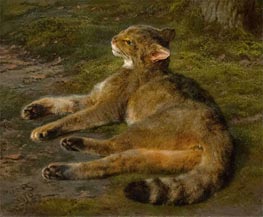
Wild Cat 1850
Oil Painting
$1265
$1265
Canvas Print
$79.33
$79.33
SKU: BRO-16878
Rosa Bonheur
Original Size: 46 x 56 cm
National Museum, Stockholm, Sweden
Rosa Bonheur
Original Size: 46 x 56 cm
National Museum, Stockholm, Sweden
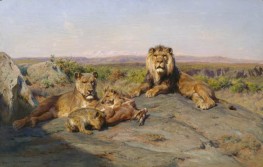
Lions 1895
Oil Painting
$3690
$3690
Canvas Print
$63.41
$63.41
SKU: BRO-21842
Rosa Bonheur
Original Size: 63.7 x 100.5 cm
Pushkin Museum of Fine Arts, Moscow, Russia
Rosa Bonheur
Original Size: 63.7 x 100.5 cm
Pushkin Museum of Fine Arts, Moscow, Russia
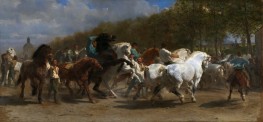
The Horse Fair 1855
Oil Painting
$12803
$12803
Canvas Print
$63.41
$63.41
SKU: BRO-22179
Rosa Bonheur
Original Size: 120 x 260 cm
National Gallery, London, UK
Rosa Bonheur
Original Size: 120 x 260 cm
National Gallery, London, UK
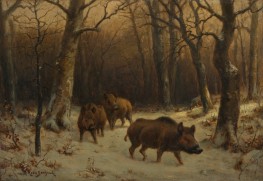
Wild Boars in the Snow c.1872/77
Oil Painting
$1306
$1306
Canvas Print
$63.41
$63.41
SKU: BRO-22180
Rosa Bonheur
Original Size: 21 x 30.8 cm
Cleveland Museum of Art, Ohio, USA
Rosa Bonheur
Original Size: 21 x 30.8 cm
Cleveland Museum of Art, Ohio, USA
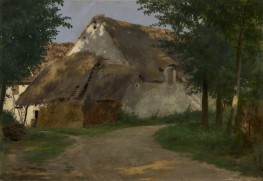
The Farm at the Entrance of the Wood 1860-1880
Oil Painting
$598
$598
Canvas Print
$63.41
$63.41
SKU: BRO-22181
Rosa Bonheur
Original Size: 28.4 x 40.3 cm
Cleveland Museum of Art, Ohio, USA
Rosa Bonheur
Original Size: 28.4 x 40.3 cm
Cleveland Museum of Art, Ohio, USA
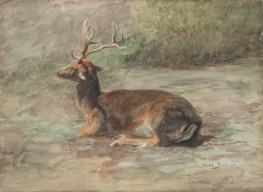
Stag Lying Down c.1875/85
Paper Art Print
$60.04
$60.04
SKU: BRO-22182
Rosa Bonheur
Original Size: 28 x 38.1 cm
Cleveland Museum of Art, Ohio, USA
Rosa Bonheur
Original Size: 28 x 38.1 cm
Cleveland Museum of Art, Ohio, USA
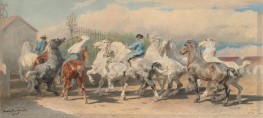
Return from the Horse Fair 1873
Paper Art Print
$60.04
$60.04
SKU: BRO-22183
Rosa Bonheur
Original Size: 25.9 x 56.7 cm
Cleveland Museum of Art, Ohio, USA
Rosa Bonheur
Original Size: 25.9 x 56.7 cm
Cleveland Museum of Art, Ohio, USA
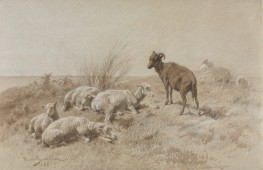
Sheep 1861
Paper Art Print
$60.04
$60.04
SKU: BRO-22184
Rosa Bonheur
Original Size: 20.8 x 31.8 cm
Cleveland Museum of Art, Ohio, USA
Rosa Bonheur
Original Size: 20.8 x 31.8 cm
Cleveland Museum of Art, Ohio, USA
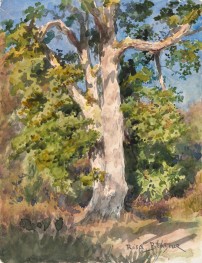
Tree Study c.1842/99
Paper Art Print
$60.04
$60.04
SKU: BRO-22185
Rosa Bonheur
Original Size: 23.6 x 18.1 cm
Cleveland Museum of Art, Ohio, USA
Rosa Bonheur
Original Size: 23.6 x 18.1 cm
Cleveland Museum of Art, Ohio, USA
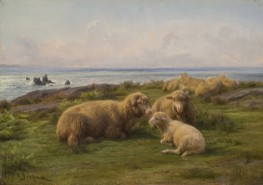
Sheep by the Sea 1865
Oil Painting
$1435
$1435
Canvas Print
$63.41
$63.41
SKU: BRO-22186
Rosa Bonheur
Original Size: 32.4 x 45.7 cm
Public Collection
Rosa Bonheur
Original Size: 32.4 x 45.7 cm
Public Collection
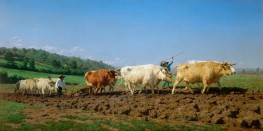
Ploughing in Nevers 1849
Oil Painting
$7570
$7570
Canvas Print
$63.41
$63.41
SKU: BRO-22187
Rosa Bonheur
Original Size: 134 x 260 cm
Musee d'Orsay, Paris, France
Rosa Bonheur
Original Size: 134 x 260 cm
Musee d'Orsay, Paris, France
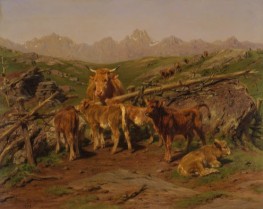
Weaning the Calves 1879
Oil Painting
$7573
$7573
Canvas Print
$76.70
$76.70
SKU: BRO-22188
Rosa Bonheur
Original Size: 65.1 x 81.3 cm
Metropolitan Museum of Art, New York, USA
Rosa Bonheur
Original Size: 65.1 x 81.3 cm
Metropolitan Museum of Art, New York, USA
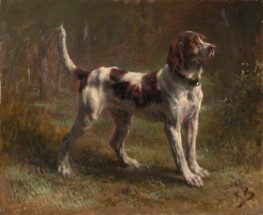
A Limier Briquet Hound 1856
Oil Painting
$1196
$1196
Canvas Print
$63.41
$63.41
SKU: BRO-22189
Rosa Bonheur
Original Size: 36.8 x 45.7 cm
Metropolitan Museum of Art, New York, USA
Rosa Bonheur
Original Size: 36.8 x 45.7 cm
Metropolitan Museum of Art, New York, USA
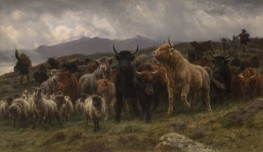
Highland Raid 1860
Oil Painting
$9111
$9111
Canvas Print
$63.41
$63.41
SKU: BRO-22190
Rosa Bonheur
Original Size: 129.5 x 213.4 cm
Public Collection
Rosa Bonheur
Original Size: 129.5 x 213.4 cm
Public Collection
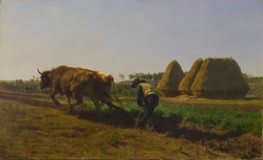
Ploughing Scene 1854
Oil Painting
$2600
$2600
Canvas Print
$63.41
$63.41
SKU: BRO-22191
Rosa Bonheur
Original Size: 49.5 x 80.5 cm
The Walters Art Museum, Baltimore, USA
Rosa Bonheur
Original Size: 49.5 x 80.5 cm
The Walters Art Museum, Baltimore, USA
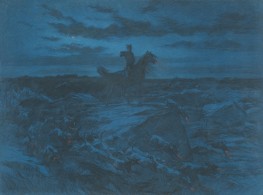
The Legend of the Wolves 1890s
Paper Art Print
$67.83
$67.83
SKU: BRO-22192
Rosa Bonheur
Original Size: 59.9 x 80.7 cm
National Gallery of Art, Washington, USA
Rosa Bonheur
Original Size: 59.9 x 80.7 cm
National Gallery of Art, Washington, USA
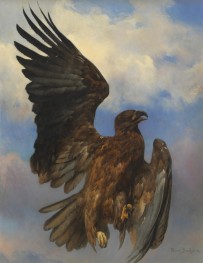
The Wounded Eagle 1870
Oil Painting
$2856
$2856
Canvas Print
$74.43
$74.43
SKU: BRO-22193
Rosa Bonheur
Original Size: 147.6 x 114.6 cm
Los Angeles County Museum of Art, California, USA
Rosa Bonheur
Original Size: 147.6 x 114.6 cm
Los Angeles County Museum of Art, California, USA
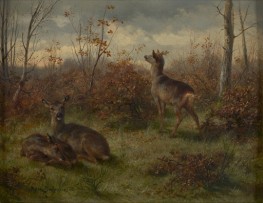
Roe Deer 1860
Oil Painting
$1356
$1356
Canvas Print
$63.41
$63.41
SKU: BRO-22194
Rosa Bonheur
Original Size: 19 x 24.7 cm
The Wallace Collection, London, UK
Rosa Bonheur
Original Size: 19 x 24.7 cm
The Wallace Collection, London, UK
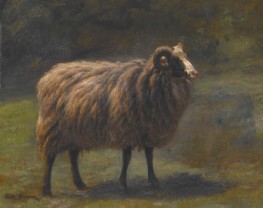
Ram 1845-1850
Oil Painting
$1167
$1167
Canvas Print
$63.41
$63.41
SKU: BRO-22195
Rosa Bonheur
Original Size: 34.3 x 42 cm
Indianapolis Museum of Art, Indiana, USA
Rosa Bonheur
Original Size: 34.3 x 42 cm
Indianapolis Museum of Art, Indiana, USA
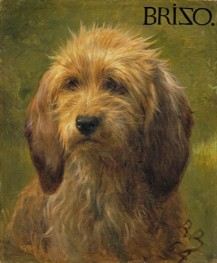
Brizo, a Shepherd's Dog 1864
Oil Painting
$811
$811
Canvas Print
$63.41
$63.41
SKU: BRO-22196
Rosa Bonheur
Original Size: 46.1 x 38.4 cm
The Wallace Collection, London, UK
Rosa Bonheur
Original Size: 46.1 x 38.4 cm
The Wallace Collection, London, UK
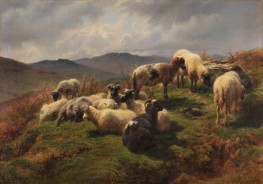
Sheep in the Highlands 1857
Oil Painting
$6386
$6386
Canvas Print
$67.61
$67.61
SKU: BRO-22197
Rosa Bonheur
Original Size: 77 x 96 cm
The Wallace Collection, London, UK
Rosa Bonheur
Original Size: 77 x 96 cm
The Wallace Collection, London, UK
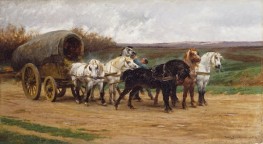
A Waggon and a Team of Horses 1852
Oil Painting
$2039
$2039
Canvas Print
$63.41
$63.41
SKU: BRO-22198
Rosa Bonheur
Original Size: 34.3 x 62.4 cm
The Wallace Collection, London, UK
Rosa Bonheur
Original Size: 34.3 x 62.4 cm
The Wallace Collection, London, UK
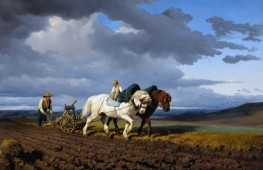
Ploughing 1844
Oil Painting
$5029
$5029
Canvas Print
$63.41
$63.41
SKU: BRO-22199
Rosa Bonheur
Original Size: 73 x 110.5 cm
Private Collection
Rosa Bonheur
Original Size: 73 x 110.5 cm
Private Collection
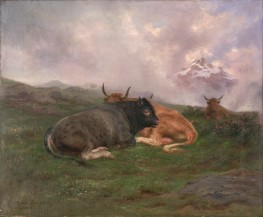
Cattle at Rest on a Hillside in the Alps 1885
Oil Painting
$2179
$2179
Canvas Print
$79.33
$79.33
SKU: BRO-22200
Rosa Bonheur
Original Size: 54.9 x 66.4 cm
Art Institute of Chicago, Illinois, USA
Rosa Bonheur
Original Size: 54.9 x 66.4 cm
Art Institute of Chicago, Illinois, USA