
The Bookworm, c.1851 Carl Spitzweg (1808-1885)
Location: Public CollectionOriginal Size: 49.5 x 26.8 cm
Own a museum-quality reproduction of The Bookworm by Carl Spitzweg (c.1851), exclusively hand-painted in oils on linen canvas by European artists with academic training. Each masterpiece is created with meticulous craftsmanship, capturing the exceptional quality and authentic brushwork of the original painting.

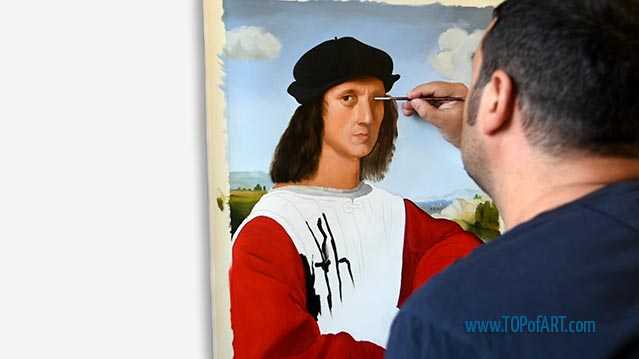
Oil Painting Reproduction
If you want a different size than the offered
Description
Painted by European Artists with Academic Education
Museum Quality
+ 4 cm (1.6") Margins for Stretching
Creation Time: 8-9 Weeks
Creation Process
We create our paintings with museum quality and covering the highest academic standards. Once we get your order, it will be entirely hand-painted with oil on canvas. All the materials we use are the highest level, being totally artist graded painting materials and linen canvas.
We will add 1.6" (4 cm) additional blank canvas all over the painting for stretching.
High quality and detailing in every inch are time consuming. The reproduction of Carl Spitzweg also needs time to dry in order to be completely ready for shipping, as this is crucial to not be damaged during transportation.
Based on the size, level of detail and complexity we need 8-9 weeks to complete the process.
In case the delivery date needs to be extended in time, or we are overloaded with requests, there will be an email sent to you sharing the new timelines of production and delivery.
TOPofART wants to remind you to keep patient, in order to get you the highest quality, being our mission to fulfill your expectations.
We not stretch and frame our oil paintings due to several reasons:
Painting reproduction is a high quality expensive product, which we cannot risk to damage by sending it being stretched.
Also, there are postal restrictions, regarding the size of the shipment.
Additionally, due to the dimensions of the stretched canvas, the shipment price may exceed the price of the product itself.
You can stretch and frame your painting in your local frame-shop.
Delivery
Once the painting The Bookworm is ready and dry, it will be shipped to your delivery address. The canvas will be rolled-up in a secure postal tube.
We offer free shipping as well as paid express transportation services.
After adding your artwork to the shopping cart, you will be able to check the delivery price using the Estimate Shipping and Tax tool.
Museum Quality
The paintings we create are only of museum quality. Our academy graduated artists will never allow a compromise in the quality and detail of the ordered painting. TOPofART do not work, and will never allow ourselves to work with low quality studios from the Far East. We are based in Europe, and quality is our highest priority.
Additional Information
The reader’s concentration gives the scene its humor. A white handkerchief hangs loose behind his dark coat, and the book wedged between his legs makes his stance look particularly impractical. Yet his attention never strays from the page. Spitzweg carefully balances this physical comedy against the dignity of the white-haired man: his absorption is recognizable, even if his method of browsing is extreme.
Light enters from outside the picture and falls across his hair, the open pages, and the shelves immediately before him. Warm ocher and reddish-brown bindings brighten against the shadowed books on the right. Above, turquoise-green decoration and curling gold ornament suggest a library far grander than the reader’s immediate needs. The tall, narrow canvas presses him into the company of the bookshelves, while the ladder’s long diagonal gives his stillness an uneasy support. Its feet and the floor remain outside the frame.
This private retreat belongs to the world of Biedermeier art, with its interest in familiar interiors and individual habits. Painted shortly after the upheavals of 1848, the scene also allows a gently satirical reading: the scholar has withdrawn into old learning while events elsewhere demand attention. Spitzweg does not need a dramatic gesture to make that distance felt. The reader simply has no interest to spare for anything beyond his book.
The shelf label identifies his subject as metaphysics, a fitting choice for someone so detached from practical concerns. Down at the lower left, a globe sits partly cut off by the frame. It places the wider world beneath him, well away from the bright patch of paper held before his eyes.

Reading the Breviary, the Evening c.1845
$1336
$61.31
Carl Spitzweg
Original Size:31 x 24.4 cm
Louvre Museum, Paris, France

The Flute Recital n.d.
$1277
$61.31
Carl Spitzweg
Original Size:29 x 23 cm
Wallraf-Richartz-Museum, Cologne, Germany
The Convent-School Outing c.1855/60
$1832
$61.31
Carl Spitzweg
Original Size:32 x 54 cm
Neue Pinakothek, Munich, Germany

The Poor Poet 1839
$2365
$61.31
Carl Spitzweg
Original Size:36.2 x 44.6 cm
Neue Pinakothek, Munich, Germany
The Two Bosom Buddies c.1875/80
$1277
$61.31
Carl Spitzweg
Original Size:35.5 x 21 cm
Private Collection