
Kazimir Malevich Painting Reproductions 1 of 7
1879-1935
Russian Avant-Garde Artist
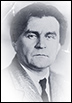
On 15 May 1935, as cancer tightened its hold, a black square was hung above the bed of Kazimir Severinovich Malevich - a stark, deliberate sign, less decoration than verdict. That image frames a life spent arguing, in paint and in prose, that art could step away from the world of things and still speak with force. Born in Kyiv (then Kiev) on 23 February 1879 and dying in Leningrad at fifty-six, Malevich became a Russian avant-garde artist and art theorist whose most radical gesture, Suprematism, aimed at “pure feeling” rather than depiction, and whose position remains central to modern art in Central and Eastern Europe.
Raised amid the itinerant pragmatics of a family tethered to sugar refineries, he learned early what it meant to live between places and languages. Polish was spoken at home; Russian came with work and bureaucracy; Ukrainian belonged to the surrounding landscape. In Parkhomovka near Kharkiv he attended an agricultural school, and the rural world entered his first attempts at painting in the direct, simplified manner of peasant imagery. Later, near Kyiv, he briefly studied at the Kyiv School of Drawing under the encouragement of the realist painter Mykola Pymonenko. Already there is a tension that never quite leaves him - the pull of vernacular forms and the push toward an art that refuses the comfort of recognition.
Kursk, from 1896, offered both employment and a widening horizon. Malevich worked as a technical draughtsman for the Moscow-Kursk-Voronezh railway company, a job that trained the hand in precision and the mind in structure. Outdoors he painted alongside local artists; through reproductions he absorbed the realist authority of the Peredvizhniki, including Ivan Shishkin and Ilia Repin. Domestic life arrived quickly: in 1899 he married Kazimira Ivanovna Zgleits, and they had two children, Galina and Anatolii, the latter dying young of typhoid. Grief sits quietly in the background of his early years, not advertised, but hard to ignore when one reads how urgently he later sought an art severed from anecdote and consolation.
Moscow, reached in the mid-1900s, did not welcome him with institutional approval. He trained in the studio of Fedor Rerberg, which prepared students for the Moscow School of Painting, Sculpture and Architecture, yet Malevich’s repeated applications were refused. Denial, for some artists, becomes a lifelong wound; for him it acted more like a release. In 1907 the Blue Rose Exhibition of Moscow Symbolists left a deep mark, and paintings such as The Triumph of Heaven (1907) and The Shroud of Christ (1908) carried that dreamlike, mystical pressure. Around 1908, Russian icons and folk art became more than references - they offered a model of frontal clarity and spiritual economy. Meanwhile, Moscow’s collectors supplied another education. Sergei Shchukin and Ivan Morozov amassed French Impressionism and the newer shocks of Cézanne, Gauguin, Picasso, and Matisse; Malevich is said to have visited these collections soon after arriving in 1904, and the proximity of Apple Tree in Blossom (1904) to a Sisley landscape then owned by Shchukin hints at what that private museum could do to a searching painter. Outside the studio, history pressed in: the unrest that intensified after Bloody Sunday (January 1905), the October Manifesto, the repression that followed. Malevich later claimed involvement in the December 1905 barricade fighting in Moscow - a self-portrait of the artist as participant, whether or not it can be verified in the record.
By 1910 he was embedded in the abrasive social life of the Russian avant-garde. He exhibited with the Knave of Diamonds, a circle that tried to fuse Western modernist vocabularies with Russian sources, and soon moved in the orbit of Natalia Goncharova and Mikhail Larionov, who broke away to form the Donkey’s Tail collective. Flattened forms, “primitive” directness, peasant subjects - these were not nostalgic choices so much as strategic ones, a way to deny academic illusionism while keeping the image physically present. Works like Floor Polishers (1911-12) and Washerwoman (1911) show the body as block, gesture as pattern. Commerce, too, entered the story: in 1911 he designed an eau de cologne bottle for Brocard & Co. called Severny - an iceberg-like base capped with a polar bear stopper - a small object that compresses his taste for sharp silhouettes and emblematic form. Perhaps it also reminded him that modernity was not only a manifesto but a marketplace.
Speed and fracture arrived with Cubo-Futurism. In 1913, at the Target exhibition in Moscow, Malevich showed paintings like Morning in the Country after Snowstorm and Knifegrinder or Principle of Glittering, where motion seems to splinter the world into angular signs. That same year he designed sets and costumes for the futurist opera Victory Over the Sun in St. Petersburg, its libretto written in zaum - “transrational” language meant to short-circuit ordinary sense. In a curtain design he traced the outline of a square, later identifying it as the first appearance of what would become his most charged emblem. Invited in 1914 to the Salon des Indépendants in Paris, he sent works including Samovar (1913), placing a Russian object into a Parisian arena. War, beginning in 1914, hardened the collage impulse: Reservist of the First Division (1914) incorporated stamp, text, and objects, a painting that behaves like a dossier. At the same time he produced propagandistic chromolithographs with captions by Vladimir Mayakovsky for Segodniashnii Lubok, drawing on folk-print punch and blunt color. The public voice and the private experiment ran side by side.
1915 was the hinge. Malevich published From Cubism and Futurism to Suprematism and exhibited Black Square at the Last Futurist Exhibition 0,10 in Petrograd, placing it high in the corner like an icon - except the icon now refused any figure. In Black Square (1915) the image is both almost nothing and insistently something: a flat plane that claims the right to be the whole event. Suprematism followed as a sequence of geometric decisions on minimal grounds - circles, crosses, rectangles - and in 1918 White on White pared the language down further, asking the eye to work with near-sameness, with the slightest shifts in tone and edge. Startlingly, the new severity was not cold. Suprematism, as he argued and revised it, pursued spirituality through reduction, as if stripping away objects might expose a different kind of intensity. One technical detail supports that seriousness: he layered paint to alter perception, sometimes laying black beneath red so the red reads as darkened, weighted from within - an approach that later helped experts distinguish authentic works from imitations that lacked the same optical depth.
After the October Revolution, institutions opened briefly to the very art that would later be condemned. Malevich worked with state arts bodies, taught in Vitebsk alongside Marc Chagall, and founded UNOVIS in 1919, a collective that treated Suprematism as a shared program rather than a private signature. That year he also held a solo show at the Sixteenth State Exhibition in Moscow. In 1923 he became director of the Petrograd State Institute of Artistic Culture, but in 1926 it was forced to close after a party newspaper denounced it as a “monastery” of suspect ideas. He nonetheless published The Non-Objective World (Munich, 1926), fixing Suprematism in text with the calm insistence of someone building a system while standing on shifting ground.
Only once did Kazimir Severinovich Malevich leave the Soviet Union. In 1927 he travelled to Warsaw, exhibited at the Polish Arts Club in the Polonia Hotel, and met artists including Władysław Strzemiński, Katarzyna Kobro, and Henryk Stażewski. Criticism came too - the charge that Suprematism did not serve a utilitarian avant-garde - but the encounter mattered, feeding Polish modernism for years. From Warsaw he went to Berlin with the poet-critic Tadeusz Peiper, visited the Bauhaus in Dessau, and met Walter Gropius and László Moholy-Nagy. The Great Berlin Art Exhibition showed over seventy of his works, a rare, concentrated account of his development, and he left many pieces behind when he returned - an act that later shaped Western knowledge of his oeuvre for decades. Back in the Soviet sphere he taught at the Kyiv Art Institute from 1928 to 1930 alongside Alexander Bogomazov, Victor Palmov, and Vladimir Tatlin, and published in the Kharkiv magazine Nova Generatsiia. Then the clamp tightened: repression of the intelligentsia pushed him back to Leningrad, and in autumn 1930 he was arrested and interrogated by the OGPU, accused of Polish espionage and threatened with execution before being released in early December.
By the early 1930s, Stalinist cultural policy imposed Socialist Realism and treated abstraction as “bourgeois.” Malevich returned to figuration, not as a conversion but as a negotiation for survival and continued work. Diagnosed with cancer in 1933, he was forbidden to travel abroad for treatment. Still he painted and exhibited as far as circumstances allowed, constrained by illness and censorship. When he died in 1935, mourners were permitted to wave a banner bearing a black square, a public acknowledgement that the simplest form he devised had become a collective sign. He wished to be buried near Nemchinovka under an oak, and a memorial marker designed by Nikolai Suetin - a white cube with a black square - stood until war erased it. Later, Nazi Germany condemned his art as “Degenerate,” while museums and scholars elsewhere began to claim him as foundational; major posthumous exhibitions followed at the Museum of Modern Art (1936), the Guggenheim (1973), and the Stedelijk Museum in Amsterdam (1989), which holds a substantial collection. In the 1990s, disputes over ownership erupted between museums and his heirs, a reminder that even the most “non-objective” art remains entangled with objects, rights, and power.
Malevich’s influence moved outward in waves - to El Lissitzky, Lyubov Popova, Alexander Rodchenko, Henryk Stażewski, and on to later abstract artists such as Ad Reinhardt and the Minimalists - not because they copied his shapes, but because he gave permission to treat form as thought. Look at Black Square now and it still refuses easy intimacy; it does not flatter the viewer. Yet it also clears a space, like a held breath in a crowded room. Perhaps solitude gave his brush its clarity. Malevich remains relevant because he insisted, against fashion and coercion alike, that art could be more than description - it could be a test of what feeling, belief, and visual logic might become when the world of things is set aside.
Raised amid the itinerant pragmatics of a family tethered to sugar refineries, he learned early what it meant to live between places and languages. Polish was spoken at home; Russian came with work and bureaucracy; Ukrainian belonged to the surrounding landscape. In Parkhomovka near Kharkiv he attended an agricultural school, and the rural world entered his first attempts at painting in the direct, simplified manner of peasant imagery. Later, near Kyiv, he briefly studied at the Kyiv School of Drawing under the encouragement of the realist painter Mykola Pymonenko. Already there is a tension that never quite leaves him - the pull of vernacular forms and the push toward an art that refuses the comfort of recognition.
Kursk, from 1896, offered both employment and a widening horizon. Malevich worked as a technical draughtsman for the Moscow-Kursk-Voronezh railway company, a job that trained the hand in precision and the mind in structure. Outdoors he painted alongside local artists; through reproductions he absorbed the realist authority of the Peredvizhniki, including Ivan Shishkin and Ilia Repin. Domestic life arrived quickly: in 1899 he married Kazimira Ivanovna Zgleits, and they had two children, Galina and Anatolii, the latter dying young of typhoid. Grief sits quietly in the background of his early years, not advertised, but hard to ignore when one reads how urgently he later sought an art severed from anecdote and consolation.
Moscow, reached in the mid-1900s, did not welcome him with institutional approval. He trained in the studio of Fedor Rerberg, which prepared students for the Moscow School of Painting, Sculpture and Architecture, yet Malevich’s repeated applications were refused. Denial, for some artists, becomes a lifelong wound; for him it acted more like a release. In 1907 the Blue Rose Exhibition of Moscow Symbolists left a deep mark, and paintings such as The Triumph of Heaven (1907) and The Shroud of Christ (1908) carried that dreamlike, mystical pressure. Around 1908, Russian icons and folk art became more than references - they offered a model of frontal clarity and spiritual economy. Meanwhile, Moscow’s collectors supplied another education. Sergei Shchukin and Ivan Morozov amassed French Impressionism and the newer shocks of Cézanne, Gauguin, Picasso, and Matisse; Malevich is said to have visited these collections soon after arriving in 1904, and the proximity of Apple Tree in Blossom (1904) to a Sisley landscape then owned by Shchukin hints at what that private museum could do to a searching painter. Outside the studio, history pressed in: the unrest that intensified after Bloody Sunday (January 1905), the October Manifesto, the repression that followed. Malevich later claimed involvement in the December 1905 barricade fighting in Moscow - a self-portrait of the artist as participant, whether or not it can be verified in the record.
By 1910 he was embedded in the abrasive social life of the Russian avant-garde. He exhibited with the Knave of Diamonds, a circle that tried to fuse Western modernist vocabularies with Russian sources, and soon moved in the orbit of Natalia Goncharova and Mikhail Larionov, who broke away to form the Donkey’s Tail collective. Flattened forms, “primitive” directness, peasant subjects - these were not nostalgic choices so much as strategic ones, a way to deny academic illusionism while keeping the image physically present. Works like Floor Polishers (1911-12) and Washerwoman (1911) show the body as block, gesture as pattern. Commerce, too, entered the story: in 1911 he designed an eau de cologne bottle for Brocard & Co. called Severny - an iceberg-like base capped with a polar bear stopper - a small object that compresses his taste for sharp silhouettes and emblematic form. Perhaps it also reminded him that modernity was not only a manifesto but a marketplace.
Speed and fracture arrived with Cubo-Futurism. In 1913, at the Target exhibition in Moscow, Malevich showed paintings like Morning in the Country after Snowstorm and Knifegrinder or Principle of Glittering, where motion seems to splinter the world into angular signs. That same year he designed sets and costumes for the futurist opera Victory Over the Sun in St. Petersburg, its libretto written in zaum - “transrational” language meant to short-circuit ordinary sense. In a curtain design he traced the outline of a square, later identifying it as the first appearance of what would become his most charged emblem. Invited in 1914 to the Salon des Indépendants in Paris, he sent works including Samovar (1913), placing a Russian object into a Parisian arena. War, beginning in 1914, hardened the collage impulse: Reservist of the First Division (1914) incorporated stamp, text, and objects, a painting that behaves like a dossier. At the same time he produced propagandistic chromolithographs with captions by Vladimir Mayakovsky for Segodniashnii Lubok, drawing on folk-print punch and blunt color. The public voice and the private experiment ran side by side.
1915 was the hinge. Malevich published From Cubism and Futurism to Suprematism and exhibited Black Square at the Last Futurist Exhibition 0,10 in Petrograd, placing it high in the corner like an icon - except the icon now refused any figure. In Black Square (1915) the image is both almost nothing and insistently something: a flat plane that claims the right to be the whole event. Suprematism followed as a sequence of geometric decisions on minimal grounds - circles, crosses, rectangles - and in 1918 White on White pared the language down further, asking the eye to work with near-sameness, with the slightest shifts in tone and edge. Startlingly, the new severity was not cold. Suprematism, as he argued and revised it, pursued spirituality through reduction, as if stripping away objects might expose a different kind of intensity. One technical detail supports that seriousness: he layered paint to alter perception, sometimes laying black beneath red so the red reads as darkened, weighted from within - an approach that later helped experts distinguish authentic works from imitations that lacked the same optical depth.
After the October Revolution, institutions opened briefly to the very art that would later be condemned. Malevich worked with state arts bodies, taught in Vitebsk alongside Marc Chagall, and founded UNOVIS in 1919, a collective that treated Suprematism as a shared program rather than a private signature. That year he also held a solo show at the Sixteenth State Exhibition in Moscow. In 1923 he became director of the Petrograd State Institute of Artistic Culture, but in 1926 it was forced to close after a party newspaper denounced it as a “monastery” of suspect ideas. He nonetheless published The Non-Objective World (Munich, 1926), fixing Suprematism in text with the calm insistence of someone building a system while standing on shifting ground.
Only once did Kazimir Severinovich Malevich leave the Soviet Union. In 1927 he travelled to Warsaw, exhibited at the Polish Arts Club in the Polonia Hotel, and met artists including Władysław Strzemiński, Katarzyna Kobro, and Henryk Stażewski. Criticism came too - the charge that Suprematism did not serve a utilitarian avant-garde - but the encounter mattered, feeding Polish modernism for years. From Warsaw he went to Berlin with the poet-critic Tadeusz Peiper, visited the Bauhaus in Dessau, and met Walter Gropius and László Moholy-Nagy. The Great Berlin Art Exhibition showed over seventy of his works, a rare, concentrated account of his development, and he left many pieces behind when he returned - an act that later shaped Western knowledge of his oeuvre for decades. Back in the Soviet sphere he taught at the Kyiv Art Institute from 1928 to 1930 alongside Alexander Bogomazov, Victor Palmov, and Vladimir Tatlin, and published in the Kharkiv magazine Nova Generatsiia. Then the clamp tightened: repression of the intelligentsia pushed him back to Leningrad, and in autumn 1930 he was arrested and interrogated by the OGPU, accused of Polish espionage and threatened with execution before being released in early December.
By the early 1930s, Stalinist cultural policy imposed Socialist Realism and treated abstraction as “bourgeois.” Malevich returned to figuration, not as a conversion but as a negotiation for survival and continued work. Diagnosed with cancer in 1933, he was forbidden to travel abroad for treatment. Still he painted and exhibited as far as circumstances allowed, constrained by illness and censorship. When he died in 1935, mourners were permitted to wave a banner bearing a black square, a public acknowledgement that the simplest form he devised had become a collective sign. He wished to be buried near Nemchinovka under an oak, and a memorial marker designed by Nikolai Suetin - a white cube with a black square - stood until war erased it. Later, Nazi Germany condemned his art as “Degenerate,” while museums and scholars elsewhere began to claim him as foundational; major posthumous exhibitions followed at the Museum of Modern Art (1936), the Guggenheim (1973), and the Stedelijk Museum in Amsterdam (1989), which holds a substantial collection. In the 1990s, disputes over ownership erupted between museums and his heirs, a reminder that even the most “non-objective” art remains entangled with objects, rights, and power.
Malevich’s influence moved outward in waves - to El Lissitzky, Lyubov Popova, Alexander Rodchenko, Henryk Stażewski, and on to later abstract artists such as Ad Reinhardt and the Minimalists - not because they copied his shapes, but because he gave permission to treat form as thought. Look at Black Square now and it still refuses easy intimacy; it does not flatter the viewer. Yet it also clears a space, like a held breath in a crowded room. Perhaps solitude gave his brush its clarity. Malevich remains relevant because he insisted, against fashion and coercion alike, that art could be more than description - it could be a test of what feeling, belief, and visual logic might become when the world of things is set aside.
150 Kazimir Malevich Paintings
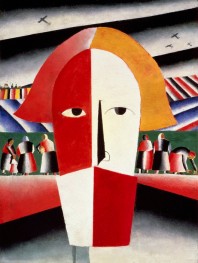
Head of a Peasant 1928
Oil Painting
$1064
$1064
Canvas Print
$72.89
$72.89
SKU: KAZ-21323
Kazimir Malevich
Original Size: 71.7 x 53.8 cm
State Russian Museum, St. Petersburg, Russia
Kazimir Malevich
Original Size: 71.7 x 53.8 cm
State Russian Museum, St. Petersburg, Russia
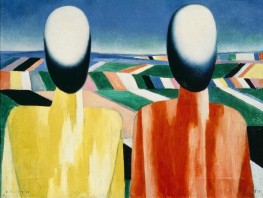
Two Peasants 1928
Oil Painting
$1049
$1049
Canvas Print
$73.41
$73.41
SKU: KAZ-21324
Kazimir Malevich
Original Size: 53 x 70 cm
State Russian Museum, St. Petersburg, Russia
Kazimir Malevich
Original Size: 53 x 70 cm
State Russian Museum, St. Petersburg, Russia
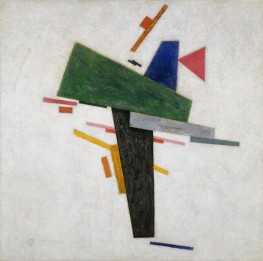
Untitled 1916
Oil Painting
$955
$955
Canvas Print
$90.14
$90.14
SKU: KAZ-21325
Kazimir Malevich
Original Size: 53 x 53 cm
Public Collection
Kazimir Malevich
Original Size: 53 x 53 cm
Public Collection
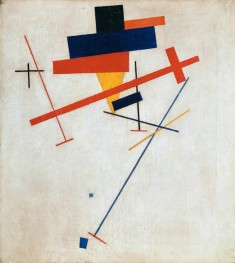
Suprematist Composition 1915
Oil Painting
$941
$941
Canvas Print
$86.30
$86.30
SKU: KAZ-21326
Kazimir Malevich
Original Size: unknown
Public Collection
Kazimir Malevich
Original Size: unknown
Public Collection
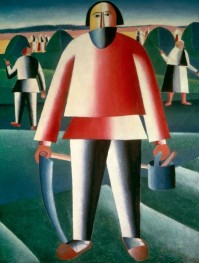
The Hay-harvest 1909
Oil Painting
$897
$897
Canvas Print
$74.48
$74.48
SKU: KAZ-21327
Kazimir Malevich
Original Size: unknown
Public Collection
Kazimir Malevich
Original Size: unknown
Public Collection
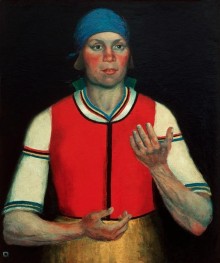
Worker 1933
Oil Painting
$1082
$1082
Canvas Print
$80.48
$80.48
SKU: KAZ-21328
Kazimir Malevich
Original Size: 70 x 58 cm
State Russian Museum, St. Petersburg, Russia
Kazimir Malevich
Original Size: 70 x 58 cm
State Russian Museum, St. Petersburg, Russia
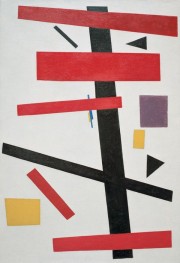
Suprematism No. 50 1915
Oil Painting
$1278
$1278
Canvas Print
$66.01
$66.01
SKU: KAZ-21329
Kazimir Malevich
Original Size: 97 x 66 cm
Stedelijk Museum, Amsterdam, Netherlands
Kazimir Malevich
Original Size: 97 x 66 cm
Stedelijk Museum, Amsterdam, Netherlands
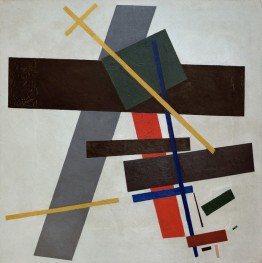
Suprematist Composition 1915
Oil Painting
$1287
$1287
Canvas Print
$96.54
$96.54
SKU: KAZ-21330
Kazimir Malevich
Original Size: 80.5 x 81 cm
State Russian Museum, St. Petersburg, Russia
Kazimir Malevich
Original Size: 80.5 x 81 cm
State Russian Museum, St. Petersburg, Russia
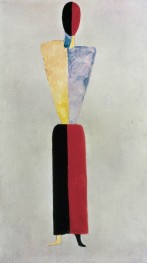
The Girl. Figure on White 1920
Oil Painting
$820
$820
Canvas Print
$64.05
$64.05
SKU: KAZ-21331
Kazimir Malevich
Original Size: unknown
State Russian Museum, St. Petersburg, Russia
Kazimir Malevich
Original Size: unknown
State Russian Museum, St. Petersburg, Russia
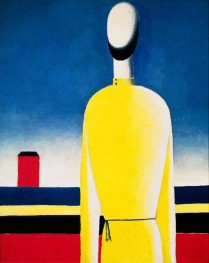
The complicated Premonition 1928
Oil Painting
$887
$887
Canvas Print
$69.36
$69.36
SKU: KAZ-21332
Kazimir Malevich
Original Size: 40 x 56 cm
State Russian Museum, St. Petersburg, Russia
Kazimir Malevich
Original Size: 40 x 56 cm
State Russian Museum, St. Petersburg, Russia
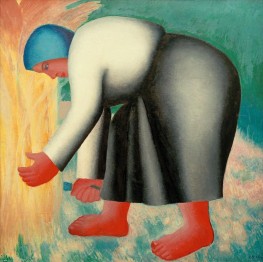
The Peasant II 1909
Oil Painting
$1185
$1185
Canvas Print
$96.54
$96.54
SKU: KAZ-21333
Kazimir Malevich
Original Size: 72.4 x 72 cm
State Russian Museum, St. Petersburg, Russia
Kazimir Malevich
Original Size: 72.4 x 72 cm
State Russian Museum, St. Petersburg, Russia
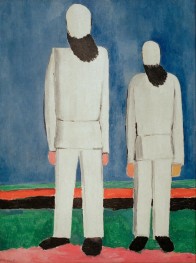
Two Male Figures 1928
Oil Painting
$1345
$1345
Canvas Print
$72.54
$72.54
SKU: KAZ-21334
Kazimir Malevich
Original Size: 99 x 74 cm
State Russian Museum, St. Petersburg, Russia
Kazimir Malevich
Original Size: 99 x 74 cm
State Russian Museum, St. Petersburg, Russia
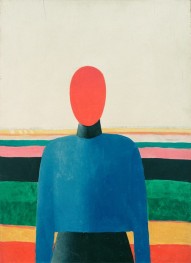
Female Torso 1928
Oil Painting
$1062
$1062
Canvas Print
$69.88
$69.88
SKU: KAZ-21335
Kazimir Malevich
Original Size: 73 x 52.5 cm
State Russian Museum, St. Petersburg, Russia
Kazimir Malevich
Original Size: 73 x 52.5 cm
State Russian Museum, St. Petersburg, Russia
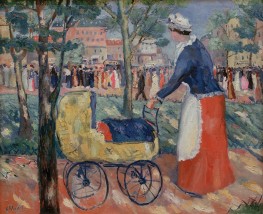
Boulevard 1903
Oil Painting
$1048
$1048
Canvas Print
$82.42
$82.42
SKU: KAZ-21336
Kazimir Malevich
Original Size: 56 x 66 cm
State Russian Museum, St. Petersburg, Russia
Kazimir Malevich
Original Size: 56 x 66 cm
State Russian Museum, St. Petersburg, Russia
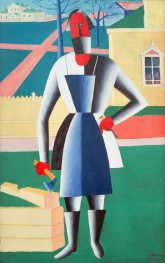
Carpenter 1928
Oil Painting
$984
$984
Canvas Print
$64.05
$64.05
SKU: KAZ-21337
Kazimir Malevich
Original Size: 70 x 44 cm
State Russian Museum, St. Petersburg, Russia
Kazimir Malevich
Original Size: 70 x 44 cm
State Russian Museum, St. Petersburg, Russia
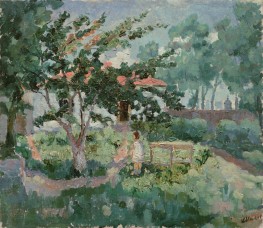
Summer landscape 1903
Oil Painting
$939
$939
Canvas Print
$85.59
$85.59
SKU: KAZ-21338
Kazimir Malevich
Original Size: 48.5 x 55 cm
State Russian Museum, St. Petersburg, Russia
Kazimir Malevich
Original Size: 48.5 x 55 cm
State Russian Museum, St. Petersburg, Russia
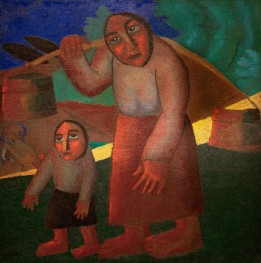
Woman with Buckets and Child 1912
Oil Painting
$1195
$1195
Canvas Print
$97.06
$97.06
SKU: KAZ-21339
Kazimir Malevich
Original Size: 73 x 73 cm
Stedelijk Museum, Amsterdam, Netherlands
Kazimir Malevich
Original Size: 73 x 73 cm
Stedelijk Museum, Amsterdam, Netherlands
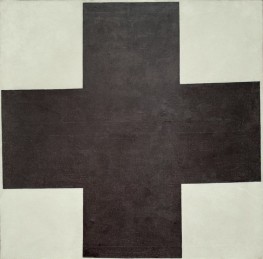
Black Cross 1921
Oil Painting
$1529
$1529
Canvas Print
$97.06
$97.06
SKU: KAZ-21340
Kazimir Malevich
Original Size: 106 x 106 cm
State Russian Museum, St. Petersburg, Russia
Kazimir Malevich
Original Size: 106 x 106 cm
State Russian Museum, St. Petersburg, Russia
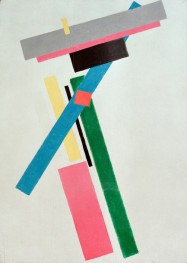
Suprematism 1915
Oil Painting
$1053
$1053
Canvas Print
$70.07
$70.07
SKU: KAZ-21341
Kazimir Malevich
Original Size: 72 x 52 cm
State Russian Museum, St. Petersburg, Russia
Kazimir Malevich
Original Size: 72 x 52 cm
State Russian Museum, St. Petersburg, Russia
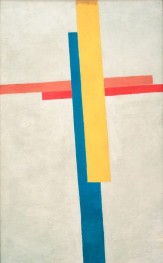
Suprematism 1916
Oil Painting
$997
$997
Canvas Print
$64.05
$64.05
SKU: KAZ-21342
Kazimir Malevich
Original Size: 71 x 45 cm
State Russian Museum, St. Petersburg, Russia
Kazimir Malevich
Original Size: 71 x 45 cm
State Russian Museum, St. Petersburg, Russia
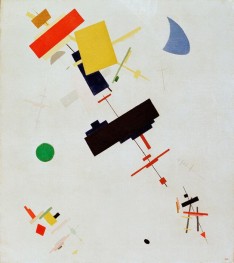
Suprematism 1916
Oil Painting
$1225
$1225
Canvas Print
$85.59
$85.59
SKU: KAZ-21343
Kazimir Malevich
Original Size: 80.5 x 71 cm
State Russian Museum, St. Petersburg, Russia
Kazimir Malevich
Original Size: 80.5 x 71 cm
State Russian Museum, St. Petersburg, Russia
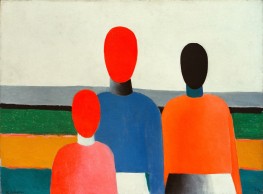
Three Female Figures 1928
Oil Painting
$975
$975
Canvas Print
$71.83
$71.83
SKU: KAZ-21344
Kazimir Malevich
Original Size: 47 x 63.5 cm
State Russian Museum, St. Petersburg, Russia
Kazimir Malevich
Original Size: 47 x 63.5 cm
State Russian Museum, St. Petersburg, Russia
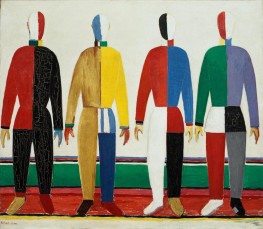
Sportsmen 1928
Oil Painting
$1446
$1446
Canvas Print
$84.01
$84.01
SKU: KAZ-21345
Kazimir Malevich
Original Size: 142 x 164 cm
State Russian Museum, St. Petersburg, Russia
Kazimir Malevich
Original Size: 142 x 164 cm
State Russian Museum, St. Petersburg, Russia
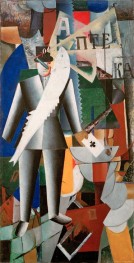
Aviator 1914
Oil Painting
$1857
$1857
Canvas Print
$64.05
$64.05
SKU: KAZ-21346
Kazimir Malevich
Original Size: 125 x 65 cm
State Russian Museum, St. Petersburg, Russia
Kazimir Malevich
Original Size: 125 x 65 cm
State Russian Museum, St. Petersburg, Russia