
Lord Frederick Leighton Painting Reproductions 1 of 5
1830-1896
English Victorian Neoclassicism Painter
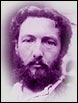
A peerage lasting one day is a strange monument to a life spent constructing permanence. Frederic Leighton, 1st Baron Leighton, PRA, born in Scarborough on 3 December 1830 and dead in London on 25 January 1896, was a British Victorian painter, draughtsman, sculptor, traveller, and public figure whose art joined classical discipline to theatrical splendour. In his own century, Frederic Leighton stood near the centre of official taste; in the next, that very authority helped send his reputation into eclipse.
His beginnings were unusually cosmopolitan. Leighton was the son of Augusta Susan and Dr Frederic Septimus Leighton, a physician, and the grandson of Sir James Boniface Leighton, who had served as doctor to Tsars Alexander I and Nicholas I. Family wealth gave the young artist something rare: time, mobility, and protection from immediate commercial anxiety. Educated at University College School in London, he was then trained largely on the Continent, first under Eduard von Steinle and later with Giovanni Costa. By his late teens he had already absorbed the visual grammar of Germany and Italy, and in 1847, in Frankfurt, he drew Arthur Schopenhauer from life - a strikingly odd encounter between a young artist of ambition and a philosopher of severe pessimism.
Florence gave him scale. At twenty-four, studying at the Accademia di Belle Arti, he painted Cimabue’s Celebrated Madonna Is Carried in Procession Through the Streets of Florence, a large historical composition that announced his appetite for ceremonial movement, Renaissance memory, and disciplined design. The picture was not merely antiquarian. It revealed Leighton’s instinct for art as public theatre: figures arranged with academic clarity, colour held in cultivated balance, architecture used as a moral stage. From 1855 to 1859 he lived in Paris, where he encountered the living presence of Ingres, Delacroix, Corot, and Millet. Such contacts sharpened rather than dissolved his academic temperament.
Travel became one of his methods. Before he settled into London life, Leighton had lived in Frankfurt, worked in Florence, stayed in Rome, and moved through Paris. In 1857 he made his first journey beyond Europe, to North Africa. Later travels took him to Algeria, Egypt, Greece, Lebanon, Morocco, Syria, Turkey, Spain, Switzerland, the Netherlands, Ireland, Scotland, and repeatedly back to Italy. These journeys fed the surfaces of his art without turning him into a simple Orientalist tourist. The Arab Hall in his later London house, with its Iznik tiles and carefully staged atmosphere, suggests how deeply he wanted aesthetic experience to become an environment, not merely an image.
In 1860 Leighton moved to London and entered the artistic machinery of Victorian Britain. He associated with the Pre-Raphaelites, though his own art remained more openly classical and institutional than theirs. In 1861 he designed Elizabeth Barrett Browning’s tomb for Robert Browning in the English Cemetery in Florence - a commission that linked him to poetry, exile, and Anglo-Italian memory. Three years later he became an associate of the Royal Academy. By 1878 he had been knighted at Windsor Castle and made President of the Royal Academy, a post he held until his death. Authority suited him. So did ceremony.
Yet Leighton was not only an administrator of taste. Daphnephoria, painted in the 1870s, shows his fascination with processional rhythm and antique ritual; After Vespers offers a quieter register of devotion and stillness. In 1877, with Athlete Wrestling with a Python, he made a sculpture that was widely taken as a signal moment in the emergence of the New Sculpture in Britain. It is tense, muscular, and compressed, a body caught between ideal form and violent resistance. Later, Flaming June of 1895 brought his art to a different pitch: a sleeping female figure folded into orange drapery, sensuous but controlled, decorative yet not empty. The line moves like music. The colour glows like heat held under glass.
Public life did not make him transparent. Leighton remained unmarried, and the surviving evidence around his private affections is fragmentary. He had a close and emotionally charged relationship with the poet Henry William Greville, whom he met in Florence in 1856, and later rumours about his sexuality or possible children have remained unresolved. No diary opens the door. His letters, at least those known, keep their distance from intimate confession. Perhaps that guardedness helps explain the poise of the pictures: feeling is present, but often disciplined into contour, gesture, and surface.
There was also the soldierly Leighton. In October 1860 he enrolled in the 38th Middlesex Artists’ Rifle Volunteer Corps, later known as the Artists Rifles, and rose through its ranks to command the corps. James Whistler mocked the combination of military command and academic presidency, but the joke only confirms how visible Leighton had become. At his funeral on 3 February 1896, his coffin entered St Paul’s Cathedral past a guard of honour formed by the Artists Rifles. Shortly before that, on 24 January, he had been created Baron Leighton of Stretton; the next day he died of angina pectoris, and the hereditary title vanished with him.
The early twentieth century was harsh on him, as it was on many Victorian painters who had enjoyed official success. Yet Leighton’s return to serious attention now feels deserved rather than nostalgic. Leighton House in Holland Park, open to the public, preserves something essential: the drawings, the collecting, the Old Master sympathies, the Islamic tiles, the sense of an artist constructing a world around himself. Today, Frederic Leighton’s best works ask to be read beyond fashion. They speak of discipline, privilege, performance, secrecy, and beauty made under pressure - not the beauty of innocence, but of control.
His beginnings were unusually cosmopolitan. Leighton was the son of Augusta Susan and Dr Frederic Septimus Leighton, a physician, and the grandson of Sir James Boniface Leighton, who had served as doctor to Tsars Alexander I and Nicholas I. Family wealth gave the young artist something rare: time, mobility, and protection from immediate commercial anxiety. Educated at University College School in London, he was then trained largely on the Continent, first under Eduard von Steinle and later with Giovanni Costa. By his late teens he had already absorbed the visual grammar of Germany and Italy, and in 1847, in Frankfurt, he drew Arthur Schopenhauer from life - a strikingly odd encounter between a young artist of ambition and a philosopher of severe pessimism.
Florence gave him scale. At twenty-four, studying at the Accademia di Belle Arti, he painted Cimabue’s Celebrated Madonna Is Carried in Procession Through the Streets of Florence, a large historical composition that announced his appetite for ceremonial movement, Renaissance memory, and disciplined design. The picture was not merely antiquarian. It revealed Leighton’s instinct for art as public theatre: figures arranged with academic clarity, colour held in cultivated balance, architecture used as a moral stage. From 1855 to 1859 he lived in Paris, where he encountered the living presence of Ingres, Delacroix, Corot, and Millet. Such contacts sharpened rather than dissolved his academic temperament.
Travel became one of his methods. Before he settled into London life, Leighton had lived in Frankfurt, worked in Florence, stayed in Rome, and moved through Paris. In 1857 he made his first journey beyond Europe, to North Africa. Later travels took him to Algeria, Egypt, Greece, Lebanon, Morocco, Syria, Turkey, Spain, Switzerland, the Netherlands, Ireland, Scotland, and repeatedly back to Italy. These journeys fed the surfaces of his art without turning him into a simple Orientalist tourist. The Arab Hall in his later London house, with its Iznik tiles and carefully staged atmosphere, suggests how deeply he wanted aesthetic experience to become an environment, not merely an image.
In 1860 Leighton moved to London and entered the artistic machinery of Victorian Britain. He associated with the Pre-Raphaelites, though his own art remained more openly classical and institutional than theirs. In 1861 he designed Elizabeth Barrett Browning’s tomb for Robert Browning in the English Cemetery in Florence - a commission that linked him to poetry, exile, and Anglo-Italian memory. Three years later he became an associate of the Royal Academy. By 1878 he had been knighted at Windsor Castle and made President of the Royal Academy, a post he held until his death. Authority suited him. So did ceremony.
Yet Leighton was not only an administrator of taste. Daphnephoria, painted in the 1870s, shows his fascination with processional rhythm and antique ritual; After Vespers offers a quieter register of devotion and stillness. In 1877, with Athlete Wrestling with a Python, he made a sculpture that was widely taken as a signal moment in the emergence of the New Sculpture in Britain. It is tense, muscular, and compressed, a body caught between ideal form and violent resistance. Later, Flaming June of 1895 brought his art to a different pitch: a sleeping female figure folded into orange drapery, sensuous but controlled, decorative yet not empty. The line moves like music. The colour glows like heat held under glass.
Public life did not make him transparent. Leighton remained unmarried, and the surviving evidence around his private affections is fragmentary. He had a close and emotionally charged relationship with the poet Henry William Greville, whom he met in Florence in 1856, and later rumours about his sexuality or possible children have remained unresolved. No diary opens the door. His letters, at least those known, keep their distance from intimate confession. Perhaps that guardedness helps explain the poise of the pictures: feeling is present, but often disciplined into contour, gesture, and surface.
There was also the soldierly Leighton. In October 1860 he enrolled in the 38th Middlesex Artists’ Rifle Volunteer Corps, later known as the Artists Rifles, and rose through its ranks to command the corps. James Whistler mocked the combination of military command and academic presidency, but the joke only confirms how visible Leighton had become. At his funeral on 3 February 1896, his coffin entered St Paul’s Cathedral past a guard of honour formed by the Artists Rifles. Shortly before that, on 24 January, he had been created Baron Leighton of Stretton; the next day he died of angina pectoris, and the hereditary title vanished with him.
The early twentieth century was harsh on him, as it was on many Victorian painters who had enjoyed official success. Yet Leighton’s return to serious attention now feels deserved rather than nostalgic. Leighton House in Holland Park, open to the public, preserves something essential: the drawings, the collecting, the Old Master sympathies, the Islamic tiles, the sense of an artist constructing a world around himself. Today, Frederic Leighton’s best works ask to be read beyond fashion. They speak of discipline, privilege, performance, secrecy, and beauty made under pressure - not the beauty of innocence, but of control.
101 Frederick Leighton Paintings
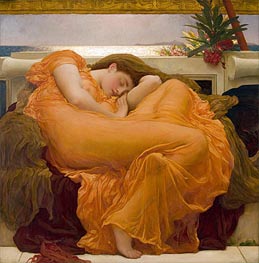
Flaming June 1895
Oil Painting
$1955
$1955
Canvas Print
$96.76
$96.76
SKU: LLF-2580
Lord Frederick Leighton
Original Size: 120.6 x 120.6 cm
Museo de Arte, Ponce
Lord Frederick Leighton
Original Size: 120.6 x 120.6 cm
Museo de Arte, Ponce
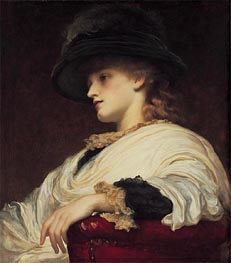
Phoebe n.d.
Oil Painting
$1267
$1267
SKU: LLF-2581
Lord Frederick Leighton
Original Size: unknown
Collection of Fred and Sherry Ross, New Jersey, USA
Lord Frederick Leighton
Original Size: unknown
Collection of Fred and Sherry Ross, New Jersey, USA
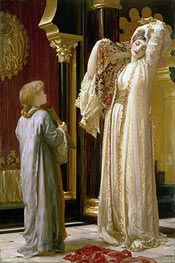
Light of the Harem (The Fairest of Them All) c.1880
Oil Painting
$1689
$1689
Canvas Print
$64.22
$64.22
SKU: LLF-2582
Lord Frederick Leighton
Original Size: 152.4 x 83.8 cm
Private Collection
Lord Frederick Leighton
Original Size: 152.4 x 83.8 cm
Private Collection
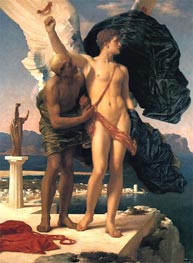
Daedalus and Icarus c.1869
Oil Painting
$2917
$2917
Canvas Print
$71.07
$71.07
SKU: LLF-2583
Lord Frederick Leighton
Original Size: 138.2 x 106.5 cm
Private Collection
Lord Frederick Leighton
Original Size: 138.2 x 106.5 cm
Private Collection
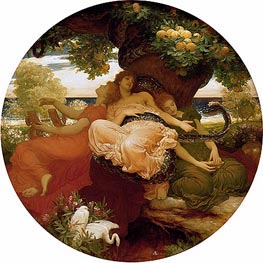
The Garden of the Hesperides c.1892
Oil Painting
$2419
$2419
Canvas Print
$79.97
$79.97
SKU: LLF-2584
Lord Frederick Leighton
Original Size: 169 x 169 cm
Lady Lever Art Gallery, Port Sunlight, UK
Lord Frederick Leighton
Original Size: 169 x 169 cm
Lady Lever Art Gallery, Port Sunlight, UK
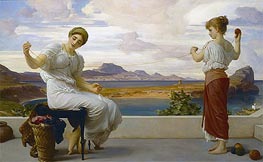
Winding the Skein c.1878
Oil Painting
$1670
$1670
Canvas Print
$63.85
$63.85
SKU: LLF-2585
Lord Frederick Leighton
Original Size: 100.3 x 161.3 cm
Art Gallery of New South Wales, Sydney, Australia
Lord Frederick Leighton
Original Size: 100.3 x 161.3 cm
Art Gallery of New South Wales, Sydney, Australia
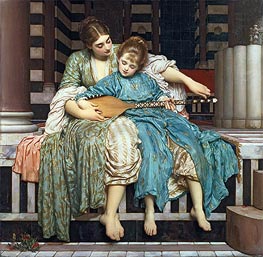
Music Lesson 1877
Oil Painting
$3011
$3011
Canvas Print
$94.30
$94.30
SKU: LLF-2586
Lord Frederick Leighton
Original Size: 92.7 x 95.2 cm
Guildhall Art Gallery, London, UK
Lord Frederick Leighton
Original Size: 92.7 x 95.2 cm
Guildhall Art Gallery, London, UK
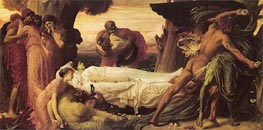
Hercules Wrestling with Death for the Body of Alcestis c.1869/71
Oil Painting
$4002
$4002
Canvas Print
$63.85
$63.85
SKU: LLF-2587
Lord Frederick Leighton
Original Size: 132.4 x 265.4 cm
Wadsworth Atheneum, Hartford, USA
Lord Frederick Leighton
Original Size: 132.4 x 265.4 cm
Wadsworth Atheneum, Hartford, USA
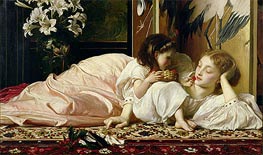
Mother and Child (Cherries) c.1865
Oil Painting
$3051
$3051
Canvas Print
$63.85
$63.85
SKU: LLF-2588
Lord Frederick Leighton
Original Size: 48 x 82 cm
Blackburn Museum and Art Gallery, Lancashire, UK
Lord Frederick Leighton
Original Size: 48 x 82 cm
Blackburn Museum and Art Gallery, Lancashire, UK
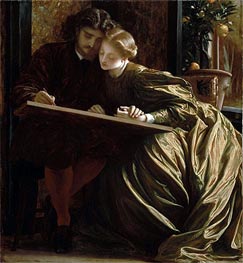
The Painter's Honeymoon c.1864
Oil Painting
$1633
$1633
Canvas Print
$89.38
$89.38
SKU: LLF-2589
Lord Frederick Leighton
Original Size: 83.8 x 76.8 cm
Boston Museum of Fine Arts, Massachusetts, USA
Lord Frederick Leighton
Original Size: 83.8 x 76.8 cm
Boston Museum of Fine Arts, Massachusetts, USA
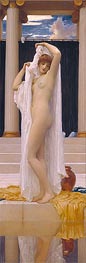
The Bath of Psyche c.1890
Oil Painting
$1989
$1989
Canvas Print
$63.85
$63.85
SKU: LLF-2590
Lord Frederick Leighton
Original Size: 189.2 x 62.2 cm
Tate Gallery, London, UK
Lord Frederick Leighton
Original Size: 189.2 x 62.2 cm
Tate Gallery, London, UK
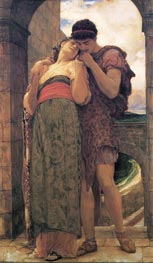
Wedded 1882
Oil Painting
$1760
$1760
Canvas Print
$63.85
$63.85
SKU: LLF-2591
Lord Frederick Leighton
Original Size: 145.4 x 81.3 cm
Art Gallery of New South Wales, Sydney, Australia
Lord Frederick Leighton
Original Size: 145.4 x 81.3 cm
Art Gallery of New South Wales, Sydney, Australia
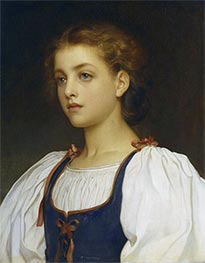
Biondina 1879
Oil Painting
$1431
$1431
Canvas Print
$68.20
$68.20
SKU: LLF-2592
Lord Frederick Leighton
Original Size: 52 x 41 cm
Hamburger Kunsthalle, Hamburg, Germany
Lord Frederick Leighton
Original Size: 52 x 41 cm
Hamburger Kunsthalle, Hamburg, Germany
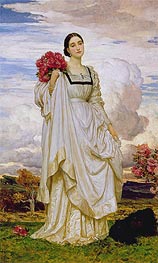
The Countess Brownlow c.1879
Oil Painting
$2246
$2246
Canvas Print
$63.85
$63.85
SKU: LLF-2593
Lord Frederick Leighton
Original Size: unknown
United Kingdom National Trust, Nelton House, UK
Lord Frederick Leighton
Original Size: unknown
United Kingdom National Trust, Nelton House, UK
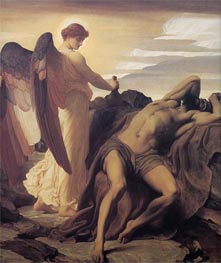
Elijah in the Wilderness c.1877/78
Oil Painting
$1929
$1929
Canvas Print
$86.92
$86.92
SKU: LLF-2594
Lord Frederick Leighton
Original Size: 234.3 x 210.4 cm
Walker Art Gallery, Liverpool, UK
Lord Frederick Leighton
Original Size: 234.3 x 210.4 cm
Walker Art Gallery, Liverpool, UK
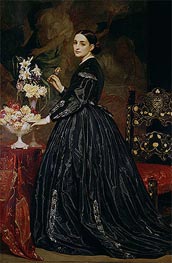
Mrs James Guthrie c.1864/65
Oil Painting
$2380
$2380
Canvas Print
$63.85
$63.85
SKU: LLF-2595
Lord Frederick Leighton
Original Size: 210.7 x 138.5 cm
Yale Center for British Art, Connecticut, USA
Lord Frederick Leighton
Original Size: 210.7 x 138.5 cm
Yale Center for British Art, Connecticut, USA
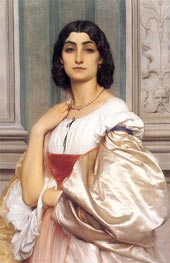
A Roman Lady (La Nanna) c.1858/59
Oil Painting
$1589
$1589
Canvas Print
$63.85
$63.85
SKU: LLF-2596
Lord Frederick Leighton
Original Size: 80 x 52.1 cm
Philadelphia Museum of Art, Pennsylvania, USA
Lord Frederick Leighton
Original Size: 80 x 52.1 cm
Philadelphia Museum of Art, Pennsylvania, USA
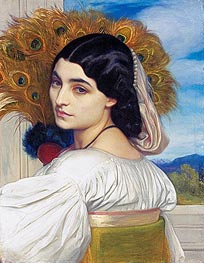
Pavonia 1859
Oil Painting
$1267
$1267
Canvas Print
$71.61
$71.61
SKU: LLF-2597
Lord Frederick Leighton
Original Size: 53.3 x 42 cm
Private Collection
Lord Frederick Leighton
Original Size: 53.3 x 42 cm
Private Collection
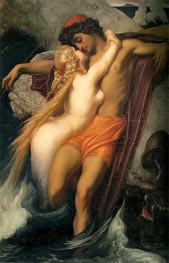
The Fisherman and the Syren 1857
Oil Painting
$1456
$1456
Canvas Print
$68.96
$68.96
SKU: LLF-2598
Lord Frederick Leighton
Original Size: 66.4 x 49 cm
Private Collection
Lord Frederick Leighton
Original Size: 66.4 x 49 cm
Private Collection
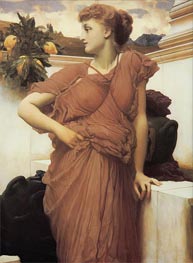
At the Fountain c.1891/92
Oil Painting
$1643
$1643
Canvas Print
$70.90
$70.90
SKU: LLF-2599
Lord Frederick Leighton
Original Size: 127.6 x 95.2 cm
Milwaukee Art Museum, Wisconsin, USA
Lord Frederick Leighton
Original Size: 127.6 x 95.2 cm
Milwaukee Art Museum, Wisconsin, USA
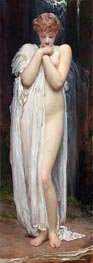
The Nymph of the River (A Bather) 1880
Oil Painting
$1456
$1456
Canvas Print
$63.85
$63.85
SKU: LLF-2600
Lord Frederick Leighton
Original Size: 76.8 x 27.2 cm
Private Collection
Lord Frederick Leighton
Original Size: 76.8 x 27.2 cm
Private Collection
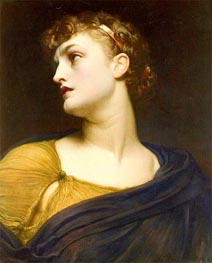
Antigone 1882
Oil Painting
$1246
$1246
Canvas Print
$63.85
$63.85
SKU: LLF-2601
Lord Frederick Leighton
Original Size: 60.3 x 49.5 cm
Private Collection
Lord Frederick Leighton
Original Size: 60.3 x 49.5 cm
Private Collection
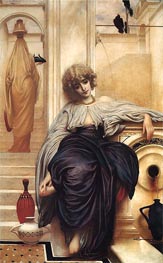
Songs Without Words (Lieder Ohne Worte) 1861
Oil Painting
$1527
$1527
Canvas Print
$63.85
$63.85
SKU: LLF-2602
Lord Frederick Leighton
Original Size: 101.6 x 63 cm
Tate Gallery, London, UK
Lord Frederick Leighton
Original Size: 101.6 x 63 cm
Tate Gallery, London, UK
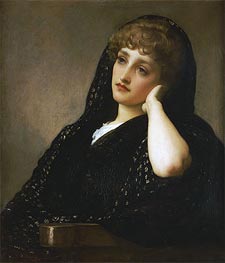
Memories c.1883
Oil Painting
$1371
$1371
Canvas Print
$82.70
$82.70
SKU: LLF-2603
Lord Frederick Leighton
Original Size: 76 x 64.5 cm
Private Collection
Lord Frederick Leighton
Original Size: 76 x 64.5 cm
Private Collection