
Portrait Painting Reproductions - Page 21
Portrait painting is a genre centered on the representation of a particular person or identifiable group, using likeness, pose, expression, and setting to shape an image of identity. A portrait can commemorate a life, preserve a personal attachment, assert authority, or establish a public reputation. The finished image reflects both the sitter’s presentation and the painter’s decisions about what to emphasize, simplify, or leave unexplained.
Scale and format establish different relationships with the viewer. A miniature invites close, private looking; a life-size, full-length portrait can give its subject a commanding presence. Head-and-shoulders and half-length formats concentrate attention on the face and hands, while double and group portraits introduce relationships between sitters. Profile, frontal, and three-quarter views offer different degrees of visual engagement. Clothing, gesture, and surrounding objects may identify a profession or social position, while the direction of the gaze makes the sitter seem attentive to the viewer or absorbed elsewhere.
The mummy portraits of Roman Egypt, dating mainly from the first to third centuries CE, are major survivals of ancient portrait painting. These likenesses were incorporated into mummy wrappings as part of funerary ritual. In China, ancestor portraits served family ceremonies and the remembrance of previous generations. Mughal court painters in South Asia cultivated precise likenesses of rulers and courtiers, often preserved in albums. Such traditions gave portraiture functions extending beyond the display of an individual face, connecting the image with ritual, ancestry, and political authority.
In 15th-century Europe, independent portraits flourished alongside images of donors in religious paintings. Jan van Eyck and Rogier van der Weyden gave individual features close attention through subtle distinctions of light and contour. Italian profile portraits drew on the authority of ancient coins and medals, while three-quarter views offered a fuller sense of bodily presence. Leonardo da Vinci’s “Mona Lisa” (c. 1503-1519, Musée du Louvre, Paris) combines a turned body, folded hands, and a distant landscape. Soft transitions of tone, known as sfumato, make the contours elusive and the expression difficult to fix.
A portrait could also make learning, wealth, and political connections visible. Hans Holbein the Younger’s “The Ambassadors” (1533, National Gallery, London) presents Jean de Dinteville and Georges de Selve beside an assembly of books, globes, and instruments. Their clothing and possessions establish social standing with extraordinary material precision. The distorted skull crossing the foreground becomes recognizable from an oblique angle, introducing a reminder of mortality into this display of worldly distinction. The two figures occupy a setting whose objects contribute substantially to their representation.
In the 17th century, court portraiture developed increasingly elaborate ways to express rank. Anthony van Dyck gave aristocratic sitters elegant poses, expansive settings, and gestures that made privilege appear effortless. Diego Velázquez achieved a different balance between ceremonial presentation and the particular presence of an individual, often using restrained backgrounds and economical brushwork. Full-length and equestrian formats allowed posture, costume, and scale to carry the language of authority. The placement of a hand or the angle of a body could be as significant as an insignia of office.
Dutch group portraiture gave civic and professional associations a collective public image. Frans Hals animated groups through varied gestures and lively exchanges of attention. Rembrandt’s “The Anatomy Lesson of Dr. Nicolaes Tulp” (1632, Mauritshuis, The Hague) organizes the portrayed men around a demonstration, turning their assembly into a scene of shared activity. Faces, hands, and glances create a sequence through the composition. Each participant remains distinguishable, yet the arrangement establishes relationships of knowledge, observation, and authority that extend beyond a row of separate likenesses.
Self-portraiture gave artists a further role as the makers of their own public image. Albrecht Dürer used dress and bearing to assert artistic standing; Rembrandt returned to his features through changing expressions, costumes, and age. Élisabeth Louise Vigée Le Brun’s “Self Portrait in a Straw Hat” (1782, National Gallery, London) combines direct eye contact with a visible palette and brushes. The shaded face, rose-colored dress, and open sky create an air of ease, while the tools establish her professional identity. The painter controls both the making of the image and the manner of her appearance within it.
In 18th-century Britain, Joshua Reynolds often borrowed the gravity of history painting for his sitters, while Thomas Gainsborough developed fluid brushwork and close relationships between figure and landscape. During the 19th century, official commissions coexisted with intimate studies of friends and family. Jean-Auguste-Dominique Ingres combined exacting drawing with adjusted proportions and meticulous descriptions of clothing. The growth of photography introduced new ways to circulate likenesses and provided painters with additional visual sources, expanding the exchanges between different forms of portraiture.
The public life of a portrait could be unpredictable. John Singer Sargent’s “Madame X” (1883-1884, The Metropolitan Museum of Art, New York) depicts Virginie Amélie Avegno Gautreau through a striking contrast between pale skin and a black dress. Her turned head and braced arm give the standing figure a deliberate tension. Sargent undertook the painting without a commission, with Gautreau’s cooperation. After its hostile reception at the Paris Salon of 1884, he repainted the shoulder strap that had originally slipped down her arm, placing it securely on her shoulder.
In the 20th century, the face became a field for experiments in color and structure. Henri Matisse used unexpected hues to organize features, and Pablo Picasso fractured or recombined familiar facial forms. Frida Kahlo made self-portraiture a setting for personal and cultural symbols; Lucian Freud investigated the sitter’s physical presence through sustained observation and dense paint. A tense hand, a tilted head, or the weight of a seated body could carry as much expressive force as the features of the face.
page 21 of 202
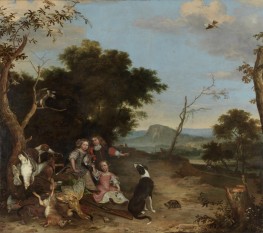
Portrait of Three Children in a Landscape with ... 1670
Melchior d'HondecoeterOil Painting
$8086
$8086
Canvas Print
$83.07
$83.07
SKU: DHM-22263
Melchior d'Hondecoeter
Original Size: 341.5 x 386 cm
Alte Pinakothek, Munich, Germany
Melchior d'Hondecoeter
Original Size: 341.5 x 386 cm
Alte Pinakothek, Munich, Germany
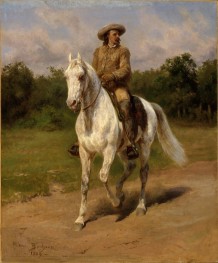
Portrait of William Frederick Cody (Buffalo Bill) 1889
Rosa BonheurOil Painting
$1310
$1310
Canvas Print
$61.78
$61.78
SKU: BRO-22214
Rosa Bonheur
Original Size: 46.9 x 38.7 cm
Whitney Gallery of Western Art, Cody, USA
Rosa Bonheur
Original Size: 46.9 x 38.7 cm
Whitney Gallery of Western Art, Cody, USA
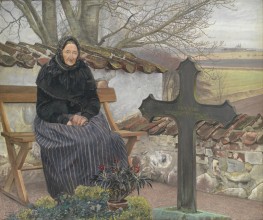
SKU: LAR-22178
Laurits Andersen Ring
Original Size: 157.5 x 188.5 cm
National Gallery of Denmark, Copenhagen
Laurits Andersen Ring
Original Size: 157.5 x 188.5 cm
National Gallery of Denmark, Copenhagen
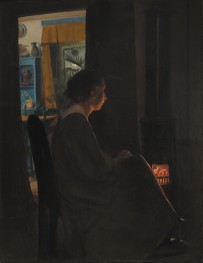
Twilight. The Artist's Wife by the Stove 1898
Laurits Andersen RingOil Painting
$1336
$1336
Canvas Print
$72.52
$72.52
SKU: LAR-22172
Laurits Andersen Ring
Original Size: 86 x 65.5 cm
National Gallery of Denmark, Copenhagen
Laurits Andersen Ring
Original Size: 86 x 65.5 cm
National Gallery of Denmark, Copenhagen
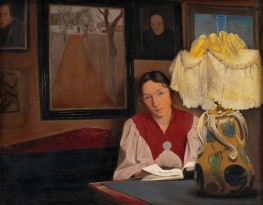
Lamplight. Interior with the Artist's Wife 1898
Laurits Andersen RingOil Painting
$1908
$1908
Canvas Print
$73.37
$73.37
SKU: LAR-22164
Laurits Andersen Ring
Original Size: 68 x 87 cm
National Gallery of Denmark, Copenhagen
Laurits Andersen Ring
Original Size: 68 x 87 cm
National Gallery of Denmark, Copenhagen
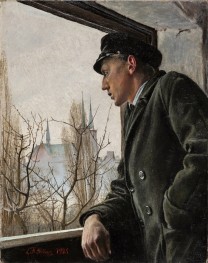
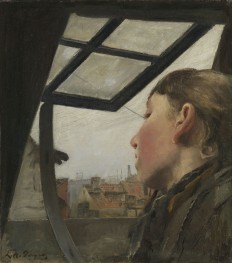
Young Girl Looking Out of a Roof Window 1885
Laurits Andersen RingOil Painting
$1269
$1269
Canvas Print
$61.78
$61.78
SKU: LAR-22142
Laurits Andersen Ring
Original Size: 33 x 29.5 cm
Nasjonalgalleriet, Oslo, Norway
Laurits Andersen Ring
Original Size: 33 x 29.5 cm
Nasjonalgalleriet, Oslo, Norway
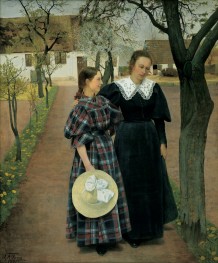
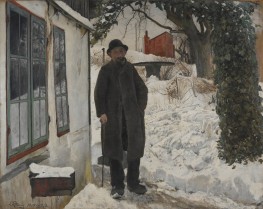
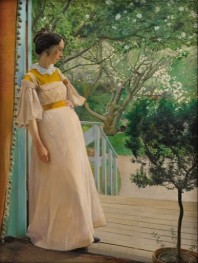
At the French Windows. The Artist's Wife 1897
Laurits Andersen RingOil Painting
$3780
$3780
Canvas Print
$70.81
$70.81
SKU: LAR-22120
Laurits Andersen Ring
Original Size: 191 x 144 cm
National Gallery of Denmark, Copenhagen
Laurits Andersen Ring
Original Size: 191 x 144 cm
National Gallery of Denmark, Copenhagen
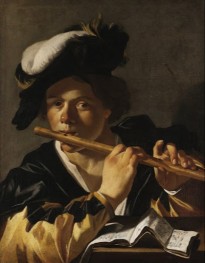
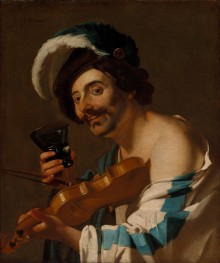
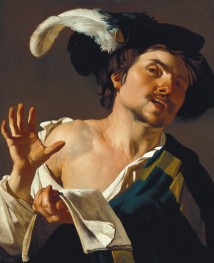
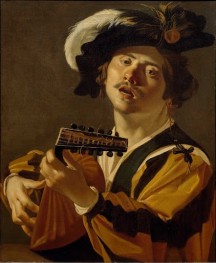
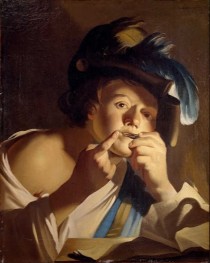
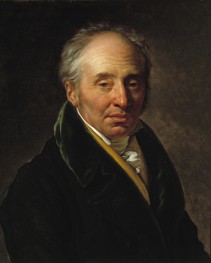
Portrait of Louis-Charles Balzac 1811
Anne-Louis Girodet de Roussy-TriosonOil Painting
$2062
$2062
Canvas Print
$75.24
$75.24
SKU: GAL-22048
Anne-Louis Girodet de Roussy-Trioson
Original Size: 61.3 x 50.5 cm
Dallas Museum of Art, USA
Anne-Louis Girodet de Roussy-Trioson
Original Size: 61.3 x 50.5 cm
Dallas Museum of Art, USA
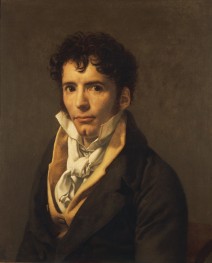
SKU: GAL-22047
Anne-Louis Girodet de Roussy-Trioson
Original Size: 64.8 x 53.3 cm
Philadelphia Museum of Art, USA
Anne-Louis Girodet de Roussy-Trioson
Original Size: 64.8 x 53.3 cm
Philadelphia Museum of Art, USA
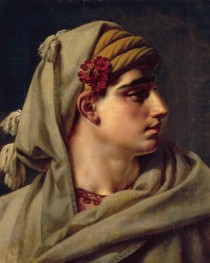
Study of a Mameluke Head 1810
Anne-Louis Girodet de Roussy-TriosonOil Painting
$5002
$5002
Canvas Print
$61.90
$61.90
SKU: GAL-22046
Anne-Louis Girodet de Roussy-Trioson
Original Size: unknown
Public Collection
Anne-Louis Girodet de Roussy-Trioson
Original Size: unknown
Public Collection
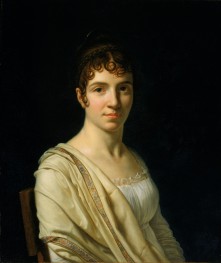
Madame Cabanis (Charlotte-Félicité Grouchy) 1804
Anne-Louis Girodet de Roussy-TriosonOil Painting
$3476
$3476
Canvas Print
$78.81
$78.81
SKU: GAL-22044
Anne-Louis Girodet de Roussy-Trioson
Original Size: 64.8 x 54.3 cm
Smith College Museum of Art, Northampton, USA
Anne-Louis Girodet de Roussy-Trioson
Original Size: 64.8 x 54.3 cm
Smith College Museum of Art, Northampton, USA
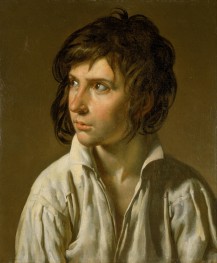
SKU: GAL-22043
Anne-Louis Girodet de Roussy-Trioson
Original Size: 46.6 x 38 cm
Five College Museum, Amherst, USA
Anne-Louis Girodet de Roussy-Trioson
Original Size: 46.6 x 38 cm
Five College Museum, Amherst, USA
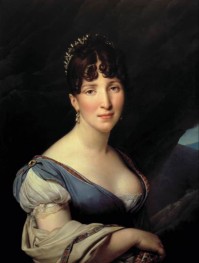
Portrait of Hortense de Beauharnais 1813
Anne-Louis Girodet de Roussy-TriosonOil Painting
$3419
$3419
Canvas Print
$71.15
$71.15
SKU: GAL-22042
Anne-Louis Girodet de Roussy-Trioson
Original Size: 69 x 56 cm
Public Collection
Anne-Louis Girodet de Roussy-Trioson
Original Size: 69 x 56 cm
Public Collection
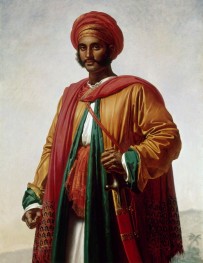
SKU: GAL-22041
Anne-Louis Girodet de Roussy-Trioson
Original Size: 145 x 113 cm
Musée Girodet, Montargis, France
Anne-Louis Girodet de Roussy-Trioson
Original Size: 145 x 113 cm
Musée Girodet, Montargis, France
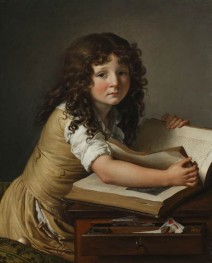
Benoît Agnès Trioson with a Book 1797
Anne-Louis Girodet de Roussy-TriosonOil Painting
$5204
$5204
Canvas Print
$75.58
$75.58
SKU: GAL-22040
Anne-Louis Girodet de Roussy-Trioson
Original Size: 73 x 59 cm
Musée Girodet, Montargis, France
Anne-Louis Girodet de Roussy-Trioson
Original Size: 73 x 59 cm
Musée Girodet, Montargis, France
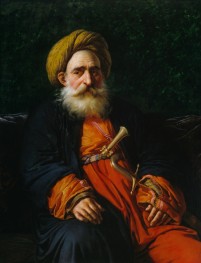
Portrait of the Katchef Dahouth, Christian Mameluke 1804
Anne-Louis Girodet de Roussy-TriosonOil Painting
$3013
$3013
Canvas Print
$71.84
$71.84
SKU: GAL-22039
Anne-Louis Girodet de Roussy-Trioson
Original Size: 144.7 x 113 cm
Art Institute of Chicago, USA
Anne-Louis Girodet de Roussy-Trioson
Original Size: 144.7 x 113 cm
Art Institute of Chicago, USA