
Eustache Le Sueur Painting Reproductions 1 of 2
1617-1655
French Baroque Painter
In the quiet severity of a Carthusian cloister, Eustache Le Sueur found the measure of his art. Eustache Le Sueur, also written Lesueur, was a French painter and draughtsman, born in Paris on 19 November 1616 and dead there on 30 April 1655, whose brief career helped define the lucid discipline of French classical painting.
Paris formed him completely. The son of Cathelin Le Sueur, a woodturner, he entered in 1632 the workshop of Simon Vouet, then the leading painter in the capital and Premier peintre du Roi. There, among other ambitious pupils such as Charles Le Brun and Pierre Mignard, he learned not only painting but decoration - the orchestration of figures, surfaces, ceilings, and rooms. Vouet’s studio offered a practical education in the grand manner: fluent drawing, theatrical grouping, religious and mythological narrative, and the elegant handling of colour demanded by Parisian patrons.
Unlike many painters who sought distinction in the seventeenth century, Le Sueur did not travel to Italy. This absence matters. Instead of absorbing Rome and Bologna directly, he studied Italian Renaissance and early Baroque art through royal palaces such as Fontainebleau and through private Parisian collections. Perhaps distance sharpened his selectiveness. He took from the Italian tradition not heat or abundance, but order, gravity, and the quiet authority of measured composition.
His earliest works remained close to Vouet, sometimes even made from the master’s drawings and under his direction. Yet a personal temper soon appeared. In the paintings connected with the Songe de Polyphile, the development is visible: the earlier scenes crowd the space with figures and decorative energy, while the later ones become calmer, more balanced, less eager to dazzle. Reusing familiar formulas - Virgins with the Child, Holy Families, devotional groups - he gradually reduced their rhetoric. Gesture became clearer. Colour lightened. The composition began to breathe.
In 1645 came the decisive commission: the cycle of the Life of Saint Bruno for the cloister of the Chartreuse de Paris. Comprising twenty-two paintings and completed over about three years with the help of assistants, the series later entered the royal collections when acquired by Louis XVI in 1776; today it is preserved in the Musée du Louvre. Here Le Sueur’s art turned more austere and more inward. Noble attitudes, pale harmonies, strict linear perspective, and carefully calculated spaces replaced the fuller decorative habits of the Vouet school. The example of Nicolas Poussin, who had worked in Paris from 1640 to 1642 before returning to Rome, is felt not as imitation, but as a shared belief that painting could think through structure.
During the 1640s and early 1650s, Le Sueur became one of the founding figures and early professors of the Académie royale de peinture et de sculpture. Around him, Parisian painting was moving toward what later historians called Parisian Atticism - a restrained, balanced classicism, steeped in antique reference yet distinct from Italian Baroque display. His patrons also came from the wealthy private world of the capital. For the Hôtel Lambert on the Île Saint-Louis, he painted works for the Chambre des Muses, including five paintings of the Nine Muses and the ceiling Phaëton demande à Apollon de conduire son char, now in the Louvre. He also decorated the Cabinet des Bains, a rare survival in situ until the devastating fire at the Hôtel Lambert in July 2013.
After the Fronde ended in 1653 and royal authority steadied again, official commissions resumed. Le Sueur took part in works for the Louvre, including the apartment of the baths of Anne of Austria and the chamber of the young Louis XIV. Only fragments and preparatory drawings preserve the memory of several political allegories painted for these interiors. Religious orders continued to call on him as well: in 1654 he made four paintings for the Benedictine abbey of Marmoutier-lès-Tours, works now divided between the Musée des Beaux-Arts in Tours and the Louvre. In La Prédication de saint Paul à Éphèse of 1649, also in the Louvre, one sees the clarity he pursued: figures arranged not for spectacle, but for moral legibility.
Le Sueur died in Paris at only thirty-eight. Brief as it was, his career left a distinct silence inside French seventeenth-century painting - not emptiness, but concentration. Later comparisons with Italian primitives and the nickname “the French Raphael” can obscure what is most valuable in him: the refusal of excess, the delicate tension between decoration and meditation, the sense that spiritual narrative need not be loud. Eustache Le Sueur remains compelling today because his art asks for slowness. In an age of visual abundance, his best paintings still teach restraint.
Paris formed him completely. The son of Cathelin Le Sueur, a woodturner, he entered in 1632 the workshop of Simon Vouet, then the leading painter in the capital and Premier peintre du Roi. There, among other ambitious pupils such as Charles Le Brun and Pierre Mignard, he learned not only painting but decoration - the orchestration of figures, surfaces, ceilings, and rooms. Vouet’s studio offered a practical education in the grand manner: fluent drawing, theatrical grouping, religious and mythological narrative, and the elegant handling of colour demanded by Parisian patrons.
Unlike many painters who sought distinction in the seventeenth century, Le Sueur did not travel to Italy. This absence matters. Instead of absorbing Rome and Bologna directly, he studied Italian Renaissance and early Baroque art through royal palaces such as Fontainebleau and through private Parisian collections. Perhaps distance sharpened his selectiveness. He took from the Italian tradition not heat or abundance, but order, gravity, and the quiet authority of measured composition.
His earliest works remained close to Vouet, sometimes even made from the master’s drawings and under his direction. Yet a personal temper soon appeared. In the paintings connected with the Songe de Polyphile, the development is visible: the earlier scenes crowd the space with figures and decorative energy, while the later ones become calmer, more balanced, less eager to dazzle. Reusing familiar formulas - Virgins with the Child, Holy Families, devotional groups - he gradually reduced their rhetoric. Gesture became clearer. Colour lightened. The composition began to breathe.
In 1645 came the decisive commission: the cycle of the Life of Saint Bruno for the cloister of the Chartreuse de Paris. Comprising twenty-two paintings and completed over about three years with the help of assistants, the series later entered the royal collections when acquired by Louis XVI in 1776; today it is preserved in the Musée du Louvre. Here Le Sueur’s art turned more austere and more inward. Noble attitudes, pale harmonies, strict linear perspective, and carefully calculated spaces replaced the fuller decorative habits of the Vouet school. The example of Nicolas Poussin, who had worked in Paris from 1640 to 1642 before returning to Rome, is felt not as imitation, but as a shared belief that painting could think through structure.
During the 1640s and early 1650s, Le Sueur became one of the founding figures and early professors of the Académie royale de peinture et de sculpture. Around him, Parisian painting was moving toward what later historians called Parisian Atticism - a restrained, balanced classicism, steeped in antique reference yet distinct from Italian Baroque display. His patrons also came from the wealthy private world of the capital. For the Hôtel Lambert on the Île Saint-Louis, he painted works for the Chambre des Muses, including five paintings of the Nine Muses and the ceiling Phaëton demande à Apollon de conduire son char, now in the Louvre. He also decorated the Cabinet des Bains, a rare survival in situ until the devastating fire at the Hôtel Lambert in July 2013.
After the Fronde ended in 1653 and royal authority steadied again, official commissions resumed. Le Sueur took part in works for the Louvre, including the apartment of the baths of Anne of Austria and the chamber of the young Louis XIV. Only fragments and preparatory drawings preserve the memory of several political allegories painted for these interiors. Religious orders continued to call on him as well: in 1654 he made four paintings for the Benedictine abbey of Marmoutier-lès-Tours, works now divided between the Musée des Beaux-Arts in Tours and the Louvre. In La Prédication de saint Paul à Éphèse of 1649, also in the Louvre, one sees the clarity he pursued: figures arranged not for spectacle, but for moral legibility.
Le Sueur died in Paris at only thirty-eight. Brief as it was, his career left a distinct silence inside French seventeenth-century painting - not emptiness, but concentration. Later comparisons with Italian primitives and the nickname “the French Raphael” can obscure what is most valuable in him: the refusal of excess, the delicate tension between decoration and meditation, the sense that spiritual narrative need not be loud. Eustache Le Sueur remains compelling today because his art asks for slowness. In an age of visual abundance, his best paintings still teach restraint.
34 Eustache Le Sueur Paintings
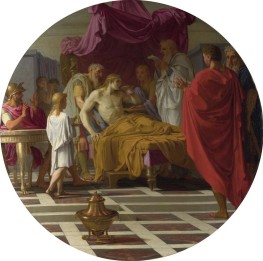
Alexander and His Doctor c.1648/49
Oil Painting
$4579
$4579
Canvas Print
$97.42
$97.42
SKU: LSE-22645
Eustache Le Sueur
Original Size: 96 x 96 cm
National Gallery, London, UK
Eustache Le Sueur
Original Size: 96 x 96 cm
National Gallery, London, UK
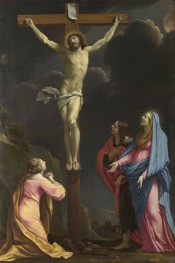
Christ on the Cross with the Virgin and Saints 1643
Oil Painting
$3294
$3294
Canvas Print
$65.36
$65.36
SKU: LSE-22646
Eustache Le Sueur
Original Size: 109 x 73.1 cm
National Gallery, London, UK
Eustache Le Sueur
Original Size: 109 x 73.1 cm
National Gallery, London, UK
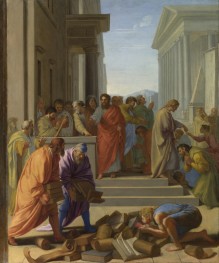
Saint Paul Preaching at Ephesus 1649
Oil Painting
$6884
$6884
Canvas Print
$81.74
$81.74
SKU: LSE-22647
Eustache Le Sueur
Original Size: 100.8 x 84.8 cm
National Gallery, London, UK
Eustache Le Sueur
Original Size: 100.8 x 84.8 cm
National Gallery, London, UK
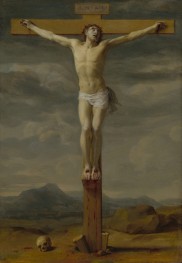
Crucifixion c.1650/55
Oil Painting
$1753
$1753
Canvas Print
$64.63
$64.63
SKU: LSE-22648
Eustache Le Sueur
Original Size: 47.5 x 34 cm
J. Paul Getty Museum, Los Angeles, USA
Eustache Le Sueur
Original Size: 47.5 x 34 cm
J. Paul Getty Museum, Los Angeles, USA
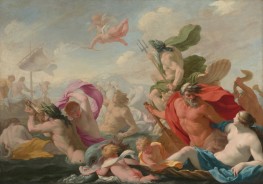
Marine Gods Paying Homage to Love c.1636/38
Oil Painting
$6817
$6817
Canvas Print
$68.74
$68.74
SKU: LSE-22649
Eustache Le Sueur
Original Size: 96.2 x 136.2 cm
J. Paul Getty Museum, Los Angeles, USA
Eustache Le Sueur
Original Size: 96.2 x 136.2 cm
J. Paul Getty Museum, Los Angeles, USA
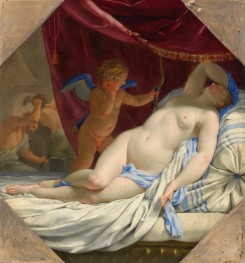
Sleeping Venus c.1638/39
Oil Painting
$4592
$4592
Canvas Print
$91.53
$91.53
SKU: LSE-22650
Eustache Le Sueur
Original Size: 128.3 x 119.4 cm
Fine Arts Museums of San Francisco, California, USA
Eustache Le Sueur
Original Size: 128.3 x 119.4 cm
Fine Arts Museums of San Francisco, California, USA
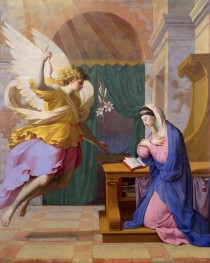
The Annunciation 1650
Oil Painting
$3364
$3364
Canvas Print
$78.53
$78.53
SKU: LSE-22651
Eustache Le Sueur
Original Size: 156.2 x 125.7 cm
Toledo Museum of Art, Ohio, USA
Eustache Le Sueur
Original Size: 156.2 x 125.7 cm
Toledo Museum of Art, Ohio, USA
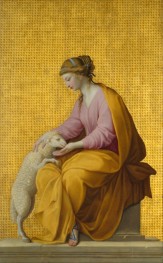
Meekness 1650
Oil Painting
$4457
$4457
Canvas Print
$64.63
$64.63
SKU: LSE-22652
Eustache Le Sueur
Original Size: 100.7 x 67 cm
Art Institute of Chicago, Illinois, USA
Eustache Le Sueur
Original Size: 100.7 x 67 cm
Art Institute of Chicago, Illinois, USA
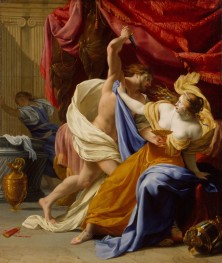
The Rape of Tamar 1640
Oil Painting
$4554
$4554
Canvas Print
$82.99
$82.99
SKU: LSE-22653
Eustache Le Sueur
Original Size: 189.2 x 161.3 cm
Metropolitan Museum of Art, New York, USA
Eustache Le Sueur
Original Size: 189.2 x 161.3 cm
Metropolitan Museum of Art, New York, USA
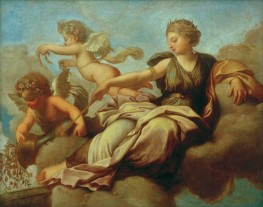
Juno Distributing Alms over Carthage c.1653/55
Oil Painting
$3370
$3370
Canvas Print
$77.29
$77.29
SKU: LSE-22654
Eustache Le Sueur
Original Size: 90 x 110 cm
Public Collection
Eustache Le Sueur
Original Size: 90 x 110 cm
Public Collection
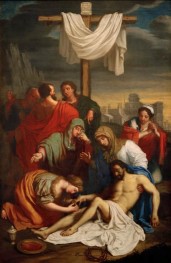
The Descent from the Cross c.1650
Oil Painting
$5412
$5412
Canvas Print
$64.63
$64.63
SKU: LSE-22655
Eustache Le Sueur
Original Size: 71 x 47 cm
Public Collection
Eustache Le Sueur
Original Size: 71 x 47 cm
Public Collection
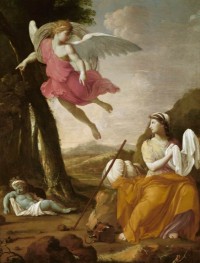
Hagar and Ishmael in the Desert n.d.
Oil Painting
$4487
$4487
Canvas Print
$74.79
$74.79
SKU: LSE-22656
Eustache Le Sueur
Original Size: 159 x 114 cm
Musee des Beaux Arts, Rennes, France
Eustache Le Sueur
Original Size: 159 x 114 cm
Musee des Beaux Arts, Rennes, France
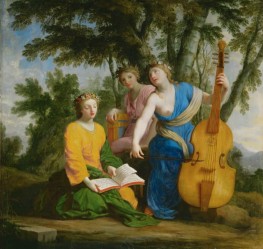
Melpomene, Erato and Polymnia c.1652/55
Oil Painting
$4596
$4596
Canvas Print
$92.96
$92.96
SKU: LSE-22657
Eustache Le Sueur
Original Size: 130 x 138 cm
Louvre Museum, Paris, France
Eustache Le Sueur
Original Size: 130 x 138 cm
Louvre Museum, Paris, France
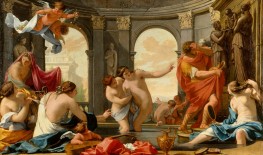
Poliphile Bathing with the Nymphs c.1640
Oil Painting
$5593
$5593
Canvas Print
$64.63
$64.63
SKU: LSE-22658
Eustache Le Sueur
Original Size: 94 x 156 cm
Musee des Beaux-Arts, Dijon, France
Eustache Le Sueur
Original Size: 94 x 156 cm
Musee des Beaux-Arts, Dijon, France
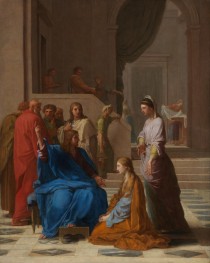
Christ in the House of Martha 1654
Oil Painting
$4529
$4529
Canvas Print
$78.53
$78.53
SKU: LSE-22659
Eustache Le Sueur
Original Size: 162.5 x 129.8 cm
Alte Pinakothek, Munich, Germany
Eustache Le Sueur
Original Size: 162.5 x 129.8 cm
Alte Pinakothek, Munich, Germany
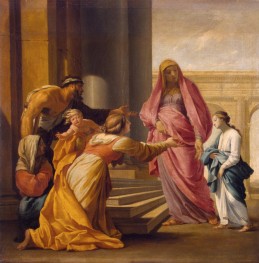
The Presentation of Mary at the Temple 1641
Oil Painting
$3448
$3448
Canvas Print
$96.88
$96.88
SKU: LSE-22660
Eustache Le Sueur
Original Size: 102.6 x 101.2 cm
State Hermitage Museum, St. Petersburg, Russia
Eustache Le Sueur
Original Size: 102.6 x 101.2 cm
State Hermitage Museum, St. Petersburg, Russia
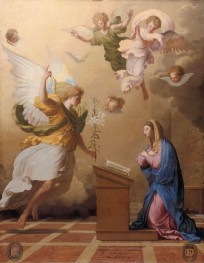
The Annunciation 1652
Oil Painting
$3343
$3343
Canvas Print
$76.22
$76.22
SKU: LSE-22661
Eustache Le Sueur
Original Size: 297 x 227 cm
Louvre Museum, Paris, France
Eustache Le Sueur
Original Size: 297 x 227 cm
Louvre Museum, Paris, France
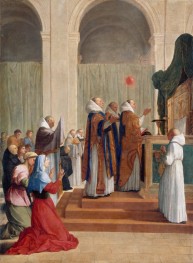
Mass of Saint Martin c.1654/55
Oil Painting
$3324
$3324
Canvas Print
$72.13
$72.13
SKU: LSE-22662
Eustache Le Sueur
Original Size: 114 x 83 cm
Louvre Museum, Paris, France
Eustache Le Sueur
Original Size: 114 x 83 cm
Louvre Museum, Paris, France
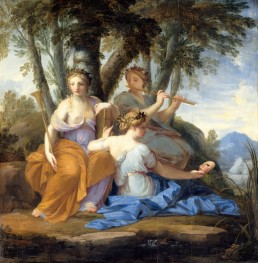
Clio, Euterpe and Thalia c.1652/55
Oil Painting
$4623
$4623
Canvas Print
$96.34
$96.34
SKU: LSE-22663
Eustache Le Sueur
Original Size: 130 x 130 cm
Louvre Museum, Paris, France
Eustache Le Sueur
Original Size: 130 x 130 cm
Louvre Museum, Paris, France
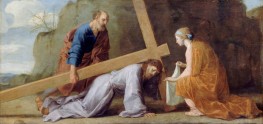
Jesus Carrying His Cross 1651
Oil Painting
$3185
$3185
Canvas Print
$64.63
$64.63
SKU: LSE-22664
Eustache Le Sueur
Original Size: 61 x 126 cm
Louvre Museum, Paris, France
Eustache Le Sueur
Original Size: 61 x 126 cm
Louvre Museum, Paris, France
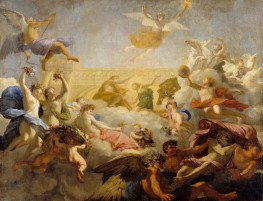
Phaeton Asking Apollo for Permission to Drive the ... c.1652/55
Oil Painting
$8020
$8020
Canvas Print
$74.98
$74.98
SKU: LSE-22665
Eustache Le Sueur
Original Size: 278 x 360 cm
Louvre Museum, Paris, France
Eustache Le Sueur
Original Size: 278 x 360 cm
Louvre Museum, Paris, France
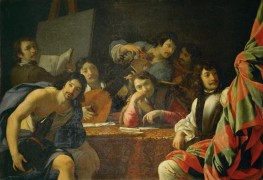
Gathering of Friends 1640
Oil Painting
$4476
$4476
Canvas Print
$67.32
$67.32
SKU: LSE-22666
Eustache Le Sueur
Original Size: 136 x 195 cm
Louvre Museum, Paris, France
Eustache Le Sueur
Original Size: 136 x 195 cm
Louvre Museum, Paris, France
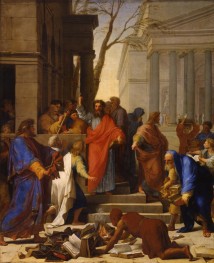
The Preaching of Saint Paul at Ephesus 1649
Oil Painting
$6881
$6881
Canvas Print
$79.96
$79.96
SKU: LSE-22667
Eustache Le Sueur
Original Size: 394 x 328 cm
Louvre Museum, Paris, France
Eustache Le Sueur
Original Size: 394 x 328 cm
Louvre Museum, Paris, France
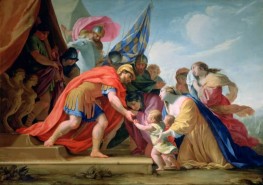
Volumnia and Veturia in Front of Coriolanus c.1638/40
Oil Painting
$1034
$1034
Canvas Print
$69.28
$69.28
SKU: LSE-22668
Eustache Le Sueur
Original Size: 115 x 140.7 cm
Louvre Museum, Paris, France
Eustache Le Sueur
Original Size: 115 x 140.7 cm
Louvre Museum, Paris, France