
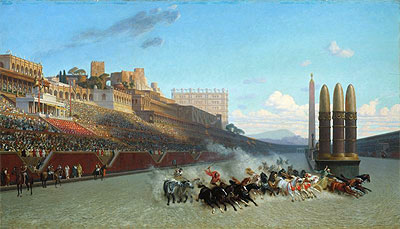
Chariot Race (Circus Maximus), 1876 Jean Leon Gerome (1824-1904)
Location: Art Institute of Chicago Illinois USAOriginal Size: 86.3 x 156 cm
Own a museum-quality reproduction of Chariot Race (Circus Maximus) by Gerome (1876), exclusively hand-painted in oils on linen canvas by European artists with academic training. Each masterpiece is created with meticulous craftsmanship, capturing the exceptional quality and authentic brushwork of the original painting.
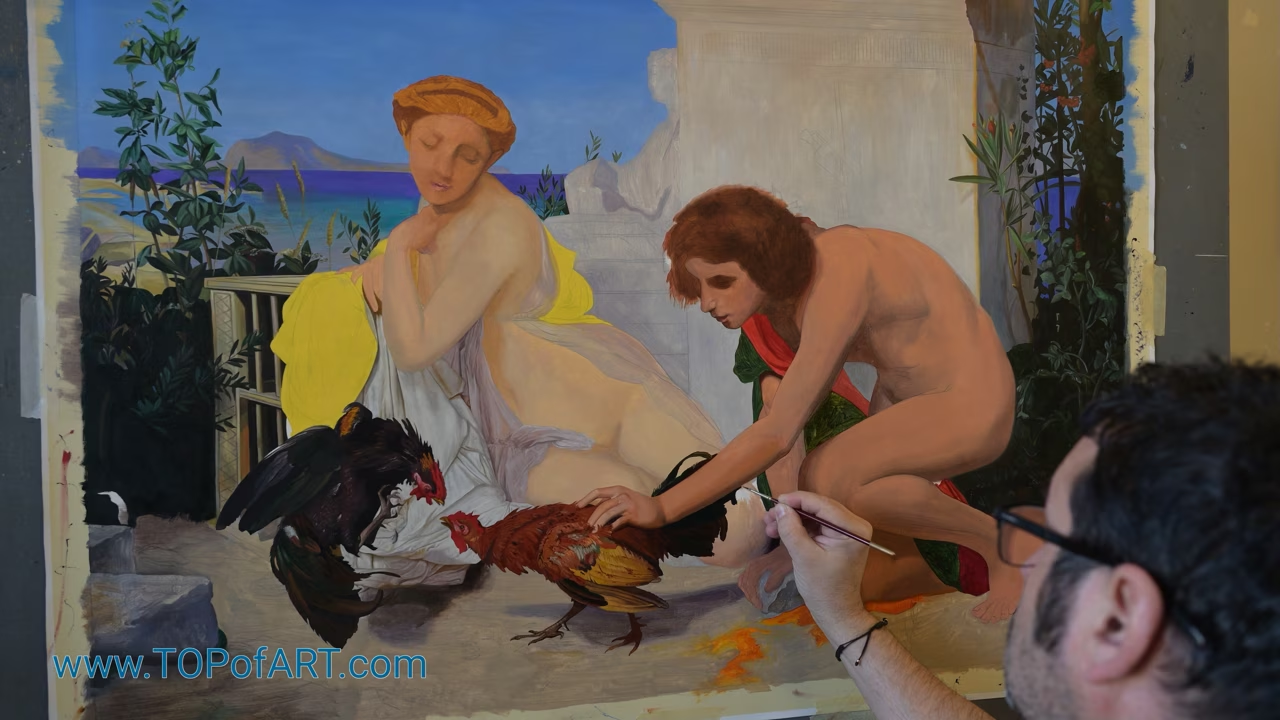
Recreating Gerome: A Video Journey into Museum-Quality Reproductions by TOPofART
Video showcasing the process of hand-painting a Gerome masterpiece with the utmost precision and care for detail.
Oil Painting Reproduction
If you want a different size than the offered
Description
Painted by European Аrtists with Academic Education
Museum Quality
+ 4 cm (1.6") Margins for Stretching
Creation Time: 8-9 Weeks
Creation Process
We create our paintings with museum quality and covering the highest academic standards. Once we get your order, it will be entirely hand-painted with oil on canvas. All the materials we use are the highest level, being totally artist graded painting materials and linen canvas.
We will add 1.6" (4 cm) additional blank canvas all over the painting for stretching.
High quality and detailing in every inch are time consuming. The reproduction of Jean Leon Gerome also needs time to dry in order to be completely ready for shipping, as this is crucial to not be damaged during transportation.
Based on the size, level of detail and complexity we need 8-9 weeks to complete the process.
In case the delivery date needs to be extended in time, or we are overloaded with requests, there will be an email sent to you sharing the new timelines of production and delivery.
TOPofART wants to remind you to keep patient, in order to get you the highest quality, being our mission to fulfill your expectations.
We not stretch and frame our oil paintings due to several reasons:
Painting reproduction is a high quality expensive product, which we cannot risk to damage by sending it being stretched.
Also, there are postal restrictions, regarding the size of the shipment.
Additionally, due to the dimensions of the stretched canvas, the shipment price may exceed the price of the product itself.
You can stretch and frame your painting in your local frame-shop.
Delivery
Once the painting Chariot Race (Circus Maximus) is ready and dry, it will be shipped to your delivery address. The canvas will be rolled-up in a secure postal tube.
We offer free shipping as well as paid express transportation services.
After adding your artwork to the shopping cart, you will be able to check the delivery price using the Estimate Shipping and Tax tool.
Museum Quality
The paintings we create are only of museum quality. Our academy graduated artists will never allow a compromise in the quality and detail of the ordered painting. TOPofART do not work, and will never allow ourselves to work with low quality studios from the Far East. We are based in Europe, and quality is our highest priority.
Additional Information
Colour here is both narrative and structural. A clear, late-afternoon light washes the arena, bleaching the dust but gilding stone and marble so that long shadows emphasise the steep perspective. Dominant warm tones—sienna, terra-rosa, incrustations of gold—anchor the viewer in antiquity, while the sky moves from pastel turquoise to pearl, punctuated by rose-lit clouds that lend a serene counterpoint to the violence below. The most saturated accent is the insistent red of the central charioteer’s cloak: it draws the eye like a flare, embodying peril and prowess simultaneously.
Although Gérôme boasted of archaeological exactitude, the technical finish is calculated to seduce rather than instruct. Every surface is polished to a vitreous sheen; brushstrokes are suppressed beneath a skin of enamel-like paint, typical of the artist’s academic training. Such finish, paradoxically, intensifies the sense of movement: the minute modelling of each hoof, wheel-spoke and plume furnishes the spectator with countless points of focus, all hurtling forward in synchronous detail. One senses the painter’s admiration for the camera—still novel in 1876—yet Gérôme surpasses mechanical record by feeding the eye an impossible simultaneity of near and distant incidents, all held in perfect depth of field.
Compositionally, the work is a feat of control. The grand diagonal of the seating tiers establishes a vector that propels us toward the distant vanishing point, while the centrifugal swirl of the horses counters that thrust, pivoting around the triple metae and obelisk. Space is subdivided into bands—arena, wall, architecture, sky—each calibrated to a different rhythm of incident and respite. The eye ricochets between dust cloud and calm horizon, a visual analogy for Roman civilisation’s own oscillation between order and brutality.
Painted at a moment when Parisian academic art looked simultaneously to antiquity and to the emerging mass culture of photography and panoramas, the canvas testifies to Gérôme’s marketing acumen. Its purchase by A. T. Stewart and the breathless coverage noted by a young Henry James confirm how such meticulously dramatised history satisfied a transatlantic appetite for grandeur. Today, the picture speaks less of Rome than of the nineteenth-century imagination: an era entranced by the archaeological theatre of empire, yet reliant on modern optics to visualise it. The paradox is productive—spectacle rendered credible, violence domesticated by finish—leaving us both thrilled and curiously detached, as though witnessing the past through glass.

1 Reviews
5.00 Overall rating

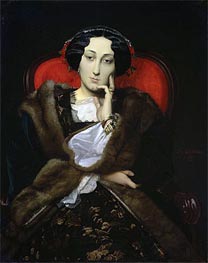
Portrait of a Woman 1851
$2080
$75.14
Jean Leon Gerome
Original Size:92.6 x 73.7 cm
Art Institute of Chicago, Illinois, USA
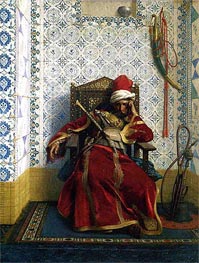
Markos Botsaris 1874
$2784
$73.23
Jean Leon Gerome
Original Size:70.2 x 54.6 cm
Private Collection
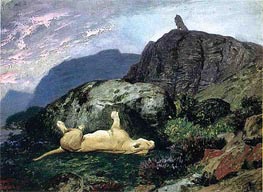
Spring in Arabia c.1888
$1251
Jean Leon Gerome
Original Size:27.3 x 38.8 cm
Private Collection
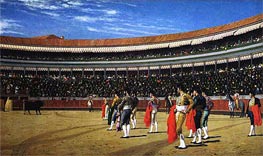
The Entrance of the Bull 1886
$3940
$62.83
Jean Leon Gerome
Original Size:45.7 x 72.6 cm
Private Collection
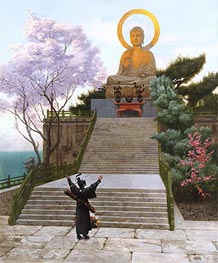
Japanese Imploring a Divinity n.d.
$1852
$62.83
Jean Leon Gerome
Original Size:71 x 59.1 cm
Private Collection