
Jan Lievens Painting Reproductions 1 of 3
1607-1674
Dutch Baroque Painter
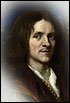
In Leiden during the late 1620s, two young painters worked so closely that later generations would sometimes struggle to tell their pictures apart. One was Rembrandt van Rijn. The other was Jan Lievens, born in Leiden on 24 October 1607, a Dutch Golden Age painter whose ambitions would eventually carry him from the Dutch Republic to England, Antwerp and Berlin. Jan Lievens built a career around history painting and portraiture, combining dramatic scale with an unusually restless willingness to adapt.
His father, Lieven Hendriksze, worked as an embroiderer, and the boy's first known training came under Joris Verschoten. At roughly ten years old he was sent to Amsterdam to study with Pieter Lastman, one of the most important history painters of the period. Lievens remained there for about two years. Returning to Leiden, he appears to have begun working independently when he was barely twelve - an astonishingly early professional start even by seventeenth-century standards.
Recognition followed quickly. A copy after Cornelis van Haarlem's Democritus and Heraclitus attracted admiration, as did a portrait of his mother, Machtelt Jans van Noortzant. Around 1620 Maurice of Nassau, Prince of Orange, reportedly acquired a life-size painting by Lievens showing a young man reading beside the light of a peat fire. The picture subsequently passed to the English ambassador and then to James I. Such early circulation at court helps explain how a painter still in his teens could acquire a reputation far beyond Leiden.
By about 1626, Lievens was working in exceptionally close proximity to Rembrandt. Both had studied with Pieter Lastman, both were ambitious history painters, and for roughly five years they shared a studio in Leiden. Competition sharpened their experiments. Across paintings, drawings and prints, their exchange became so intimate that attribution remains difficult for a number of works from the period.
Lievens preferred large formats and frequently pushed figures toward life size. Dramatic lighting and emphatic gesture connected his early work to the theatrical vocabulary of the Caravaggisti, while his history paintings reveal an appetite for invention and unusual narrative situations. In King Saladin Holding King Guy de Lusignan Captive of 1625, for example, a motif associated with Rubens's Adoration of the Magi reappears in an entirely different historical setting. Borrowing here did not mean passivity. Lievens absorbed visual ideas and repositioned them.
Constantijn Huygens, who observed both Leiden painters at close range, considered Lievens the more inventive of the two, although he found Rembrandt superior in emotional expression. It is an illuminating judgment. Lievens could conceive imposing images with remarkable confidence, yet the emotional inwardness that became central to Rembrandt's reputation was not always his principal concern. Scale, pictorial authority and narrative impact mattered enormously.
Their paths separated in 1631. Rembrandt moved to Amsterdam, while Lievens turned toward England. The precise chronology is not entirely secure: a portrait of Prince Charles Louis and His Tutor, now in the Getty Museum, is signed and dated 1631 and appears to have been painted in Leiden, complicating a simple account of his departure. Yet Lievens did work in England and entered the orbit of the British court. There he portrayed Thomas Howard, 21st Earl of Arundel, one of the great collectors of the age.
England also brought him into contact with the elegant portrait language of Anthony van Dyck. The encounter broadened Lievens's manner. Where his Leiden paintings could be forceful, dense and dramatically lit, later portraiture increasingly responded to the aristocratic refinement associated with Van Dyck - elongated forms, greater fluency of pose and a more polished social presence. Travelling changed his art because each new artistic centre required a different visual diplomacy.
Returning from England through Calais, Lievens eventually established himself in Antwerp. On 23 December 1638 he married Suzanna Colyn de Nole, daughter of the sculptor Michiel Colyns. Antwerp placed him within the orbit of Flemish painting at a moment when Rubens and Van Dyck had transformed the possibilities of large-scale Baroque art. Lievens also cooperated with Adriaen Brouwer. His career was no longer simply that of the prodigious Leiden youth beside Rembrandt; it had become international and courtly.
Important commissions followed from civic and princely patrons. Lievens worked for rulers, municipal authorities and mayors, and his career included periods as a court painter in The Hague and Berlin. Such appointments suited his capacity for monumental narrative. History painting remained a field in which political authority, moral example and theatrical composition could meet.
Personal circumstances also changed. After the death of his first wife, Lievens married a sister of the painter Jan de Bray in 1648. By then his professional world linked several of the principal artistic centres of northern Europe. Yet he never entirely severed the connections formed in youth. Rembrandt still owned paintings by Lievens in 1656, a small but telling survival of a relationship that had begun three decades earlier amid the intense artistic competition of Leiden.
After returning to Amsterdam in 1655, Lievens undertook some of his most visible civic work. His Allegory of Peace, dated 1654, presents Peace enthroned and crowned while War is subdued beneath her feet - an image conceived in the grand language of public allegory. Even more prominent was the chimney-piece made in 1661 for the mayor's room in Amsterdam's new town hall, now the Royal Palace. It depicted Brinno raised upon a shield by the Cananefates, taking up a subject previously treated by Otto van Veen. Joost van den Vondel celebrated Lievens's work in verse, evidence of the cultural prestige attached to such a commission.
Yet public achievement did not guarantee private security. After the Rampjaar of 1672, when the Dutch Republic suffered political and military catastrophe, Lievens's financial position deteriorated. Debts accumulated. When Jan Lievens died in Amsterdam on 4 June 1674, his family renounced claims to the inheritance because of the obligations attached to his estate. The contrast is sobering: a painter who had worked for courts and city governments ended his life under financial pressure.
For centuries, Lievens was often discussed primarily in relation to Rembrandt, as though proximity to so dominant a figure inevitably reduced everyone nearby to a supporting role. His surviving work suggests something more complicated. Jan Lievens was unusually mobile for a Dutch painter of his generation, responsive to Leiden naturalism, Caravaggesque drama, Flemish monumentality and Van Dyck's aristocratic elegance without surrendering his own appetite for scale and reinvention. Perhaps that adaptability explains both his historical importance and the difficulty of summarising him. His career refuses a single style. Today, that very restlessness makes him compelling - not merely as Rembrandt's youthful companion, but as a painter whose changing manner records the artistic conversations of seventeenth-century Europe.
His father, Lieven Hendriksze, worked as an embroiderer, and the boy's first known training came under Joris Verschoten. At roughly ten years old he was sent to Amsterdam to study with Pieter Lastman, one of the most important history painters of the period. Lievens remained there for about two years. Returning to Leiden, he appears to have begun working independently when he was barely twelve - an astonishingly early professional start even by seventeenth-century standards.
Recognition followed quickly. A copy after Cornelis van Haarlem's Democritus and Heraclitus attracted admiration, as did a portrait of his mother, Machtelt Jans van Noortzant. Around 1620 Maurice of Nassau, Prince of Orange, reportedly acquired a life-size painting by Lievens showing a young man reading beside the light of a peat fire. The picture subsequently passed to the English ambassador and then to James I. Such early circulation at court helps explain how a painter still in his teens could acquire a reputation far beyond Leiden.
By about 1626, Lievens was working in exceptionally close proximity to Rembrandt. Both had studied with Pieter Lastman, both were ambitious history painters, and for roughly five years they shared a studio in Leiden. Competition sharpened their experiments. Across paintings, drawings and prints, their exchange became so intimate that attribution remains difficult for a number of works from the period.
Lievens preferred large formats and frequently pushed figures toward life size. Dramatic lighting and emphatic gesture connected his early work to the theatrical vocabulary of the Caravaggisti, while his history paintings reveal an appetite for invention and unusual narrative situations. In King Saladin Holding King Guy de Lusignan Captive of 1625, for example, a motif associated with Rubens's Adoration of the Magi reappears in an entirely different historical setting. Borrowing here did not mean passivity. Lievens absorbed visual ideas and repositioned them.
Constantijn Huygens, who observed both Leiden painters at close range, considered Lievens the more inventive of the two, although he found Rembrandt superior in emotional expression. It is an illuminating judgment. Lievens could conceive imposing images with remarkable confidence, yet the emotional inwardness that became central to Rembrandt's reputation was not always his principal concern. Scale, pictorial authority and narrative impact mattered enormously.
Their paths separated in 1631. Rembrandt moved to Amsterdam, while Lievens turned toward England. The precise chronology is not entirely secure: a portrait of Prince Charles Louis and His Tutor, now in the Getty Museum, is signed and dated 1631 and appears to have been painted in Leiden, complicating a simple account of his departure. Yet Lievens did work in England and entered the orbit of the British court. There he portrayed Thomas Howard, 21st Earl of Arundel, one of the great collectors of the age.
England also brought him into contact with the elegant portrait language of Anthony van Dyck. The encounter broadened Lievens's manner. Where his Leiden paintings could be forceful, dense and dramatically lit, later portraiture increasingly responded to the aristocratic refinement associated with Van Dyck - elongated forms, greater fluency of pose and a more polished social presence. Travelling changed his art because each new artistic centre required a different visual diplomacy.
Returning from England through Calais, Lievens eventually established himself in Antwerp. On 23 December 1638 he married Suzanna Colyn de Nole, daughter of the sculptor Michiel Colyns. Antwerp placed him within the orbit of Flemish painting at a moment when Rubens and Van Dyck had transformed the possibilities of large-scale Baroque art. Lievens also cooperated with Adriaen Brouwer. His career was no longer simply that of the prodigious Leiden youth beside Rembrandt; it had become international and courtly.
Important commissions followed from civic and princely patrons. Lievens worked for rulers, municipal authorities and mayors, and his career included periods as a court painter in The Hague and Berlin. Such appointments suited his capacity for monumental narrative. History painting remained a field in which political authority, moral example and theatrical composition could meet.
Personal circumstances also changed. After the death of his first wife, Lievens married a sister of the painter Jan de Bray in 1648. By then his professional world linked several of the principal artistic centres of northern Europe. Yet he never entirely severed the connections formed in youth. Rembrandt still owned paintings by Lievens in 1656, a small but telling survival of a relationship that had begun three decades earlier amid the intense artistic competition of Leiden.
After returning to Amsterdam in 1655, Lievens undertook some of his most visible civic work. His Allegory of Peace, dated 1654, presents Peace enthroned and crowned while War is subdued beneath her feet - an image conceived in the grand language of public allegory. Even more prominent was the chimney-piece made in 1661 for the mayor's room in Amsterdam's new town hall, now the Royal Palace. It depicted Brinno raised upon a shield by the Cananefates, taking up a subject previously treated by Otto van Veen. Joost van den Vondel celebrated Lievens's work in verse, evidence of the cultural prestige attached to such a commission.
Yet public achievement did not guarantee private security. After the Rampjaar of 1672, when the Dutch Republic suffered political and military catastrophe, Lievens's financial position deteriorated. Debts accumulated. When Jan Lievens died in Amsterdam on 4 June 1674, his family renounced claims to the inheritance because of the obligations attached to his estate. The contrast is sobering: a painter who had worked for courts and city governments ended his life under financial pressure.
For centuries, Lievens was often discussed primarily in relation to Rembrandt, as though proximity to so dominant a figure inevitably reduced everyone nearby to a supporting role. His surviving work suggests something more complicated. Jan Lievens was unusually mobile for a Dutch painter of his generation, responsive to Leiden naturalism, Caravaggesque drama, Flemish monumentality and Van Dyck's aristocratic elegance without surrendering his own appetite for scale and reinvention. Perhaps that adaptability explains both his historical importance and the difficulty of summarising him. His career refuses a single style. Today, that very restlessness makes him compelling - not merely as Rembrandt's youthful companion, but as a painter whose changing manner records the artistic conversations of seventeenth-century Europe.
69 Jan Lievens Paintings
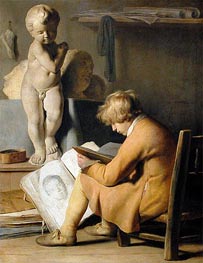
The Young Artist c.1630/35
Oil Painting
$3032
$3032
Canvas Print
$74.93
$74.93
SKU: LJA-6780
Jan Lievens
Original Size: 129 x 100 cm
Louvre Museum, Paris, France
Jan Lievens
Original Size: 129 x 100 cm
Louvre Museum, Paris, France
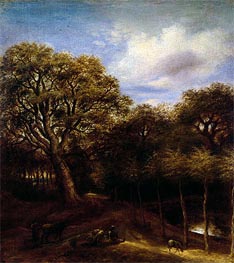
Wooded Landscape with Figures, Sheep and Oxen n.d.
Oil Painting
$1632
$1632
Canvas Print
$106.24
$106.24
SKU: LJA-6781
Jan Lievens
Original Size: unknown
Private Collection
Jan Lievens
Original Size: unknown
Private Collection
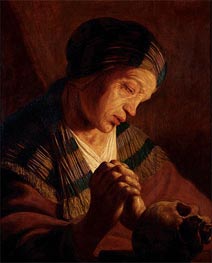
St. Mary Magdalene at Prayer n.d.
Oil Painting
$1607
$1607
SKU: LJA-6782
Jan Lievens
Original Size: 68 x 55 cm
Musee de la Chartreuse, Douai, France
Jan Lievens
Original Size: 68 x 55 cm
Musee de la Chartreuse, Douai, France
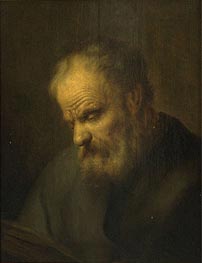
Portrait of a Man n.d.
Oil Painting
$1665
$1665
Canvas Print
$64.57
$64.57
SKU: LJA-6783
Jan Lievens
Original Size: 63.5 x 48.3 cm
Fine Arts Museums of San Francisco, California, USA
Jan Lievens
Original Size: 63.5 x 48.3 cm
Fine Arts Museums of San Francisco, California, USA
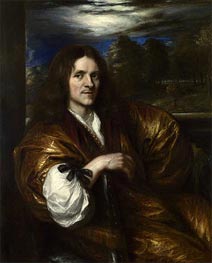
Self Portrait c.1638
Oil Painting
$3262
$3262
Canvas Print
$78.12
$78.12
SKU: LJA-6784
Jan Lievens
Original Size: 96.2 x 77 cm
National Gallery, London, UK
Jan Lievens
Original Size: 96.2 x 77 cm
National Gallery, London, UK
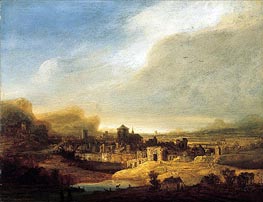
Panoramic Landscape 1640
Oil Painting
$2542
$2542
Canvas Print
$64.14
$64.14
SKU: LJA-6785
Jan Lievens
Original Size: 38.7 x 49.8 cm
Norton Simon Museum, Pasadena, USA
Jan Lievens
Original Size: 38.7 x 49.8 cm
Norton Simon Museum, Pasadena, USA
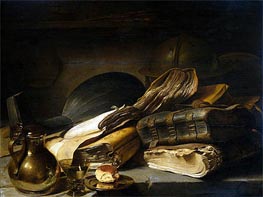
Still Life with Books c.1620/30
Oil Painting
$4614
$4614
Canvas Print
$74.22
$74.22
SKU: LJA-6786
Jan Lievens
Original Size: 91 x 120 cm
Rijksmuseum, Amsterdam, Netherlands
Jan Lievens
Original Size: 91 x 120 cm
Rijksmuseum, Amsterdam, Netherlands
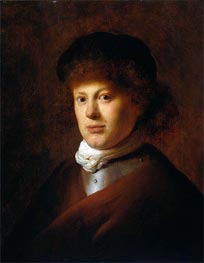
Portrait of Rembrandt van Rijn c.1630
Oil Painting
$1716
$1716
Canvas Print
$75.64
$75.64
SKU: LJA-6787
Jan Lievens
Original Size: 57 x 44.7 cm
Rijksmuseum, Amsterdam, Netherlands
Jan Lievens
Original Size: 57 x 44.7 cm
Rijksmuseum, Amsterdam, Netherlands
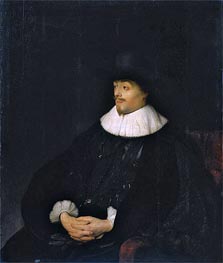
Portrait of Constantijn Huygens c.1626/27
Oil Painting
$2677
$2677
Canvas Print
$81.47
$81.47
SKU: LJA-6788
Jan Lievens
Original Size: 99 x 84 cm
Rijksmuseum, Amsterdam, Netherlands
Jan Lievens
Original Size: 99 x 84 cm
Rijksmuseum, Amsterdam, Netherlands
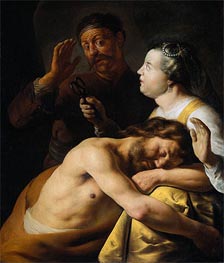
Samson and Delilah c.1630
Oil Painting
$5129
$5129
Canvas Print
$82.54
$82.54
SKU: LJA-6789
Jan Lievens
Original Size: 131 x 111 cm
Rijksmuseum, Amsterdam, Netherlands
Jan Lievens
Original Size: 131 x 111 cm
Rijksmuseum, Amsterdam, Netherlands
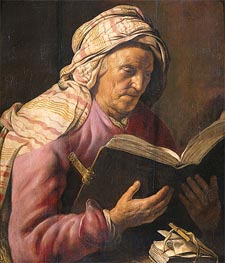
Old Woman Reading c.1626/33
Oil Painting
$2895
$2895
Canvas Print
$86.24
$86.24
SKU: LJA-6790
Jan Lievens
Original Size: 78 x 68 cm
Rijksmuseum, Amsterdam, Netherlands
Jan Lievens
Original Size: 78 x 68 cm
Rijksmuseum, Amsterdam, Netherlands
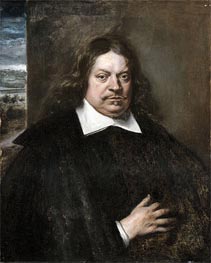
Portrait of a Man c.1650
Oil Painting
$1742
$1742
Canvas Print
$77.76
$77.76
SKU: LJA-6791
Jan Lievens
Original Size: 80.6 x 64.4 cm
Fogg Art Museum at Harvard University, Massachusetts, USA
Jan Lievens
Original Size: 80.6 x 64.4 cm
Fogg Art Museum at Harvard University, Massachusetts, USA
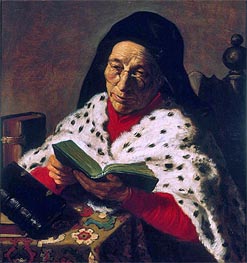
Old Woman Reading n.d.
Oil Painting
$1753
$1753
Canvas Print
$64.14
$64.14
SKU: LJA-6792
Jan Lievens
Original Size: 71.4 x 67.3 cm
Philadelphia Museum of Art, Pennsylvania, USA
Jan Lievens
Original Size: 71.4 x 67.3 cm
Philadelphia Museum of Art, Pennsylvania, USA
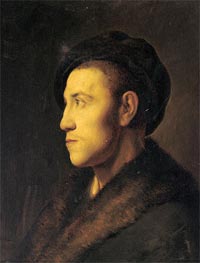
Portrait of a Young Man in Profile n.d.
Oil Painting
$1441
$1441
Canvas Print
$64.14
$64.14
SKU: LJA-6793
Jan Lievens
Original Size: unknown
Private Collection
Jan Lievens
Original Size: unknown
Private Collection
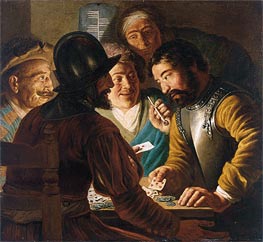
The Card Players c.1622/24
Oil Painting
$3278
$3278
Canvas Print
$110.16
$110.16
SKU: LJA-6794
Jan Lievens
Original Size: 97.6 x 105.6 cm
Private Collection
Jan Lievens
Original Size: 97.6 x 105.6 cm
Private Collection
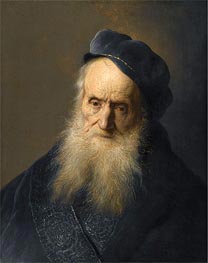
A Tronie of an Old Man n.d.
Oil Painting
$1771
$1771
Canvas Print
$66.04
$66.04
SKU: LJA-6795
Jan Lievens
Original Size: 60.1 x 47.8 cm
Private Collection
Jan Lievens
Original Size: 60.1 x 47.8 cm
Private Collection
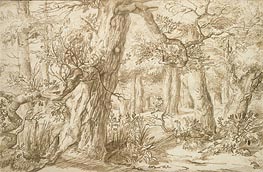
Forest Interior with Draftsman c.1664
Paper Art Print
$60.73
$60.73
SKU: LJA-6796
Jan Lievens
Original Size: 24 x 36.2 cm
Fogg Art Museum at Harvard University, Massachusetts, USA
Jan Lievens
Original Size: 24 x 36.2 cm
Fogg Art Museum at Harvard University, Massachusetts, USA
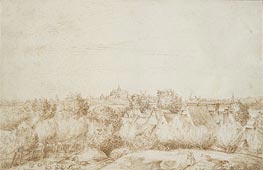
Landscape with a Distant View of Haarlem n.d.
Paper Art Print
$60.73
$60.73
SKU: LJA-6797
Jan Lievens
Original Size: 23.3 x 35.7 cm
Fogg Art Museum at Harvard University, Massachusetts, USA
Jan Lievens
Original Size: 23.3 x 35.7 cm
Fogg Art Museum at Harvard University, Massachusetts, USA
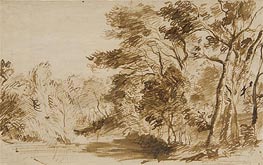
Forest Landscape with a Pond c.1650/70
Paper Art Print
$60.73
$60.73
SKU: LJA-6798
Jan Lievens
Original Size: 22 x 35.6 cm
Fogg Art Museum at Harvard University, Massachusetts, USA
Jan Lievens
Original Size: 22 x 35.6 cm
Fogg Art Museum at Harvard University, Massachusetts, USA
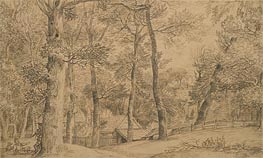
Cottage among Trees n.d.
Paper Art Print
$60.73
$60.73
SKU: LJA-6799
Jan Lievens
Original Size: 22.3 x 37 cm
Fogg Art Museum at Harvard University, Massachusetts, USA
Jan Lievens
Original Size: 22.3 x 37 cm
Fogg Art Museum at Harvard University, Massachusetts, USA
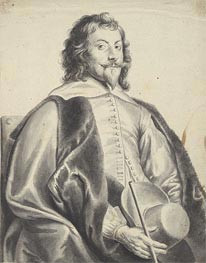
Portrait of Nicholas Lanier n.d.
Paper Art Print
$60.73
$60.73
SKU: LJA-6800
Jan Lievens
Original Size: 29.1 x 20.1 cm
Fogg Art Museum at Harvard University, Massachusetts, USA
Jan Lievens
Original Size: 29.1 x 20.1 cm
Fogg Art Museum at Harvard University, Massachusetts, USA
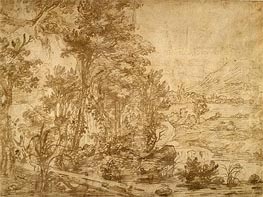
Wooded Landscape n.d.
Paper Art Print
$63.18
$63.18
SKU: LJA-6801
Jan Lievens
Original Size: 39.7 x 52.3 cm
Fogg Art Museum at Harvard University, Massachusetts, USA
Jan Lievens
Original Size: 39.7 x 52.3 cm
Fogg Art Museum at Harvard University, Massachusetts, USA
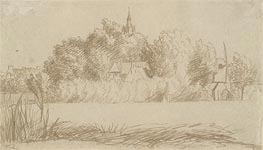
View of a Village n.d.
Paper Art Print
$60.73
$60.73
SKU: LJA-6802
Jan Lievens
Original Size: 17.5 x 30.6 cm
Fogg Art Museum at Harvard University, Massachusetts, USA
Jan Lievens
Original Size: 17.5 x 30.6 cm
Fogg Art Museum at Harvard University, Massachusetts, USA
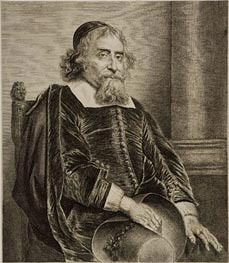
Ephraim Bonus, Jewish Physician n.d.
Paper Art Print
$60.73
$60.73
SKU: LJA-6803
Jan Lievens
Original Size: unknown
Fogg Art Museum at Harvard University, Massachusetts, USA
Jan Lievens
Original Size: unknown
Fogg Art Museum at Harvard University, Massachusetts, USA