
Nicolas Lancret Painting Reproductions 1 of 3
1690-1743
French Rococo Painter
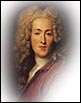
In the Paris of the Régence, when theatre, gardens, masquerade, and polite flirtation became a language of social life, Nicolas Lancret found his subject almost waiting for him. Nicolas Lancret (22 January 1690 - 14 September 1743) was a French Rococo painter, born in Paris, who gave pictorial form to the light comedy and cultivated pleasures of French society under the Duke of Orléans and the early reign of Louis XV.
Lancret’s beginnings were rooted in training rather than legend. His first teacher was Pierre d’Ulin, but the decisive turn came through his encounter with the art of Antoine Watteau. Admiration led him away from d’Ulin and toward Claude Gillot, who had also taught Watteau. Between 1712 and 1713 Lancret studied under Gillot, absorbing a taste for theatrical subjects, elegant gesture, and figures placed between performance and ordinary life. In his early work, the slender proportions associated with Watteau’s manner remained visible, yet Lancret was not merely copying a fashionable model. He was learning how a painting could turn social behaviour into choreography.
Success came quickly, and in a tellingly public setting. Two paintings by Lancret shown on the Place Dauphine were received with unusual enthusiasm. So close were they to Watteau’s world that some viewers reportedly praised them as Watteau’s own. That compliment, if it was one, also carried danger: it was said to have estranged Watteau from the younger painter. Here was the central difficulty of Lancret’s career. He had to work near a dominant example without disappearing beneath it. Gradually, he did so by becoming less elusive, less melancholic, and more explicitly narrative. His fête galante is often a social episode rather than a dream.
In 1718 Lancret was received into the Académie, a crucial institutional step that confirmed his position in Parisian artistic life. From then on he became a respected painter, especially among patrons and viewers who admired Watteau’s refinement but wanted something more legible, more worldly, and often more amused. Balls, fairs, village weddings, outdoor meals, games, dances, and theatrical encounters became his preferred subjects. He also painted portraits and historical pieces, yet his instinct drew him repeatedly toward scenes in which manners reveal character. In such works, costume is never just decoration. It is social evidence.
During the 1720s and 1730s, Lancret developed a reputation across a widening courtly and aristocratic world. He completed decorative works for the Palace of Versailles, and his art later found favour with Frederick the Great, a sign of how far this Parisian language of pleasure travelled. In 1735 he was appointed councillor at the Académie, marking not only professional esteem but also the durability of his success. By then his paintings had also circulated through engravings in considerable numbers. More than eighty of his works were engraved, giving his compositions a life beyond the rooms for which they were first intended.
Looking closely, one sees why his art appealed. Lancret understood arrangement. His drawing could be precise, sometimes even a little dry, and his training under an engraver may partly explain the firmness of his contour and the clarity of his incident. Yet dryness is not the whole truth. In Marie-Anne de Camargo of 1730, the famous dancer is not treated as a remote emblem but as a figure of public grace, poised between celebrity and movement. In Le Déjeuner de jambon, now at the Musée Condé in Chantilly, painted in 1735, conviviality becomes composition: food, gesture, glances, and costume are bound into a scene of urbane appetite. Lancret’s people know that they are being watched. That knowledge gives them life.
Increasingly, his late work gained weight and coherence. Figures became more substantial, more firmly set within their surroundings, and the relation between artifice and nature grew more persuasive. In Montreur de lanterne magique, his handling suggests an artist more interested in unity than in sparkle alone. The change has often been connected with the later Watteau, particularly L’Enseigne de Gersaint, where social space itself becomes a subject. Lancret’s own late paintings show a similar concern with how people occupy a shared world, though his tone remained more domestic and less haunted.
His personal life, long marked by bachelorhood, changed only near the end. In 1741 he married the eighteen-year-old granddaughter of Boursault, the author of Aesop at Court. The story attached to this marriage is striking: Lancret was said to have found the young woman and her dying mother living in poverty in an attic, with the daughter facing the prospect of entering a convent. Whether softened by pity, affection, or conscience, he acted. Perhaps the painter of sociable pleasures understood loneliness more acutely than his canvases first suggest.
Lancret died of pneumonia on 14 September 1743. His last painting, Family in a Garden, now in the National Gallery, London, has often been regarded as the culmination of his art. A family takes coffee; a young girl, wide-eyed, seems to encounter its taste for the first time. The scene is intimate, lightly humorous, and held together by flowing Rococo line and pastel harmony. It also looks forward. In its freshness and affectionate observation, one can sense something that later appears in Thomas Gainsborough and Jean-Honoré Fragonard. The National Gallery also holds his Four Ages of Man, while the British Museum preserves a notable group of red chalk studies. Nicolas Lancret may not possess Watteau’s mystery, but his art gives us something still valuable: the texture of pleasure made visible, sociability observed with intelligence, and the fleeting comedy of manners held, for a moment, in paint.
Lancret’s beginnings were rooted in training rather than legend. His first teacher was Pierre d’Ulin, but the decisive turn came through his encounter with the art of Antoine Watteau. Admiration led him away from d’Ulin and toward Claude Gillot, who had also taught Watteau. Between 1712 and 1713 Lancret studied under Gillot, absorbing a taste for theatrical subjects, elegant gesture, and figures placed between performance and ordinary life. In his early work, the slender proportions associated with Watteau’s manner remained visible, yet Lancret was not merely copying a fashionable model. He was learning how a painting could turn social behaviour into choreography.
Success came quickly, and in a tellingly public setting. Two paintings by Lancret shown on the Place Dauphine were received with unusual enthusiasm. So close were they to Watteau’s world that some viewers reportedly praised them as Watteau’s own. That compliment, if it was one, also carried danger: it was said to have estranged Watteau from the younger painter. Here was the central difficulty of Lancret’s career. He had to work near a dominant example without disappearing beneath it. Gradually, he did so by becoming less elusive, less melancholic, and more explicitly narrative. His fête galante is often a social episode rather than a dream.
In 1718 Lancret was received into the Académie, a crucial institutional step that confirmed his position in Parisian artistic life. From then on he became a respected painter, especially among patrons and viewers who admired Watteau’s refinement but wanted something more legible, more worldly, and often more amused. Balls, fairs, village weddings, outdoor meals, games, dances, and theatrical encounters became his preferred subjects. He also painted portraits and historical pieces, yet his instinct drew him repeatedly toward scenes in which manners reveal character. In such works, costume is never just decoration. It is social evidence.
During the 1720s and 1730s, Lancret developed a reputation across a widening courtly and aristocratic world. He completed decorative works for the Palace of Versailles, and his art later found favour with Frederick the Great, a sign of how far this Parisian language of pleasure travelled. In 1735 he was appointed councillor at the Académie, marking not only professional esteem but also the durability of his success. By then his paintings had also circulated through engravings in considerable numbers. More than eighty of his works were engraved, giving his compositions a life beyond the rooms for which they were first intended.
Looking closely, one sees why his art appealed. Lancret understood arrangement. His drawing could be precise, sometimes even a little dry, and his training under an engraver may partly explain the firmness of his contour and the clarity of his incident. Yet dryness is not the whole truth. In Marie-Anne de Camargo of 1730, the famous dancer is not treated as a remote emblem but as a figure of public grace, poised between celebrity and movement. In Le Déjeuner de jambon, now at the Musée Condé in Chantilly, painted in 1735, conviviality becomes composition: food, gesture, glances, and costume are bound into a scene of urbane appetite. Lancret’s people know that they are being watched. That knowledge gives them life.
Increasingly, his late work gained weight and coherence. Figures became more substantial, more firmly set within their surroundings, and the relation between artifice and nature grew more persuasive. In Montreur de lanterne magique, his handling suggests an artist more interested in unity than in sparkle alone. The change has often been connected with the later Watteau, particularly L’Enseigne de Gersaint, where social space itself becomes a subject. Lancret’s own late paintings show a similar concern with how people occupy a shared world, though his tone remained more domestic and less haunted.
His personal life, long marked by bachelorhood, changed only near the end. In 1741 he married the eighteen-year-old granddaughter of Boursault, the author of Aesop at Court. The story attached to this marriage is striking: Lancret was said to have found the young woman and her dying mother living in poverty in an attic, with the daughter facing the prospect of entering a convent. Whether softened by pity, affection, or conscience, he acted. Perhaps the painter of sociable pleasures understood loneliness more acutely than his canvases first suggest.
Lancret died of pneumonia on 14 September 1743. His last painting, Family in a Garden, now in the National Gallery, London, has often been regarded as the culmination of his art. A family takes coffee; a young girl, wide-eyed, seems to encounter its taste for the first time. The scene is intimate, lightly humorous, and held together by flowing Rococo line and pastel harmony. It also looks forward. In its freshness and affectionate observation, one can sense something that later appears in Thomas Gainsborough and Jean-Honoré Fragonard. The National Gallery also holds his Four Ages of Man, while the British Museum preserves a notable group of red chalk studies. Nicolas Lancret may not possess Watteau’s mystery, but his art gives us something still valuable: the texture of pleasure made visible, sociability observed with intelligence, and the fleeting comedy of manners held, for a moment, in paint.
67 Nicolas Lancret Paintings
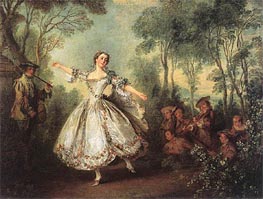
Mademoiselle de Camargo Dancing 1730
Oil Painting
$2414
$2414
Canvas Print
$72.70
$72.70
SKU: LAN-2967
Nicolas Lancret
Original Size: 41.7 x 54.5 cm
The Wallace Collection, London, UK
Nicolas Lancret
Original Size: 41.7 x 54.5 cm
The Wallace Collection, London, UK
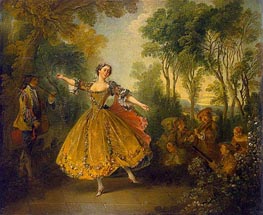
Mlle Camargo Dancing c.1710/43
Oil Painting
$2440
$2440
Canvas Print
$79.17
$79.17
SKU: LAN-2969
Nicolas Lancret
Original Size: 45 x 55 cm
State Hermitage Museum, St. Petersburg, Russia
Nicolas Lancret
Original Size: 45 x 55 cm
State Hermitage Museum, St. Petersburg, Russia
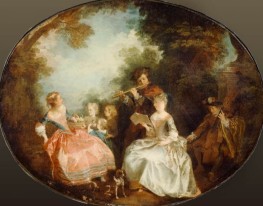
Concert in the Park n.d.
Oil Painting
$3818
$3818
Canvas Print
$75.82
$75.82
SKU: LAN-21840
Nicolas Lancret
Original Size: 83 x 104 cm
Pushkin Museum of Fine Arts, Moscow, Russia
Nicolas Lancret
Original Size: 83 x 104 cm
Pushkin Museum of Fine Arts, Moscow, Russia
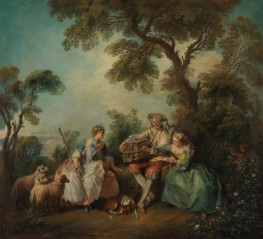
The Bird Cage (Les amours du bocage) 1735
Oil Painting
$4089
$4089
Canvas Print
$67.40
$67.40
SKU: LAN-22402
Nicolas Lancret
Original Size: 43.9 x 48 cm
Alte Pinakothek, Munich, Germany
Nicolas Lancret
Original Size: 43.9 x 48 cm
Alte Pinakothek, Munich, Germany
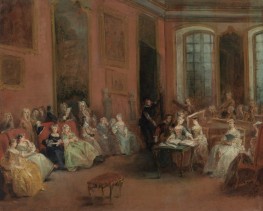
Concert in Salon 1738
Oil Painting
$3863
$3863
Canvas Print
$63.85
$63.85
SKU: LAN-22403
Nicolas Lancret
Original Size: 36.8 x 45.6 cm
Alte Pinakothek, Munich, Germany
Nicolas Lancret
Original Size: 36.8 x 45.6 cm
Alte Pinakothek, Munich, Germany
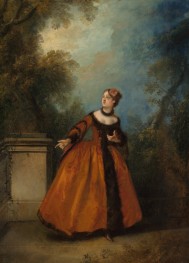
The Beautiful Greek Woman c.1731/36
Oil Painting
$2648
$2648
Canvas Print
$69.66
$69.66
SKU: LAN-22404
Nicolas Lancret
Original Size: 70 x 51.6 cm
Art Institute of Chicago, Illinois, USA
Nicolas Lancret
Original Size: 70 x 51.6 cm
Art Institute of Chicago, Illinois, USA
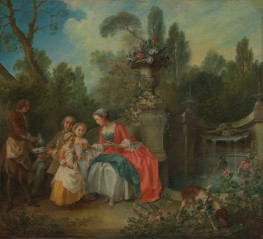
A Lady in a Garden Having Coffee with Children 1742
Oil Painting
$6850
$6850
Canvas Print
$88.31
$88.31
SKU: LAN-22405
Nicolas Lancret
Original Size: 88.9 x 97.8 cm
National Gallery, London, UK
Nicolas Lancret
Original Size: 88.9 x 97.8 cm
National Gallery, London, UK
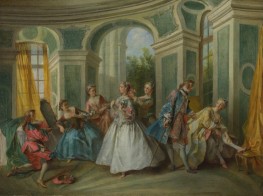
The Four Ages of Man: Adolescence c.1733/34
Oil Painting
$3774
$3774
Canvas Print
$63.85
$63.85
SKU: LAN-22406
Nicolas Lancret
Original Size: 34.3 x 45.3 cm
National Gallery, London, UK
Nicolas Lancret
Original Size: 34.3 x 45.3 cm
National Gallery, London, UK
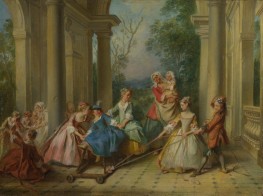
The Four Ages of Man: Childhood c.1733/34
Oil Painting
$3791
$3791
Canvas Print
$63.85
$63.85
SKU: LAN-22407
Nicolas Lancret
Original Size: 34.5 x 45.7 cm
National Gallery, London, UK
Nicolas Lancret
Original Size: 34.5 x 45.7 cm
National Gallery, London, UK
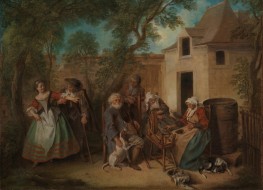
The Four Ages of Man: Old Age c.1733/34
Oil Painting
$3787
$3787
Canvas Print
$63.85
$63.85
SKU: LAN-22408
Nicolas Lancret
Original Size: 34.6 x 45.4 cm
National Gallery, London, UK
Nicolas Lancret
Original Size: 34.6 x 45.4 cm
National Gallery, London, UK
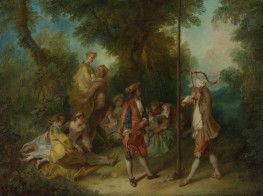
The Four Ages of Man: Youth c.1733/34
Oil Painting
$3772
$3772
Canvas Print
$63.85
$63.85
SKU: LAN-22409
Nicolas Lancret
Original Size: 34.3 x 45.2 cm
National Gallery, London, UK
Nicolas Lancret
Original Size: 34.3 x 45.2 cm
National Gallery, London, UK
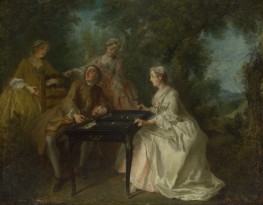
The Four Times of Day: Afternoon c.1739/41
Oil Painting
$3380
$3380
Canvas Print
$63.85
$63.85
SKU: LAN-22410
Nicolas Lancret
Original Size: 28.8 x 36.7 cm
National Gallery, London, UK
Nicolas Lancret
Original Size: 28.8 x 36.7 cm
National Gallery, London, UK
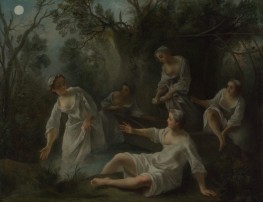
The Four Times of Day: Evening c.1739/41
Oil Painting
$3382
$3382
Canvas Print
$63.85
$63.85
SKU: LAN-22411
Nicolas Lancret
Original Size: 28.8 x 36.8 cm
National Gallery, London, UK
Nicolas Lancret
Original Size: 28.8 x 36.8 cm
National Gallery, London, UK
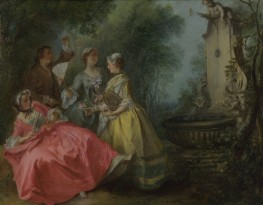
The Four Times of Day: Midday c.1739/41
Oil Painting
$3379
$3379
Canvas Print
$63.85
$63.85
SKU: LAN-22412
Nicolas Lancret
Original Size: 28.6 x 36.9 cm
National Gallery, London, UK
Nicolas Lancret
Original Size: 28.6 x 36.9 cm
National Gallery, London, UK
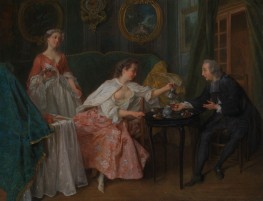
The Four Times of Day: Morning 1739
Oil Painting
$3357
$3357
Canvas Print
$63.85
$63.85
SKU: LAN-22413
Nicolas Lancret
Original Size: 28.3 x 36.4 cm
National Gallery, London, UK
Nicolas Lancret
Original Size: 28.3 x 36.4 cm
National Gallery, London, UK
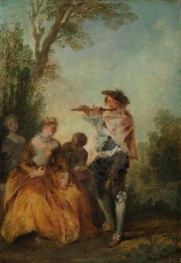
With a Tender Song 1725
Oil Painting
$1663
$1663
Canvas Print
$63.85
$63.85
SKU: LAN-22414
Nicolas Lancret
Original Size: 27 x 19 cm
Fitzwilliam Museum, Cambridge, UK
Nicolas Lancret
Original Size: 27 x 19 cm
Fitzwilliam Museum, Cambridge, UK
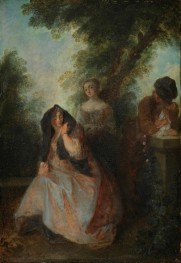
'In This Pleasant Solitude...' n.d.
Oil Painting
$1700
$1700
Canvas Print
$63.85
$63.85
SKU: LAN-22415
Nicolas Lancret
Original Size: 29.5 x 18.4 cm
Fitzwilliam Museum, Cambridge, UK
Nicolas Lancret
Original Size: 29.5 x 18.4 cm
Fitzwilliam Museum, Cambridge, UK
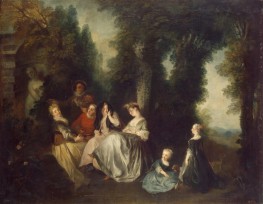
Party in the Garden n.d.
Oil Painting
$6521
$6521
Canvas Print
$75.29
$75.29
SKU: LAN-22416
Nicolas Lancret
Original Size: 99 x 132 cm
State Hermitage Museum, St. Petersburg, Russia
Nicolas Lancret
Original Size: 99 x 132 cm
State Hermitage Museum, St. Petersburg, Russia
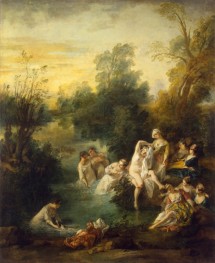
Summer 1730
Oil Painting
$6765
$6765
Canvas Print
$79.34
$79.34
SKU: LAN-22417
Nicolas Lancret
Original Size: 115 x 95 cm
State Hermitage Museum, St. Petersburg, Russia
Nicolas Lancret
Original Size: 115 x 95 cm
State Hermitage Museum, St. Petersburg, Russia
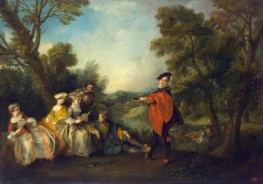
Concert in the Park c.1720/43
Oil Painting
$6383
$6383
Canvas Print
$67.91
$67.91
SKU: LAN-22418
Nicolas Lancret
Original Size: 76 x 107 cm
State Hermitage Museum, St. Petersburg, Russia
Nicolas Lancret
Original Size: 76 x 107 cm
State Hermitage Museum, St. Petersburg, Russia
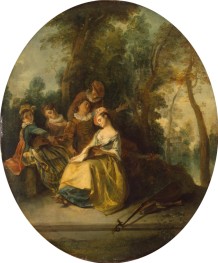
Concert in the Park 1738
Oil Painting
$4738
$4738
Canvas Print
$80.58
$80.58
SKU: LAN-22419
Nicolas Lancret
Original Size: 61.5 x 51.5 cm
State Hermitage Museum, St. Petersburg, Russia
Nicolas Lancret
Original Size: 61.5 x 51.5 cm
State Hermitage Museum, St. Petersburg, Russia
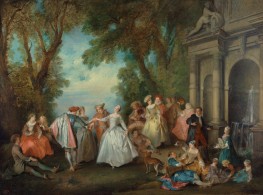
Dance Before a Fountain 1724
Oil Painting
$6511
$6511
Canvas Print
$71.96
$71.96
SKU: LAN-22420
Nicolas Lancret
Original Size: 97.8 x 130.8 cm
J. Paul Getty Museum, Los Angeles, USA
Nicolas Lancret
Original Size: 97.8 x 130.8 cm
J. Paul Getty Museum, Los Angeles, USA
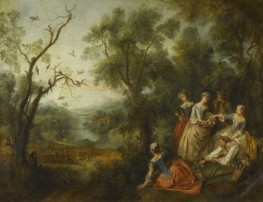
Spring n.d.
Oil Painting
$4718
$4718
Canvas Print
$74.42
$74.42
SKU: LAN-22421
Nicolas Lancret
Original Size: 69 x 84 cm
Louvre Museum, Paris, France
Nicolas Lancret
Original Size: 69 x 84 cm
Louvre Museum, Paris, France
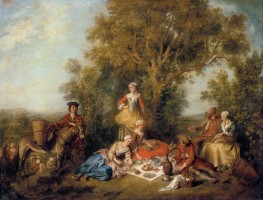
Autumn n.d.
Oil Painting
$5872
$5872
Canvas Print
$73.71
$73.71
SKU: LAN-22422
Nicolas Lancret
Original Size: 69 x 84 cm
Louvre Museum, Paris, France
Nicolas Lancret
Original Size: 69 x 84 cm
Louvre Museum, Paris, France