
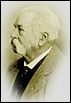
Benjamin Williams Leader Painting Reproductions 1 of 2
1831-1923
English Realist Painter
Born on March 12, 1831 in Worcester, England, Benjamin Williams (later Benjamin Leader) was introduced to the principles of art at an early age through his father, Edward Leader Williams, who favored open-air painting and had connections to John Constable. The familial setting—sketches along the Severn River, a father’s easel occasionally commandeered for youthful additions—created a foundation for Leader’s eventual devotion to landscape painting. This grounding in practical observation proved formative when he later cultivated a personal vision of English countryside scenes, marking him as a leading figure among Victorian landscape artists.
Despite his early passion for drawing, the young artist initially worked in his father’s engineering office. Yet his tendency to fill sketchbooks rather than design grids and locks confirmed that art would prevail over engineering. By 1853, he had enrolled in the Royal Academy Schools. Soon after, he began exhibiting works that revealed traits of the Pre-Raphaelite approach: clarity of form, meticulous detail, and a faithful transcription of nature’s subtleties. Early pieces like "Cottage Children Blowing Bubbles" found willing buyers, and local patrons recognized the promise of his precise, nature-centric vision.
Leader’s artistic journey, however, was punctuated by dissatisfaction. Even as commissions increased, he questioned whether the brilliance of certain hues accurately conveyed the gentler interplay of light and shade he observed in the field. One of his English rural scenes—those reflections along calm waters and the subdued gleam that bathes the church spire illustrate his evolving mastery of atmospheric effects. His skill in capturing the gentle shifts of time and weather underscores his belief that English riversides, lanes, and churchyards were incomparable sources of inspiration.
In the late 1850s, wishing to distinguish himself from a well-known family of painters named Williams, he adopted the name Benjamin Leader. Critics soon took note, especially when his Welsh and Midland county landscapes appeared in London exhibitions. Crucial support from prominent dealers and editors helped expand his reputation beyond the Royal Academy walls. A choice to move briefly to London in 1861 further indicated his resolve to gain both critical and commercial success, yet the Worcestershire countryside always remained his primary subject. This duality between professional ambition and an unchanging love for provincial England shaped his style and presence in Victorian art circles.
Leader’s adoption of a more naturalistic technique in the mid-1860s displayed his admiration for Constable, John Linell, and the Barbizon painters. Observations made on sketching trips around Britain, along with lessons gleaned from French open-air practices, fueled a shift from the polished brilliance of his early pieces to a subtler portrayal of atmosphere. By the time he married Mary Eastlake in 1876 and was later recognized as an Associate of the Royal Academy in 1883, the hallmark of his paintings was their amber light—manifested as a late afternoon glow that imbued village lanes and rural churches with understated warmth.
Steadily, his reputation grew. Works like "February Fill Dyke" enjoyed critical praise and broad public appeal, leading to engravings that found new audiences through print markets. This commercial success, combined with decorative honors from the French government and full membership of the Royal Academy by 1898, confirmed his standing within the Victorian and Edwardian art establishment. Even as global acclaim broadened, culminating in popularity across North America, Leader never ceased to refine the personal impressions of meadows, lanes, and rivers that had defined him from boyhood. He passed away on March 22, 1923, leaving behind a considerable legacy of exhibited works—nearly seven decades of contributions that solidified his stature as one of Britain’s foremost interpreters of its enduring rural landscapes.
Despite his early passion for drawing, the young artist initially worked in his father’s engineering office. Yet his tendency to fill sketchbooks rather than design grids and locks confirmed that art would prevail over engineering. By 1853, he had enrolled in the Royal Academy Schools. Soon after, he began exhibiting works that revealed traits of the Pre-Raphaelite approach: clarity of form, meticulous detail, and a faithful transcription of nature’s subtleties. Early pieces like "Cottage Children Blowing Bubbles" found willing buyers, and local patrons recognized the promise of his precise, nature-centric vision.
Leader’s artistic journey, however, was punctuated by dissatisfaction. Even as commissions increased, he questioned whether the brilliance of certain hues accurately conveyed the gentler interplay of light and shade he observed in the field. One of his English rural scenes—those reflections along calm waters and the subdued gleam that bathes the church spire illustrate his evolving mastery of atmospheric effects. His skill in capturing the gentle shifts of time and weather underscores his belief that English riversides, lanes, and churchyards were incomparable sources of inspiration.
In the late 1850s, wishing to distinguish himself from a well-known family of painters named Williams, he adopted the name Benjamin Leader. Critics soon took note, especially when his Welsh and Midland county landscapes appeared in London exhibitions. Crucial support from prominent dealers and editors helped expand his reputation beyond the Royal Academy walls. A choice to move briefly to London in 1861 further indicated his resolve to gain both critical and commercial success, yet the Worcestershire countryside always remained his primary subject. This duality between professional ambition and an unchanging love for provincial England shaped his style and presence in Victorian art circles.
Leader’s adoption of a more naturalistic technique in the mid-1860s displayed his admiration for Constable, John Linell, and the Barbizon painters. Observations made on sketching trips around Britain, along with lessons gleaned from French open-air practices, fueled a shift from the polished brilliance of his early pieces to a subtler portrayal of atmosphere. By the time he married Mary Eastlake in 1876 and was later recognized as an Associate of the Royal Academy in 1883, the hallmark of his paintings was their amber light—manifested as a late afternoon glow that imbued village lanes and rural churches with understated warmth.
Steadily, his reputation grew. Works like "February Fill Dyke" enjoyed critical praise and broad public appeal, leading to engravings that found new audiences through print markets. This commercial success, combined with decorative honors from the French government and full membership of the Royal Academy by 1898, confirmed his standing within the Victorian and Edwardian art establishment. Even as global acclaim broadened, culminating in popularity across North America, Leader never ceased to refine the personal impressions of meadows, lanes, and rivers that had defined him from boyhood. He passed away on March 22, 1923, leaving behind a considerable legacy of exhibited works—nearly seven decades of contributions that solidified his stature as one of Britain’s foremost interpreters of its enduring rural landscapes.
30 Benjamin Williams Leader Paintings
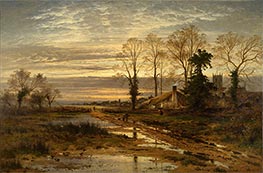
February Fill Dyke 1881
Oil Painting
$1633
$1633
Canvas Print
$64.73
$64.73
SKU: LBW-5520
Benjamin Williams Leader
Original Size: 122 x 183 cm
Museum and Art Gallery, Birmingham, UK
Benjamin Williams Leader
Original Size: 122 x 183 cm
Museum and Art Gallery, Birmingham, UK
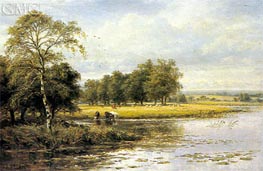
On the Thames n.d.
Oil Painting
$1214
$1214
SKU: LBW-5521
Benjamin Williams Leader
Original Size: unknown
Private Collection
Benjamin Williams Leader
Original Size: unknown
Private Collection
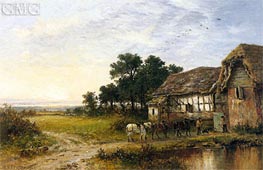
Returning Home 1897
Oil Painting
$1476
$1476
SKU: LBW-5522
Benjamin Williams Leader
Original Size: unknown
Private Collection
Benjamin Williams Leader
Original Size: unknown
Private Collection
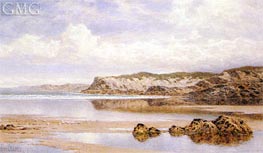
The Incoming Tide, Porth Newquay 1912
Oil Painting
$1263
$1263
SKU: LBW-5523
Benjamin Williams Leader
Original Size: unknown
Private Collection
Benjamin Williams Leader
Original Size: unknown
Private Collection
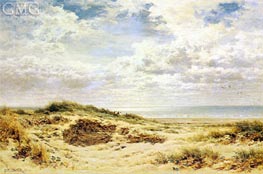
Morning on the Sussex Coast 1911
Oil Painting
$1334
$1334
SKU: LBW-5524
Benjamin Williams Leader
Original Size: unknown
Private Collection
Benjamin Williams Leader
Original Size: unknown
Private Collection
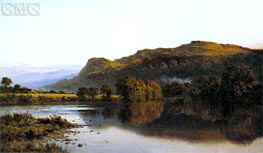
Where Peaceful Waters Glide 1898
Oil Painting
$1568
$1568
SKU: LBW-5525
Benjamin Williams Leader
Original Size: unknown
Private Collection
Benjamin Williams Leader
Original Size: unknown
Private Collection
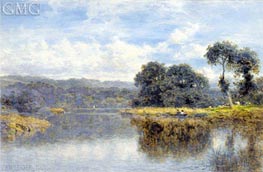
A Fine Day on the Thames 1907
Oil Painting
$1127
$1127
SKU: LBW-5526
Benjamin Williams Leader
Original Size: unknown
Private Collection
Benjamin Williams Leader
Original Size: unknown
Private Collection
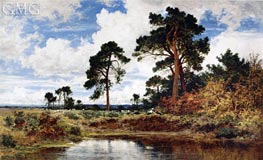
The Breezy Morn 1898
Oil Painting
$1669
$1669
SKU: LBW-5527
Benjamin Williams Leader
Original Size: unknown
Private Collection
Benjamin Williams Leader
Original Size: unknown
Private Collection
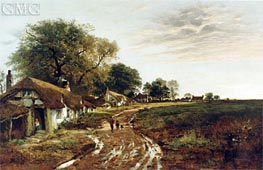
Sunshine After Rain 1882
Oil Painting
$1784
$1784
SKU: LBW-5528
Benjamin Williams Leader
Original Size: unknown
Private Collection
Benjamin Williams Leader
Original Size: unknown
Private Collection
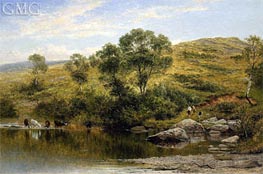
A Quiet Pool on the River Llugwy, Near Capel Curig 1872
Oil Painting
$1568
$1568
SKU: LBW-5529
Benjamin Williams Leader
Original Size: unknown
Private Collection
Benjamin Williams Leader
Original Size: unknown
Private Collection
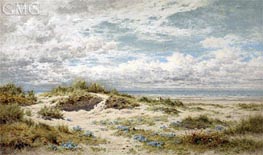
A Sandy Shore on the South Coast 1904
Oil Painting
$1693
$1693
SKU: LBW-5530
Benjamin Williams Leader
Original Size: unknown
Private Collection
Benjamin Williams Leader
Original Size: unknown
Private Collection
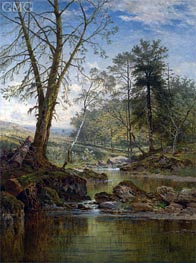
A Sunny Stream - Beardon, Dartmoor 1883
Oil Painting
$1909
$1909
Canvas Print
$73.13
$73.13
SKU: LBW-5531
Benjamin Williams Leader
Original Size: 143 x 107 cm
Private Collection
Benjamin Williams Leader
Original Size: 143 x 107 cm
Private Collection
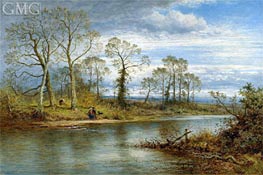
An English River in Autumn 1877
Oil Painting
$1669
$1669
SKU: LBW-5532
Benjamin Williams Leader
Original Size: unknown
Private Collection
Benjamin Williams Leader
Original Size: unknown
Private Collection
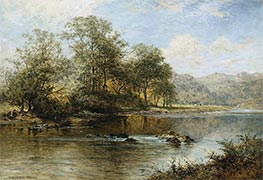
On the Llugwy, North Wales 1887
Oil Painting
$716
$716
Canvas Print
$67.06
$67.06
SKU: LBW-5533
Benjamin Williams Leader
Original Size: 46 x 66 cm
Private Collection
Benjamin Williams Leader
Original Size: 46 x 66 cm
Private Collection
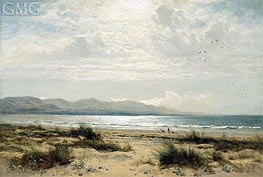
On the Sands 1893
Oil Painting
$976
$976
SKU: LBW-5534
Benjamin Williams Leader
Original Size: unknown
Private Collection
Benjamin Williams Leader
Original Size: unknown
Private Collection
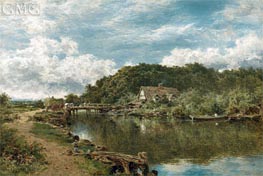
On the Stour near Flatford Mill, Suffolk 1901
Oil Painting
$1568
$1568
Canvas Print
$65.64
$65.64
SKU: LBW-5535
Benjamin Williams Leader
Original Size: 51 x 76 cm
Private Collection
Benjamin Williams Leader
Original Size: 51 x 76 cm
Private Collection
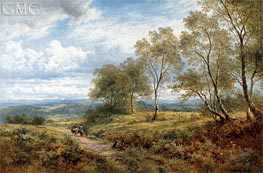
On the Welsh Border 1874
Oil Painting
$1633
$1633
SKU: LBW-5536
Benjamin Williams Leader
Original Size: unknown
Private Collection
Benjamin Williams Leader
Original Size: unknown
Private Collection
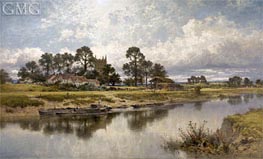
Severn Side, Sabrina's Stream at Kempsey on the ... 1889
Oil Painting
$1846
$1846
SKU: LBW-5537
Benjamin Williams Leader
Original Size: unknown
Private Collection
Benjamin Williams Leader
Original Size: unknown
Private Collection
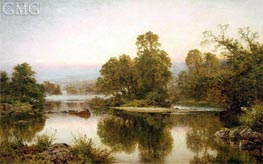
Summer Eve by Haunted Stream 1899
Oil Painting
$1633
$1633
SKU: LBW-5538
Benjamin Williams Leader
Original Size: unknown
Private Collection
Benjamin Williams Leader
Original Size: unknown
Private Collection
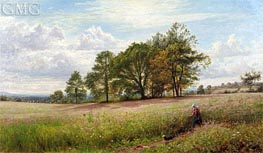
Summer Time: Through the Hayfield, Worcestershire 1866
Oil Painting
$1655
$1655
SKU: LBW-5539
Benjamin Williams Leader
Original Size: unknown
Private Collection
Benjamin Williams Leader
Original Size: unknown
Private Collection
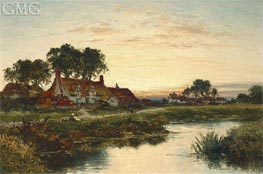
Worcestershire Cottages 1897
Oil Painting
$1046
$1046
SKU: LBW-5540
Benjamin Williams Leader
Original Size: unknown
Private Collection
Benjamin Williams Leader
Original Size: unknown
Private Collection
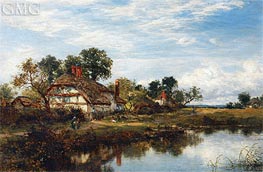
Worcestershire Cottages 1894
Oil Painting
$1151
$1151
SKU: LBW-5541
Benjamin Williams Leader
Original Size: unknown
Private Collection
Benjamin Williams Leader
Original Size: unknown
Private Collection
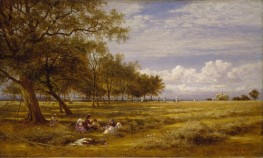
An English Hayfield 1878
Oil Painting
$3262
$3262
Canvas Print
$64.73
$64.73
SKU: LBW-22682
Benjamin Williams Leader
Original Size: 68.7 x 114.1 cm
Museum and Art Gallery, Birmingham, UK
Benjamin Williams Leader
Original Size: 68.7 x 114.1 cm
Museum and Art Gallery, Birmingham, UK
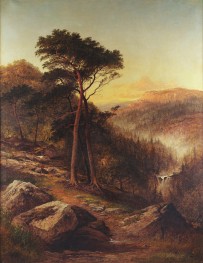
Falls of Bettws-y-Coed 1869
Oil Painting
$3352
$3352
Canvas Print
$76.16
$76.16
SKU: LBW-22683
Benjamin Williams Leader
Original Size: 149.9 x 115.6 cm
Fred Jones Jr. Museum of Art at University of Oklahoma, Oklahoma, USA
Benjamin Williams Leader
Original Size: 149.9 x 115.6 cm
Fred Jones Jr. Museum of Art at University of Oklahoma, Oklahoma, USA