
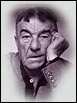
Fernand Léger Painting Reproductions 1 of 5
1881-1955
French Cubist Painter
A muzzle-flash of sunlight on a piece of artillery - that was the kind of shock Fernand Léger later named as a turning point, when the modern world stopped being background and became subject. Joseph Fernand Henri Léger (4 February 1881 - 17 August 1955) was a French painter who also worked as a sculptor and filmmaker, moving from a personal form of Cubism - the critics’ “Tubism” - toward a bolder, more populist figuration. In his hands, the machine age becomes pictorial grammar: cylinders, discs, hard contours, and colour that behaves like signage.
Argentan in Lower Normandy gave him a practical start. His father raised cattle, and the young man learned the steadiness of labour and the value of exact lines. Architecture came first: training from 1897 to 1899, then a move to Paris in 1900 to earn his living as an architectural draftsman. Military service in Versailles followed in 1902 - 1903. Refused by the École des Beaux-Arts, he enrolled at the School of Decorative Arts and attended the Beaux-Arts unofficially, later calling those years “empty and useless” because they did not teach him what he needed.
Painting arrived slowly, then decisively. Le Jardin de ma mère (My Mother’s Garden), 1905, still breathes an Impressionist softness, and it is telling that he did not later destroy it as he destroyed much of his early output. A firmer rigour entered after the Cézanne retrospective at the Salon d’Automne in 1907: drawing tightened, geometry asserted itself, and the image began to behave like a constructed object rather than a view. By 1909 he was in Montparnasse, meeting Alexander Archipenko, Jacques Lipchitz, Marc Chagall, Joseph Csaky and Robert Delaunay, in a neighbourhood where ideas were traded with the urgency of rent.
Public visibility arrived quickly. In 1910 he exhibited at the Salon d’Automne in the same room as Jean Metzinger and Henri Le Fauconnier. In 1911 the Salon des Indépendants grouped together the painters identified as Cubists - Metzinger, Albert Gleizes, Le Fauconnier, Delaunay and Léger - so viewers met Cubism as an organised proposition rather than a private code. He returned to the Salon d’Automne and the Indépendants in 1912 and joined the Puteaux Group, also called the Section d’Or, alongside artists including Gleizes, Metzinger, Le Fauconnier, Francis Picabia, and the Duchamp brothers.
Nus dans la forêt (Nudes in the Forest), 1910, shows why “Tubism” stuck: bodies rebuilt from cylinders and cones, massed like engineered parts. From 1912 to 1914 his painting grew more abstract, made of tubular, conical and cubed forms laid down in rough patches of primary colour plus green, black and white. He avoided collage, letting paint itself do the joining. La Femme en Bleu (Woman in Blue), exhibited at the 1912 Salon d’Automne, holds the figure like architecture - frontal, weighty, and oddly impassive. Even when the human subject remains, sentiment is held at bay by construction.
War re-educated the eye. Mobilised in August 1914, Léger spent two years at the front in the Argonne, sketching artillery pieces, aeroplanes, and fellow soldiers in the trenches. Painted on furlough, Le Soldat à la Pipe (Soldier with a Pipe), 1916, simplifies the figure toward an object, pared down to function and silhouette. In September 1916 he nearly died in a German mustard-gas attack at Verdun. Convalescing in Villepinte, he painted The Card Players (1917), where robot-like figures and harsh simplifications register experience without turning it into narrative melodrama.
Out of that came what is often called the mechanical period. Starting in 1918 he produced the first Disk paintings, punctuating space with circles suggestive of traffic lights. In December 1919 he married Jeanne-Augustine Lohy, and in 1920 he met Le Corbusier, a lifelong friend who sharpened his sense of painting as something architectural. The decade’s “return to order” did not soften him; it steadied him. Mother and Child (1922) and Nude on a Red Background (1927) carry the same insistence on form.
Cinema itself had its claim. In 1923 - 1924 he designed the laboratory set for Marcel L’Herbier’s L’Inhumaine. In 1924 he co-produced and co-directed Ballet Mécanique with Dudley Murphy, collaborating with George Antheil and Man Ray: a non-narrative sequence of lips, teeth, ordinary objects, repeated gestures, and machine rhythms, organised by montage rather than story. Teaching ran alongside experiment. With Amédée Ozenfant he founded the Académie Moderne in 1924, with Alexandra Exter and Marie Laurencin among the teachers. In 1925 he began the “mural paintings” intended for polychrome architecture, flattening space into planes that advance and recede like coloured walls.
After 1927 organic, irregular forms gained ground. Two Sisters (1935) shows a figure less schematic, more bodily, but still held by contour. He visited the United States in 1931, travelling to New York City and Chicago. The Museum of Modern Art in New York mounted an exhibition of his work in 1935, and in 1938 he was commissioned to decorate Nelson Rockefeller’s apartment.
World War II displaced him again. Living in the United States, he taught at Yale University and found new motifs in an unglamorous sight: industrial refuse scattered through the landscape. Flowers pushing up through abandoned machines, birds perching on metal - this collision became his “law of contrast”, visible in The Tree in the Ladder (1943 - 1944) and Romantic Landscape (1946). Watching Broadway’s neon, he discovered colour as a sudden event: a face turns blue, then red, then yellow, as light changes the world without asking permission.
Returning to France in 1945, Léger joined the Communist Party and turned toward monumental scenes of popular life - builders, divers, acrobats, country outings - while continuing to work for public settings in murals, mosaics, and stained glass. After Jeanne-Augustine Lohy died in 1950, he married Nadia Khodossevitch in 1952. In his last years he lectured in Bern, designed mosaics and stained-glass windows for the Central University of Venezuela in Caracas, and began a mosaic project for the São Paulo Opera in 1954. He died suddenly in 1955 and was buried in Gif-sur-Yvette.
His writing makes the aim explicit. In 1945 he argued that the object must become the main character in modern painting; in 1949, in How I Conceive the Human Figure, he treated the body as a “plastic value” rather than a sentimental one - hence those willfully inexpressive faces that keep emotion from slipping into melodrama. Murals were installed in 1952 in the United Nations General Assembly Hall in New York, and a museum dedicated to Fernand Léger opened in Biot in 1960. Reputation, market, and exhibition history have continued to shift around him, but the paintings keep their nerve. Perhaps the most persuasive thing about Fernand Léger is his calm refusal to separate the human from the engineered.
Argentan in Lower Normandy gave him a practical start. His father raised cattle, and the young man learned the steadiness of labour and the value of exact lines. Architecture came first: training from 1897 to 1899, then a move to Paris in 1900 to earn his living as an architectural draftsman. Military service in Versailles followed in 1902 - 1903. Refused by the École des Beaux-Arts, he enrolled at the School of Decorative Arts and attended the Beaux-Arts unofficially, later calling those years “empty and useless” because they did not teach him what he needed.
Painting arrived slowly, then decisively. Le Jardin de ma mère (My Mother’s Garden), 1905, still breathes an Impressionist softness, and it is telling that he did not later destroy it as he destroyed much of his early output. A firmer rigour entered after the Cézanne retrospective at the Salon d’Automne in 1907: drawing tightened, geometry asserted itself, and the image began to behave like a constructed object rather than a view. By 1909 he was in Montparnasse, meeting Alexander Archipenko, Jacques Lipchitz, Marc Chagall, Joseph Csaky and Robert Delaunay, in a neighbourhood where ideas were traded with the urgency of rent.
Public visibility arrived quickly. In 1910 he exhibited at the Salon d’Automne in the same room as Jean Metzinger and Henri Le Fauconnier. In 1911 the Salon des Indépendants grouped together the painters identified as Cubists - Metzinger, Albert Gleizes, Le Fauconnier, Delaunay and Léger - so viewers met Cubism as an organised proposition rather than a private code. He returned to the Salon d’Automne and the Indépendants in 1912 and joined the Puteaux Group, also called the Section d’Or, alongside artists including Gleizes, Metzinger, Le Fauconnier, Francis Picabia, and the Duchamp brothers.
Nus dans la forêt (Nudes in the Forest), 1910, shows why “Tubism” stuck: bodies rebuilt from cylinders and cones, massed like engineered parts. From 1912 to 1914 his painting grew more abstract, made of tubular, conical and cubed forms laid down in rough patches of primary colour plus green, black and white. He avoided collage, letting paint itself do the joining. La Femme en Bleu (Woman in Blue), exhibited at the 1912 Salon d’Automne, holds the figure like architecture - frontal, weighty, and oddly impassive. Even when the human subject remains, sentiment is held at bay by construction.
War re-educated the eye. Mobilised in August 1914, Léger spent two years at the front in the Argonne, sketching artillery pieces, aeroplanes, and fellow soldiers in the trenches. Painted on furlough, Le Soldat à la Pipe (Soldier with a Pipe), 1916, simplifies the figure toward an object, pared down to function and silhouette. In September 1916 he nearly died in a German mustard-gas attack at Verdun. Convalescing in Villepinte, he painted The Card Players (1917), where robot-like figures and harsh simplifications register experience without turning it into narrative melodrama.
Out of that came what is often called the mechanical period. Starting in 1918 he produced the first Disk paintings, punctuating space with circles suggestive of traffic lights. In December 1919 he married Jeanne-Augustine Lohy, and in 1920 he met Le Corbusier, a lifelong friend who sharpened his sense of painting as something architectural. The decade’s “return to order” did not soften him; it steadied him. Mother and Child (1922) and Nude on a Red Background (1927) carry the same insistence on form.
Cinema itself had its claim. In 1923 - 1924 he designed the laboratory set for Marcel L’Herbier’s L’Inhumaine. In 1924 he co-produced and co-directed Ballet Mécanique with Dudley Murphy, collaborating with George Antheil and Man Ray: a non-narrative sequence of lips, teeth, ordinary objects, repeated gestures, and machine rhythms, organised by montage rather than story. Teaching ran alongside experiment. With Amédée Ozenfant he founded the Académie Moderne in 1924, with Alexandra Exter and Marie Laurencin among the teachers. In 1925 he began the “mural paintings” intended for polychrome architecture, flattening space into planes that advance and recede like coloured walls.
After 1927 organic, irregular forms gained ground. Two Sisters (1935) shows a figure less schematic, more bodily, but still held by contour. He visited the United States in 1931, travelling to New York City and Chicago. The Museum of Modern Art in New York mounted an exhibition of his work in 1935, and in 1938 he was commissioned to decorate Nelson Rockefeller’s apartment.
World War II displaced him again. Living in the United States, he taught at Yale University and found new motifs in an unglamorous sight: industrial refuse scattered through the landscape. Flowers pushing up through abandoned machines, birds perching on metal - this collision became his “law of contrast”, visible in The Tree in the Ladder (1943 - 1944) and Romantic Landscape (1946). Watching Broadway’s neon, he discovered colour as a sudden event: a face turns blue, then red, then yellow, as light changes the world without asking permission.
Returning to France in 1945, Léger joined the Communist Party and turned toward monumental scenes of popular life - builders, divers, acrobats, country outings - while continuing to work for public settings in murals, mosaics, and stained glass. After Jeanne-Augustine Lohy died in 1950, he married Nadia Khodossevitch in 1952. In his last years he lectured in Bern, designed mosaics and stained-glass windows for the Central University of Venezuela in Caracas, and began a mosaic project for the São Paulo Opera in 1954. He died suddenly in 1955 and was buried in Gif-sur-Yvette.
His writing makes the aim explicit. In 1945 he argued that the object must become the main character in modern painting; in 1949, in How I Conceive the Human Figure, he treated the body as a “plastic value” rather than a sentimental one - hence those willfully inexpressive faces that keep emotion from slipping into melodrama. Murals were installed in 1952 in the United Nations General Assembly Hall in New York, and a museum dedicated to Fernand Léger opened in Biot in 1960. Reputation, market, and exhibition history have continued to shift around him, but the paintings keep their nerve. Perhaps the most persuasive thing about Fernand Léger is his calm refusal to separate the human from the engineered.
102 Fernand Léger Paintings
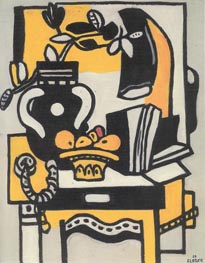
Le Vase Noire 1949
Oil Painting
$551
$551
SKU: LEG-3853
Fernand Léger
Original Size: unknown
Private Collection
Fernand Léger
Original Size: unknown
Private Collection
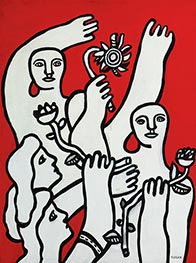
The Joy of Living 1955
Canvas Print
$73.02
$73.02
SKU: LEG-17930
Fernand Léger
Original Size: 130.2 x 97 cm
Private Collection
Fernand Léger
Original Size: 130.2 x 97 cm
Private Collection
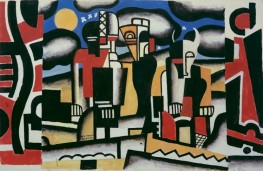
Stage Design for Creation of the World c.1923
Oil Painting
$2681
$2681
Canvas Print
$64.63
$64.63
SKU: LEG-20864
Fernand Léger
Original Size: 42 x 63 cm
Dansmuseet, Stockholm, Sweden
Fernand Léger
Original Size: 42 x 63 cm
Dansmuseet, Stockholm, Sweden
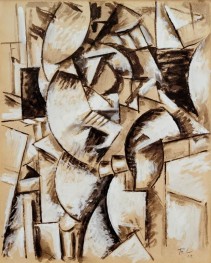
Contrast of Forms 1912
Paper Art Print
$61.20
$61.20
SKU: LEG-20865
Fernand Léger
Original Size: 36 x 29 cm
Sprengel Museum, Hannover, Germany
Fernand Léger
Original Size: 36 x 29 cm
Sprengel Museum, Hannover, Germany
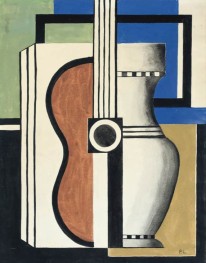
Composition with a Guitar c.1900s
Paper Art Print
$73.02
$73.02
SKU: LEG-20866
Fernand Léger
Original Size: unknown
Private Collection
Fernand Léger
Original Size: unknown
Private Collection
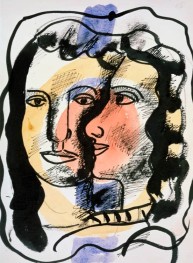
Two Faces c.1940s/50s
Paper Art Print
$61.20
$61.20
SKU: LEG-20867
Fernand Léger
Original Size: unknown
Pushkin Museum of Fine Arts, Moscow, Russia
Fernand Léger
Original Size: unknown
Pushkin Museum of Fine Arts, Moscow, Russia
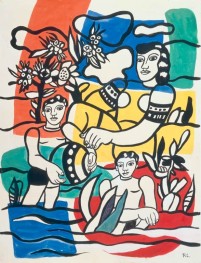
Happiness 1950
Paper Art Print
$71.00
$71.00
SKU: LEG-20868
Fernand Léger
Original Size: unknown
Private Collection
Fernand Léger
Original Size: unknown
Private Collection
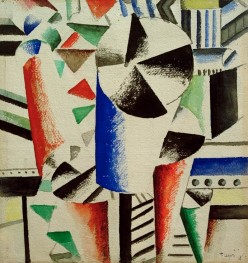
Colored Cylinders 1918
Paper Art Print
$61.20
$61.20
SKU: LEG-20869
Fernand Léger
Original Size: 35.2 x 33.6 cm
Staatliche Kunsthalle, Karlsruhe, Germany
Fernand Léger
Original Size: 35.2 x 33.6 cm
Staatliche Kunsthalle, Karlsruhe, Germany
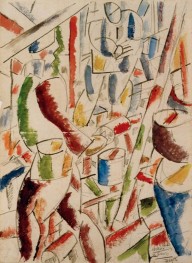
Soldiers Digging a Trench 1916
Paper Art Print
$61.20
$61.20
SKU: LEG-20870
Fernand Léger
Original Size: 35.9 x 26.4 cm
Museum of Modern Art, New York, USA
Fernand Léger
Original Size: 35.9 x 26.4 cm
Museum of Modern Art, New York, USA
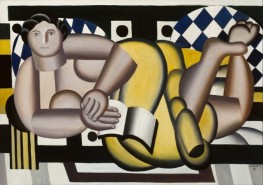
Reclining Woman 1922
Oil Painting
$1478
$1478
Canvas Print
$69.09
$69.09
SKU: LEG-20871
Fernand Léger
Original Size: 64.5 x 92 cm
Art Institute of Chicago, Illinois, USA
Fernand Léger
Original Size: 64.5 x 92 cm
Art Institute of Chicago, Illinois, USA
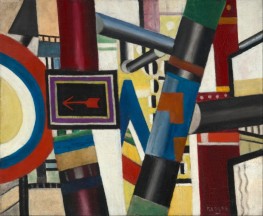
The Railway Crossing (Sketch) 1919
Oil Painting
$1406
$1406
Canvas Print
$80.49
$80.49
SKU: LEG-20872
Fernand Léger
Original Size: 54.1 x 65.7 cm
Art Institute of Chicago, Illinois, USA
Fernand Léger
Original Size: 54.1 x 65.7 cm
Art Institute of Chicago, Illinois, USA
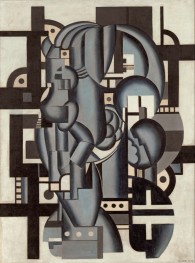
Composition in Blue 1921-1927
Oil Painting
$3097
$3097
Canvas Print
$73.02
$73.02
SKU: LEG-20873
Fernand Léger
Original Size: 130.5 x 97.2 cm
Art Institute of Chicago, Illinois, USA
Fernand Léger
Original Size: 130.5 x 97.2 cm
Art Institute of Chicago, Illinois, USA
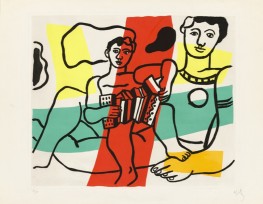
Accordion Player 1953
Paper Art Print
$72.01
$72.01
SKU: LEG-20874
Fernand Léger
Original Size: 45.9 x 55.1 cm
Art Institute of Chicago, Illinois, USA
Fernand Léger
Original Size: 45.9 x 55.1 cm
Art Institute of Chicago, Illinois, USA
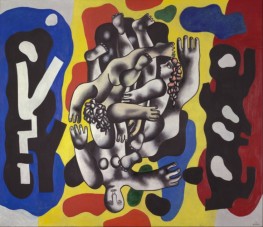
Divers on a Yellow Background 1941
Oil Painting
$3538
$3538
Canvas Print
$84.77
$84.77
SKU: LEG-20875
Fernand Léger
Original Size: 186.7 x 217.8 cm
Art Institute of Chicago, Illinois, USA
Fernand Léger
Original Size: 186.7 x 217.8 cm
Art Institute of Chicago, Illinois, USA
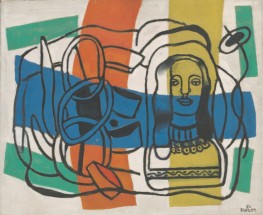
Composition with Statuette 1950
Oil Painting
$2330
$2330
Canvas Print
$80.32
$80.32
SKU: LEG-20876
Fernand Léger
Original Size: 53.7 x 64.8 cm
Art Institute of Chicago, Illinois, USA
Fernand Léger
Original Size: 53.7 x 64.8 cm
Art Institute of Chicago, Illinois, USA
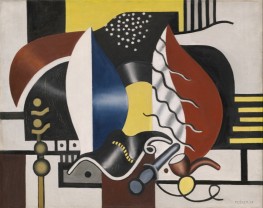
Still Life 1928
Oil Painting
$2959
$2959
Canvas Print
$77.64
$77.64
SKU: LEG-20877
Fernand Léger
Original Size: 73.3 x 92 cm
Art Institute of Chicago, Illinois, USA
Fernand Léger
Original Size: 73.3 x 92 cm
Art Institute of Chicago, Illinois, USA
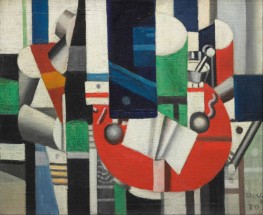
The Red Table 1920
Oil Painting
$1666
$1666
Canvas Print
$80.32
$80.32
SKU: LEG-20878
Fernand Léger
Original Size: 54 x 65 cm
Art Institute of Chicago, Illinois, USA
Fernand Léger
Original Size: 54 x 65 cm
Art Institute of Chicago, Illinois, USA
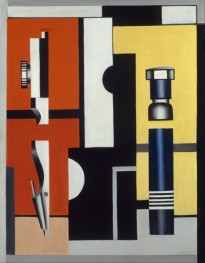
Still Life 1926
Oil Painting
$1746
$1746
Canvas Print
$76.76
$76.76
SKU: LEG-20879
Fernand Léger
Original Size: 92 x 73 cm
Art Institute of Chicago, Illinois, USA
Fernand Léger
Original Size: 92 x 73 cm
Art Institute of Chicago, Illinois, USA
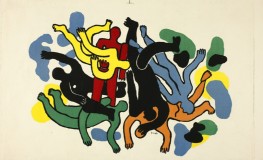
Figure Composition 1942
Paper Art Print
$61.20
$61.20
SKU: LEG-20880
Fernand Léger
Original Size: 29.7 x 48 cm
Art Institute of Chicago, Illinois, USA
Fernand Léger
Original Size: 29.7 x 48 cm
Art Institute of Chicago, Illinois, USA
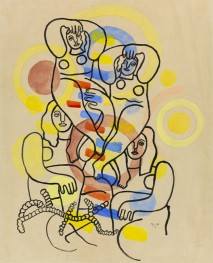
Acrobats 1940
Paper Art Print
$75.39
$75.39
SKU: LEG-20881
Fernand Léger
Original Size: 60.3 x 48.7 cm
Art Institute of Chicago, Illinois, USA
Fernand Léger
Original Size: 60.3 x 48.7 cm
Art Institute of Chicago, Illinois, USA
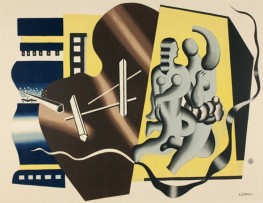
Composition with Two Dancers 1929/30
Paper Art Print
$61.20
$61.20
SKU: LEG-20888
Fernand Léger
Original Size: 34 x 44 cm
Art Institute of Chicago, Illinois, USA
Fernand Léger
Original Size: 34 x 44 cm
Art Institute of Chicago, Illinois, USA
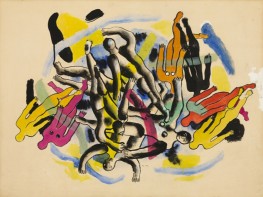
The Divers 1942
Paper Art Print
$69.82
$69.82
SKU: LEG-20889
Fernand Léger
Original Size: 53.4 x 70.8 cm
Art Institute of Chicago, Illinois, USA
Fernand Léger
Original Size: 53.4 x 70.8 cm
Art Institute of Chicago, Illinois, USA
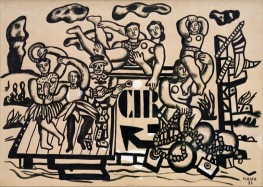
The Great Parade 1953
Paper Art Print
$66.11
$66.11
SKU: LEG-20890
Fernand Léger
Original Size: 75 x 104 cm
Private Collection
Fernand Léger
Original Size: 75 x 104 cm
Private Collection
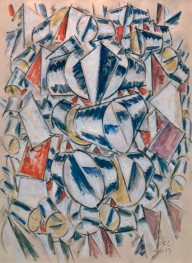
Contrasting Forms 1913
Paper Art Print
$61.20
$61.20
SKU: LEG-20891
Fernand Léger
Original Size: 40.3 x 39 cm
Private Collection
Fernand Léger
Original Size: 40.3 x 39 cm
Private Collection