
Sir Peter Lely Painting Reproductions 1 of 4
1618-1680
Dutch Baroque Painter
At an easel in Covent Garden, brush still in hand, Sir Peter Lely met the end that later generations could hardly resist turning into emblem. Born Pieter van der Faes on 14 September 1618 in Soest, Westphalia, and dead in London on 30 November 1680, Sir Peter Lely was a painter of Dutch origin who became the defining portraitist of Restoration England. His art gave Charles II’s court its languid faces, satin surfaces, loosened hair, and carefully managed air of appetite.
Although his career was almost entirely English, his formation belonged to the Netherlands. His parents were Dutch, and his father served as an officer in the army of the Elector of Brandenburg. The surname by which he became famous was said to have come from a lily carved or displayed on the gable of the family house in The Hague. Trained in Haarlem, probably in the circle of Pieter de Grebber, Lely entered the Guild of Saint Luke as a master in 1637. Haarlem mattered. It offered him a world of disciplined drawing, warm colour, theatrical gesture, and that Dutch Baroque confidence in paint as both surface and persuasion.
Arriving in London around 1643, Lely came into a country already altered by the death of Anthony van Dyck in 1641 and soon to be torn apart by civil war. At first, he painted religious and mythological subjects, as well as portraits placed in pastoral landscapes. Van Dyck’s grand manner stood near him: the elegant hand, the lifted head, the silk sleeve catching light, the sitter made socially legible through pose. Yet Lely was no mere echo. His touch could be softer, his atmosphere more narcotic, his sense of flesh more insistently present. In the London of the 1640s, this mattered. Portraiture was not only likeness; it was survival, allegiance, performance.
By 1647 he was a freeman of the Painter-Stainers’ Company and had become portrait painter to Charles I. Then came the king’s execution in 1649. Many careers might have broken there. Lely’s did not. He painted Oliver Cromwell with the famous instruction, “warts and all,” and later served Richard Cromwell as well. This ability to continue across regimes was not simple opportunism, though it had a practical intelligence. It showed a painter who understood power as something that changed costume more often than face. Around 1650, Sir Richard Lovelace wrote poems in his praise, evidence that Lely already occupied a visible place in the cultural life of London.
With the Restoration in 1660, his position became official and immensely profitable. In 1661 Charles II appointed him Principal Painter in Ordinary, with the same annual stipend of £200 that Van Dyck had enjoyed under the earlier Stuart court. A year later, Lely became a naturalised English subject. The court now required images of renewal, pleasure, dynasty, and political ease after years of austerity and violence. Sir Peter Lely supplied them. The women of the court, especially, became central to his fame: half-draped, heavy-lidded, framed by clouds, columns, flowers, and brown-gold interiors. In these portraits, satin and skin almost exchange properties.
Demand was relentless. To meet it, Lely developed a large studio with assistants who often completed bodies, draperies, landscapes, and accessories after he had painted the head. This workshop practice produced a vast quantity of pictures and also a wide range of quality. Look closely at a strong original and the face is alive with minute calculation: the mouth slightly parted, the eyelids lowered but alert, the modelling of cheek and throat managed through delicate transitions rather than hard contour. In lesser studio versions, the formula stiffens. The same cascade of fabric, the same pastoral background, the same musical instrument or garland becomes a repeated social code.
Among his best-known projects were the Windsor Beauties, the series of ten court ladies once at Windsor Castle and now associated with Hampton Court Palace. They do not simply record beauty; they manufacture it as a political language. A comparable group was made for Althorp. For a different register of authority, Lely painted the admirals and captains of the Second Anglo-Dutch War in the series known as the Flagmen of Lowestoft, now mostly in the National Maritime Museum, Greenwich. Here lace and armour, sea-command and court polish meet in a cooler masculine rhetoric. His Susannah and the Elders at Burghley House and Nymphs by a Fountain in Dulwich Picture Gallery show another side of him, closer to mythological invention than social documentation.
Lely’s importance was not confined to oil on canvas. He played a notable role in bringing mezzotint into Britain, recognising that the medium could spread his portraits beyond the immediate circle of aristocratic possession. By encouraging Dutch mezzotinters to come to England and reproduce his works, he helped lay the ground for a strong English mezzotint tradition. This was a shrewd modern instinct. The painted portrait remained exclusive; the printed image travelled. Fame, he understood, could be multiplied.
From about 1651 until his death, Lely lived at No. 10-11 Great Piazza, Covent Garden, close to the theatre, market, church, and restless public life of Restoration London. The young Robert Hooke briefly entered his orbit as an apprentice before moving to Westminster School under Richard Busby. Lely was also known as a connoisseur. His collection included works by Titian, Veronese, Rubens, Claude Lorrain, and an exceptional body of drawings. After his death, the sale of this collection raised the extraordinary sum of £26,000. That figure alone says much about the scale of his success and the seriousness of his eye.
Knighted by Charles II in 1680, Lely did not long enjoy the title. He died later that year while painting a portrait of the Duchess of Somerset and was buried at St Paul’s Church, Covent Garden. After him, John Riley and Sir Godfrey Kneller inherited the business of court portraiture, though Kneller’s later manner moved toward a different Continental polish. Lely’s legacy remains more complicated and more interesting than mere elegance. He gave Restoration England a face it wished to see in the mirror: sensuous, hierarchical, worldly, and theatrically composed. Perhaps beneath the perfumed surface lies his sharper truth - that portraiture is never innocent. It flatters, records, disguises, and exposes, often in the same glance.
Although his career was almost entirely English, his formation belonged to the Netherlands. His parents were Dutch, and his father served as an officer in the army of the Elector of Brandenburg. The surname by which he became famous was said to have come from a lily carved or displayed on the gable of the family house in The Hague. Trained in Haarlem, probably in the circle of Pieter de Grebber, Lely entered the Guild of Saint Luke as a master in 1637. Haarlem mattered. It offered him a world of disciplined drawing, warm colour, theatrical gesture, and that Dutch Baroque confidence in paint as both surface and persuasion.
Arriving in London around 1643, Lely came into a country already altered by the death of Anthony van Dyck in 1641 and soon to be torn apart by civil war. At first, he painted religious and mythological subjects, as well as portraits placed in pastoral landscapes. Van Dyck’s grand manner stood near him: the elegant hand, the lifted head, the silk sleeve catching light, the sitter made socially legible through pose. Yet Lely was no mere echo. His touch could be softer, his atmosphere more narcotic, his sense of flesh more insistently present. In the London of the 1640s, this mattered. Portraiture was not only likeness; it was survival, allegiance, performance.
By 1647 he was a freeman of the Painter-Stainers’ Company and had become portrait painter to Charles I. Then came the king’s execution in 1649. Many careers might have broken there. Lely’s did not. He painted Oliver Cromwell with the famous instruction, “warts and all,” and later served Richard Cromwell as well. This ability to continue across regimes was not simple opportunism, though it had a practical intelligence. It showed a painter who understood power as something that changed costume more often than face. Around 1650, Sir Richard Lovelace wrote poems in his praise, evidence that Lely already occupied a visible place in the cultural life of London.
With the Restoration in 1660, his position became official and immensely profitable. In 1661 Charles II appointed him Principal Painter in Ordinary, with the same annual stipend of £200 that Van Dyck had enjoyed under the earlier Stuart court. A year later, Lely became a naturalised English subject. The court now required images of renewal, pleasure, dynasty, and political ease after years of austerity and violence. Sir Peter Lely supplied them. The women of the court, especially, became central to his fame: half-draped, heavy-lidded, framed by clouds, columns, flowers, and brown-gold interiors. In these portraits, satin and skin almost exchange properties.
Demand was relentless. To meet it, Lely developed a large studio with assistants who often completed bodies, draperies, landscapes, and accessories after he had painted the head. This workshop practice produced a vast quantity of pictures and also a wide range of quality. Look closely at a strong original and the face is alive with minute calculation: the mouth slightly parted, the eyelids lowered but alert, the modelling of cheek and throat managed through delicate transitions rather than hard contour. In lesser studio versions, the formula stiffens. The same cascade of fabric, the same pastoral background, the same musical instrument or garland becomes a repeated social code.
Among his best-known projects were the Windsor Beauties, the series of ten court ladies once at Windsor Castle and now associated with Hampton Court Palace. They do not simply record beauty; they manufacture it as a political language. A comparable group was made for Althorp. For a different register of authority, Lely painted the admirals and captains of the Second Anglo-Dutch War in the series known as the Flagmen of Lowestoft, now mostly in the National Maritime Museum, Greenwich. Here lace and armour, sea-command and court polish meet in a cooler masculine rhetoric. His Susannah and the Elders at Burghley House and Nymphs by a Fountain in Dulwich Picture Gallery show another side of him, closer to mythological invention than social documentation.
Lely’s importance was not confined to oil on canvas. He played a notable role in bringing mezzotint into Britain, recognising that the medium could spread his portraits beyond the immediate circle of aristocratic possession. By encouraging Dutch mezzotinters to come to England and reproduce his works, he helped lay the ground for a strong English mezzotint tradition. This was a shrewd modern instinct. The painted portrait remained exclusive; the printed image travelled. Fame, he understood, could be multiplied.
From about 1651 until his death, Lely lived at No. 10-11 Great Piazza, Covent Garden, close to the theatre, market, church, and restless public life of Restoration London. The young Robert Hooke briefly entered his orbit as an apprentice before moving to Westminster School under Richard Busby. Lely was also known as a connoisseur. His collection included works by Titian, Veronese, Rubens, Claude Lorrain, and an exceptional body of drawings. After his death, the sale of this collection raised the extraordinary sum of £26,000. That figure alone says much about the scale of his success and the seriousness of his eye.
Knighted by Charles II in 1680, Lely did not long enjoy the title. He died later that year while painting a portrait of the Duchess of Somerset and was buried at St Paul’s Church, Covent Garden. After him, John Riley and Sir Godfrey Kneller inherited the business of court portraiture, though Kneller’s later manner moved toward a different Continental polish. Lely’s legacy remains more complicated and more interesting than mere elegance. He gave Restoration England a face it wished to see in the mirror: sensuous, hierarchical, worldly, and theatrically composed. Perhaps beneath the perfumed surface lies his sharper truth - that portraiture is never innocent. It flatters, records, disguises, and exposes, often in the same glance.
91 Peter Lely Paintings
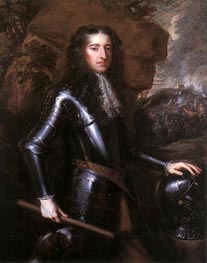
King William III 1677
Oil Painting
$2855
$2855
SKU: LEP-3982
Sir Peter Lely
Original Size: 124.5 x 101 cm
National Portrait Gallery, London, UK
Sir Peter Lely
Original Size: 124.5 x 101 cm
National Portrait Gallery, London, UK
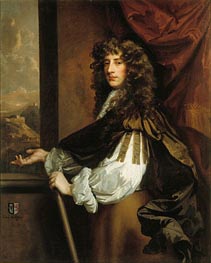
Charles Killigrew c.1673
Oil Painting
$2907
$2907
Canvas Print
$78.65
$78.65
SKU: LEP-3983
Sir Peter Lely
Original Size: 126 x 103 cm
Victoria and Albert Museum, London, UK
Sir Peter Lely
Original Size: 126 x 103 cm
Victoria and Albert Museum, London, UK
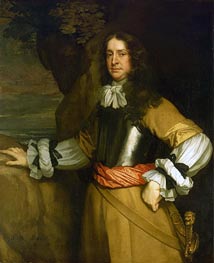
Flagmen of Lowestoft: Vice-Admiral Sir William Berkeley c.1665/66
Oil Painting
$2882
$2882
SKU: LEP-3984
Sir Peter Lely
Original Size: unknown
Maritime Art Museum, Greenwich, UK
Sir Peter Lely
Original Size: unknown
Maritime Art Museum, Greenwich, UK
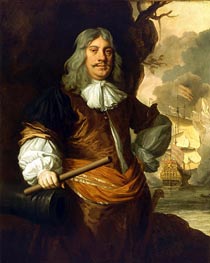
Portrait of Cornelis Tromp c.1675
Oil Painting
$2933
$2933
SKU: LEP-3985
Sir Peter Lely
Original Size: unknown
Maritime Art Museum, Greenwich, UK
Sir Peter Lely
Original Size: unknown
Maritime Art Museum, Greenwich, UK
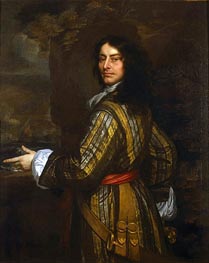
Flagmen of Lowestoft: Admiral Sir John Harman 1666
Oil Painting
$3179
$3179
Canvas Print
$78.48
$78.48
SKU: LEP-3986
Sir Peter Lely
Original Size: 127 x 101.5 cm
Maritime Art Museum, Greenwich, UK
Sir Peter Lely
Original Size: 127 x 101.5 cm
Maritime Art Museum, Greenwich, UK
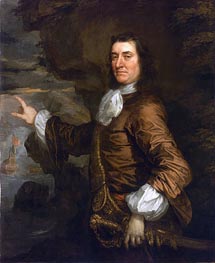
Flagmen of Lowestoft: Admiral Sir Thomas Allin 1665
Oil Painting
$2882
$2882
Canvas Print
$79.36
$79.36
SKU: LEP-3987
Sir Peter Lely
Original Size: 127 x 101.5 cm
Maritime Art Museum, Greenwich, UK
Sir Peter Lely
Original Size: 127 x 101.5 cm
Maritime Art Museum, Greenwich, UK
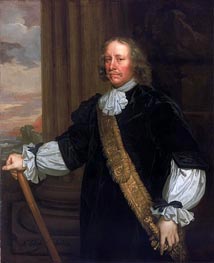
Flagmen of Lowestoft: Vice-Admiral Sir Joseph Jordan 1666
Oil Painting
$2830
$2830
Canvas Print
$79.90
$79.90
SKU: LEP-3988
Sir Peter Lely
Original Size: 127 x 101.5 cm
Maritime Art Museum, Greenwich, UK
Sir Peter Lely
Original Size: 127 x 101.5 cm
Maritime Art Museum, Greenwich, UK
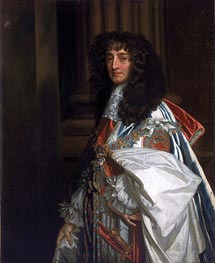
Prince Rupert, 1st Duke of Cumberland and Count ... 1665
Oil Painting
$2801
$2801
SKU: LEP-3989
Sir Peter Lely
Original Size: unknown
Maritime Art Museum, Greenwich, UK
Sir Peter Lely
Original Size: unknown
Maritime Art Museum, Greenwich, UK
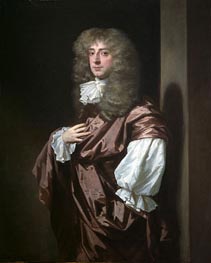
Portrait of Sir Thomas Thynne, later 1st Viscount ... c.1675
Oil Painting
$2830
$2830
Canvas Print
$78.48
$78.48
SKU: LEP-3990
Sir Peter Lely
Original Size: 125 x 102.2 cm
Courtauld Institute of Art, London, UK
Sir Peter Lely
Original Size: 125 x 102.2 cm
Courtauld Institute of Art, London, UK
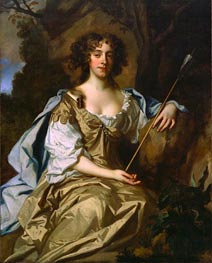
The Countess of Meath c.1674
Oil Painting
$2907
$2907
SKU: LEP-3991
Sir Peter Lely
Original Size: unknown
National Gallery of Art, Ottawa, Canada
Sir Peter Lely
Original Size: unknown
National Gallery of Art, Ottawa, Canada
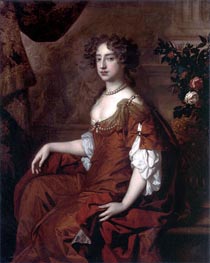
Portrait of Queen Mary II 1677
Oil Painting
$2901
$2901
Canvas Print
$79.36
$79.36
SKU: LEP-3994
Sir Peter Lely
Original Size: 125.4 x 102 cm
National Portrait Gallery, London, UK
Sir Peter Lely
Original Size: 125.4 x 102 cm
National Portrait Gallery, London, UK
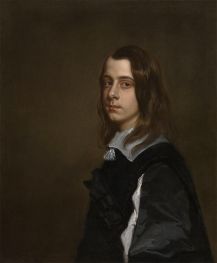
Portrait of Samuel Crew c.1650/52
Oil Painting
$1197
$1197
Canvas Print
$80.78
$80.78
SKU: LEP-19820
Sir Peter Lely
Original Size: 76.2 x 63.5 cm
Groeninge Museum, Bruges, Belgium
Sir Peter Lely
Original Size: 76.2 x 63.5 cm
Groeninge Museum, Bruges, Belgium
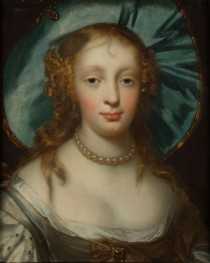
Portrait of a Lady with a Blue Hat c.1650/00
Oil Painting
$2132
$2132
Canvas Print
$64.43
$64.43
SKU: LEP-22715
Sir Peter Lely
Original Size: 48 x 40.5 cm
Galerie Belvedere, Vienna, Austria
Sir Peter Lely
Original Size: 48 x 40.5 cm
Galerie Belvedere, Vienna, Austria
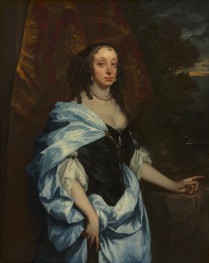
Portrait of Mrs. Leneve 1657
Oil Painting
$6437
$6437
Canvas Print
$77.77
$77.77
SKU: LEP-22716
Sir Peter Lely
Original Size: 126.7 x 101.3 cm
Cleveland Museum of Art, Ohio, USA
Sir Peter Lely
Original Size: 126.7 x 101.3 cm
Cleveland Museum of Art, Ohio, USA
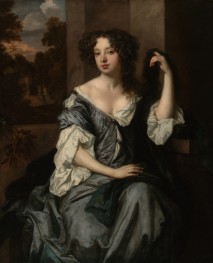
Louise de Keroualle, Duchess of Portsmouth c.1671/74
Oil Painting
$6475
$6475
Canvas Print
$79.19
$79.19
SKU: LEP-22717
Sir Peter Lely
Original Size: 125.1 x 101.6 cm
J. Paul Getty Museum, Los Angeles, USA
Sir Peter Lely
Original Size: 125.1 x 101.6 cm
J. Paul Getty Museum, Los Angeles, USA
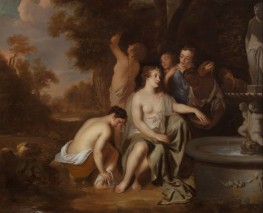
Diana and Her Nymphs at a Fountain 1648
Oil Painting
$6052
$6052
Canvas Print
$79.19
$79.19
SKU: LEP-22718
Sir Peter Lely
Original Size: 74.9 x 92.7 cm
Yale Center for British Art, Connecticut, USA
Sir Peter Lely
Original Size: 74.9 x 92.7 cm
Yale Center for British Art, Connecticut, USA
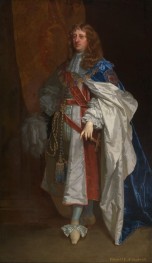
Edward Montagu, First Earl of Sandwich c.1660/65
Oil Painting
$5722
$5722
Canvas Print
$64.43
$64.43
SKU: LEP-22719
Sir Peter Lely
Original Size: 223.2 x 130.8 cm
Yale Center for British Art, Connecticut, USA
Sir Peter Lely
Original Size: 223.2 x 130.8 cm
Yale Center for British Art, Connecticut, USA
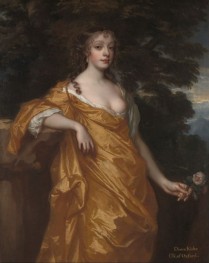
Diana Kirke, Later Countess of Oxford 1665
Oil Painting
$6401
$6401
Canvas Print
$77.77
$77.77
SKU: LEP-22720
Sir Peter Lely
Original Size: 132.1 x 104.1 cm
Yale Center for British Art, Connecticut, USA
Sir Peter Lely
Original Size: 132.1 x 104.1 cm
Yale Center for British Art, Connecticut, USA
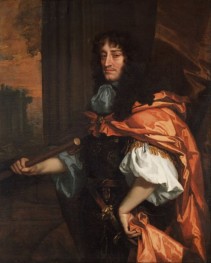
Prince Rupert of the Rhine c.1665/71
Oil Painting
$4121
$4121
Canvas Print
$78.48
$78.48
SKU: LEP-22721
Sir Peter Lely
Original Size: 125.7 x 101 cm
Yale Center for British Art, Connecticut, USA
Sir Peter Lely
Original Size: 125.7 x 101 cm
Yale Center for British Art, Connecticut, USA
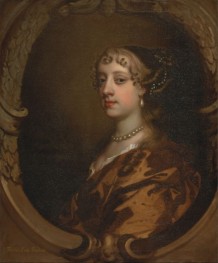
Lady Frances Savile, Later Lady Brudenell 1668
Oil Painting
$2989
$2989
Canvas Print
$80.96
$80.96
SKU: LEP-22722
Sir Peter Lely
Original Size: 76.8 x 63.8 cm
Yale Center for British Art, Connecticut, USA
Sir Peter Lely
Original Size: 76.8 x 63.8 cm
Yale Center for British Art, Connecticut, USA
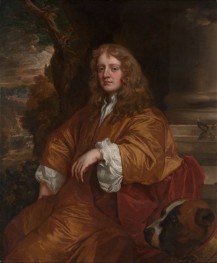
Sir Ralph Bankes 1660
Oil Painting
$5353
$5353
Canvas Print
$80.78
$80.78
SKU: LEP-22723
Sir Peter Lely
Original Size: 119.1 x 98.4 cm
Yale Center for British Art, Connecticut, USA
Sir Peter Lely
Original Size: 119.1 x 98.4 cm
Yale Center for British Art, Connecticut, USA
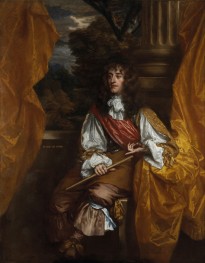
James VII and II, When Duke of York 1661
Oil Painting
$6392
$6392
Canvas Print
$76.34
$76.34
SKU: LEP-22724
Sir Peter Lely
Original Size: 182.5 x 143.3 cm
Scottish National Portrait Gallery, Edinburgh, UK
Sir Peter Lely
Original Size: 182.5 x 143.3 cm
Scottish National Portrait Gallery, Edinburgh, UK
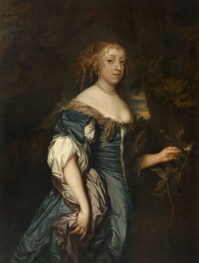
Lady Diana Bruce c.1660/70
Oil Painting
$5246
$5246
Canvas Print
$73.85
$73.85
SKU: LEP-22725
Sir Peter Lely
Original Size: 122 x 96.5 cm
National Galleries of Scotland, Edinburgh, UK
Sir Peter Lely
Original Size: 122 x 96.5 cm
National Galleries of Scotland, Edinburgh, UK
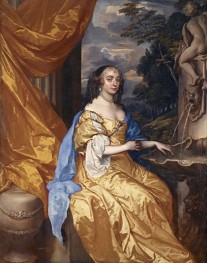
Anne Hyde, Duchess of York 1661
Oil Painting
$6404
$6404
Canvas Print
$76.88
$76.88
SKU: LEP-22726
Sir Peter Lely
Original Size: 182.2 x 143.8 cm
Scottish National Portrait Gallery, Edinburgh, UK
Sir Peter Lely
Original Size: 182.2 x 143.8 cm
Scottish National Portrait Gallery, Edinburgh, UK