
Francois Lemoyne Painting Reproductions 1 of 2
1688-1737
French Rococo Painter
Six months after completing one of the grandest decorative schemes at Versailles, François Lemoyne ended his life with a sword. The contrast is brutal: public acclaim had never been greater, yet private stability had apparently collapsed. Born in Paris in 1688 and dead there on 4 June 1737, François Lemoyne was a French painter of the early Rococo, a history painter who sought to renew the monumental ambitions of the previous century while giving them a lighter, more sensuous surface.
Paris provided his training ground. Lemoyne studied with Louis Galloche and remained under his guidance until 1713, absorbing the disciplined conventions of academic painting before testing himself against the larger European tradition. In 1711 he won the Prix de Rome, an achievement that allowed him to continue his studies in Italy. Rome confronted him with Raphael, Correggio and Titian, but Rubens proved especially important to his developing sense of colour. Flesh, drapery and cloud became vehicles for chromatic movement rather than merely descriptive elements.
Returning to Paris, he entered the institutional world that governed French artistic life. In 1718 he was received as a full member of the Académie royale de peinture et de sculpture. Such recognition mattered enormously. The Académie controlled status, teaching and access to official commissions, and Lemoyne’s ambitions were never modest. He wanted to stand as the successor to Charles Le Brun, Louis XIV’s great decorator, and to be acknowledged as the foremost history painter of his own generation. Jean-François de Troy pursued much the same distinction, creating a rivalry that sharpened both careers.
In 1723 Lemoyne travelled to Italy again. This second journey deepened rather than merely repeated his earlier education. At the Palazzo Barberini he studied the illusionistic ceiling painted by Pietro da Cortona, where architecture seems to open into an inhabited sky. Venetian painting also claimed his attention, above all Paolo Veronese, whose spacious compositions and orchestration of colour offered a model for combining grandeur with visual pleasure. From this point, the Italian element in Lemoyne’s art became increasingly pronounced.
Public opportunities in Paris were scarce. Only one Salon had been held between 1704 and 1725, so the competition organized in 1727 by the duc d’Antin, director of the Bâtiments du Roi, carried unusual weight. Its purpose was to revive history painting within the Académie, and twelve works were submitted by leading artists, among them Charles-Antoine Coypel and Noël-Nicolas Coypel. Critical opinion divided sharply. Many preferred the Coypels, yet the prize of 5,000 livres was shared between Lemoyne and Jean-François de Troy. Intended as a compromise, the result satisfied neither man.
Still, the competition strengthened Lemoyne’s position. In 1728 he received the royal commission that would define his career: the ceiling of the Salon d’Hercule at Versailles. Work on the project occupied him principally from 1733 to 1736. Its scale required more than invention. It demanded control of foreshortening, anatomy, perspective and the difficult relationship between painted figures and the actual architecture below.
The resulting Apotheosis of Hercules was conceived as a French answer to the great Italian ceilings Lemoyne had studied. Across the vault, bodies rise, turn and recede within an immense celestial theatre. Colour carries the eye through groups of gods, allegorical beings and airborne figures, while the painted sky dissolves the physical limit of the room. In this work we see his central artistic problem and his greatest success: how to preserve the authority of grand history painting while loosening its rhetoric through luminosity, movement and sensuous grace.
Contemporaries understood the achievement. Voltaire and Cardinal Fleury were among those who praised the completed decoration, and the response was described as unanimous. Lemoyne appeared to have proved that a French painter could rival Italy in à ciel ouvert illusionism. His colleagues called him the new Le Brun, a title that acknowledged both his decorative power and his determination to inherit the highest traditions of royal painting.
Teaching formed another part of his influence. Charles-Joseph Natoire and François Boucher studied under him, and both would become significant figures in eighteenth-century French art. Lemoyne also worked beside or in connection with artists such as Donat Nonnotte, Gilles Dutilleul, Charles de La Fosse and members of the Coypel circle. Elected professor at the Académie in 1733, he occupied a central position between institution, court and workshop.
His painting nevertheless remained more inward than the public scale of his commissions might suggest. Later critics have described it as refined, introverted and sensuously beautiful, comparisons with Correggio arising from the softness of his modelling and the emotional warmth of his colour. He was industrious, painstaking and serious. Beneath the airy surfaces lay laborious calculation, repeated adjustment and a relentless pursuit of finish.
In 1736, at the peak of his reputation, Lemoyne became Premier peintre du Roi to Louis XV. No official title could have confirmed his success more clearly. Yet the appointment brought neither security nor peace. Accounts have pointed to exhaustion, court intrigue at Versailles, the death of his wife, emotional instability and despair over unattainable perfection. None fully explains what followed.
On the day before his death, he completed Time Saving Truth from Falsehood and Envy for his friend and patron François Berger. Then, on 4 June 1737, he stabbed himself repeatedly in the chest and throat, dying in Paris at forty-nine. Perhaps the most painful aspect of the story is the distance between outward triumph and inward judgment. A painter celebrated by the court may still have believed his work insufficient.
François Lemoyne left a legacy both commanding and curiously fragile. His death helped bring the fashion for vast allegorical ceilings in France to an end, as though the form had exhausted itself with its most driven advocate. Yet the Salon d’Hercule remains a persuasive record of his ambition. It joins French academic discipline to Italian illusionism, Rubensian colour and Rococo lightness without dissolving into mere decoration. Today, his achievement asks viewers to look beyond elegance and notice the strain that supports it - the calculation behind the clouds, the discipline beneath the grace, and the human cost that can accompany artistic perfectionism.
Paris provided his training ground. Lemoyne studied with Louis Galloche and remained under his guidance until 1713, absorbing the disciplined conventions of academic painting before testing himself against the larger European tradition. In 1711 he won the Prix de Rome, an achievement that allowed him to continue his studies in Italy. Rome confronted him with Raphael, Correggio and Titian, but Rubens proved especially important to his developing sense of colour. Flesh, drapery and cloud became vehicles for chromatic movement rather than merely descriptive elements.
Returning to Paris, he entered the institutional world that governed French artistic life. In 1718 he was received as a full member of the Académie royale de peinture et de sculpture. Such recognition mattered enormously. The Académie controlled status, teaching and access to official commissions, and Lemoyne’s ambitions were never modest. He wanted to stand as the successor to Charles Le Brun, Louis XIV’s great decorator, and to be acknowledged as the foremost history painter of his own generation. Jean-François de Troy pursued much the same distinction, creating a rivalry that sharpened both careers.
In 1723 Lemoyne travelled to Italy again. This second journey deepened rather than merely repeated his earlier education. At the Palazzo Barberini he studied the illusionistic ceiling painted by Pietro da Cortona, where architecture seems to open into an inhabited sky. Venetian painting also claimed his attention, above all Paolo Veronese, whose spacious compositions and orchestration of colour offered a model for combining grandeur with visual pleasure. From this point, the Italian element in Lemoyne’s art became increasingly pronounced.
Public opportunities in Paris were scarce. Only one Salon had been held between 1704 and 1725, so the competition organized in 1727 by the duc d’Antin, director of the Bâtiments du Roi, carried unusual weight. Its purpose was to revive history painting within the Académie, and twelve works were submitted by leading artists, among them Charles-Antoine Coypel and Noël-Nicolas Coypel. Critical opinion divided sharply. Many preferred the Coypels, yet the prize of 5,000 livres was shared between Lemoyne and Jean-François de Troy. Intended as a compromise, the result satisfied neither man.
Still, the competition strengthened Lemoyne’s position. In 1728 he received the royal commission that would define his career: the ceiling of the Salon d’Hercule at Versailles. Work on the project occupied him principally from 1733 to 1736. Its scale required more than invention. It demanded control of foreshortening, anatomy, perspective and the difficult relationship between painted figures and the actual architecture below.
The resulting Apotheosis of Hercules was conceived as a French answer to the great Italian ceilings Lemoyne had studied. Across the vault, bodies rise, turn and recede within an immense celestial theatre. Colour carries the eye through groups of gods, allegorical beings and airborne figures, while the painted sky dissolves the physical limit of the room. In this work we see his central artistic problem and his greatest success: how to preserve the authority of grand history painting while loosening its rhetoric through luminosity, movement and sensuous grace.
Contemporaries understood the achievement. Voltaire and Cardinal Fleury were among those who praised the completed decoration, and the response was described as unanimous. Lemoyne appeared to have proved that a French painter could rival Italy in à ciel ouvert illusionism. His colleagues called him the new Le Brun, a title that acknowledged both his decorative power and his determination to inherit the highest traditions of royal painting.
Teaching formed another part of his influence. Charles-Joseph Natoire and François Boucher studied under him, and both would become significant figures in eighteenth-century French art. Lemoyne also worked beside or in connection with artists such as Donat Nonnotte, Gilles Dutilleul, Charles de La Fosse and members of the Coypel circle. Elected professor at the Académie in 1733, he occupied a central position between institution, court and workshop.
His painting nevertheless remained more inward than the public scale of his commissions might suggest. Later critics have described it as refined, introverted and sensuously beautiful, comparisons with Correggio arising from the softness of his modelling and the emotional warmth of his colour. He was industrious, painstaking and serious. Beneath the airy surfaces lay laborious calculation, repeated adjustment and a relentless pursuit of finish.
In 1736, at the peak of his reputation, Lemoyne became Premier peintre du Roi to Louis XV. No official title could have confirmed his success more clearly. Yet the appointment brought neither security nor peace. Accounts have pointed to exhaustion, court intrigue at Versailles, the death of his wife, emotional instability and despair over unattainable perfection. None fully explains what followed.
On the day before his death, he completed Time Saving Truth from Falsehood and Envy for his friend and patron François Berger. Then, on 4 June 1737, he stabbed himself repeatedly in the chest and throat, dying in Paris at forty-nine. Perhaps the most painful aspect of the story is the distance between outward triumph and inward judgment. A painter celebrated by the court may still have believed his work insufficient.
François Lemoyne left a legacy both commanding and curiously fragile. His death helped bring the fashion for vast allegorical ceilings in France to an end, as though the form had exhausted itself with its most driven advocate. Yet the Salon d’Hercule remains a persuasive record of his ambition. It joins French academic discipline to Italian illusionism, Rubensian colour and Rococo lightness without dissolving into mere decoration. Today, his achievement asks viewers to look beyond elegance and notice the strain that supports it - the calculation behind the clouds, the discipline beneath the grace, and the human cost that can accompany artistic perfectionism.
27 Francois Lemoyne Paintings
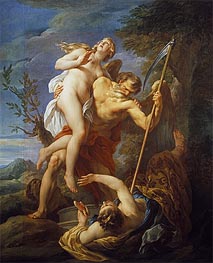
Time Saving Truth from Falsehood and Envy 1737
Oil Painting
$4702
$4702
Canvas Print
$78.84
$78.84
SKU: LEF-2532
Francois Lemoyne
Original Size: 149 x 113.5 cm
The Wallace Collection, London, UK
Francois Lemoyne
Original Size: 149 x 113.5 cm
The Wallace Collection, London, UK
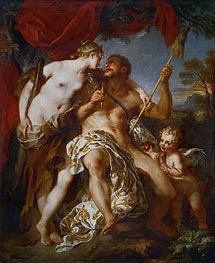
Hercules and Omphale 1724
Oil Painting
$5768
$5768
Canvas Print
$79.20
$79.20
SKU: LEF-15355
Francois Lemoyne
Original Size: 184 x 149 cm
Louvre Museum, Paris, France
Francois Lemoyne
Original Size: 184 x 149 cm
Louvre Museum, Paris, France
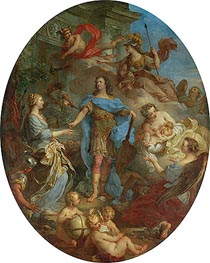
Louis XV Bringing Peace to Europe n.d.
Oil Painting
$6943
$6943
Canvas Print
$77.96
$77.96
SKU: LEF-15356
Francois Lemoyne
Original Size: unknown
Museum of Palace of Versailles, Paris, France
Francois Lemoyne
Original Size: unknown
Museum of Palace of Versailles, Paris, France
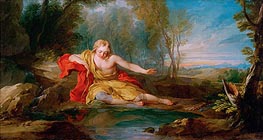
Narcissus Contemplating His Image Mirrored in the Water c.1725/28
Oil Painting
$3102
$3102
Canvas Print
$64.30
$64.30
SKU: LEF-15357
Francois Lemoyne
Original Size: 56.5 x 105.5 cm
Louvre Museum, Paris, France
Francois Lemoyne
Original Size: 56.5 x 105.5 cm
Louvre Museum, Paris, France
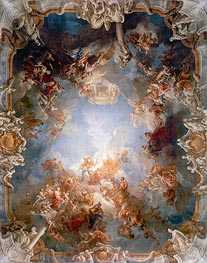
Apotheosis of Hercules c.1731/35
Oil Painting
$35607
$35607
Canvas Print
$76.54
$76.54
SKU: LEF-15358
Francois Lemoyne
Original Size: 1850 x 1700 cm
Museum of Palace of Versailles, Paris, France
Francois Lemoyne
Original Size: 1850 x 1700 cm
Museum of Palace of Versailles, Paris, France
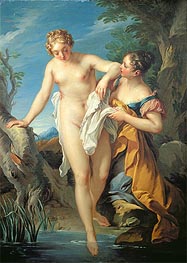
The Bather and her Maid n.d.
Oil Painting
$3513
$3513
Canvas Print
$69.28
$69.28
SKU: LEF-15359
Francois Lemoyne
Original Size: 137 x 104 cm
Musee des Beaux Arts, Tours, France
Francois Lemoyne
Original Size: 137 x 104 cm
Musee des Beaux Arts, Tours, France
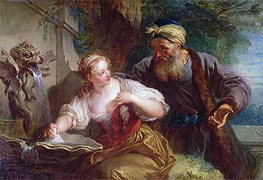
The Amorous Proposal c.1725
Oil Painting
$3798
$3798
Canvas Print
$66.62
$66.62
SKU: LEF-15360
Francois Lemoyne
Original Size: 99 x 144.8 cm
The Clark Art Institute, Massachusetts, USA
Francois Lemoyne
Original Size: 99 x 144.8 cm
The Clark Art Institute, Massachusetts, USA
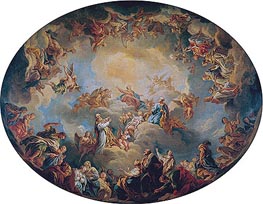
The Glorification of the Virgin 1731
Oil Painting
$5795
$5795
Canvas Print
$64.30
$64.30
SKU: LEF-15361
Francois Lemoyne
Original Size: unknown
Louvre Museum, Paris, France
Francois Lemoyne
Original Size: unknown
Louvre Museum, Paris, France
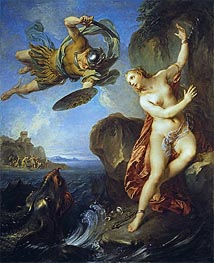
Perseus and Andromeda 1723
Oil Painting
$4063
$4063
Canvas Print
$79.20
$79.20
SKU: LEF-15362
Francois Lemoyne
Original Size: 183 x 149.7 cm
The Wallace Collection, London, UK
Francois Lemoyne
Original Size: 183 x 149.7 cm
The Wallace Collection, London, UK
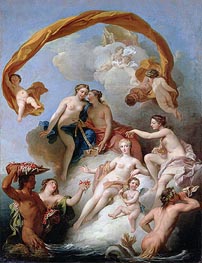
The Toilet of Venus n.d.
Oil Painting
$4211
$4211
Canvas Print
$74.95
$74.95
SKU: LEF-15363
Francois Lemoyne
Original Size: unknown
Musee des Beaux-Arts Andre Malraux, Le Havre, France
Francois Lemoyne
Original Size: unknown
Musee des Beaux-Arts Andre Malraux, Le Havre, France
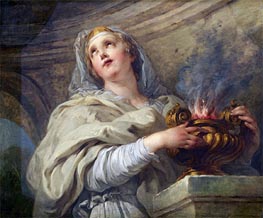
Vestal Virgin c.1730
Oil Painting
$2942
$2942
Canvas Print
$79.91
$79.91
SKU: LEF-15364
Francois Lemoyne
Original Size: 89 x 106.7 cm
Minneapolis Institute of Arts, Minnesota, USA
Francois Lemoyne
Original Size: 89 x 106.7 cm
Minneapolis Institute of Arts, Minnesota, USA
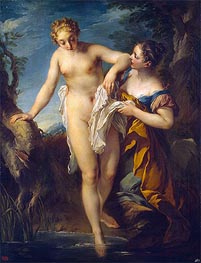
Woman Bathing a.1724
Oil Painting
$3578
$3578
Canvas Print
$74.60
$74.60
SKU: LEF-15365
Francois Lemoyne
Original Size: 136.5 x 105 cm
State Hermitage Museum, St. Petersburg, Russia
Francois Lemoyne
Original Size: 136.5 x 105 cm
State Hermitage Museum, St. Petersburg, Russia
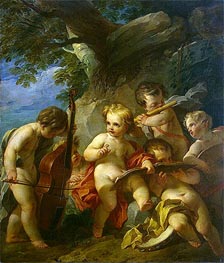
Genius of Music c.1727/29
Oil Painting
$3754
$3754
Canvas Print
$83.63
$83.63
SKU: LEF-15366
Francois Lemoyne
Original Size: 98 x 85.5 cm
State Hermitage Museum, St. Petersburg, Russia
Francois Lemoyne
Original Size: 98 x 85.5 cm
State Hermitage Museum, St. Petersburg, Russia
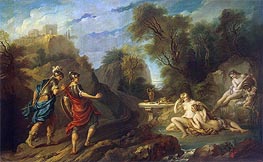
Messengers of Godfrey of Bouillon in Gardens of Armida 1735
Oil Painting
$3680
$3680
Canvas Print
$64.30
$64.30
SKU: LEF-15367
Francois Lemoyne
Original Size: 128 x 196 cm
State Hermitage Museum, St. Petersburg, Russia
Francois Lemoyne
Original Size: 128 x 196 cm
State Hermitage Museum, St. Petersburg, Russia
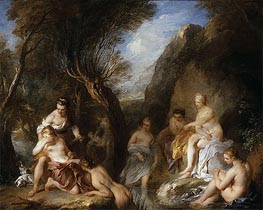
Diana and Callisto 1723
Oil Painting
$5810
$5810
Canvas Print
$77.79
$77.79
SKU: LEF-15368
Francois Lemoyne
Original Size: 75 x 94 cm
Los Angeles County Museum of Art, California, USA
Francois Lemoyne
Original Size: 75 x 94 cm
Los Angeles County Museum of Art, California, USA
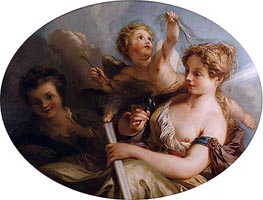
Allegory of Love n.d.
Oil Painting
$3833
$3833
Canvas Print
$64.30
$64.30
SKU: LEF-15369
Francois Lemoyne
Original Size: 74.5 x 95 cm
Private Collection
Francois Lemoyne
Original Size: 74.5 x 95 cm
Private Collection
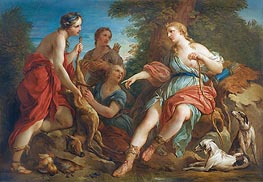
Diana Returning from the Hunt (The Evening) n.d.
Oil Painting
$3886
$3886
Canvas Print
$67.33
$67.33
SKU: LEF-15370
Francois Lemoyne
Original Size: 114 x 162.5 cm
Private Collection
Francois Lemoyne
Original Size: 114 x 162.5 cm
Private Collection
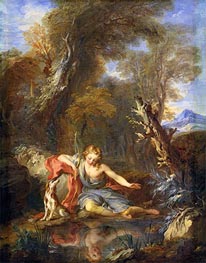
Narcissus 1728
Oil Painting
$3562
$3562
Canvas Print
$76.54
$76.54
SKU: LEF-15371
Francois Lemoyne
Original Size: 90.7 x 71.5 cm
Hamburger Kunsthalle, Hamburg, Germany
Francois Lemoyne
Original Size: 90.7 x 71.5 cm
Hamburger Kunsthalle, Hamburg, Germany
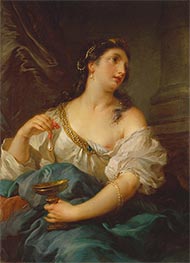
Cleopatra c.1725
Oil Painting
$3811
$3811
Canvas Print
$70.16
$70.16
SKU: LEF-17598
Francois Lemoyne
Original Size: 102.8 x 74.3 cm
Minneapolis Institute of Arts, Minnesota, USA
Francois Lemoyne
Original Size: 102.8 x 74.3 cm
Minneapolis Institute of Arts, Minnesota, USA
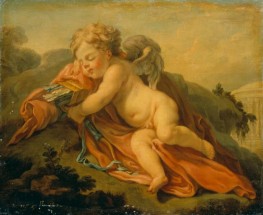
Sleeping Cupid c.1688-1737
Oil Painting
$954
$954
Canvas Print
$64.30
$64.30
SKU: LEF-21841
Francois Lemoyne
Original Size: 38 x 46 cm
Pushkin Museum of Fine Arts, Moscow, Russia
Francois Lemoyne
Original Size: 38 x 46 cm
Pushkin Museum of Fine Arts, Moscow, Russia
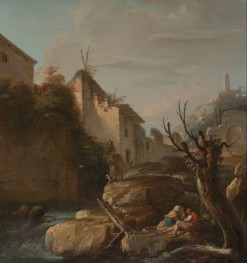
Appenine Landscape 1730
Oil Painting
$2040
$2040
Canvas Print
$91.96
$91.96
SKU: LEF-22857
Francois Lemoyne
Original Size: 76 x 72 cm
Art Institute of Chicago, Illinois, USA
Francois Lemoyne
Original Size: 76 x 72 cm
Art Institute of Chicago, Illinois, USA
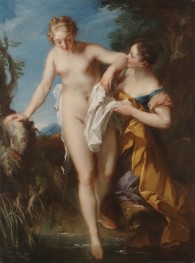
The Bather 1724
Oil Painting
$3549
$3549
Canvas Print
$72.29
$72.29
SKU: LEF-22858
Francois Lemoyne
Original Size: 149.9 x 111.8 cm
Dallas Museum of Art, Texas, USA
Francois Lemoyne
Original Size: 149.9 x 111.8 cm
Dallas Museum of Art, Texas, USA
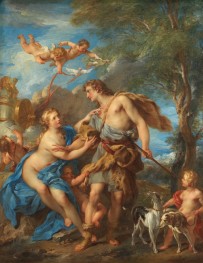
Venus and Adonis 1729
Oil Painting
$6771
$6771
Canvas Print
$75.31
$75.31
SKU: LEF-22859
Francois Lemoyne
Original Size: 94 x 74 cm
National Museum, Stockholm, Sweden
Francois Lemoyne
Original Size: 94 x 74 cm
National Museum, Stockholm, Sweden
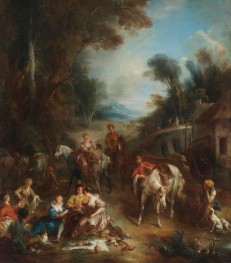
A Hunting Party 1730
Oil Painting
$8032
$8032
Canvas Print
$85.93
$85.93
SKU: LEF-22860
Francois Lemoyne
Original Size: 211.3 x 186 cm
Bavarian National Museum, Munich, Germany
Francois Lemoyne
Original Size: 211.3 x 186 cm
Bavarian National Museum, Munich, Germany