
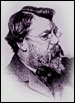
Emanuel Gottlieb Leutze Painting Reproductions 1 of 1
1816-1868
German Romanticism Painter
Few American paintings have carried a national legend as forcefully as Washington Crossing the Delaware. Behind its heroic arrangement stood Emanuel Gottlieb Leutze, a German-born American history painter whose career moved repeatedly between the political imagination of the United States and the disciplined studio culture of nineteenth-century Germany. Born on May 24, 1816, in Schwäbisch Gmünd in the Kingdom of Württemberg, he became closely associated with the Düsseldorf school before his death in Washington, D.C., on July 18, 1868.
Leutze was nine when his family emigrated to the United States in 1825. They settled first in Fredericksburg, Virginia, and later in Philadelphia, where the circumstances of his youth gave drawing an unusual seriousness. While sitting beside his sick father, he used a pencil to occupy the long hours of attendance. His father died in 1831, leaving the fourteen-year-old to help support himself. Portraits, painted for five dollars each, became not merely exercises in observation but a source of income.
In 1834, he began attending classes given by John Rubens Smith, a Philadelphia portrait painter. Leutze soon acquired enough confidence to propose a series of likenesses of prominent American statesmen for publication in Washington. The project received little encouragement, yet its ambition is revealing. Political history, public character, and the visual construction of national memory already interested him more than private portraiture alone.
A decisive opportunity arrived in 1840, when one of his paintings attracted attention and brought commissions sufficient to finance study in Germany. Emanuel Gottlieb Leutze entered the Kunstakademie Düsseldorf, although his resistance to academic discipline limited his formal attendance to a single year in the class of the director, Friedrich Wilhelm von Schadow. More important was his contact with Karl Friedrich Lessing, whose approach to historical painting offered an example of how narrative, landscape, and moral drama might be joined within a single composition.
Moving to Munich in 1842, Leutze studied the works of Peter von Cornelius and Wilhelm von Kaulbach. There he completed Columbus before the Queen, continuing a subject that had already established his reputation. Columbus before the Council of Salamanca, painted in 1841, was purchased by the Düsseldorf Art Union. Its companion, Columbus in Chains, received a gold medal at the Brussels Art Exhibition and was later acquired by the Art Union in New York. Decades afterward, that image provided the basis for the two-dollar stamp in the United States Columbian Issue of 1893.
Travel widened his visual education. In Venice and Rome, he made studies after Titian and Michelangelo, confronting two very different models of monumental art - Venetian colour and Roman sculptural form. After touring Italy, he returned to Düsseldorf in 1845, married Juliane Lottner, and remained based there for the next fourteen years. His historical compositions belonged to the Düsseldorf school’s carefully staged narrative tradition, in which clear drawing, calculated gesture, and legible emotion carried the burden of meaning.
Yet Leutze’s Düsseldorf years mattered for more than his own painting. Visiting Americans found in him an unusually generous intermediary. He helped them secure lodgings and studios, arranged introductions, and sometimes offered emotional or financial assistance. Perhaps his own experience as an emigrant made him alert to the loneliness of artists arriving in a foreign city. For many years he served as president of the Düsseldorf Artists’ Association. In 1848, he supported the early development of the Malkasten artists’ association, and in 1857 he led the call for the gathering from which the Allgemeine deutsche Kunstgenossenschaft emerged.
Politics entered his art most powerfully during the European revolutions of 1848. Sympathetic to liberal reform, Leutze conceived a painting that would present the American Revolution as an encouraging precedent for European campaigners. American tourists and art students posed as models and assisted in the studio. The first version of Washington Crossing the Delaware was completed in 1850, damaged by fire soon afterward, restored, and acquired by the Kunsthalle Bremen. It survived until September 5, 1942, when it was destroyed during an Allied bombing raid.
A second and larger version had already been commissioned in 1850 by the Parisian dealer Adolphe Goupil for his New York branch. Exhibited on Broadway in October 1851, it eventually entered the Metropolitan Museum of Art. The painting transformed a Revolutionary War episode into a public image of collective resolve. Its deliberate theatricality is central to its effect. Leutze did not offer history as detached reconstruction; he arranged it as an urgent moral spectacle, designed to make the past act upon the present.
Further American subjects followed. In 1854, the New York banker David Leavitt commissioned Washington Rallying the Troops at Monmouth. By then, Leutze had developed a substantial reputation on both sides of the Atlantic, but in 1859 he returned permanently to the United States and established a studio in New York City. He divided his time between New York and Washington, D.C., placing himself close to the political institutions and public figures who supplied his subjects.
That same year he painted Chief Justice Roger Brooke Taney, two years after the notorious Dred Scott decision. The portrait, now at Harvard Law School, presents Taney dressed in black and seated in a shadowed red chair, his hands resting with an air of fatigue. Justice Antonin Scalia later read in the face and deep-set eyes an expression of sadness and disillusionment. Whether Leutze intended a moral judgment cannot be established, but the painting differs tellingly from the elevated certainty of his revolutionary histories. Here public authority appears burdened, isolated, and inwardly diminished.
Leutze also painted fellow artist William Morris Hunt. Owned by Hunt’s brother, Leavitt Hunt, the portrait was included in the 1878 exhibition devoted to William Morris Hunt at the Museum of Fine Arts, Boston. Portraiture had sustained Leutze as an adolescent, and it remained a significant element of his mature practice, demanding psychological concentration rather than the expansive rhetoric of history painting.
In 1860, the United States Congress commissioned him to decorate a staircase in the Capitol. The resulting mural, Westward the Course of Empire Takes Its Way, commonly known as Westward Ho!, carried his historical imagination into an architectural and explicitly national setting. Its scale suited an artist accustomed to arranging crowds, symbols, and directional movement. At the same time, the commission placed his work within the contested mythology of American expansion, a subject whose triumphal assumptions are viewed more critically today.
Late in his career, Leutze became a member of the National Academy of Design and belonged to the Union League Club of New York, which held several of his paintings. He died from heat stroke in Washington, D.C., at the age of fifty-two and was buried in Glenwood Cemetery. An unfinished painting, The Emancipation of the Slaves, remained in preparation at his death - a poignant indication that the nation’s history, in its conflicts between liberty and injustice, continued to occupy him.
Emanuel Gottlieb Leutze is remembered above all for one immense image, yet his career was more complex than that fame suggests. He was an emigrant who returned to Europe, an American nationalist working within a German school, and a painter of liberal ideals who also portrayed the troubled faces of political power. Washington Crossing the Delaware continues to command attention because it makes history feel deliberate, collective, and emotionally present. Its certainty may invite questioning, but its visual authority remains difficult to escape.
Leutze was nine when his family emigrated to the United States in 1825. They settled first in Fredericksburg, Virginia, and later in Philadelphia, where the circumstances of his youth gave drawing an unusual seriousness. While sitting beside his sick father, he used a pencil to occupy the long hours of attendance. His father died in 1831, leaving the fourteen-year-old to help support himself. Portraits, painted for five dollars each, became not merely exercises in observation but a source of income.
In 1834, he began attending classes given by John Rubens Smith, a Philadelphia portrait painter. Leutze soon acquired enough confidence to propose a series of likenesses of prominent American statesmen for publication in Washington. The project received little encouragement, yet its ambition is revealing. Political history, public character, and the visual construction of national memory already interested him more than private portraiture alone.
A decisive opportunity arrived in 1840, when one of his paintings attracted attention and brought commissions sufficient to finance study in Germany. Emanuel Gottlieb Leutze entered the Kunstakademie Düsseldorf, although his resistance to academic discipline limited his formal attendance to a single year in the class of the director, Friedrich Wilhelm von Schadow. More important was his contact with Karl Friedrich Lessing, whose approach to historical painting offered an example of how narrative, landscape, and moral drama might be joined within a single composition.
Moving to Munich in 1842, Leutze studied the works of Peter von Cornelius and Wilhelm von Kaulbach. There he completed Columbus before the Queen, continuing a subject that had already established his reputation. Columbus before the Council of Salamanca, painted in 1841, was purchased by the Düsseldorf Art Union. Its companion, Columbus in Chains, received a gold medal at the Brussels Art Exhibition and was later acquired by the Art Union in New York. Decades afterward, that image provided the basis for the two-dollar stamp in the United States Columbian Issue of 1893.
Travel widened his visual education. In Venice and Rome, he made studies after Titian and Michelangelo, confronting two very different models of monumental art - Venetian colour and Roman sculptural form. After touring Italy, he returned to Düsseldorf in 1845, married Juliane Lottner, and remained based there for the next fourteen years. His historical compositions belonged to the Düsseldorf school’s carefully staged narrative tradition, in which clear drawing, calculated gesture, and legible emotion carried the burden of meaning.
Yet Leutze’s Düsseldorf years mattered for more than his own painting. Visiting Americans found in him an unusually generous intermediary. He helped them secure lodgings and studios, arranged introductions, and sometimes offered emotional or financial assistance. Perhaps his own experience as an emigrant made him alert to the loneliness of artists arriving in a foreign city. For many years he served as president of the Düsseldorf Artists’ Association. In 1848, he supported the early development of the Malkasten artists’ association, and in 1857 he led the call for the gathering from which the Allgemeine deutsche Kunstgenossenschaft emerged.
Politics entered his art most powerfully during the European revolutions of 1848. Sympathetic to liberal reform, Leutze conceived a painting that would present the American Revolution as an encouraging precedent for European campaigners. American tourists and art students posed as models and assisted in the studio. The first version of Washington Crossing the Delaware was completed in 1850, damaged by fire soon afterward, restored, and acquired by the Kunsthalle Bremen. It survived until September 5, 1942, when it was destroyed during an Allied bombing raid.
A second and larger version had already been commissioned in 1850 by the Parisian dealer Adolphe Goupil for his New York branch. Exhibited on Broadway in October 1851, it eventually entered the Metropolitan Museum of Art. The painting transformed a Revolutionary War episode into a public image of collective resolve. Its deliberate theatricality is central to its effect. Leutze did not offer history as detached reconstruction; he arranged it as an urgent moral spectacle, designed to make the past act upon the present.
Further American subjects followed. In 1854, the New York banker David Leavitt commissioned Washington Rallying the Troops at Monmouth. By then, Leutze had developed a substantial reputation on both sides of the Atlantic, but in 1859 he returned permanently to the United States and established a studio in New York City. He divided his time between New York and Washington, D.C., placing himself close to the political institutions and public figures who supplied his subjects.
That same year he painted Chief Justice Roger Brooke Taney, two years after the notorious Dred Scott decision. The portrait, now at Harvard Law School, presents Taney dressed in black and seated in a shadowed red chair, his hands resting with an air of fatigue. Justice Antonin Scalia later read in the face and deep-set eyes an expression of sadness and disillusionment. Whether Leutze intended a moral judgment cannot be established, but the painting differs tellingly from the elevated certainty of his revolutionary histories. Here public authority appears burdened, isolated, and inwardly diminished.
Leutze also painted fellow artist William Morris Hunt. Owned by Hunt’s brother, Leavitt Hunt, the portrait was included in the 1878 exhibition devoted to William Morris Hunt at the Museum of Fine Arts, Boston. Portraiture had sustained Leutze as an adolescent, and it remained a significant element of his mature practice, demanding psychological concentration rather than the expansive rhetoric of history painting.
In 1860, the United States Congress commissioned him to decorate a staircase in the Capitol. The resulting mural, Westward the Course of Empire Takes Its Way, commonly known as Westward Ho!, carried his historical imagination into an architectural and explicitly national setting. Its scale suited an artist accustomed to arranging crowds, symbols, and directional movement. At the same time, the commission placed his work within the contested mythology of American expansion, a subject whose triumphal assumptions are viewed more critically today.
Late in his career, Leutze became a member of the National Academy of Design and belonged to the Union League Club of New York, which held several of his paintings. He died from heat stroke in Washington, D.C., at the age of fifty-two and was buried in Glenwood Cemetery. An unfinished painting, The Emancipation of the Slaves, remained in preparation at his death - a poignant indication that the nation’s history, in its conflicts between liberty and injustice, continued to occupy him.
Emanuel Gottlieb Leutze is remembered above all for one immense image, yet his career was more complex than that fame suggests. He was an emigrant who returned to Europe, an American nationalist working within a German school, and a painter of liberal ideals who also portrayed the troubled faces of political power. Washington Crossing the Delaware continues to command attention because it makes history feel deliberate, collective, and emotionally present. Its certainty may invite questioning, but its visual authority remains difficult to escape.
15 Leutze Paintings
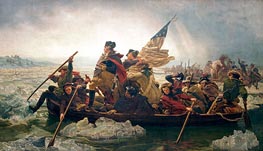
Washington Crossing the Delaware 1851
Oil Painting
$9761
$9761
Canvas Print
$63.52
$63.52
SKU: EGL-4663
Emanuel Gottlieb Leutze
Original Size: 378.5 x 647.7 cm
Metropolitan Museum of Art, New York, USA
Emanuel Gottlieb Leutze
Original Size: 378.5 x 647.7 cm
Metropolitan Museum of Art, New York, USA
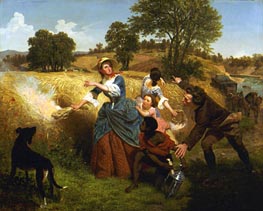
Mrs Schuyler Burning Her Wheat Fields on the ... 1852
Oil Painting
$7638
$7638
Canvas Print
$77.01
$77.01
SKU: EGL-4664
Emanuel Gottlieb Leutze
Original Size: 81.3 x 101.6 cm
Los Angeles County Museum of Art, California, USA
Emanuel Gottlieb Leutze
Original Size: 81.3 x 101.6 cm
Los Angeles County Museum of Art, California, USA
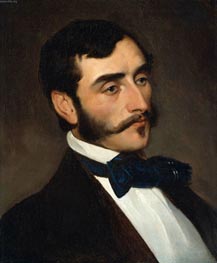
Portrait of William Morris Hunt c.1845
Oil Painting
$1587
$1587
SKU: EGL-4665
Emanuel Gottlieb Leutze
Original Size: unknown
Boston Museum of Fine Arts, Massachusetts, USA
Emanuel Gottlieb Leutze
Original Size: unknown
Boston Museum of Fine Arts, Massachusetts, USA
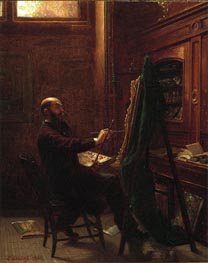
Worthington Whittredge in his Tenth Street Studio 1865
Oil Painting
$630
$630
Canvas Print
$63.52
$63.52
SKU: EGL-4666
Emanuel Gottlieb Leutze
Original Size: 37.5 x 29.5 cm
Reynolda House Museum of American Art, North Carolina, USA
Emanuel Gottlieb Leutze
Original Size: 37.5 x 29.5 cm
Reynolda House Museum of American Art, North Carolina, USA

The Summons 1856
Oil Painting
$4396
$4396
Canvas Print
$67.04
$67.04
SKU: EGL-22977
Emanuel Gottlieb Leutze
Original Size: 79.3 x 114.9 cm
Fogg Art Museum at Harvard University, Massachusetts, USA
Emanuel Gottlieb Leutze
Original Size: 79.3 x 114.9 cm
Fogg Art Museum at Harvard University, Massachusetts, USA
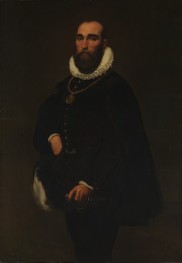
Worthington Whittredge 1856
Oil Painting
$2154
$2154
Canvas Print
$66.87
$66.87
SKU: EGL-22978
Emanuel Gottlieb Leutze
Original Size: 129.2 x 102.9 cm
Metropolitan Museum of Art, New York, USA
Emanuel Gottlieb Leutze
Original Size: 129.2 x 102.9 cm
Metropolitan Museum of Art, New York, USA
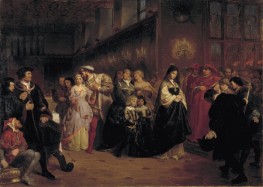
The Courtship of Anne Boleyn 1846
Oil Painting
$11296
$11296
Canvas Print
$68.61
$68.61
SKU: EGL-22979
Emanuel Gottlieb Leutze
Original Size: 72.4 x 101.8 cm
Smithsonian American Art Museum, Washington, USA
Emanuel Gottlieb Leutze
Original Size: 72.4 x 101.8 cm
Smithsonian American Art Museum, Washington, USA
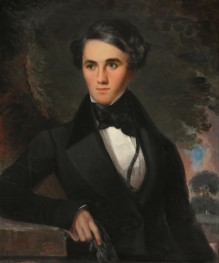
Thomas Stokes Page 1836
Oil Painting
$1979
$1979
Canvas Print
$80.52
$80.52
SKU: EGL-22980
Emanuel Gottlieb Leutze
Original Size: 76.2 x 64.1 cm
Philadelphia Museum of Art, Pennsylvania, USA
Emanuel Gottlieb Leutze
Original Size: 76.2 x 64.1 cm
Philadelphia Museum of Art, Pennsylvania, USA
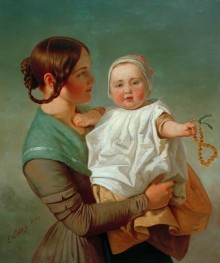
The Amber Necklace 1847
Oil Painting
$2099
$2099
Canvas Print
$80.69
$80.69
SKU: EGL-22981
Emanuel Gottlieb Leutze
Original Size: 91 x 77 cm
Public Collection
Emanuel Gottlieb Leutze
Original Size: 91 x 77 cm
Public Collection
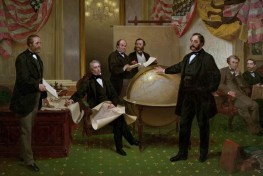
William Henry Seward and Eduard de Stoeckl of ... 1867
Oil Painting
$9653
$9653
Canvas Print
$64.42
$64.42
SKU: EGL-22982
Emanuel Gottlieb Leutze
Original Size: unknown
Public Collection
Emanuel Gottlieb Leutze
Original Size: unknown
Public Collection
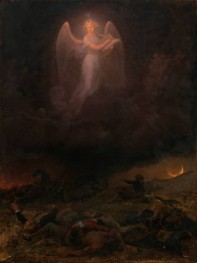
Angel on the Battlefield 1864
Oil Painting
$1971
$1971
Canvas Print
$72.47
$72.47
SKU: EGL-22983
Emanuel Gottlieb Leutze
Original Size: 79.1 x 60 cm
Chrysler Museum of Art, Norfolk, USA
Emanuel Gottlieb Leutze
Original Size: 79.1 x 60 cm
Chrysler Museum of Art, Norfolk, USA
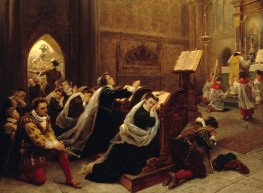
Mary Stuart After Her Return From France in ... 1866
Oil Painting
$10180
$10180
Canvas Print
$70.71
$70.71
SKU: EGL-22984
Emanuel Gottlieb Leutze
Original Size: 102 x 131.5 cm
Public Collection
Emanuel Gottlieb Leutze
Original Size: 102 x 131.5 cm
Public Collection
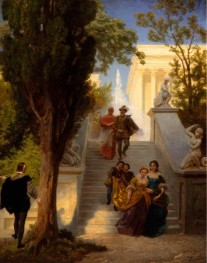
Tasso and Leonore 1859
Oil Painting
$4303
$4303
Canvas Print
$76.14
$76.14
SKU: EGL-22985
Emanuel Gottlieb Leutze
Original Size: 82 x 65 cm
Private Collection
Emanuel Gottlieb Leutze
Original Size: 82 x 65 cm
Private Collection
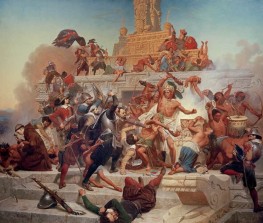
The Conquest of the Teocalli Temple by Cortés ... 1849
Oil Painting
$17109
$17109
Canvas Print
$81.74
$81.74
SKU: EGL-22986
Emanuel Gottlieb Leutze
Original Size: 215.3 x 250.8 cm
Wadsworth Atheneum, Hartford, USA
Emanuel Gottlieb Leutze
Original Size: 215.3 x 250.8 cm
Wadsworth Atheneum, Hartford, USA
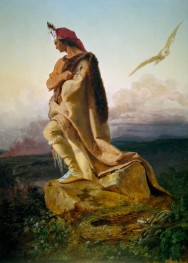
The Last of the Mohicans 1850
Oil Painting
$2065
$2065
Canvas Print
$68.97
$68.97
SKU: EGL-22987
Emanuel Gottlieb Leutze
Original Size: 98 x 65 cm
Private Collection
Emanuel Gottlieb Leutze
Original Size: 98 x 65 cm
Private Collection