
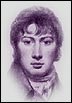
John Constable Painting Reproductions 1 of 4
1776-1837
English Romanticism Painter
Wind presses across the River Stour, and the sky refuses to sit still. A bank of cloud slides over water meadows, and the light changes its mind in seconds - the sort of ordinary drama most painters once treated as background. John Constable (11 June 1776 - 31 March 1837), an English landscape painter of the Romantic period, built his art on that restlessness. He insisted that the familiar countryside of Suffolk and Essex could carry as much emotional weight as any grand, invented prospect.
His upbringing unfolded beside working mills, barges, wet timber, and the practical traffic of grain. Golding Constable, a prosperous corn merchant, expected his second son to step into the family business, especially as the elder brother could not. Yet the young man kept slipping into the lanes and along the Stour, sketchbook in hand, taking note of willow roots, sluices, brickwork softened by damp, and the particular glint of water escaping from a mill dam. Such details were not decorative to him; they were the grammar of place. When he later wrote that painting was another word for feeling, he was not offering sentimentality but a working method: attention as devotion.
London entered the story by way of looking. Shown a Claude Lorrain landscape by the collector George Beaumont, Constable understood how classical composition could dignify land and sky, even as he mistrusted the habit of borrowing nature “at second hand.” In 1799 he persuaded his father to allow a professional path, and he entered the Royal Academy Schools as a probationer, drawing from life, attending dissections, and copying Old Masters. Thomas Gainsborough mattered for the Englishness of his touch; Rubens and Annibale Carracci for the energy of paint; Jacob van Ruisdael for weather’s architecture. Still, the ambition was not to join a lineage by mimicry. Room remained, he insisted, for a natural painter.
By 1803 he was exhibiting at the Royal Academy, while keeping a rhythm that shaped his career: winters in London, summers at East Bergholt, returning again and again to the same bends in the river and the same hedged paths. In 1802 he refused a secure post as drawing master at Great Marlow Military College, knowing it might be read as professional suicide. Instead, he chose the slower gamble of landscape - and, when money tightened, he took on portraiture despite finding it deadening. Country-house commissions helped too, because patrons paid for recognisable property and calm competence. Wivenhoe Park (1816), painted for Major-General Francis Slater Rebow, turns estate land into a carefully observed theatre of water, trees, and reflections, with the painter’s eye already tugging upward toward the moving sky.
In 1811 Salisbury added a different register. Friendship with John Fisher, later Bishop of Salisbury, brought Constable into the cathedral’s orbit, where architecture and weather meet in long perspectives and sudden showers. He could be sociable to the core - a trait revealed on his 1806 tour of the Lake District, where mountain solitude, for all its grandeur, depressed him when it lacked human association. Villages, churches, farmhouses, and cottages were not quaint additions; they were the signs of lived time. That preference anchored his most famous landscapes, which rarely abandon the working world even when they feel lyrical.
Marriage sharpened both need and daring. His relationship with Maria Elizabeth Bicknell, rooted in long acquaintance, faced sharp opposition from her family, and the couple married in October 1816 at St Martin-in-the-Fields with Fisher officiating. A honeymoon along the south coast - Weymouth and Brighton - pulled new colour from his palette and encouraged a more vivacious handling of paint. Osmington Bay (1816) shows him testing how sea air changes light, and how a horizon can be both calm and immense. Yet even at the coast, he did not become a painter of pure escape; he watched how nature and modern bustle collided, later describing Brighton’s beach as “Piccadilly by the seaside.”
Ambition arrived on canvases that could not be ignored. Flatford Mill (Scene on a Navigable River), begun in 1816 and shown in 1817, was painted largely outdoors at a scale unusual for a working river scene. Constable wanted landscape to claim the public space reserved for history painting and classical invention. The breakthrough came with The White Horse (1819), sold to Fisher for 100 guineas - a turning point that brought financial breathing room and election as an Associate of the Royal Academy. It also opened the path to the series later nicknamed the “six-footers,” monumental narratives of the Stour: Stratford Mill (1820), The Hay Wain (1821), View on the Stour near Dedham (1822), The Lock (1824), and The Leaping Horse (1825).
The Hay Wain, shown at the Royal Academy in 1821, did not sell at home, but it traveled in the minds of those who saw it. Théodore Géricault and the writer Charles Nodier carried its example to France, and in 1824 the dealer John Arrowsmith took it - with View on the Stour near Dedham - to the Paris Salon, where it caused a sensation and won a gold medal from Charles X. Eugène Delacroix, studying Constable’s greens, found permission to rethink tone itself and famously reworked passages of his own Massacre de Scio after seeing the pictures. Constable’s technique offered French painters a practical liberation: broken brushstrokes, scumbled touches laid over lighter passages, and a refusal to smooth away the flicker of light. Underneath the finished canvases sat full-scale oil sketches, done directly from nature, whose vigorous shorthand still feels startlingly modern.
Health and grief redirected the story. From 1824 the family lodged in Brighton for sea air as Maria’s tuberculosis worsened, and Constable split his time between the coast and Charlotte Street in London. Chain Pier, Brighton (exhibited 1827) stands as his major large-scale statement there, while smaller seascapes and cloud studies thicken the sense of atmosphere - one critic even remarked on the “humidity” of the air. Constable annotated his sky studies with time, wind, and weather conditions, treating observation almost as field science. Reading the meteorologist Luke Howard on cloud classification, and absorbing Thomas Forster’s atmospheric writing, he pursued what he called “skying” with determination, believing the sky to be the key note and chief organ of sentiment in a landscape. Perhaps solitude gave his brush its clarity here, because the work looks simultaneously intimate and unsparing.
Maria died in Hampstead on 23 November 1828, leaving Constable with seven children and a world he described as altered in its very face. He wore black, lived with melancholy, and poured effort into projects that promised stability yet drained resources. Maria’s inheritance, received after her father’s death, went disastrously into an engraving venture: mezzotints after his landscapes, made with the mezzotinter David Lucas across forty plates, some passing through thirteen proof stages under Constable’s pencil corrections. The publication did not find enough subscribers. Still, the prints extended his reach and fixed his compositions in public memory, even when money did not follow.
Late paintings show a mind weathered, not dulled. Hadleigh Castle (1829) and Salisbury Cathedral from the Meadows (1831) intensify his earlier calm into a more broken, accented handling - paint becomes more urgent, clouds more dramatic, and the landscape’s stability less assured. Elected a full Royal Academician in 1829 at the age of 52, he served as Visitor at the Royal Academy and lectured publicly on landscape painting, including at the Royal Institution in 1836. Painting, he argued, is scientific as well as poetic; imagination cannot outdo reality; no great painter is self-taught. He also resisted the Gothic Revival when it became mere imitation, preferring direct engagement over fashionable quotation.
Constable died on 31 March 1837, apparently of heart failure, and was buried with Maria at St John-at-Hampstead. Afterward, his reputation traveled in ways his bank account never managed. In France his example fed the Barbizon painters’ seriousness about working from nature, and later the Impressionists found a precedent in his luminous, fragmentary touch. Yet the lasting power of John Constable is not a matter of “influence” as a chain of names. It lies in a stubborn belief that a lane, a hedge, a lock gate, and a changeable sky are enough - if one looks until feeling becomes form. In that insistence, his landscapes still speak with the quiet authority of places truly known.
His upbringing unfolded beside working mills, barges, wet timber, and the practical traffic of grain. Golding Constable, a prosperous corn merchant, expected his second son to step into the family business, especially as the elder brother could not. Yet the young man kept slipping into the lanes and along the Stour, sketchbook in hand, taking note of willow roots, sluices, brickwork softened by damp, and the particular glint of water escaping from a mill dam. Such details were not decorative to him; they were the grammar of place. When he later wrote that painting was another word for feeling, he was not offering sentimentality but a working method: attention as devotion.
London entered the story by way of looking. Shown a Claude Lorrain landscape by the collector George Beaumont, Constable understood how classical composition could dignify land and sky, even as he mistrusted the habit of borrowing nature “at second hand.” In 1799 he persuaded his father to allow a professional path, and he entered the Royal Academy Schools as a probationer, drawing from life, attending dissections, and copying Old Masters. Thomas Gainsborough mattered for the Englishness of his touch; Rubens and Annibale Carracci for the energy of paint; Jacob van Ruisdael for weather’s architecture. Still, the ambition was not to join a lineage by mimicry. Room remained, he insisted, for a natural painter.
By 1803 he was exhibiting at the Royal Academy, while keeping a rhythm that shaped his career: winters in London, summers at East Bergholt, returning again and again to the same bends in the river and the same hedged paths. In 1802 he refused a secure post as drawing master at Great Marlow Military College, knowing it might be read as professional suicide. Instead, he chose the slower gamble of landscape - and, when money tightened, he took on portraiture despite finding it deadening. Country-house commissions helped too, because patrons paid for recognisable property and calm competence. Wivenhoe Park (1816), painted for Major-General Francis Slater Rebow, turns estate land into a carefully observed theatre of water, trees, and reflections, with the painter’s eye already tugging upward toward the moving sky.
In 1811 Salisbury added a different register. Friendship with John Fisher, later Bishop of Salisbury, brought Constable into the cathedral’s orbit, where architecture and weather meet in long perspectives and sudden showers. He could be sociable to the core - a trait revealed on his 1806 tour of the Lake District, where mountain solitude, for all its grandeur, depressed him when it lacked human association. Villages, churches, farmhouses, and cottages were not quaint additions; they were the signs of lived time. That preference anchored his most famous landscapes, which rarely abandon the working world even when they feel lyrical.
Marriage sharpened both need and daring. His relationship with Maria Elizabeth Bicknell, rooted in long acquaintance, faced sharp opposition from her family, and the couple married in October 1816 at St Martin-in-the-Fields with Fisher officiating. A honeymoon along the south coast - Weymouth and Brighton - pulled new colour from his palette and encouraged a more vivacious handling of paint. Osmington Bay (1816) shows him testing how sea air changes light, and how a horizon can be both calm and immense. Yet even at the coast, he did not become a painter of pure escape; he watched how nature and modern bustle collided, later describing Brighton’s beach as “Piccadilly by the seaside.”
Ambition arrived on canvases that could not be ignored. Flatford Mill (Scene on a Navigable River), begun in 1816 and shown in 1817, was painted largely outdoors at a scale unusual for a working river scene. Constable wanted landscape to claim the public space reserved for history painting and classical invention. The breakthrough came with The White Horse (1819), sold to Fisher for 100 guineas - a turning point that brought financial breathing room and election as an Associate of the Royal Academy. It also opened the path to the series later nicknamed the “six-footers,” monumental narratives of the Stour: Stratford Mill (1820), The Hay Wain (1821), View on the Stour near Dedham (1822), The Lock (1824), and The Leaping Horse (1825).
The Hay Wain, shown at the Royal Academy in 1821, did not sell at home, but it traveled in the minds of those who saw it. Théodore Géricault and the writer Charles Nodier carried its example to France, and in 1824 the dealer John Arrowsmith took it - with View on the Stour near Dedham - to the Paris Salon, where it caused a sensation and won a gold medal from Charles X. Eugène Delacroix, studying Constable’s greens, found permission to rethink tone itself and famously reworked passages of his own Massacre de Scio after seeing the pictures. Constable’s technique offered French painters a practical liberation: broken brushstrokes, scumbled touches laid over lighter passages, and a refusal to smooth away the flicker of light. Underneath the finished canvases sat full-scale oil sketches, done directly from nature, whose vigorous shorthand still feels startlingly modern.
Health and grief redirected the story. From 1824 the family lodged in Brighton for sea air as Maria’s tuberculosis worsened, and Constable split his time between the coast and Charlotte Street in London. Chain Pier, Brighton (exhibited 1827) stands as his major large-scale statement there, while smaller seascapes and cloud studies thicken the sense of atmosphere - one critic even remarked on the “humidity” of the air. Constable annotated his sky studies with time, wind, and weather conditions, treating observation almost as field science. Reading the meteorologist Luke Howard on cloud classification, and absorbing Thomas Forster’s atmospheric writing, he pursued what he called “skying” with determination, believing the sky to be the key note and chief organ of sentiment in a landscape. Perhaps solitude gave his brush its clarity here, because the work looks simultaneously intimate and unsparing.
Maria died in Hampstead on 23 November 1828, leaving Constable with seven children and a world he described as altered in its very face. He wore black, lived with melancholy, and poured effort into projects that promised stability yet drained resources. Maria’s inheritance, received after her father’s death, went disastrously into an engraving venture: mezzotints after his landscapes, made with the mezzotinter David Lucas across forty plates, some passing through thirteen proof stages under Constable’s pencil corrections. The publication did not find enough subscribers. Still, the prints extended his reach and fixed his compositions in public memory, even when money did not follow.
Late paintings show a mind weathered, not dulled. Hadleigh Castle (1829) and Salisbury Cathedral from the Meadows (1831) intensify his earlier calm into a more broken, accented handling - paint becomes more urgent, clouds more dramatic, and the landscape’s stability less assured. Elected a full Royal Academician in 1829 at the age of 52, he served as Visitor at the Royal Academy and lectured publicly on landscape painting, including at the Royal Institution in 1836. Painting, he argued, is scientific as well as poetic; imagination cannot outdo reality; no great painter is self-taught. He also resisted the Gothic Revival when it became mere imitation, preferring direct engagement over fashionable quotation.
Constable died on 31 March 1837, apparently of heart failure, and was buried with Maria at St John-at-Hampstead. Afterward, his reputation traveled in ways his bank account never managed. In France his example fed the Barbizon painters’ seriousness about working from nature, and later the Impressionists found a precedent in his luminous, fragmentary touch. Yet the lasting power of John Constable is not a matter of “influence” as a chain of names. It lies in a stubborn belief that a lane, a hedge, a lock gate, and a changeable sky are enough - if one looks until feeling becomes form. In that insistence, his landscapes still speak with the quiet authority of places truly known.
80 Constable Paintings
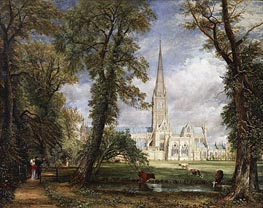
Salisbury Cathedral from the Bishop's Garden 1826
Oil Painting
$2350
$2350
Canvas Print
$77.93
$77.93
SKU: COJ-2888
John Constable
Original Size: 88.9 x 112.4 cm
Frick Collection, New York, USA
John Constable
Original Size: 88.9 x 112.4 cm
Frick Collection, New York, USA
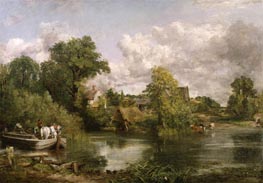
The White Horse 1819
Oil Painting
$1504
$1504
Canvas Print
$68.22
$68.22
SKU: COJ-2889
John Constable
Original Size: 131.4 x 188.3 cm
Frick Collection, New York, USA
John Constable
Original Size: 131.4 x 188.3 cm
Frick Collection, New York, USA
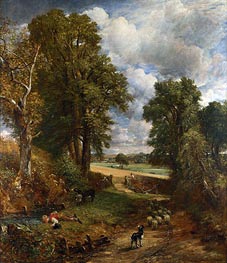
The Cornfield 1826
Oil Painting
$1337
$1337
Canvas Print
$85.47
$85.47
SKU: COJ-2890
John Constable
Original Size: 143 x 122 cm
National Gallery, London, UK
John Constable
Original Size: 143 x 122 cm
National Gallery, London, UK
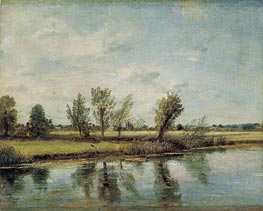
Watermeadows near Salisbury 1829
Oil Painting
$568
$568
Canvas Print
$82.50
$82.50
SKU: COJ-2891
John Constable
Original Size: 45.7 x 55.3 cm
Victoria and Albert Museum, London, UK
John Constable
Original Size: 45.7 x 55.3 cm
Victoria and Albert Museum, London, UK
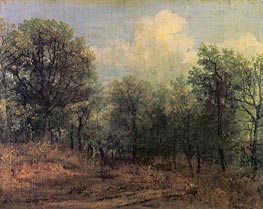
A Wood c.1802
Oil Painting
$479
$479
Canvas Print
$65.16
$65.16
SKU: COJ-2892
John Constable
Original Size: 34.3 x 43.2 cm
Victoria and Albert Museum, London, UK
John Constable
Original Size: 34.3 x 43.2 cm
Victoria and Albert Museum, London, UK
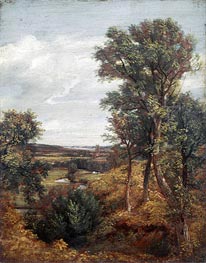
Dedham Vale 1802
Oil Painting
$479
$479
Canvas Print
$65.16
$65.16
SKU: COJ-2893
John Constable
Original Size: 43.5 x 34.4 cm
Victoria and Albert Museum, London, UK
John Constable
Original Size: 43.5 x 34.4 cm
Victoria and Albert Museum, London, UK
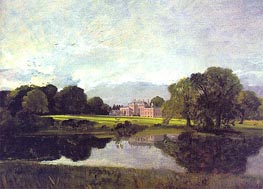
Malvern Hall, Warwickshire 1809
Oil Painting
$1086
$1086
Canvas Print
$65.16
$65.16
SKU: COJ-2894
John Constable
Original Size: 51.4 x 76.8 cm
Tate Gallery, London, UK
John Constable
Original Size: 51.4 x 76.8 cm
Tate Gallery, London, UK
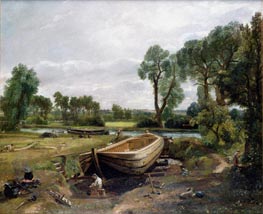
Boat Building near Flatford Mill 1815
Oil Painting
$1125
$1125
Canvas Print
$82.77
$82.77
SKU: COJ-2895
John Constable
Original Size: 50.8 x 61.6 cm
Victoria and Albert Museum, London, UK
John Constable
Original Size: 50.8 x 61.6 cm
Victoria and Albert Museum, London, UK
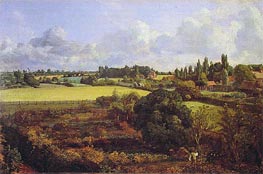
Golding Constable's Kitchen Garden 1815
Oil Painting
$611
$611
SKU: COJ-2896
John Constable
Original Size: unknown
Borough Council Museums and Galleries, Ipswich, UK
John Constable
Original Size: unknown
Borough Council Museums and Galleries, Ipswich, UK
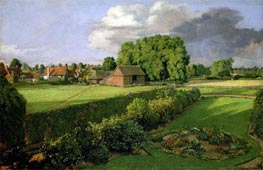
Golding Constable's Flower Garden 1815
Oil Painting
$611
$611
Canvas Print
$65.16
$65.16
SKU: COJ-2897
John Constable
Original Size: 33 x 50.8 cm
Borough Council Museums and Galleries, Ipswich, UK
John Constable
Original Size: 33 x 50.8 cm
Borough Council Museums and Galleries, Ipswich, UK
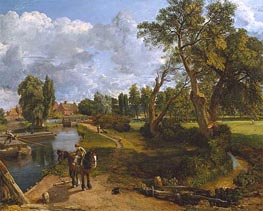
Flatford Mill (Scene on a Navigable River) c.1816/17
Oil Painting
$1597
$1597
Canvas Print
$79.00
$79.00
SKU: COJ-2898
John Constable
Original Size: 101.6 x 127 cm
Tate Gallery, London, UK
John Constable
Original Size: 101.6 x 127 cm
Tate Gallery, London, UK
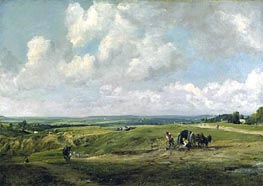
Hamstead Heath c.1820
Oil Painting
$1063
$1063
Canvas Print
$69.31
$69.31
SKU: COJ-2899
John Constable
Original Size: 54 x 77 cm
Fitzwilliam Museum, Cambridge, UK
John Constable
Original Size: 54 x 77 cm
Fitzwilliam Museum, Cambridge, UK
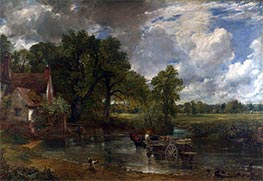
The Hay Wain 1821
Oil Painting
$1692
$1692
Canvas Print
$68.77
$68.77
SKU: COJ-2900
John Constable
Original Size: 130.2 x 185.4 cm
National Gallery, London, UK
John Constable
Original Size: 130.2 x 185.4 cm
National Gallery, London, UK
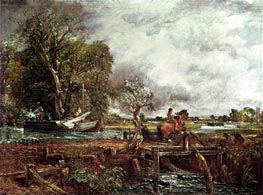
The Leaping Horse 1825
Oil Painting
$1616
$1616
Canvas Print
$73.62
$73.62
SKU: COJ-2901
John Constable
Original Size: 142 x 187.3 cm
Royal Academy of Arts, London, UK
John Constable
Original Size: 142 x 187.3 cm
Royal Academy of Arts, London, UK
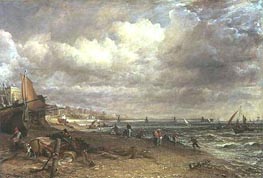
Marine Parade and Chain Pier, Brighton c.1826/27
Oil Painting
$1671
$1671
SKU: COJ-2902
John Constable
Original Size: 127 x 183 cm
Tate Gallery, London, UK
John Constable
Original Size: 127 x 183 cm
Tate Gallery, London, UK
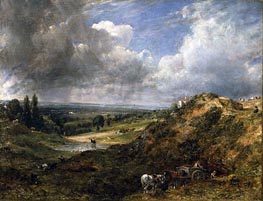
Hampstead Heath, Branch Hill Pond 1828
Oil Painting
$1449
$1449
Canvas Print
$75.95
$75.95
SKU: COJ-2903
John Constable
Original Size: 59.6 x 77.6 cm
Victoria and Albert Museum, London, UK
John Constable
Original Size: 59.6 x 77.6 cm
Victoria and Albert Museum, London, UK
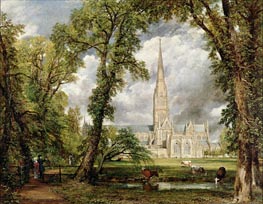
View of Salisbury Cathedral from the Bishop's Grounds c.1822
Oil Painting
$1935
$1935
Canvas Print
$76.84
$76.84
SKU: COJ-5064
John Constable
Original Size: 87.6 x 111.8 cm
Victoria and Albert Museum, London, UK
John Constable
Original Size: 87.6 x 111.8 cm
Victoria and Albert Museum, London, UK
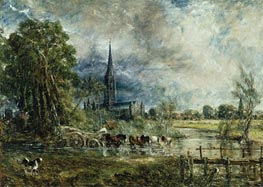
Salisbury Cathedral from the Meadows (Fording the ... c.1829/31
Oil Painting
$1637
$1637
SKU: COJ-5065
John Constable
Original Size: 135 x 188 cm
Guildhall Art Gallery, London, UK
John Constable
Original Size: 135 x 188 cm
Guildhall Art Gallery, London, UK
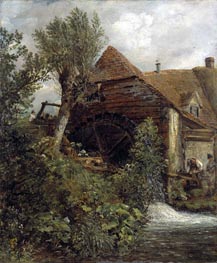
Watermill at Gillingham, Dorset c.1823/27
Oil Painting
$1337
$1337
Canvas Print
$80.80
$80.80
SKU: COJ-5066
John Constable
Original Size: 63 x 52 cm
Victoria and Albert Museum, London, UK
John Constable
Original Size: 63 x 52 cm
Victoria and Albert Museum, London, UK
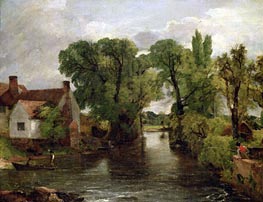
The Mill Stream c.1814/15
Oil Painting
$1390
$1390
SKU: COJ-5067
John Constable
Original Size: 71 x 91.8 cm
Borough Council Museums and Galleries, Ipswich, UK
John Constable
Original Size: 71 x 91.8 cm
Borough Council Museums and Galleries, Ipswich, UK
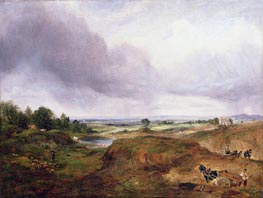
Hampstead Heath n.d.
Oil Painting
$1197
$1197
SKU: COJ-5068
John Constable
Original Size: unknown
Bury Art Gallery and Museum, Lancashire, UK
John Constable
Original Size: unknown
Bury Art Gallery and Museum, Lancashire, UK
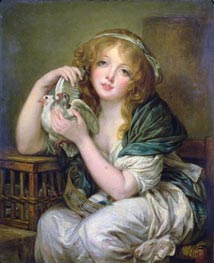
Girl with the Doves (after Greuze) n.d.
Oil Painting
$1449
$1449
SKU: COJ-5069
John Constable
Original Size: unknown
Private Collection
John Constable
Original Size: unknown
Private Collection
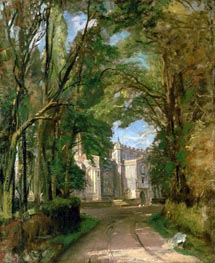
East Bergholt Church n.d.
Oil Painting
$969
$969
Canvas Print
$66.93
$66.93
SKU: COJ-5070
John Constable
Original Size: unknown
Private Collection
John Constable
Original Size: unknown
Private Collection
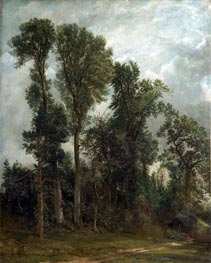
Trees at Hampstead 1821
Oil Painting
$1372
$1372
Canvas Print
$79.37
$79.37
SKU: COJ-5071
John Constable
Original Size: 91.4 x 72.4 cm
Victoria and Albert Museum, London, UK
John Constable
Original Size: 91.4 x 72.4 cm
Victoria and Albert Museum, London, UK