
Gustave Caillebotte Painting Reproductions 1 of 7
1848-1894
French Impressionist Painter
Rain glistens on the Paris pavement, umbrellas open like dark flowers, and the city seems at once observed and staged. Gustave Caillebotte, born in Paris on 19 August 1848 and dead at Petit-Gennevilliers on 21 February 1894, belongs to Impressionism and yet never sits easily within it: a French painter of modern life whose eye was cooler, firmer, and often more exact than that of many of his friends.
He came from security rather than struggle. The family lived on the rue du Faubourg-Saint-Denis, solidly upper class, and the conditions of his childhood mattered because they later freed him from the market and its compromises. His father, Martial Caillebotte, had inherited a military textile business and also served as a judge at the Tribunal de commerce de la Seine. His mother, Céleste Daufresne, raised three sons - Gustave, René, and Martial. Nothing in this background pushed him theatrically toward rebellion; instead, it gave him education, discipline, and the means to choose painting without needing to flatter buyers.
Law came first. Caillebotte earned his degree in 1868 and obtained a licence to practise in 1870; he also trained as an engineer. Then history intervened. Drafted during the Franco-Prussian War, he served from July 1870 until March 1871 in the Garde Nationale Mobile de la Seine. It was during that period that he began to paint. One can sense, perhaps, how a mind sharpened by engineering and military order later found satisfaction in measured space, steep diagonals, and the geometry of boulevards.
After the war he entered the studio of Léon Bonnat and, for a time, the École des Beaux-Arts. Yet academic routine never seems to have held him for long. More important were the friendships he formed around 1874 with painters working outside the official system - Edgar Degas among them, and Giuseppe de Nittis. He attended the first Impressionist exhibition of that year without exhibiting in it. This was a decisive proximity. The group had broken from the Salon and its hierarchy of approved subjects, and Caillebotte, though temperamentally distinct, recognised in them a serious alternative to official taste.
His own debut came in the second Impressionist exhibition of 1876. There he showed eight pictures, including Les raboteurs de parquet, painted in 1875, still one of the most arresting images of labour in 19th-century French art. Three men strip and plane a wooden floor, probably in the artist's own studio. Nothing is sentimentalised. Their bodies bend to work; the light picks out flesh, timber, and shavings; perspective drives the eye across the room. The subject had already been rejected by the Salon, and the reason is telling. Urban labourers at close quarters seemed too raw, too modern, too unbeautified. Rural peasants were acceptable; parquet workers in a bourgeois interior were not. Caillebotte knew exactly where the discomfort lay.
From there his career unfolded quickly. In 1877, for the third Impressionist exhibition, he took on a leading organisational role, securing the rental space, choosing works, and hanging the show. Such labour is rarely glamorous, but it reveals character. He was not merely participating; he was sustaining the conditions in which the group could be seen. He eventually exhibited in five of the eight Impressionist exhibitions, though the burden of managing artists and their ambitions plainly wore on him. Money helped, but money did not simplify temperament.
Stylistically, Gustave Caillebotte remained elusive in the best sense. He shared with Courbet, Millet, and Degas a wish to strip painting of some of its inherited theatre and to register what was actually there. Yet he was no doctrinaire realist. At times his interiors carry the weight and colour-density of Degas; elsewhere the brush loosens, tones soften, and the surface approaches the pastel delicacy of Renoir or Pissarro, though never with quite their chromatic exuberance. Tilted ground planes, abrupt cropping, and unusually high vantage points recur across the work. Whether these came from photography, from Japanese prints, or from his own fascination with perspective, they gave his paintings their peculiar tension. He often places the viewer slightly off balance, as if modern vision itself had shifted.
That shift is nowhere more memorable than in his Paris paintings. The Europe Bridge, Place Saint-Augustin, Man on a Balcony, Boulevard Seen from Above, and above all Paris Street; Rainy Day take Haussmann's capital as both subject and structure. In Paris Street; Rainy Day, painted in 1877, the broad square opens under a metallic sky; figures pass one another without contact; the space is rational, public, and faintly estranged. Its flat colour and near-photographic stillness make it feel uncannily modern. Not for nothing did American viewers respond strongly after the Art Institute of Chicago acquired it in 1964. The painting seems to predict a later urban solitude, even while remaining wholly of its century.
Yet Paris was only part of him. Caillebotte painted interiors of family life with unusual tact: dining, reading, card-playing, sewing, music-making. Young Man at His Window places his brother René before the city, both participant in and watcher of it. The Orange Trees and Portraits in the Country draw on the family's property at Yerres, where he also found subjects of boating, fishing, swimming, and riverside leisure. In such works the handling often becomes softer, more atmospheric. Oarsman in a Top Hat, also known as Boating Party, is especially striking for its close-up action and the passenger's viewpoint from inside the boat. Submitted to the fourth Impressionist exhibition in 1879, it belonged to the strongest group of works he showed while alive. Water gave him movement, reflection, and a different sort of modernity - less metropolitan, but no less precise.
He also painted still lifes, especially food and flowers, and produced a small but significant group of nudes. These are notable for their frankness. Homme au bain and Nude on a Couch refuse mythological alibis; they are simply bodies in space, observed without decorative excuse. That directness has mattered increasingly to later viewers. Recent exhibitions have paid particular attention to the unusual prominence of men in his art - bathing, rowing, resting, inhabiting domestic settings with a degree of intimacy rare in French painting of the time. Not everyone has agreed on how these pictures should be interpreted, but the debate itself confirms that Caillebotte still resists easy categorisation.
In practical life he was indispensable to Impressionism. His family fortune, enlarged by inheritance after his father's death in 1874 and his mother's in 1878, meant that he could buy boldly and help discreetly. He purchased works by Monet, Renoir, Pissarro, Degas, Sisley, Cézanne, Manet and others; he supported exhibitions; he even helped Monet financially, including by paying studio rent. In 1890 he played an important part in helping Monet organise the campaign for the French state to acquire Manet's Olympia. This was patronage with judgement. He did not collect everything indiscriminately, and his eye as a collector proved nearly as consequential as his eye as a painter.
By the 1880s his life began to turn more fully toward the Seine. He bought property at Petit-Gennevilliers in 1881, near Argenteuil, and after his brother Martial married in 1887 he moved there permanently. There he gardened, grew orchids, designed yachts, built them, raced them, and won regattas with a boat called Roastbeef. Renoir visited often, and the two men talked widely - art, politics, literature, philosophy. Caillebotte never married, though he appears to have had a serious relationship with Charlotte Berthier, to whom he left a substantial annuity. He stopped exhibiting while still relatively young and, in the early 1890s, worked less on large canvases, turning increasingly to en plein air landscapes and river scenes around his home. Perhaps this narrowing of radius was not a retreat at all, but a concentration.
Death came early. Convinced since the death of his brother René in 1876 that his own life might be short, he had drawn up his will while still in his twenties. When he died in 1894 of pulmonary congestion, aged only forty-five, he left behind not just paintings but one of the great acts of artistic foresight in modern France: the bequest of his collection of Impressionist works to the state. The gift was controversial. Official France still mistrusted the Impressionists, and his conditions were resisted. After long negotiation, thirty-eight paintings entered the Luxembourg Palace in 1897, forming the first public presentation of Impressionism in France. In that sense Gustave Caillebotte altered not only what painting could look like, but where the nation would eventually place its faith.
For decades his reputation remained oddly split. He was praised as benefactor, overshadowed as painter. Only in the second half of the 20th century did that imbalance begin to correct itself, helped by family sales, the Chicago acquisition of Paris Street; Rainy Day, and major retrospectives - above all the large international exhibition of 1994, a century after his death, and later shows such as The Painter's Eye in 2015-16. More recently, France's acquisition of Boating Party and the exhibitions surrounding it confirmed how central he has become. What still compels is not merely his generosity, nor even his historical place within Impressionism, but the singular quality of his looking. Caillebotte saw modern life as both immediate and strangely distant, intimate and architectonic. That doubleness feels contemporary still.
He came from security rather than struggle. The family lived on the rue du Faubourg-Saint-Denis, solidly upper class, and the conditions of his childhood mattered because they later freed him from the market and its compromises. His father, Martial Caillebotte, had inherited a military textile business and also served as a judge at the Tribunal de commerce de la Seine. His mother, Céleste Daufresne, raised three sons - Gustave, René, and Martial. Nothing in this background pushed him theatrically toward rebellion; instead, it gave him education, discipline, and the means to choose painting without needing to flatter buyers.
Law came first. Caillebotte earned his degree in 1868 and obtained a licence to practise in 1870; he also trained as an engineer. Then history intervened. Drafted during the Franco-Prussian War, he served from July 1870 until March 1871 in the Garde Nationale Mobile de la Seine. It was during that period that he began to paint. One can sense, perhaps, how a mind sharpened by engineering and military order later found satisfaction in measured space, steep diagonals, and the geometry of boulevards.
After the war he entered the studio of Léon Bonnat and, for a time, the École des Beaux-Arts. Yet academic routine never seems to have held him for long. More important were the friendships he formed around 1874 with painters working outside the official system - Edgar Degas among them, and Giuseppe de Nittis. He attended the first Impressionist exhibition of that year without exhibiting in it. This was a decisive proximity. The group had broken from the Salon and its hierarchy of approved subjects, and Caillebotte, though temperamentally distinct, recognised in them a serious alternative to official taste.
His own debut came in the second Impressionist exhibition of 1876. There he showed eight pictures, including Les raboteurs de parquet, painted in 1875, still one of the most arresting images of labour in 19th-century French art. Three men strip and plane a wooden floor, probably in the artist's own studio. Nothing is sentimentalised. Their bodies bend to work; the light picks out flesh, timber, and shavings; perspective drives the eye across the room. The subject had already been rejected by the Salon, and the reason is telling. Urban labourers at close quarters seemed too raw, too modern, too unbeautified. Rural peasants were acceptable; parquet workers in a bourgeois interior were not. Caillebotte knew exactly where the discomfort lay.
From there his career unfolded quickly. In 1877, for the third Impressionist exhibition, he took on a leading organisational role, securing the rental space, choosing works, and hanging the show. Such labour is rarely glamorous, but it reveals character. He was not merely participating; he was sustaining the conditions in which the group could be seen. He eventually exhibited in five of the eight Impressionist exhibitions, though the burden of managing artists and their ambitions plainly wore on him. Money helped, but money did not simplify temperament.
Stylistically, Gustave Caillebotte remained elusive in the best sense. He shared with Courbet, Millet, and Degas a wish to strip painting of some of its inherited theatre and to register what was actually there. Yet he was no doctrinaire realist. At times his interiors carry the weight and colour-density of Degas; elsewhere the brush loosens, tones soften, and the surface approaches the pastel delicacy of Renoir or Pissarro, though never with quite their chromatic exuberance. Tilted ground planes, abrupt cropping, and unusually high vantage points recur across the work. Whether these came from photography, from Japanese prints, or from his own fascination with perspective, they gave his paintings their peculiar tension. He often places the viewer slightly off balance, as if modern vision itself had shifted.
That shift is nowhere more memorable than in his Paris paintings. The Europe Bridge, Place Saint-Augustin, Man on a Balcony, Boulevard Seen from Above, and above all Paris Street; Rainy Day take Haussmann's capital as both subject and structure. In Paris Street; Rainy Day, painted in 1877, the broad square opens under a metallic sky; figures pass one another without contact; the space is rational, public, and faintly estranged. Its flat colour and near-photographic stillness make it feel uncannily modern. Not for nothing did American viewers respond strongly after the Art Institute of Chicago acquired it in 1964. The painting seems to predict a later urban solitude, even while remaining wholly of its century.
Yet Paris was only part of him. Caillebotte painted interiors of family life with unusual tact: dining, reading, card-playing, sewing, music-making. Young Man at His Window places his brother René before the city, both participant in and watcher of it. The Orange Trees and Portraits in the Country draw on the family's property at Yerres, where he also found subjects of boating, fishing, swimming, and riverside leisure. In such works the handling often becomes softer, more atmospheric. Oarsman in a Top Hat, also known as Boating Party, is especially striking for its close-up action and the passenger's viewpoint from inside the boat. Submitted to the fourth Impressionist exhibition in 1879, it belonged to the strongest group of works he showed while alive. Water gave him movement, reflection, and a different sort of modernity - less metropolitan, but no less precise.
He also painted still lifes, especially food and flowers, and produced a small but significant group of nudes. These are notable for their frankness. Homme au bain and Nude on a Couch refuse mythological alibis; they are simply bodies in space, observed without decorative excuse. That directness has mattered increasingly to later viewers. Recent exhibitions have paid particular attention to the unusual prominence of men in his art - bathing, rowing, resting, inhabiting domestic settings with a degree of intimacy rare in French painting of the time. Not everyone has agreed on how these pictures should be interpreted, but the debate itself confirms that Caillebotte still resists easy categorisation.
In practical life he was indispensable to Impressionism. His family fortune, enlarged by inheritance after his father's death in 1874 and his mother's in 1878, meant that he could buy boldly and help discreetly. He purchased works by Monet, Renoir, Pissarro, Degas, Sisley, Cézanne, Manet and others; he supported exhibitions; he even helped Monet financially, including by paying studio rent. In 1890 he played an important part in helping Monet organise the campaign for the French state to acquire Manet's Olympia. This was patronage with judgement. He did not collect everything indiscriminately, and his eye as a collector proved nearly as consequential as his eye as a painter.
By the 1880s his life began to turn more fully toward the Seine. He bought property at Petit-Gennevilliers in 1881, near Argenteuil, and after his brother Martial married in 1887 he moved there permanently. There he gardened, grew orchids, designed yachts, built them, raced them, and won regattas with a boat called Roastbeef. Renoir visited often, and the two men talked widely - art, politics, literature, philosophy. Caillebotte never married, though he appears to have had a serious relationship with Charlotte Berthier, to whom he left a substantial annuity. He stopped exhibiting while still relatively young and, in the early 1890s, worked less on large canvases, turning increasingly to en plein air landscapes and river scenes around his home. Perhaps this narrowing of radius was not a retreat at all, but a concentration.
Death came early. Convinced since the death of his brother René in 1876 that his own life might be short, he had drawn up his will while still in his twenties. When he died in 1894 of pulmonary congestion, aged only forty-five, he left behind not just paintings but one of the great acts of artistic foresight in modern France: the bequest of his collection of Impressionist works to the state. The gift was controversial. Official France still mistrusted the Impressionists, and his conditions were resisted. After long negotiation, thirty-eight paintings entered the Luxembourg Palace in 1897, forming the first public presentation of Impressionism in France. In that sense Gustave Caillebotte altered not only what painting could look like, but where the nation would eventually place its faith.
For decades his reputation remained oddly split. He was praised as benefactor, overshadowed as painter. Only in the second half of the 20th century did that imbalance begin to correct itself, helped by family sales, the Chicago acquisition of Paris Street; Rainy Day, and major retrospectives - above all the large international exhibition of 1994, a century after his death, and later shows such as The Painter's Eye in 2015-16. More recently, France's acquisition of Boating Party and the exhibitions surrounding it confirmed how central he has become. What still compels is not merely his generosity, nor even his historical place within Impressionism, but the singular quality of his looking. Caillebotte saw modern life as both immediate and strangely distant, intimate and architectonic. That doubleness feels contemporary still.
151 Caillebotte Paintings
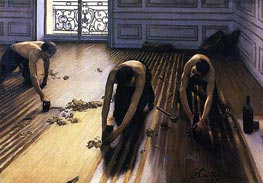
The Floor Scrapers 1875
Oil Painting
$1046
$1046
Canvas Print
$68.87
$68.87
SKU: GUC-498
Gustave Caillebotte
Original Size: 102 x 146 cm
Musee d'Orsay, Paris, France
Gustave Caillebotte
Original Size: 102 x 146 cm
Musee d'Orsay, Paris, France
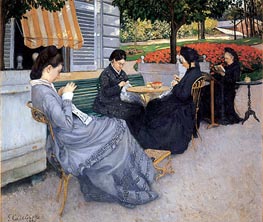
Portraits in the Countryside 1876
Oil Painting
$1508
$1508
Canvas Print
$83.49
$83.49
SKU: GUC-499
Gustave Caillebotte
Original Size: 95 x 111 cm
Musee Baron Garerd, Bayeux, France
Gustave Caillebotte
Original Size: 95 x 111 cm
Musee Baron Garerd, Bayeux, France
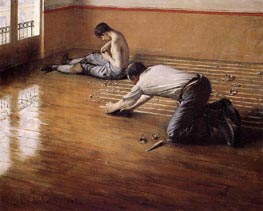
Wood Floor Planers 1876
Oil Painting
$1721
$1721
Canvas Print
$78.32
$78.32
SKU: GUC-500
Gustave Caillebotte
Original Size: 80 x 100 cm
Private Collection
Gustave Caillebotte
Original Size: 80 x 100 cm
Private Collection
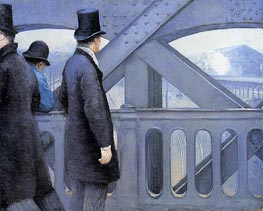
The Pont de Europe c.1876/77
Oil Painting
$1046
$1046
Canvas Print
$79.04
$79.04
SKU: GUC-501
Gustave Caillebotte
Original Size: 105.7 x 130.8 cm
Kimbell Art Museum, Fort Worth, USA
Gustave Caillebotte
Original Size: 105.7 x 130.8 cm
Kimbell Art Museum, Fort Worth, USA
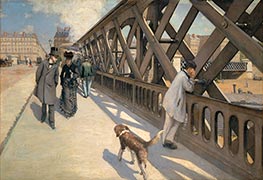
The Pont de Europe 1876
Oil Painting
$1451
$1451
Canvas Print
$67.26
$67.26
SKU: GUC-502
Gustave Caillebotte
Original Size: 124.8 x 180.7 cm
Petit Palais, Paris, France
Gustave Caillebotte
Original Size: 124.8 x 180.7 cm
Petit Palais, Paris, France
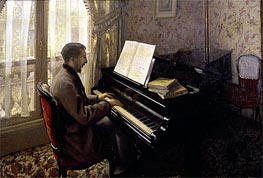
Young Man Playing the Piano 1876
Oil Painting
$1775
$1775
Canvas Print
$67.98
$67.98
SKU: GUC-503
Gustave Caillebotte
Original Size: 80 x 116 cm
Bridgestone Museum of Art, Tokyo, Japan
Gustave Caillebotte
Original Size: 80 x 116 cm
Bridgestone Museum of Art, Tokyo, Japan
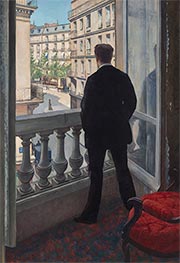
Young Man at His Window 1876
Oil Painting
$1299
$1299
Canvas Print
$67.08
$67.08
SKU: GUC-504
Gustave Caillebotte
Original Size: 116 x 81 cm
Private Collection
Gustave Caillebotte
Original Size: 116 x 81 cm
Private Collection
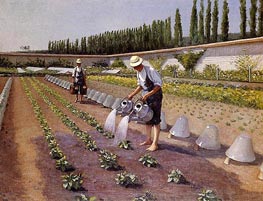
The Gardeners c.1877
Oil Painting
$1260
$1260
Canvas Print
$75.12
$75.12
SKU: GUC-505
Gustave Caillebotte
Original Size: 89.6 x 116.8 cm
Private Collection
Gustave Caillebotte
Original Size: 89.6 x 116.8 cm
Private Collection
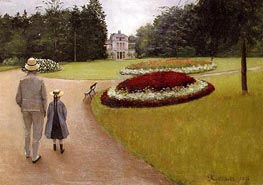
The Park on the Caillebotte Property at Yerres 1875
Oil Painting
$1031
$1031
SKU: GUC-506
Gustave Caillebotte
Original Size: unknown
Private Collection
Gustave Caillebotte
Original Size: unknown
Private Collection
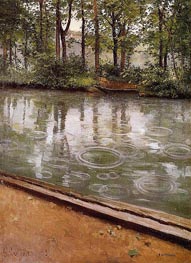
The Yerres, Rain (Riverbank in the Rain) 1875
Oil Painting
$871
$871
SKU: GUC-507
Gustave Caillebotte
Original Size: unknown
Indiana University Art Museum, Bloomington, USA
Gustave Caillebotte
Original Size: unknown
Indiana University Art Museum, Bloomington, USA
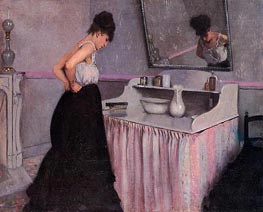
Woman at a Dressing Table c.1873
Oil Painting
$1046
$1046
SKU: GUC-508
Gustave Caillebotte
Original Size: unknown
Private Collection
Gustave Caillebotte
Original Size: unknown
Private Collection
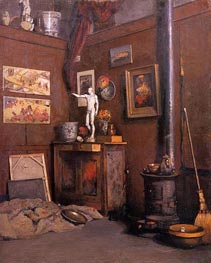
Interior of a Studio with Stove c.1872/74
Oil Painting
$962
$962
SKU: GUC-509
Gustave Caillebotte
Original Size: unknown
Private Collection
Gustave Caillebotte
Original Size: unknown
Private Collection
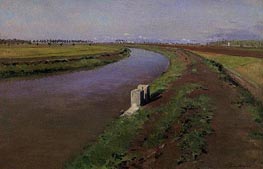
The Banks of a Canal, near Naples c.1872
Oil Painting
$661
$661
Canvas Print
$64.75
$64.75
SKU: GUC-510
Gustave Caillebotte
Original Size: 39.7 x 59.7 cm
Private Collection
Gustave Caillebotte
Original Size: 39.7 x 59.7 cm
Private Collection
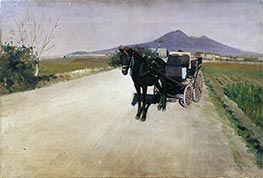
A Road near Naples 1872
Oil Painting
$697
$697
Canvas Print
$66.19
$66.19
SKU: GUC-511
Gustave Caillebotte
Original Size: 40 x 60 cm
Private Collection
Gustave Caillebotte
Original Size: 40 x 60 cm
Private Collection
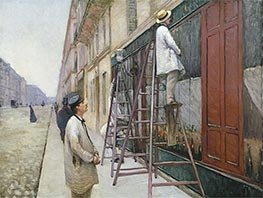
The House Painters 1877
Oil Painting
$1174
$1174
Canvas Print
$73.86
$73.86
SKU: GUC-512
Gustave Caillebotte
Original Size: 87 x 116 cm
Private Collection
Gustave Caillebotte
Original Size: 87 x 116 cm
Private Collection
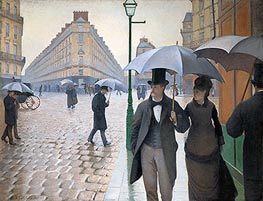
Paris Street; Rainy Weather 1877
Oil Painting
$1855
$1855
Canvas Print
$76.18
$76.18
SKU: GUC-513
Gustave Caillebotte
Original Size: 212.2 x 276.2 cm
Art Institute of Chicago, Illinois, USA
Gustave Caillebotte
Original Size: 212.2 x 276.2 cm
Art Institute of Chicago, Illinois, USA
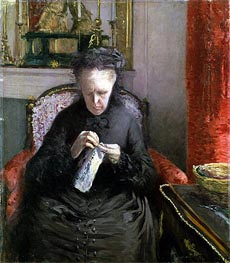
Portrait of Madame Martial Caillebotte 1877
Oil Painting
$1046
$1046
Canvas Print
$105.27
$105.27
SKU: GUC-514
Gustave Caillebotte
Original Size: 83 x 72 cm
Private Collection
Gustave Caillebotte
Original Size: 83 x 72 cm
Private Collection
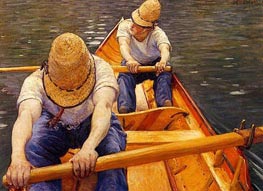
Oarsmen 1877
Oil Painting
$1163
$1163
Canvas Print
$68.15
$68.15
SKU: GUC-515
Gustave Caillebotte
Original Size: unknown
Private Collection
Gustave Caillebotte
Original Size: unknown
Private Collection
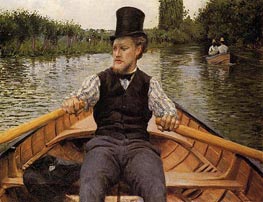
Boating Party 1877
Oil Painting
$1713
$1713
Canvas Print
$75.12
$75.12
SKU: GUC-516
Gustave Caillebotte
Original Size: 89.5 x 116.7 cm
Musee d'Orsay, Paris, France
Gustave Caillebotte
Original Size: 89.5 x 116.7 cm
Musee d'Orsay, Paris, France
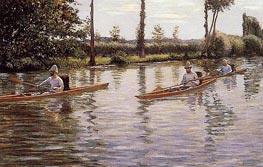
Perissoires 1877
Oil Painting
$1073
$1073
Canvas Print
$64.75
$64.75
SKU: GUC-517
Gustave Caillebotte
Original Size: 103.5 x 156 cm
Milwaukee Art Museum, Wisconsin, USA
Gustave Caillebotte
Original Size: 103.5 x 156 cm
Milwaukee Art Museum, Wisconsin, USA
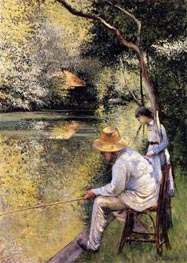
Fishing 1878
Oil Painting
$1103
$1103
Canvas Print
$69.04
$69.04
SKU: GUC-518
Gustave Caillebotte
Original Size: 157 x 113 cm
Private Collection
Gustave Caillebotte
Original Size: 157 x 113 cm
Private Collection
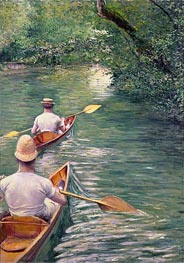
Perissoires (The Canoes) 1878
Oil Painting
$1163
$1163
Canvas Print
$68.15
$68.15
SKU: GUC-519
Gustave Caillebotte
Original Size: 155 x 108.5 cm
Musee des Beaux Arts, Rennes, France
Gustave Caillebotte
Original Size: 155 x 108.5 cm
Musee des Beaux Arts, Rennes, France
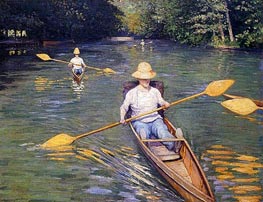
Skiffs 1877
Oil Painting
$960
$960
Canvas Print
$74.93
$74.93
SKU: GUC-520
Gustave Caillebotte
Original Size: 89 x 116.2 cm
National Gallery of Art, Washington, USA
Gustave Caillebotte
Original Size: 89 x 116.2 cm
National Gallery of Art, Washington, USA
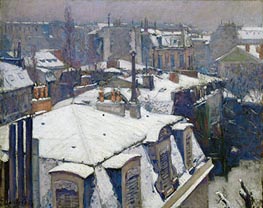
View of Roofs (Snow Effect) 1878
Oil Painting
$1328
$1328
Canvas Print
$77.61
$77.61
SKU: GUC-521
Gustave Caillebotte
Original Size: 64 x 82 cm
Musee d'Orsay, Paris, France
Gustave Caillebotte
Original Size: 64 x 82 cm
Musee d'Orsay, Paris, France