
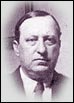
Andre Derain Painting Reproductions 1 of 5
1880-1954
French Fauvist Painter
A strip of the Thames turns to shattered glass under his brush - not because London behaves that way, but because André Derain insists that paint can remake a city in one audacious breath.
André Derain (10 June 1880 - 8 September 1954) was a French painter, sculptor, and printmaker, and - alongside Henri Matisse - a co-founder of Fauvism. Few artists moved so decisively from riotous colour to a disciplined sobriety, and few paid such a public price for choices made in the darkest political light.
Chatou, in the Yvelines just outside Paris, gave him his first geography: water, bridges, a suburban edge where the city loosens its collar. In 1895 he began studying on his own, a stubborn apprenticeship conducted against the easy myth that genius arrives only when a famous hand taps your shoulder. He even went into the countryside with Father Jacomin - an old friend of Cézanne - accompanied by Jacomin’s sons, as if proximity to an older painter’s orbit could be translated into steadier looking.
Engineering, briefly, tried to claim him. In 1898 he studied to be an engineer at the Académie Camillo, yet he also took painting classes under Eugène Carrière. That is where he met Matisse, a meeting that mattered not as a tidy origin story but as a practical alignment - two temperaments testing what colour and form could risk. By 1900, Derain had met Maurice de Vlaminck and shared a studio with him; they painted the neighbourhood around them until ordinary life was interrupted by extraordinary obligation. From September 1901 to 1904, military service at Commercy broke the rhythm, a long parenthesis in which the hand is trained for one kind of discipline while the eye longs for another.
Released, he did not slide back into engineering. Matisse persuaded Derain’s parents to let their son abandon that career and devote himself to painting, and Derain enrolled at the Académie Julian. It is easy to romanticise such a decision; harder, and more accurate, to notice its practical courage. Paris offered instruction, rivalry, and the daily proof that modern painting was not a private hobby but a public argument.
Then came Collioure. In the summer of 1905, Derain worked with Matisse in that Mediterranean village and produced Mountains at Collioure, a canvas in which landscape becomes a theatre for pigment. Colour does not describe - it declares. Later that year, they exhibited at the Salon d’Automne, and the critic Louis Vauxcelles, seeing the vivid, unnatural palette, called them les Fauves - the wild beasts. The label stuck because it was both insult and diagnosis: these paintings refused polite transition, refused the soft persuasion of half-tones. One of Derain’s emblematic works from that moment, Le séchage des voiles (The Drying Sails), 1905 (Pushkin Museum, Moscow), was shown at that 1905 Salon d’Automne - a public stage for private daring.
A year later, the argument travelled. In March 1906 Ambroise Vollard sent Derain to London to paint the city, and he produced a series of thirty paintings - twenty-nine still extant - that answered London with bold composition and shockingly fresh chromatic choices. Tower Bridge and the Thames appear again and again, not as postcards but as structures through which light is fractured. Some views rely on a Pointillist touch - not the tiny, doctrinaire dots of Neo-Impressionism, but enlarged marks that behave more like Divisionism, separating colours so that water seems to shimmer and break apart in sunlight. London, so often painted as atmosphere, becomes in Derain’s hands a problem of colour intervals and moving reflections - a city rebuilt as a sequence of painted decisions.
In 1907 Daniel-Henry Kahnweiler purchased Derain’s entire studio, granting him financial stability - and, with it, the freedom to shift. Derain experimented with stone sculpture and moved to Montmartre, nearer to Pablo Picasso and the tight, combustible circles of Parisian modernism. Fernande Olivier, Picasso’s mistress at the time, left a vivid portrait of Derain as slim, elegant, impeccably styled, pipe in mouth - phlegmatic, mocking, cold, an arguer. The description is revealing: it suggests a man who wanted control, even when his canvases looked feral.
Around Montmartre, the palette cooled. Muted tones began to replace the Fauve blaze, and the influence of Cubism and Cézanne pressed in, not as imitation but as a tightening of structure. Gertrude Stein even proposed that Derain may have encountered African sculpture before Picasso - a reminder that modernism’s genealogies are rarely as neat as later legend pretends. He supplied primitivist woodcuts for Guillaume Apollinaire’s first prose book, L’enchanteur pourrissant (1909), and illustrated a collection of poems by Max Jacob in 1912. Printmaking, with its necessary economy, suited this period: line becomes a kind of moral choice.
Exhibitions confirmed that Derain was no provincial phenomenon. He showed work with the Neue Künstlervereinigung in Munich in 1910, then with the secessionist Der Blaue Reiter in 1912, and in 1913 at the Armory Show in New York - the great American introduction to the European avant-garde. Yet even as his reputation travelled, his own painting turned inward, towards an older conversation. From roughly 1911 to 1914 - sometimes called his gothic period - colour receded and forms grew austere under the pressure of his study of Cézanne and the old masters. Depth and volume were rebuilt with restraint, as if he were testing whether modern painting could be severe without becoming merely academic.
War returned and with it another interruption. Mobilised in 1914, Derain had little time for painting until his release in 1919. Still, even in 1916, he produced illustrations for André Breton’s first book, Mont de Piete - a small signal that the younger generation was watching him, even as Surrealism had not yet taken its name.
After the First World War, Derain emerged as a prominent figure in the Return to Order, the new classicism that swept through the arts. This is not the story of a man “settling down” so much as a man deciding that tradition could be an instrument, not a prison. In 1919 he designed the ballet La Boutique fantasque for Serge Diaghilev and the Ballets Russes, a major success that led to further ballet designs. Stage design demanded clarity, silhouette, and rhythm - qualities that also haunt his painting of this period, where structure is prized and colour obeys.
The 1920s brought public reward. In 1928 he received the Carnegie Prize for Still-life with Dead Game, and he exhibited widely abroad - in London, Berlin, Frankfurt, Düsseldorf, New York City, and Cincinnati. Recognition, however, does not settle a style. Perhaps the very acclaim sharpened his need to argue with himself: how to remain modern without repeating modernism’s loudest gestures, how to be classical without borrowing another century’s voice.
Then comes the episode that still chills his legacy. During the German occupation of France in the Second World War, Derain lived mainly in Paris and was courted by the Germans as a symbol of French cultural prestige. In 1941 he accepted an invitation to make an official visit to Germany and travelled to Berlin with other French artists to attend a Nazi exhibition featuring the officially endorsed sculptor Arno Breker. His presence was used for propaganda; after the Liberation, he was branded a collaborator and ostracised by many who had once defended him. Here the biography resists consolation. One can map influences and exhibitions; it is harder to map judgement. Still, the record remains: a public artist became a public instrument, and the aftermath was permanent.
In his last year he suffered an eye infection from which he never fully recovered - a cruel fate for someone who had wagered so much on seeing. He died in Garches, Hauts-de-Seine, in 1954, struck by a moving vehicle. Later reassessments continued to shape how his work is encountered: the Courtauld Institute mounted a major exhibition of the London paintings from 27 October 2005 to 22 January 2006, and in 2023 the Metropolitan Museum of Art and the Museum of Fine Arts, Houston, co-organised Vertigo of Color: Matisse, Derain, and the Origins of Fauvism, returning his Collioure collaboration with Matisse to centre stage. As of 2025, his work entered the public domain in the United States, altering access, reproduction, and the practical life of his images.
What remains, after the labels and the scandals, is a body of work that refuses a single temperature. The 1905-1906 canvases still startle with their refusal to behave; the later paintings insist on the dignity of structure. Derain’s career makes a viewer uneasy in a useful way. It asks whether an artist’s changes are betrayals or necessities, whether discipline is retreat or refinement. And it leaves one quiet, lingering thought: perhaps the same argumentative clarity that made him a fierce painter also made him vulnerable to the worst kind of political misreading - of himself, and by others. Today, when style is often confused with identity, André Derain still offers a harder lesson - that painting can change its mind, and that history rarely forgives the moments when an artist stops questioning the world that frames his work.
André Derain (10 June 1880 - 8 September 1954) was a French painter, sculptor, and printmaker, and - alongside Henri Matisse - a co-founder of Fauvism. Few artists moved so decisively from riotous colour to a disciplined sobriety, and few paid such a public price for choices made in the darkest political light.
Chatou, in the Yvelines just outside Paris, gave him his first geography: water, bridges, a suburban edge where the city loosens its collar. In 1895 he began studying on his own, a stubborn apprenticeship conducted against the easy myth that genius arrives only when a famous hand taps your shoulder. He even went into the countryside with Father Jacomin - an old friend of Cézanne - accompanied by Jacomin’s sons, as if proximity to an older painter’s orbit could be translated into steadier looking.
Engineering, briefly, tried to claim him. In 1898 he studied to be an engineer at the Académie Camillo, yet he also took painting classes under Eugène Carrière. That is where he met Matisse, a meeting that mattered not as a tidy origin story but as a practical alignment - two temperaments testing what colour and form could risk. By 1900, Derain had met Maurice de Vlaminck and shared a studio with him; they painted the neighbourhood around them until ordinary life was interrupted by extraordinary obligation. From September 1901 to 1904, military service at Commercy broke the rhythm, a long parenthesis in which the hand is trained for one kind of discipline while the eye longs for another.
Released, he did not slide back into engineering. Matisse persuaded Derain’s parents to let their son abandon that career and devote himself to painting, and Derain enrolled at the Académie Julian. It is easy to romanticise such a decision; harder, and more accurate, to notice its practical courage. Paris offered instruction, rivalry, and the daily proof that modern painting was not a private hobby but a public argument.
Then came Collioure. In the summer of 1905, Derain worked with Matisse in that Mediterranean village and produced Mountains at Collioure, a canvas in which landscape becomes a theatre for pigment. Colour does not describe - it declares. Later that year, they exhibited at the Salon d’Automne, and the critic Louis Vauxcelles, seeing the vivid, unnatural palette, called them les Fauves - the wild beasts. The label stuck because it was both insult and diagnosis: these paintings refused polite transition, refused the soft persuasion of half-tones. One of Derain’s emblematic works from that moment, Le séchage des voiles (The Drying Sails), 1905 (Pushkin Museum, Moscow), was shown at that 1905 Salon d’Automne - a public stage for private daring.
A year later, the argument travelled. In March 1906 Ambroise Vollard sent Derain to London to paint the city, and he produced a series of thirty paintings - twenty-nine still extant - that answered London with bold composition and shockingly fresh chromatic choices. Tower Bridge and the Thames appear again and again, not as postcards but as structures through which light is fractured. Some views rely on a Pointillist touch - not the tiny, doctrinaire dots of Neo-Impressionism, but enlarged marks that behave more like Divisionism, separating colours so that water seems to shimmer and break apart in sunlight. London, so often painted as atmosphere, becomes in Derain’s hands a problem of colour intervals and moving reflections - a city rebuilt as a sequence of painted decisions.
In 1907 Daniel-Henry Kahnweiler purchased Derain’s entire studio, granting him financial stability - and, with it, the freedom to shift. Derain experimented with stone sculpture and moved to Montmartre, nearer to Pablo Picasso and the tight, combustible circles of Parisian modernism. Fernande Olivier, Picasso’s mistress at the time, left a vivid portrait of Derain as slim, elegant, impeccably styled, pipe in mouth - phlegmatic, mocking, cold, an arguer. The description is revealing: it suggests a man who wanted control, even when his canvases looked feral.
Around Montmartre, the palette cooled. Muted tones began to replace the Fauve blaze, and the influence of Cubism and Cézanne pressed in, not as imitation but as a tightening of structure. Gertrude Stein even proposed that Derain may have encountered African sculpture before Picasso - a reminder that modernism’s genealogies are rarely as neat as later legend pretends. He supplied primitivist woodcuts for Guillaume Apollinaire’s first prose book, L’enchanteur pourrissant (1909), and illustrated a collection of poems by Max Jacob in 1912. Printmaking, with its necessary economy, suited this period: line becomes a kind of moral choice.
Exhibitions confirmed that Derain was no provincial phenomenon. He showed work with the Neue Künstlervereinigung in Munich in 1910, then with the secessionist Der Blaue Reiter in 1912, and in 1913 at the Armory Show in New York - the great American introduction to the European avant-garde. Yet even as his reputation travelled, his own painting turned inward, towards an older conversation. From roughly 1911 to 1914 - sometimes called his gothic period - colour receded and forms grew austere under the pressure of his study of Cézanne and the old masters. Depth and volume were rebuilt with restraint, as if he were testing whether modern painting could be severe without becoming merely academic.
War returned and with it another interruption. Mobilised in 1914, Derain had little time for painting until his release in 1919. Still, even in 1916, he produced illustrations for André Breton’s first book, Mont de Piete - a small signal that the younger generation was watching him, even as Surrealism had not yet taken its name.
After the First World War, Derain emerged as a prominent figure in the Return to Order, the new classicism that swept through the arts. This is not the story of a man “settling down” so much as a man deciding that tradition could be an instrument, not a prison. In 1919 he designed the ballet La Boutique fantasque for Serge Diaghilev and the Ballets Russes, a major success that led to further ballet designs. Stage design demanded clarity, silhouette, and rhythm - qualities that also haunt his painting of this period, where structure is prized and colour obeys.
The 1920s brought public reward. In 1928 he received the Carnegie Prize for Still-life with Dead Game, and he exhibited widely abroad - in London, Berlin, Frankfurt, Düsseldorf, New York City, and Cincinnati. Recognition, however, does not settle a style. Perhaps the very acclaim sharpened his need to argue with himself: how to remain modern without repeating modernism’s loudest gestures, how to be classical without borrowing another century’s voice.
Then comes the episode that still chills his legacy. During the German occupation of France in the Second World War, Derain lived mainly in Paris and was courted by the Germans as a symbol of French cultural prestige. In 1941 he accepted an invitation to make an official visit to Germany and travelled to Berlin with other French artists to attend a Nazi exhibition featuring the officially endorsed sculptor Arno Breker. His presence was used for propaganda; after the Liberation, he was branded a collaborator and ostracised by many who had once defended him. Here the biography resists consolation. One can map influences and exhibitions; it is harder to map judgement. Still, the record remains: a public artist became a public instrument, and the aftermath was permanent.
In his last year he suffered an eye infection from which he never fully recovered - a cruel fate for someone who had wagered so much on seeing. He died in Garches, Hauts-de-Seine, in 1954, struck by a moving vehicle. Later reassessments continued to shape how his work is encountered: the Courtauld Institute mounted a major exhibition of the London paintings from 27 October 2005 to 22 January 2006, and in 2023 the Metropolitan Museum of Art and the Museum of Fine Arts, Houston, co-organised Vertigo of Color: Matisse, Derain, and the Origins of Fauvism, returning his Collioure collaboration with Matisse to centre stage. As of 2025, his work entered the public domain in the United States, altering access, reproduction, and the practical life of his images.
What remains, after the labels and the scandals, is a body of work that refuses a single temperature. The 1905-1906 canvases still startle with their refusal to behave; the later paintings insist on the dignity of structure. Derain’s career makes a viewer uneasy in a useful way. It asks whether an artist’s changes are betrayals or necessities, whether discipline is retreat or refinement. And it leaves one quiet, lingering thought: perhaps the same argumentative clarity that made him a fierce painter also made him vulnerable to the worst kind of political misreading - of himself, and by others. Today, when style is often confused with identity, André Derain still offers a harder lesson - that painting can change its mind, and that history rarely forgives the moments when an artist stops questioning the world that frames his work.
104 André Derain Paintings
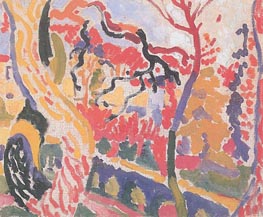
Landscape at Collioure Summer 190
Oil Painting
$234
$234
SKU: DER-3856
Andre Derain
Original Size: unknown
Joanne & Ira Kirshbaum Collection, Los Angeles, USA
Andre Derain
Original Size: unknown
Joanne & Ira Kirshbaum Collection, Los Angeles, USA
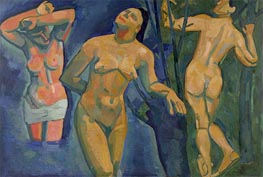
Bathers 1907
Oil Painting
$829
$829
Canvas Print
$63.81
$63.81
SKU: DER-16880
Andre Derain
Original Size: 132 x 195 cm
Museum of Modern Art, New York, USA
Andre Derain
Original Size: 132 x 195 cm
Museum of Modern Art, New York, USA
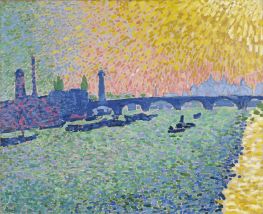
Waterloo Bridge 1906
Oil Painting
$1443
$1443
Canvas Print
$77.93
$77.93
SKU: DER-16996
Andre Derain
Original Size: 80.5 x 101 cm
Thyssen-Bornemisza Museum, Madrid, Spain
Andre Derain
Original Size: 80.5 x 101 cm
Thyssen-Bornemisza Museum, Madrid, Spain
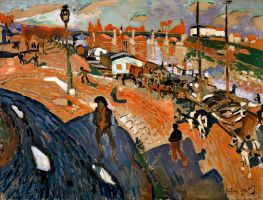
The Bridge at Le Pecq c.1904/05
Oil Painting
$1089
$1089
Canvas Print
$73.05
$73.05
SKU: DER-19703
Andre Derain
Original Size: 88.3 x 115.6 cm
Cincinnati Art Museum, Ohio, USA
Andre Derain
Original Size: 88.3 x 115.6 cm
Cincinnati Art Museum, Ohio, USA
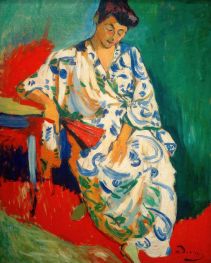
Woman with Shawl, Madame Matisse with Kimono 1905
Oil Painting
$1007
$1007
Canvas Print
$77.06
$77.06
SKU: DER-19939
Andre Derain
Original Size: 80.5 x 65 cm
Private Collection
Andre Derain
Original Size: 80.5 x 65 cm
Private Collection
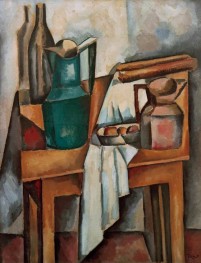
Still Life on the Table 1910
Oil Painting
$1326
$1326
Canvas Print
$73.40
$73.40
SKU: DER-20765
Andre Derain
Original Size: 92 x 71.5 cm
Musée d'Art Moderne, Paris, France
Andre Derain
Original Size: 92 x 71.5 cm
Musée d'Art Moderne, Paris, France
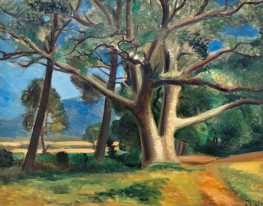
The Large Tree c.1929/30
Oil Painting
$1607
$1607
Canvas Print
$75.49
$75.49
SKU: DER-20766
Andre Derain
Original Size: 73 x 92 cm
Musee de l'Orangerie, Paris, France
Andre Derain
Original Size: 73 x 92 cm
Musee de l'Orangerie, Paris, France
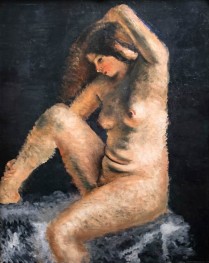
The Beautiful Model 1923
Oil Painting
$1453
$1453
Canvas Print
$76.36
$76.36
SKU: DER-20767
Andre Derain
Original Size: 115 x 90 cm
Musee de l'Orangerie, Paris, France
Andre Derain
Original Size: 115 x 90 cm
Musee de l'Orangerie, Paris, France
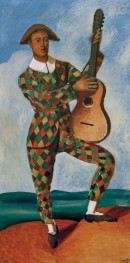
Harlequin with Guitar 1924
Oil Painting
$1463
$1463
Canvas Print
$63.27
$63.27
SKU: DER-20768
Andre Derain
Original Size: 190 x 97 cm
Musee de l'Orangerie, Paris, France
Andre Derain
Original Size: 190 x 97 cm
Musee de l'Orangerie, Paris, France
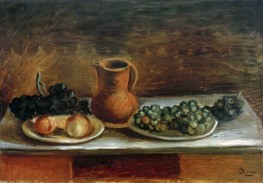
Still Life with Grapes n.d.
Oil Painting
$1203
$1203
Canvas Print
$66.94
$66.94
SKU: DER-20769
Andre Derain
Original Size: 46 x 65 cm
Private Collection
Andre Derain
Original Size: 46 x 65 cm
Private Collection
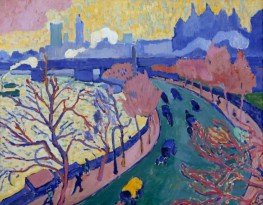
Charing Cross Bridge in London 1906
Oil Painting
$1727
$1727
Canvas Print
$75.14
$75.14
SKU: DER-20770
Andre Derain
Original Size: 81 x 100 cm
Musee d'Orsay, Paris, France
Andre Derain
Original Size: 81 x 100 cm
Musee d'Orsay, Paris, France
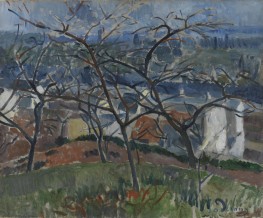
Landscape around Chatou c.1904/05
Oil Painting
$1274
$1274
Canvas Print
$79.50
$79.50
SKU: DER-20771
Andre Derain
Original Size: 54.2 x 65.2 cm
Thyssen-Bornemisza Museum, Madrid, Spain
Andre Derain
Original Size: 54.2 x 65.2 cm
Thyssen-Bornemisza Museum, Madrid, Spain
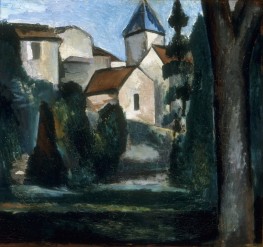
The Church of Chatou 1909
Oil Painting
$897
$897
Canvas Print
$63.27
$63.27
SKU: DER-20772
Andre Derain
Original Size: 33 x 35 cm
Thyssen-Bornemisza Museum, Madrid, Spain
Andre Derain
Original Size: 33 x 35 cm
Thyssen-Bornemisza Museum, Madrid, Spain
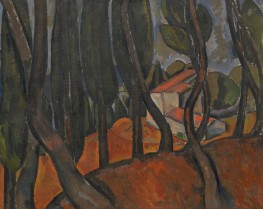
Forest at Martigues 1908
Oil Painting
$1730
$1730
Canvas Print
$76.36
$76.36
SKU: DER-20773
Andre Derain
Original Size: 81.3 x 100.3 cm
Art Institute of Chicago, Illinois, USA
Andre Derain
Original Size: 81.3 x 100.3 cm
Art Institute of Chicago, Illinois, USA
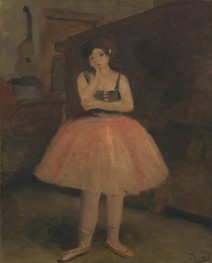
Ballet Dancer 1920s
Oil Painting
$1002
$1002
Canvas Print
$63.27
$63.27
SKU: DER-20774
Andre Derain
Original Size: 45.6 x 37 cm
Art Institute of Chicago, Illinois, USA
Andre Derain
Original Size: 45.6 x 37 cm
Art Institute of Chicago, Illinois, USA
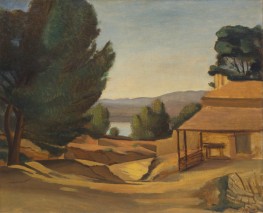
Landscape c.1920/25
Oil Painting
$1353
$1353
Canvas Print
$77.76
$77.76
SKU: DER-20775
Andre Derain
Original Size: 58.8 x 71.4 cm
Art Institute of Chicago, Illinois, USA
Andre Derain
Original Size: 58.8 x 71.4 cm
Art Institute of Chicago, Illinois, USA
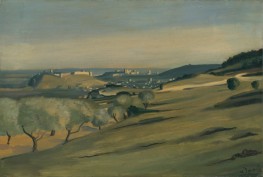
Landscape in Provence c.1930
Oil Painting
$1069
$1069
Canvas Print
$65.90
$65.90
SKU: DER-20776
Andre Derain
Original Size: 37.8 x 55 cm
Art Institute of Chicago, Illinois, USA
Andre Derain
Original Size: 37.8 x 55 cm
Art Institute of Chicago, Illinois, USA
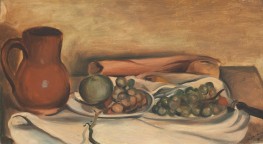
Grapes 1920s
Oil Painting
$885
$885
Canvas Print
$63.27
$63.27
SKU: DER-20777
Andre Derain
Original Size: 25 x 44 cm
Art Institute of Chicago, Illinois, USA
Andre Derain
Original Size: 25 x 44 cm
Art Institute of Chicago, Illinois, USA
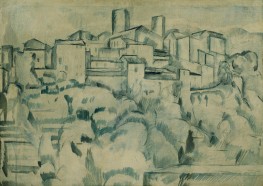
Cagnes 1910
Oil Painting
$1220
$1220
Canvas Print
$67.99
$67.99
SKU: DER-20778
Andre Derain
Original Size: 54.8 x 76.4 cm
Art Institute of Chicago, Illinois, USA
Andre Derain
Original Size: 54.8 x 76.4 cm
Art Institute of Chicago, Illinois, USA
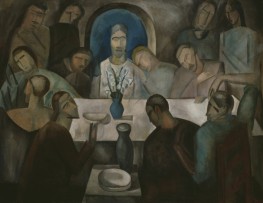
The Last Supper 1911
Oil Painting
$2115
$2115
Canvas Print
$74.44
$74.44
SKU: DER-20779
Andre Derain
Original Size: 227.4 x 288.3 cm
Art Institute of Chicago, Illinois, USA
Andre Derain
Original Size: 227.4 x 288.3 cm
Art Institute of Chicago, Illinois, USA
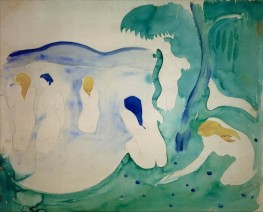
Bathers c.1906/07
Paper Art Print
$68.40
$68.40
SKU: DER-20780
Andre Derain
Original Size: 43 x 53 cm
Musee des Beaux-Arts et d'Archeologie, Troyes, France
Andre Derain
Original Size: 43 x 53 cm
Musee des Beaux-Arts et d'Archeologie, Troyes, France
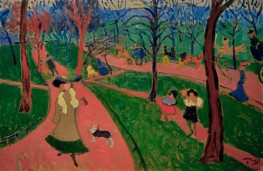
Hyde Park c.1906/07
Oil Painting
$1589
$1589
Canvas Print
$63.27
$63.27
SKU: DER-20781
Andre Derain
Original Size: 66 x 99 cm
Musee des Beaux-Arts et d'Archeologie, Troyes, France
Andre Derain
Original Size: 66 x 99 cm
Musee des Beaux-Arts et d'Archeologie, Troyes, France
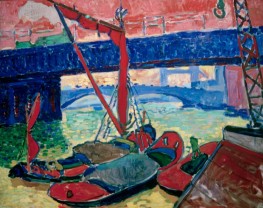
Boats on the Thames (Southwark Bridge) 1907
Oil Painting
$1221
$1221
Canvas Print
$75.84
$75.84
SKU: DER-20782
Andre Derain
Original Size: 81.3 x 99 cm
City Art Gallery, Leeds, UK
Andre Derain
Original Size: 81.3 x 99 cm
City Art Gallery, Leeds, UK
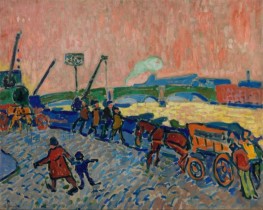
The Thames Embankments c.1906/07
Oil Painting
$1332
$1332
Canvas Print
$76.88
$76.88
SKU: DER-20783
Andre Derain
Original Size: 81 x 100 cm
Centre Georges Pompidou, Paris, France
Andre Derain
Original Size: 81 x 100 cm
Centre Georges Pompidou, Paris, France