Painting Reproductions of Animals - Page 10
Animal painting is a genre in which animals are the principal subjects, portrayed for their appearance, movement, behavior, or expressive presence, either individually or within a wider setting. It includes portraits of horses and pets, pastoral scenes with livestock, hunting pictures, and representations of wildlife. These subjects connect the genre with landscape, everyday life, and the history of relationships between people and other living creatures.
A convincing animal depends on the relationship between structure and surface. The placement of feet, the angle of a shoulder, and the distribution of weight establish how a body stands or moves. Fur, feathers, and smooth hide require different rhythms of brushwork, but each must follow the underlying form. Since animals rarely maintain a chosen pose, painters have relied on repeated observation, sketches, anatomical study, and the combination of separate impressions. An apparently spontaneous movement may therefore result from a carefully constructed composition.
Animal subjects developed within different artistic traditions. In Tang-dynasty China, Han Gan became celebrated for horse painting during the eighth century, giving particular attention to the individuality and vitality of his subjects. Chinese bird-and-flower painting also established close relationships between animals, vegetation, and seasonal change. Within these traditions, observation could work alongside symbolic meaning and expressive brushwork. The balance of a bird on a branch, the turn of its head, or the curve of a horse's neck offered opportunities to convey life through the movement of a line.
In European Renaissance art, Albrecht Dürer demonstrated the pictorial possibilities of sustained attention to an individual creature. His “Young Hare” of 1502, in the Albertina in Vienna, combines watercolor and bodycolor on paper. Fine strokes describe the changing direction and texture of the fur, while broader tonal relationships establish the compact weight of the crouching animal. The ears, alert eye, and shadow beneath the body contribute to its presence. The surrounding space allows these small differences of texture and posture to become the main events of the image.
During the seventeenth century, animal painting became a prominent specialty in the Dutch Republic and Flanders. Frans Snyders and Jan Fyt developed ambitious compositions involving hunting, animals in conflict, and game. Snyders also collaborated with Peter Paul Rubens, contributing animals to works that drew on the skills of several specialists. In hunting scenes, intersecting diagonals and compressed groups could organize pursuit and resistance into a forceful pictorial rhythm. Pictures of dead game connected animal subjects with still life, where feathers, fur, and the arrangement of bodies carried much of the visual interest.
Paulus Potter gave livestock remarkable prominence in “The Bull” of 1647, now in the Mauritshuis in The Hague. The large canvas places the standing animal within a rural setting shared with a farmer, a cow, and sheep. Its broad body and turned head establish a commanding presence, while smaller details encourage close inspection. Light across the coat, the texture of the ground, and the open sky connect the animal to its surroundings. The scale changes the encounter: a familiar farm animal occupies the viewer's attention with the visual authority of a monumental subject.
Eighteenth-century patronage encouraged portraits of prized animals. In France, Alexandre-François Desportes and Jean-Baptiste Oudry painted animals associated with royal hunting and court life. In Britain, George Stubbs brought extensive anatomical knowledge to equine painting. His “Whistlejacket,” painted around 1762 and held in London's National Gallery, presents a rearing horse against a plain background. The lifted forelegs, arched neck, and sweep of the tail give the figure an expansive rhythm. With the setting reduced to a neutral field, the relationships between silhouette, muscle, and light become especially clear. The portrait preserves the recognizable features of a particular horse within an exceptionally concentrated composition.
Nineteenth-century painters explored the emotional and dramatic possibilities of animal subjects. Edwin Landseer made posture and gesture central to pictures that invited viewers to recognize loyalty, grief, or vigilance in animals. Such readings belong partly to the human stories constructed around them. Eugène Delacroix approached lions and tigers through muscular tension, twisting movement, and energetic color. His animal imagery allowed concentrated encounters between powerful bodies. These approaches gave animal painting a range extending from domestic intimacy to the restless energy associated with Romantic visions of nature.
Rosa Bonheur's “The Horse Fair,” painted in 1852-1855 and held in the Metropolitan Museum of Art in New York, brought animal painting to the scale of a major public spectacle. Repeated sketching visits to a Paris horse market supplied material for the work. Across the broad canvas, handlers and horses move in a sweeping procession, with changes of direction creating alternating passages of resistance and momentum. Raised heads, planted hooves, and turning bodies distinguish individual actions within the group. The carefully organized movement gives the animals physical force while keeping the entire scene legible.
Later in the nineteenth century, the Swedish painter Bruno Liljefors developed a close connection between wildlife and habitat. His birds, foxes, and hares inhabit landscapes whose grasses, branches, snow, and water actively shape what can be seen. Camouflage makes the discovery of an animal part of the experience of looking. A patterned coat may almost disappear into vegetation, while a sudden change of direction reveals a moving body. Such painting asks the viewer to attend to the whole environment, including the relationships between shelter, visibility, pursuit, and escape.
In the early twentieth century, Franz Marc used animals to explore expressive color and a spiritual understanding of nature. His “Yellow Cow” of 1911, in the Solomon R. Guggenheim Museum in New York, transforms a familiar animal through brilliant color and a buoyant leap. The curve of the back, the thrust of the legs, and the colored shapes of the landscape create a continuous rhythm across the canvas. The cow remains recognizable as its body becomes part of a larger arrangement of lines and planes. Color conveys an imagined quality of life and energy, extending the genre's possibilities beyond the description of outward appearance.
page 10 of 146
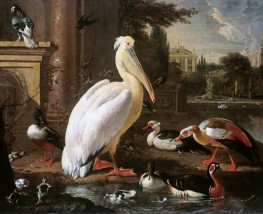
Pelican and Other Waterfowl in a Park n.d.
Melchior d'HondecoeterOil Painting
$7718
$7718
Canvas Print
$75.40
$75.40
SKU: DHM-22281
Melchior d'Hondecoeter
Original Size: 132 x 161.5 cm
Gemäldegalerie, Berlin, Germany
Melchior d'Hondecoeter
Original Size: 132 x 161.5 cm
Gemäldegalerie, Berlin, Germany
SKU: DHM-22280
Melchior d'Hondecoeter
Original Size: 148.2 x 170.3 cm
National Gallery of Victoria, Melbourne, Australia
Melchior d'Hondecoeter
Original Size: 148.2 x 170.3 cm
National Gallery of Victoria, Melbourne, Australia
SKU: DHM-22279
Melchior d'Hondecoeter
Original Size: 101.5 x 130 cm
National Gallery of Ireland, Dublin
Melchior d'Hondecoeter
Original Size: 101.5 x 130 cm
National Gallery of Ireland, Dublin
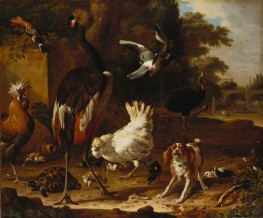
Birds and a Spaniel in a Garden c.1660/95
Melchior d'HondecoeterOil Painting
$7790
$7790
Canvas Print
$76.56
$76.56
SKU: DHM-22278
Melchior d'Hondecoeter
Original Size: 127.6 x 152.4 cm
The Royal Collection, London, UK
Melchior d'Hondecoeter
Original Size: 127.6 x 152.4 cm
The Royal Collection, London, UK
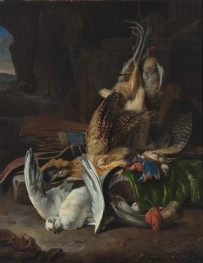
Dead Birds and Hunting Appurtenances 1665
Melchior d'HondecoeterOil Painting
$7611
$7611
Canvas Print
$71.37
$71.37
SKU: DHM-22277
Melchior d'Hondecoeter
Original Size: 104.2 x 82.2 cm
Museum Boijmans Van Beuningen, Rotterdam, Netherlands
Melchior d'Hondecoeter
Original Size: 104.2 x 82.2 cm
Museum Boijmans Van Beuningen, Rotterdam, Netherlands
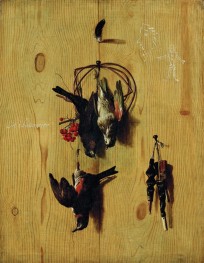
Trompe-l'oeil with Redwings and a Fieldfare c.1660/70
Melchior d'HondecoeterOil Painting
$5349
$5349
Canvas Print
$71.88
$71.88
SKU: DHM-22276
Melchior d'Hondecoeter
Original Size: 84 x 66 cm
Suermondt-Ludwig-Museum, Aachen, Germany
Melchior d'Hondecoeter
Original Size: 84 x 66 cm
Suermondt-Ludwig-Museum, Aachen, Germany
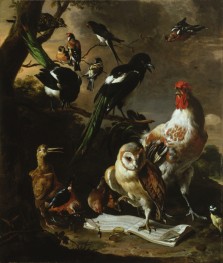
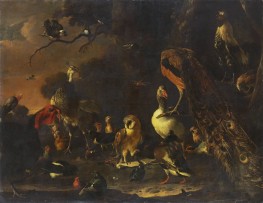
SKU: DHM-22274
Melchior d'Hondecoeter
Original Size: 150.5 x 193 cm
Gemäldegalerie Alte Meister, Kassel, Germany
Melchior d'Hondecoeter
Original Size: 150.5 x 193 cm
Gemäldegalerie Alte Meister, Kassel, Germany
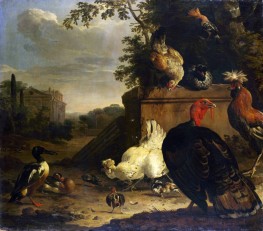
SKU: DHM-22273
Melchior d'Hondecoeter
Original Size: 140 x 155.5 cm
Gemäldegalerie Alte Meister, Kassel, Germany
Melchior d'Hondecoeter
Original Size: 140 x 155.5 cm
Gemäldegalerie Alte Meister, Kassel, Germany
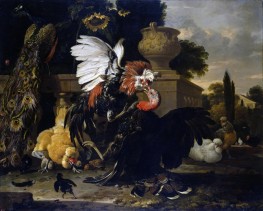
Fight Between a Rooster and a Turkey 1668
Melchior d'HondecoeterOil Painting
$7674
$7674
Canvas Print
$74.22
$74.22
SKU: DHM-22272
Melchior d'Hondecoeter
Original Size: 128.5 x 159.5 cm
Gemäldegalerie Alte Meister, Kassel, Germany
Melchior d'Hondecoeter
Original Size: 128.5 x 159.5 cm
Gemäldegalerie Alte Meister, Kassel, Germany
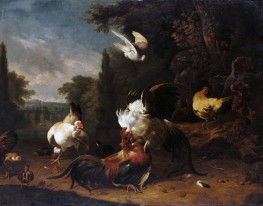
SKU: DHM-22271
Melchior d'Hondecoeter
Original Size: 155 x 197 cm
Gemäldegalerie Alte Meister, Kassel, Germany
Melchior d'Hondecoeter
Original Size: 155 x 197 cm
Gemäldegalerie Alte Meister, Kassel, Germany
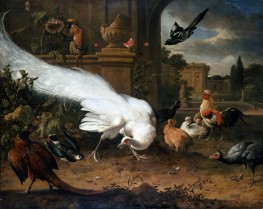
SKU: DHM-22270
Melchior d'Hondecoeter
Original Size: 144 x 180.5 cm
Gemäldegalerie Alte Meister, Kassel, Germany
Melchior d'Hondecoeter
Original Size: 144 x 180.5 cm
Gemäldegalerie Alte Meister, Kassel, Germany
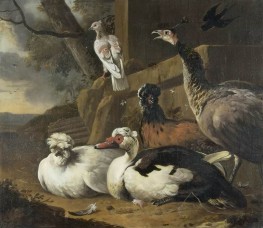
SKU: DHM-22269
Melchior d'Hondecoeter
Original Size: 86.4 x 99.1 cm
Bowdoin College Museum of Art, Brunswick, USA
Melchior d'Hondecoeter
Original Size: 86.4 x 99.1 cm
Bowdoin College Museum of Art, Brunswick, USA
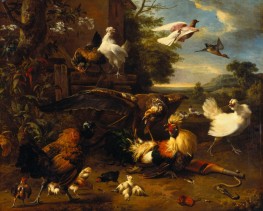
The Marsh Harrier in the Poultry-Yard c.1636/95
Melchior d'HondecoeterOil Painting
$7740
$7740
Canvas Print
$74.22
$74.22
SKU: DHM-22268
Melchior d'Hondecoeter
Original Size: 136 x 165 cm
Public Collection
Melchior d'Hondecoeter
Original Size: 136 x 165 cm
Public Collection
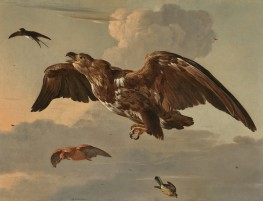
An Eagle, a Swallow, a Snipe and a Finch in Flight c.1650/60
Melchior d'HondecoeterOil Painting
$7541
$7541
Canvas Print
$70.54
$70.54
SKU: DHM-22267
Melchior d'Hondecoeter
Original Size: 111.2 x 144.3 cm
The Kremer Collection, Amsterdam, Netherlands
Melchior d'Hondecoeter
Original Size: 111.2 x 144.3 cm
The Kremer Collection, Amsterdam, Netherlands
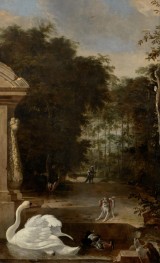
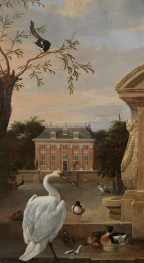
Bird Park with View of the Country Estate Driemond c.1671/80
Melchior d'HondecoeterOil Painting
$6671
$6671
Canvas Print
$60.80
$60.80
SKU: DHM-22265
Melchior d'Hondecoeter
Original Size: 338.5 x 188.4 cm
Alte Pinakothek, Munich, Germany
Melchior d'Hondecoeter
Original Size: 338.5 x 188.4 cm
Alte Pinakothek, Munich, Germany
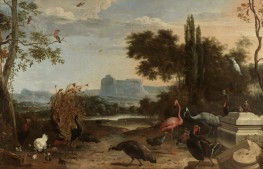
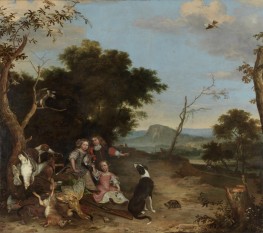
Portrait of Three Children in a Landscape with ... 1670
Melchior d'HondecoeterOil Painting
$7958
$7958
Canvas Print
$81.76
$81.76
SKU: DHM-22263
Melchior d'Hondecoeter
Original Size: 341.5 x 386 cm
Alte Pinakothek, Munich, Germany
Melchior d'Hondecoeter
Original Size: 341.5 x 386 cm
Alte Pinakothek, Munich, Germany
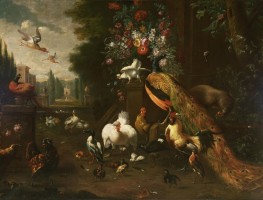
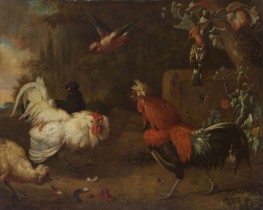
SKU: DHM-22261
Melchior d'Hondecoeter
Original Size: 106.7 x 130.8 cm
Philadelphia Museum of Art, USA
Melchior d'Hondecoeter
Original Size: 106.7 x 130.8 cm
Philadelphia Museum of Art, USA
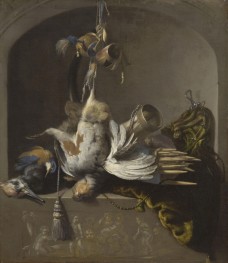
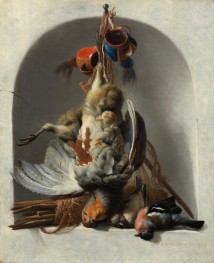
Still Life with Birds and Hunting Gear in a Niche 1663
Melchior d'HondecoeterOil Painting
$5064
$5064
Canvas Print
$75.22
$75.22
SKU: DHM-22259
Melchior d'Hondecoeter
Original Size: 56 x 46 cm
Nationalmuseum, Stockholm, Sweden
Melchior d'Hondecoeter
Original Size: 56 x 46 cm
Nationalmuseum, Stockholm, Sweden