

Albrecht Dürer Painting Reproductions 1 of 4
1471-1528
German Painter - Northern Renaissance
Albrecht Dürer (1471-1528) was a German Renaissance painter, printmaker, and theorist whose work joined close observation of nature with a sustained investigation of human proportion. His woodcuts and engravings brought him an international audience, while his portraits gave unusual prominence to the artist’s own appearance and status. He grew up in Nuremberg, a prosperous center of craftsmanship and printing. His father, a goldsmith from Hungary, taught him drawing and the fundamentals of his trade. At thirteen, Dürer drew his own likeness in silverpoint, a demanding medium that allowed little correction. In 1486 he entered Michael Wolgemut’s workshop, where painting and the production of illustrations for printed books formed part of the same business.
Dürer left Nuremberg in 1490 for four years of travel as a journeyman. When he reached Colmar in 1492, the engraver Martin Schongauer, whose work he admired, had already died; Schongauer’s brothers received him instead. His travels also took him to Basel and Strasbourg. Returning home in 1494, he married Agnes Frey in a match arranged during his absence. They had no children. Agnes later helped sell his prints, making her an active participant in the business rather than simply a sitter for drawings. Alpine travels in 1494-1495 yielded watercolors of places including Innsbruck and Arco. These studies recorded particular buildings, slopes, and stretches of water rather than an imagined landscape assembled from conventional forms.
In 1495 Dürer established an independent workshop in Nuremberg. He developed both copper engraving, cutting lines into the metal himself, and woodcut, for which specialist craftsmen generally cut his designs. He also organized distribution: by 1497 he employed traveling agents to sell prints at agreed prices. The Apocalypse, published at his own expense in 1498, made religious illustration the vehicle for an ambitious artistic enterprise. In The Four Horsemen of the Apocalypse, overlapping riders surge across the sheet while people fall beneath the horses. His self-portraits asserted a different kind of authority. The elegant clothes of his 1498 Self-Portrait emphasized social standing; the frontal pose of his Self-Portrait of 1500 recalled established images of Christ, without turning the painting into a conventional devotional picture.
Alongside these public statements, Dürer made studies of modest natural subjects. Young Hare, dated 1502, combines watercolor with opaque paint to distinguish soft fur, whiskers, and the reflective surface of an eye. The Great Piece of Turf of 1503 gives weeds and grasses the attention usually reserved for more elevated subjects. His search for the principles underlying the human figure developed through contact with Jacopo de’ Barbari around 1500. Dürer later explained that the Italian would not disclose all his knowledge of proportion, prompting further investigations of his own. The engraved Adam and Eve of 1504 placed carefully constructed nude figures in a densely observed forest. His friendship with the humanist Willibald Pirckheimer also gave him access to classical learning beyond his own schooling.
During his Italian stay of 1505-1507, Dürer worked in Venice, where he particularly admired Giovanni Bellini. Letters to Pirckheimer recorded both his appreciation of Venetian painting and his pleasure in the respect accorded to artists there. For the German community’s church of San Bartolomeo, he painted The Feast of the Rose Garlands in 1506. Its rich color and ordered gathering around the Virgin reflected his engagement with Venetian art; Dürer included himself standing to one side with a document identifying his authorship. His interest in Italian learning extended beyond paintings. In 1507 he bought a printed edition of Euclid in Venice and noted its price, one ducat, inside the volume.
Back in Nuremberg in 1507, Dürer undertook major religious paintings, including the Heller Altarpiece and the Landauer Altarpiece. Praying Hands, made around 1508, was a preparatory study for an apostle in the former, not an independent devotional commission. In 1509 he bought the large house that accommodated his household and workshop. Despite prestigious commissions, he complained that painting paid poorly for the labor it required compared with printmaking. Emperor Maximilian I became a major patron from 1512, employing him on collaborative projects such as the enormous printed Triumphal Arch. Dürer’s concentrated work in engraving produced Knight, Death and the Devil in 1513, followed in 1514 by Saint Jerome in His Study and Melencolia I. The Rhinoceros woodcut of 1515 had a different origin: he worked from a written account and another artist’s sketch, never having seen the animal himself.
After Maximilian’s death in 1519, Dürer needed the imperial pension confirmed by Charles V. He traveled to the Netherlands in 1520 with Agnes and her maid, using Antwerp as his principal base. His journal recorded sales, exchanges, gifts, and expenses with unusual precision. Prints served as merchandise, but also as presents within a network of artists and patrons. He met Erasmus and Lucas van Leyden, admired the Ghent Altarpiece, and examined objects sent from Mexico to the imperial court. Not every encounter brought success: Margaret of Austria declined his portrait of her father, Maximilian, and he eventually exchanged it for white cloth. His pension was secured, but an illness contracted during the journey continued to trouble him after his return in 1521.
In his final years, Dürer devoted increasing attention to theoretical writing. His book on measurement appeared in 1525, explaining geometry and perspective in German rather than Latin; a treatise on fortification followed in 1527. He remained responsive to religious change. His writings expressed admiration for Martin Luther, although they do not establish a clear formal break with Catholicism. In 1526 he presented The Four Apostles to Nuremberg’s city council and received payment in acknowledgment. The two panels pair John with Peter and Paul with Mark, their substantial figures and contrasting faces dominating the narrow spaces. The same year he painted the sharply attentive Portrait of Hieronymus Holzschuher. Dürer died in his native city on April 6, 1528, leaving considerable wealth.
His study of human proportions appeared posthumously later in 1528. Through their circulation, his prints supplied compositions and motifs to artists far beyond Germany, including the Italian engraver Marcantonio Raimondi; Cranach’s treatments of the nude also responded to his example. Today the Albertina in Vienna holds Young Hare and The Great Piece of Turf, while Munich’s Alte Pinakothek houses the 1500 Self-Portrait and The Four Apostles. His former Nuremberg home survives as a museum, preserving the setting in which artistic production, household life, and an international print business once shared a roof.
91 Dürer Paintings

Portrait of Hieronymus Holzschuher 1526
Oil Painting
$4187
$4187
Canvas Print
$61.90
$61.90
SKU: DUA-3046
Albrecht Dürer
Original Size: 51 x 37 cm
Gemäldegalerie, Berlin, Germany
Albrecht Dürer
Original Size: 51 x 37 cm
Gemäldegalerie, Berlin, Germany

Portrait of Bernhard von Reesen 1521
Oil Painting
$2631
$2631
Canvas Print
$61.90
$61.90
SKU: DUA-3047
Albrecht Dürer
Original Size: 45.5 x 31.5 cm
Gemäldegalerie Alte Meister, Dresden, Germany
Albrecht Dürer
Original Size: 45.5 x 31.5 cm
Gemäldegalerie Alte Meister, Dresden, Germany

Saint Jerome 1521
Oil Painting
$4330
$4330
Canvas Print
$77.95
$77.95
SKU: DUA-3048
Albrecht Dürer
Original Size: 60 x 48 cm
Museu Nacional de Arte Antiga, Lisbon, Portugal
Albrecht Dürer
Original Size: 60 x 48 cm
Museu Nacional de Arte Antiga, Lisbon, Portugal

Saint Anne with the Virgin and Child 1519
Oil Painting
$4848
$4848
Canvas Print
$77.61
$77.61
SKU: DUA-3049
Albrecht Dürer
Original Size: 60 x 49.8 cm
Metropolitan Museum of Art, New York, USA
Albrecht Dürer
Original Size: 60 x 49.8 cm
Metropolitan Museum of Art, New York, USA

Portrait of Emperor Maximilian I 1519
Oil Painting
$4527
$4527
Canvas Print
$76.76
$76.76
SKU: DUA-3050
Albrecht Dürer
Original Size: 74 x 61.5 cm
Kunsthistorisches Museum, Vienna, Austria
Albrecht Dürer
Original Size: 74 x 61.5 cm
Kunsthistorisches Museum, Vienna, Austria

Virgin and Child with Half a Pear 1512
Oil Painting
$3614
$3614
Canvas Print
$61.90
$61.90
SKU: DUA-3051
Albrecht Dürer
Original Size: 49 x 37 cm
Kunsthistorisches Museum, Vienna, Austria
Albrecht Dürer
Original Size: 49 x 37 cm
Kunsthistorisches Museum, Vienna, Austria

Adam 1507
Oil Painting
$3542
$3542
Canvas Print
$61.90
$61.90
SKU: DUA-3052
Albrecht Dürer
Original Size: 209 x 81 cm
Prado Museum, Madrid, Spain
Albrecht Dürer
Original Size: 209 x 81 cm
Prado Museum, Madrid, Spain

Eve 1507
Oil Painting
$3669
$3669
Canvas Print
$61.90
$61.90
SKU: DUA-3053
Albrecht Dürer
Original Size: 209 x 80 cm
Prado Museum, Madrid, Spain
Albrecht Dürer
Original Size: 209 x 80 cm
Prado Museum, Madrid, Spain

Christ Among the Doctors 1506
Oil Painting
$7204
$7204
Canvas Print
$75.56
$75.56
SKU: DUA-3054
Albrecht Dürer
Original Size: 64.3 x 80.3 cm
Thyssen-Bornemisza Museum, Madrid, Spain
Albrecht Dürer
Original Size: 64.3 x 80.3 cm
Thyssen-Bornemisza Museum, Madrid, Spain

Portrait of Burkard von Speyer 1506
Oil Painting
$2631
$2631
Canvas Print
$61.90
$61.90
SKU: DUA-3055
Albrecht Dürer
Original Size: 31.7 x 26 cm
The Royal Collection, London, UK
Albrecht Dürer
Original Size: 31.7 x 26 cm
The Royal Collection, London, UK

Portrait of a Young Venetian Woman 1505
Oil Painting
$3198
$3198
Canvas Print
$61.90
$61.90
SKU: DUA-3056
Albrecht Dürer
Original Size: 32.5 x 24.2 cm
Kunsthistorisches Museum, Vienna, Austria
Albrecht Dürer
Original Size: 32.5 x 24.2 cm
Kunsthistorisches Museum, Vienna, Austria

Self Portrait at 28 1500
Oil Painting
$4187
$4187
Canvas Print
$67.54
$67.54
SKU: DUA-3057
Albrecht Dürer
Original Size: 67 x 49 cm
Alte Pinakothek, Munich, Germany
Albrecht Dürer
Original Size: 67 x 49 cm
Alte Pinakothek, Munich, Germany

Portrait of Elsbeth Tucher 1499
Oil Painting
$2556
$2556
Canvas Print
$61.90
$61.90
SKU: DUA-3058
Albrecht Dürer
Original Size: 29 x 23 cm
Gemäldegalerie Alte Meister, Kassel, Germany
Albrecht Dürer
Original Size: 29 x 23 cm
Gemäldegalerie Alte Meister, Kassel, Germany
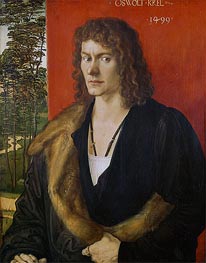
Portrait of Oswolt Krel 1499
Oil Painting
$3721
$3721
Canvas Print
$61.90
$61.90
SKU: DUA-3059
Albrecht Dürer
Original Size: 49.6 x 39 cm
Alte Pinakothek, Munich, Germany
Albrecht Dürer
Original Size: 49.6 x 39 cm
Alte Pinakothek, Munich, Germany

Self Portrait at 26 1498
Oil Painting
$4664
$4664
Canvas Print
$66.12
$66.12
SKU: DUA-3060
Albrecht Dürer
Original Size: 52 x 41 cm
Prado Museum, Madrid, Spain
Albrecht Dürer
Original Size: 52 x 41 cm
Prado Museum, Madrid, Spain

Portrait of Dürer's Father at 70 1497
Oil Painting
$3198
$3198
Canvas Print
$63.74
$63.74
SKU: DUA-3061
Albrecht Dürer
Original Size: 51 x 40.3 cm
National Gallery, London, UK
Albrecht Dürer
Original Size: 51 x 40.3 cm
National Gallery, London, UK

Virgin and Child before an Archway c.1495
Oil Painting
$3145
$3145
Canvas Print
$61.90
$61.90
SKU: DUA-3062
Albrecht Dürer
Original Size: 48 x 36 cm
Fondazione Magnani-Rocca, Parma, Italy
Albrecht Dürer
Original Size: 48 x 36 cm
Fondazione Magnani-Rocca, Parma, Italy

Saint Jerome in the Wilderness c.1495
Oil Painting
$3198
$3198
Canvas Print
$61.90
$61.90
SKU: DUA-3063
Albrecht Dürer
Original Size: 23 x 17.4 cm
National Gallery, London, UK
Albrecht Dürer
Original Size: 23 x 17.4 cm
National Gallery, London, UK

Christ as the Man of Sorrows c.1493
Oil Painting
$2785
$2785
Canvas Print
$61.90
$61.90
SKU: DUA-3064
Albrecht Dürer
Original Size: 30 x 19 cm
Staatliche Kunsthalle Karlsruhe, Germany
Albrecht Dürer
Original Size: 30 x 19 cm
Staatliche Kunsthalle Karlsruhe, Germany

Portrait of Dürer's Father 1490
Oil Painting
$3013
$3013
Canvas Print
$61.90
$61.90
SKU: DUA-3065
Albrecht Dürer
Original Size: 47.5 x 39.5 cm
Galleria degli Uffizi, Florence, Italy
Albrecht Dürer
Original Size: 47.5 x 39.5 cm
Galleria degli Uffizi, Florence, Italy

The Four Horsemen of the Apocalypse 1498
Fine Art Paper Print
$58.61
$58.61
SKU: DUA-13815
Albrecht Dürer
Original Size: 38.8 x 29.1 cm
Metropolitan Museum of Art, New York, USA
Albrecht Dürer
Original Size: 38.8 x 29.1 cm
Metropolitan Museum of Art, New York, USA

The Feast of the Rose Garlands 1506
Oil Painting
$31728
$31728
Canvas Print
$78.98
$78.98
SKU: DUA-16217
Albrecht Dürer
Original Size: 160 x 193 cm
National Gallery Prague, Czech Republic
Albrecht Dürer
Original Size: 160 x 193 cm
National Gallery Prague, Czech Republic

Hands of an Apostle (Praying Hands) 1508
Fine Art Paper Print
$58.61
$58.61
SKU: DUA-16218
Albrecht Dürer
Original Size: 29 x 19.7 cm
Graphische Sammlung Albertina, Vienna, Austria
Albrecht Dürer
Original Size: 29 x 19.7 cm
Graphische Sammlung Albertina, Vienna, Austria

Self-Portrait with a Thistle 1493
Oil Painting
$3362
$3362
Canvas Print
$70.27
$70.27
SKU: DUA-16219
Albrecht Dürer
Original Size: 56.5 x 44.5 cm
Louvre Museum, Paris, France
Albrecht Dürer
Original Size: 56.5 x 44.5 cm
Louvre Museum, Paris, France