
Painting Reproductions of Animals - Page 2
Animal painting is an art form that dates back to the earliest civilizations. Animals have been depicted in art for thousands of years as symbols of power, as pets, or as objects of hunting. The ancient Egyptians were known for their paintings of animals, especially cats, in their tombs and temples. In ancient Greece and Rome, animal paintings were popular as decorations in homes and public spaces. During the Renaissance, artists such as Albrecht Dürer continued the tradition of painting animals, but with greater realism and attention to detail.
In the 18th and 19th centuries, animal painting became increasingly popular in Europe and America as interest in natural history and zoology grew. Artists such as John James Audubon in America and Carl Rungius in Germany, gained recognition for their detailed and scientifically accurate paintings of animals in their natural habitats. The genre of animal portraiture also became popular, with artists creating paintings of people's pets or of livestock as a means of capturing their likenesses.
In the 19th and 20th centuries, animal painting became a genre in its own right, with artists such as Rosa Bonheur, Edwin Landseer creating works that celebrated the beauty and majesty of animals. Today, animal painting continues to be a popular genre, with contemporary artists creating works that are both realistic and abstract, and that explore the relationship between humans and animals.
In the 20th century, modernist artists such as Pablo Picasso, Georges Braque and Franz Marc incorporated animals into their cubist, surrealist and expressionist works, often as a way to comment on the human condition or to explore the boundaries between the natural world and the human imagination. Today, animal painting continues to evolve, with artists using a variety of styles and techniques to create works that are both beautiful and thought-provoking.
Overall, animal painting has a rich history that reflects the changing attitudes and values of different cultures and time periods. Whether as symbols of power and prestige, as objects of scientific inquiry, or as subjects of aesthetic contemplation, animals have played a central role in the development of Western art, and continue to inspire and captivate artists and audiences alike.
In the 18th and 19th centuries, animal painting became increasingly popular in Europe and America as interest in natural history and zoology grew. Artists such as John James Audubon in America and Carl Rungius in Germany, gained recognition for their detailed and scientifically accurate paintings of animals in their natural habitats. The genre of animal portraiture also became popular, with artists creating paintings of people's pets or of livestock as a means of capturing their likenesses.
In the 19th and 20th centuries, animal painting became a genre in its own right, with artists such as Rosa Bonheur, Edwin Landseer creating works that celebrated the beauty and majesty of animals. Today, animal painting continues to be a popular genre, with contemporary artists creating works that are both realistic and abstract, and that explore the relationship between humans and animals.
In the 20th century, modernist artists such as Pablo Picasso, Georges Braque and Franz Marc incorporated animals into their cubist, surrealist and expressionist works, often as a way to comment on the human condition or to explore the boundaries between the natural world and the human imagination. Today, animal painting continues to evolve, with artists using a variety of styles and techniques to create works that are both beautiful and thought-provoking.
Overall, animal painting has a rich history that reflects the changing attitudes and values of different cultures and time periods. Whether as symbols of power and prestige, as objects of scientific inquiry, or as subjects of aesthetic contemplation, animals have played a central role in the development of Western art, and continue to inspire and captivate artists and audiences alike.
page 2 of 39
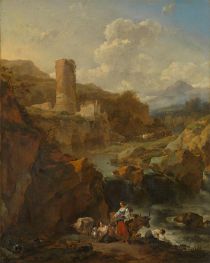
SKU: BNP-19847
Nicolaes Berchem
Original Size: 87.5 x 69.4 cm
Rijksmuseum Amsterdam Netherlands
Nicolaes Berchem
Original Size: 87.5 x 69.4 cm
Rijksmuseum Amsterdam Netherlands
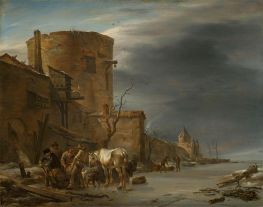
SKU: BNP-19846
Nicolaes Berchem
Original Size: 39.5 x 48.5 cm
Rijksmuseum Amsterdam Netherlands
Nicolaes Berchem
Original Size: 39.5 x 48.5 cm
Rijksmuseum Amsterdam Netherlands
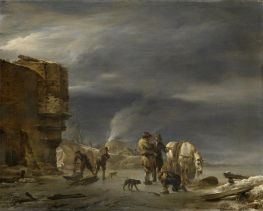
SKU: BNP-19845
Nicolaes Berchem
Original Size: 39.5 x 48.5 cm
Rijksmuseum Amsterdam Netherlands
Nicolaes Berchem
Original Size: 39.5 x 48.5 cm
Rijksmuseum Amsterdam Netherlands
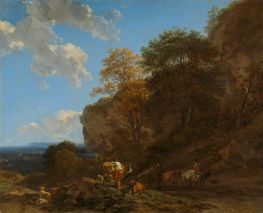
SKU: BNP-19844
Nicolaes Berchem
Original Size: 65 x 81 cm
Rijksmuseum Amsterdam Netherlands
Nicolaes Berchem
Original Size: 65 x 81 cm
Rijksmuseum Amsterdam Netherlands
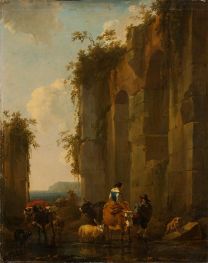
SKU: BNP-19843
Nicolaes Berchem
Original Size: 51.5 x 41.5 cm
Rijksmuseum Amsterdam Netherlands
Nicolaes Berchem
Original Size: 51.5 x 41.5 cm
Rijksmuseum Amsterdam Netherlands
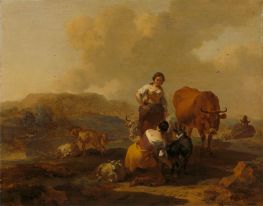
SKU: BNP-19842
Nicolaes Berchem
Original Size: 30.5 x 37.5 cm
Rijksmuseum Amsterdam Netherlands
Nicolaes Berchem
Original Size: 30.5 x 37.5 cm
Rijksmuseum Amsterdam Netherlands
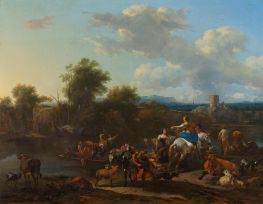
SKU: BNP-19841
Nicolaes Berchem
Original Size: 82.5 x 105.5 cm
Rijksmuseum Amsterdam Netherlands
Nicolaes Berchem
Original Size: 82.5 x 105.5 cm
Rijksmuseum Amsterdam Netherlands
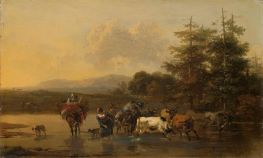
SKU: BNP-19840
Nicolaes Berchem
Original Size: 38 x 62.5 cm
Rijksmuseum Amsterdam Netherlands
Nicolaes Berchem
Original Size: 38 x 62.5 cm
Rijksmuseum Amsterdam Netherlands
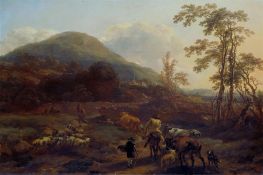
SKU: BNP-19839
Nicolaes Berchem
Original Size: 44 x 66.5 cm
Rijksmuseum Amsterdam Netherlands
Nicolaes Berchem
Original Size: 44 x 66.5 cm
Rijksmuseum Amsterdam Netherlands
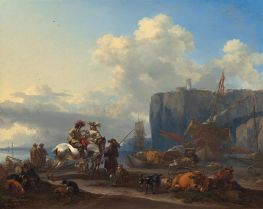
SKU: BNP-19838
Nicolaes Berchem
Original Size: 48 x 59.5 cm
National Gallery of Art Washington USA
Nicolaes Berchem
Original Size: 48 x 59.5 cm
National Gallery of Art Washington USA
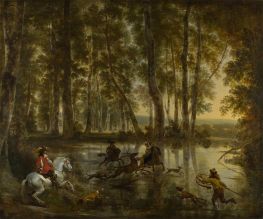
SKU: BNP-19837
Nicolaes Berchem
Original Size: 99.7 x 120 cm
National Gallery London UK
Nicolaes Berchem
Original Size: 99.7 x 120 cm
National Gallery London UK
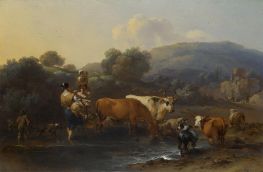
Peasants with Cattle fording a Stream c.1670/80
Nicolaes Berchem
Oil Painting
$1198
$1198
Canvas Print
$56.39
$56.39
SKU: BNP-19836
Nicolaes Berchem
Original Size: 29.5 x 45.3 cm
National Gallery London UK
Nicolaes Berchem
Original Size: 29.5 x 45.3 cm
National Gallery London UK
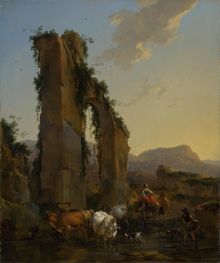
SKU: BNP-19835
Nicolaes Berchem
Original Size: 47 x 38.7 cm
National Gallery London UK
Nicolaes Berchem
Original Size: 47 x 38.7 cm
National Gallery London UK
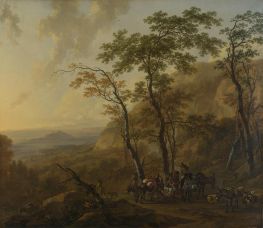
SKU: BNP-19834
Nicolaes Berchem
Original Size: 109 x 126 cm
National Gallery London UK
Nicolaes Berchem
Original Size: 109 x 126 cm
National Gallery London UK
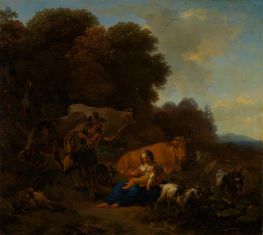
A Peasant playing a Hurdy-Gurdy to a Woman and Child 1658
Nicolaes Berchem
Oil Painting
$1117
$1117
Canvas Print
$56.39
$56.39
SKU: BNP-19833
Nicolaes Berchem
Original Size: 34.5 x 38.3 cm
National Gallery London UK
Nicolaes Berchem
Original Size: 34.5 x 38.3 cm
National Gallery London UK
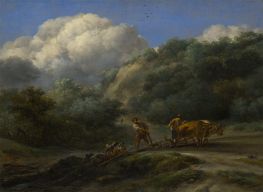
A Man and a Youth ploughing with Oxen c.1650/55
Nicolaes Berchem
Oil Painting
$1291
$1291
Canvas Print
$56.39
$56.39
SKU: BNP-19832
Nicolaes Berchem
Original Size: 38.2 x 51.5 cm
National Gallery London UK
Nicolaes Berchem
Original Size: 38.2 x 51.5 cm
National Gallery London UK
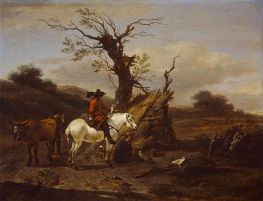
The Bird Trap: Encampment with a Figure on a ... c.1645/46
Nicolaes Berchem
Oil Painting
$1038
$1038
Canvas Print
$56.39
$56.39
SKU: BNP-19831
Nicolaes Berchem
Original Size: 30.6 x 40.3 cm
National Galleries of Scotland Edinburgh UK
Nicolaes Berchem
Original Size: 30.6 x 40.3 cm
National Galleries of Scotland Edinburgh UK
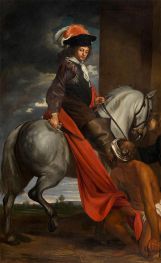
The Charity of Saint Martin c.1630/57
Jacob van Oost, the Elder
Oil Painting
$1650
$1650
Canvas Print
$56.39
$56.39
SKU: OVE-19806
Jacob van Oost, the Elder
Original Size: 301 x 181 cm
Groeninge Museum Bruges Belgium
Jacob van Oost, the Elder
Original Size: 301 x 181 cm
Groeninge Museum Bruges Belgium
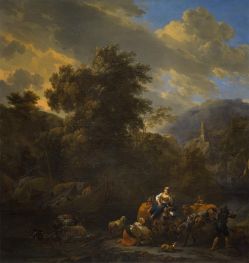
Italianate Landscape with Figures and Pack ... n.d.
Nicolaes Berchem
Oil Painting
$2597
$2597
Canvas Print
$81.12
$81.12
SKU: BNP-19784
Nicolaes Berchem
Original Size: 95.6 x 90.2 cm
Detroit Institute of Arts Michigan USA
Nicolaes Berchem
Original Size: 95.6 x 90.2 cm
Detroit Institute of Arts Michigan USA
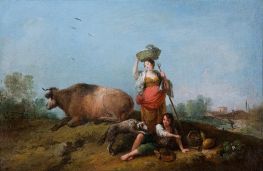
SKU: ZUF-19769
Francesco Zuccarelli
Original Size: unknown
Public Collection
Francesco Zuccarelli
Original Size: unknown
Public Collection
SKU: ZUF-19768
Francesco Zuccarelli
Original Size: unknown
Public Collection
Francesco Zuccarelli
Original Size: unknown
Public Collection
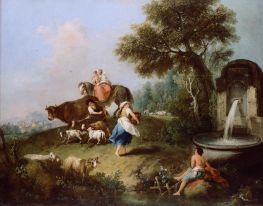
Landscape with a Fountain, Figures and Animals b.1788
Francesco Zuccarelli
Oil Painting
$3888
$3888
Canvas Print
$66.98
$66.98
SKU: ZUF-19761
Francesco Zuccarelli
Original Size: 99.7 x 124.8 cm
Dulwich Picture Gallery London UK
Francesco Zuccarelli
Original Size: 99.7 x 124.8 cm
Dulwich Picture Gallery London UK
SKU: AJJ-19668
John James Audubon
Original Size: 55.7 x 71 cm
Amon Carter Museum Texas USA
John James Audubon
Original Size: 55.7 x 71 cm
Amon Carter Museum Texas USA
SKU: AJJ-19667
John James Audubon
Original Size: 55.6 x 71 cm
Amon Carter Museum Texas USA
John James Audubon
Original Size: 55.6 x 71 cm
Amon Carter Museum Texas USA