
Isaac Ilyich Levitan Painting Reproductions 1 of 6
1860-1900
Russian Peredvizhniki Painter
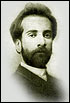
In the summer light of central Russia, Isaac Levitan found something more elusive than scenery. A road, a flooded grove, or a distant monastery could become an image of expectation, loss, or inward calm. Isaac Ilyich Levitan, born on 30 August 1860 and dead before his fortieth birthday on 4 August 1900, was a Russian painter who transformed landscape into what became known as the “mood landscape.”
His beginnings lay far from Moscow’s artistic institutions. Levitan was born in Kibarty, a shtetl in the Augustów Governorate of Congress Poland, then part of the Russian Empire and now within Lithuania. His family was Jewish, educated, and poor. Elyashiv Levitan, his father, was the son of a rabbi. After studying in a yeshiva, he educated himself further, taught German and French in Kowno, and worked as a translator during the construction of a railway bridge for a French company. At the beginning of 1870, the family moved to Moscow, where opportunity existed beside persistent insecurity.
In September 1873, Levitan entered the Moscow School of Painting, Sculpture and Architecture. His elder brother Avel had already studied there for two years. Beginning in the copying class, Isaac soon progressed through naturalistic study into the landscape department. His teachers included Alexei Savrasov, Vasily Perov, and Vasily Polenov, three figures who offered markedly different approaches to observation, narrative, and atmosphere. Savrasov proved especially important. Drawing partly upon the example of the Barbizon painters, including Jean-Baptiste-Camille Corot, he took his pupils outdoors and taught them to work directly before nature.
Poverty soon became more than a background condition. Levitan’s mother died in 1875, and his father, already seriously ill, could no longer support the four children. By 1877, he too was dead. The young painter remained at the school only through financial assistance granted in recognition of his ability and circumstances. That same year, his work appeared publicly for the first time and received favourable attention from the press. Success, however, did not protect him from the restrictions imposed upon Jews in the Russian Empire.
Following the attempted assassination of Alexander II in 1879, Jewish families were expelled from major cities. Levitan was forced to leave Moscow for nearby Saltykovka. Pressure from admirers within the artistic community secured his return later that year. During this troubled period, he painted Autumn Day. Sokolniki, an image of a long path extending through a Moscow park beneath a cold, unsettled sky. Nikolay Chekhov, a fellow student and the brother of Anton Chekhov, thought the empty path required a human presence. He added the woman in black who walks towards the viewer. This small intervention - a genre figure placed within Levitan’s landscape - reveals the collaborative habits of the Moscow school while sharpening the painting’s emotional tension.
Pavel Tretyakov purchased Autumn Day. Sokolniki in 1880 for one hundred roubles. It was the beginning of a lasting relationship between the painter and Russia’s most significant private collector, who eventually acquired another twenty works by Levitan. Yet institutional recognition remained uncertain. In 1883, hoping to win a silver medal and the professional status it conferred, Levitan submitted a landscape to his school. Savrasov, by then disgraced and no longer teaching regularly, wrote “silver medal” on the reverse. The school rejected the picture. Levitan stopped attending classes, and later accounts suggested that Savrasov’s involvement, professional hostility, or antisemitism may have contributed to the decision.
Beyond the school, a broader artistic world opened. Levitan exhibited with the Peredvizhniki in the spring of 1884 and became a full member of their partnership in 1891. He formed friendships with Konstantin Korovin, Mikhail Nesterov, Fyodor Shekhtel, and Nikolay Chekhov. During the early 1880s, he worked with the Chekhov brothers on the illustrated magazine Moscow and contributed illustrations to an edition of Kremlin by M. Fabritsius. With Korovin, he also painted theatrical scenery for Savva Mamontov’s Private Russian Opera in 1885 and 1886. An underwater scene for Rusalka, created with Viktor Vasnetsov, received applause as soon as the curtain rose.
By the middle of the decade, Levitan had become closely attached to Anton Chekhov and his family. At their country house near Babkino, conversation, practical jokes, literature, and painting formed an unusually fertile social environment. During his first summer there, Levitan painted The River Istra and presented it to Chekhov. Twilight River Istra, also dated 1885, employed a darker and more sombre range. Such paintings already reveal his central achievement: the conversion of observed nature into an emotional structure without reducing it to anecdote.
Human figures became rare, and cities rarer still. Apart from works such as Illumination of the Kremlin and the lost View of Simonov Monastery, Levitan avoided urban subjects. Forest clearings, modest fields, rivers, birch trees, and empty roads offered sufficient drama. In these places, weather and light carry the psychological weight. Vladimirka of 1892 presents a road historically associated with exile, yet the painting remains restrained. Evening Bells, painted in the same year, allows architecture, water, and distance to create a measured sense of longing. In Eternal Rest of 1894, a small churchyard confronts a vast expanse of water and sky. Nothing is exaggerated. Stillness becomes monumental.
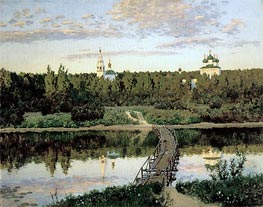
Travel provided new motifs without altering his fundamental purpose. In the summer of 1890, Levitan worked around Yuryevets and painted studies including a view of the Krivooserski Monastery. From these observations emerged A Quiet Monastery, in which wooden bridges connect a secluded religious settlement with the surrounding world. Chekhov responded deeply to the picture. Levitan’s aim differed from that of many Peredvizhniki painters, who used art to expose social hardship. Although he shared their belief in accessible public exhibitions, he pursued beauty, atmosphere, and spiritual suggestion rather than explicit narrative. Later, he also exhibited with the younger World of Art circle, whose members defended beauty as an artistic end.
The 1890s brought both artistic maturity and personal turbulence. Levitan maintained a difficult relationship with the married painter Sofia Kuvshinnikova. Chekhov’s story The Grasshopper, published in 1892, appeared to borrow elements from their affair. Both Levitan and Kuvshinnikova felt exposed, and Levitan’s friendship with the writer broke down until January 1895. Political humiliation followed private conflict. In September 1892, Jews were again expelled from Moscow, and Levitan had to leave for Boldino. Through the intervention of Kuvshinnikova’s husband, he received permission to return in December.
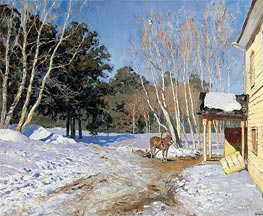
Nature nevertheless remained a field of renewal. Birch Grove, begun in 1885 and completed several years later, places the viewer low among white trunks broken by shifting sunlight. Golden Autumn of 1895 is more expansive, with orange foliage blazing beside a dark blue river. Spring Flood of 1897 turns slender, leafless birches into reflections trembling across meltwater. Elsewhere, as in Moonlit Night: Main Road, the pale trunks emerge from darkness with almost spectral clarity. Levitan had absorbed aspects of Impressionism, especially its responsiveness to changing light, but he never treated vision as an optical experiment alone. Tone, memory, and silence remained decisive.
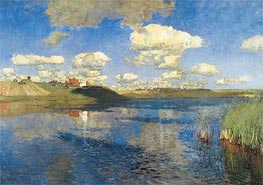
Recognition finally arrived from the institutions that had once resisted him. In 1897, already internationally known, he was elected to the Imperial Academy of Arts. The following year, he became head of the landscape studio at the Moscow School of Painting, Sculpture and Architecture. Ill health, however, narrowed his future. Levitan had suffered from a heart condition for much of his life, and he spent his final year at Chekhov’s home in Crimea. His late paintings grew lighter and calmer. Lake. Rus, left unfinished at his death, suggests a final attempt to gather sky, water, settlement, and open country into a single image of Russia.
Isaac Levitan died on 4 August 1900. He was first buried in Moscow’s Dorogomilovo Jewish Cemetery, but in 1941 his remains were transferred to Novodevichy Cemetery, close to Chekhov’s grave. He left no wife or children, but more than a thousand paintings, watercolours, pastels, drawings, and illustrations survived. A large memorial exhibition travelled from Moscow to St Petersburg during the year after his death, and his landscapes entered Russian education and public memory. Perhaps solitude gave his brush its unusual clarity. Even now, Levitan’s empty roads and quiet waters seem inhabited - not by visible figures, but by the viewer’s own recollections.
His beginnings lay far from Moscow’s artistic institutions. Levitan was born in Kibarty, a shtetl in the Augustów Governorate of Congress Poland, then part of the Russian Empire and now within Lithuania. His family was Jewish, educated, and poor. Elyashiv Levitan, his father, was the son of a rabbi. After studying in a yeshiva, he educated himself further, taught German and French in Kowno, and worked as a translator during the construction of a railway bridge for a French company. At the beginning of 1870, the family moved to Moscow, where opportunity existed beside persistent insecurity.
In September 1873, Levitan entered the Moscow School of Painting, Sculpture and Architecture. His elder brother Avel had already studied there for two years. Beginning in the copying class, Isaac soon progressed through naturalistic study into the landscape department. His teachers included Alexei Savrasov, Vasily Perov, and Vasily Polenov, three figures who offered markedly different approaches to observation, narrative, and atmosphere. Savrasov proved especially important. Drawing partly upon the example of the Barbizon painters, including Jean-Baptiste-Camille Corot, he took his pupils outdoors and taught them to work directly before nature.
Poverty soon became more than a background condition. Levitan’s mother died in 1875, and his father, already seriously ill, could no longer support the four children. By 1877, he too was dead. The young painter remained at the school only through financial assistance granted in recognition of his ability and circumstances. That same year, his work appeared publicly for the first time and received favourable attention from the press. Success, however, did not protect him from the restrictions imposed upon Jews in the Russian Empire.
Following the attempted assassination of Alexander II in 1879, Jewish families were expelled from major cities. Levitan was forced to leave Moscow for nearby Saltykovka. Pressure from admirers within the artistic community secured his return later that year. During this troubled period, he painted Autumn Day. Sokolniki, an image of a long path extending through a Moscow park beneath a cold, unsettled sky. Nikolay Chekhov, a fellow student and the brother of Anton Chekhov, thought the empty path required a human presence. He added the woman in black who walks towards the viewer. This small intervention - a genre figure placed within Levitan’s landscape - reveals the collaborative habits of the Moscow school while sharpening the painting’s emotional tension.
Pavel Tretyakov purchased Autumn Day. Sokolniki in 1880 for one hundred roubles. It was the beginning of a lasting relationship between the painter and Russia’s most significant private collector, who eventually acquired another twenty works by Levitan. Yet institutional recognition remained uncertain. In 1883, hoping to win a silver medal and the professional status it conferred, Levitan submitted a landscape to his school. Savrasov, by then disgraced and no longer teaching regularly, wrote “silver medal” on the reverse. The school rejected the picture. Levitan stopped attending classes, and later accounts suggested that Savrasov’s involvement, professional hostility, or antisemitism may have contributed to the decision.
Beyond the school, a broader artistic world opened. Levitan exhibited with the Peredvizhniki in the spring of 1884 and became a full member of their partnership in 1891. He formed friendships with Konstantin Korovin, Mikhail Nesterov, Fyodor Shekhtel, and Nikolay Chekhov. During the early 1880s, he worked with the Chekhov brothers on the illustrated magazine Moscow and contributed illustrations to an edition of Kremlin by M. Fabritsius. With Korovin, he also painted theatrical scenery for Savva Mamontov’s Private Russian Opera in 1885 and 1886. An underwater scene for Rusalka, created with Viktor Vasnetsov, received applause as soon as the curtain rose.
By the middle of the decade, Levitan had become closely attached to Anton Chekhov and his family. At their country house near Babkino, conversation, practical jokes, literature, and painting formed an unusually fertile social environment. During his first summer there, Levitan painted The River Istra and presented it to Chekhov. Twilight River Istra, also dated 1885, employed a darker and more sombre range. Such paintings already reveal his central achievement: the conversion of observed nature into an emotional structure without reducing it to anecdote.
Human figures became rare, and cities rarer still. Apart from works such as Illumination of the Kremlin and the lost View of Simonov Monastery, Levitan avoided urban subjects. Forest clearings, modest fields, rivers, birch trees, and empty roads offered sufficient drama. In these places, weather and light carry the psychological weight. Vladimirka of 1892 presents a road historically associated with exile, yet the painting remains restrained. Evening Bells, painted in the same year, allows architecture, water, and distance to create a measured sense of longing. In Eternal Rest of 1894, a small churchyard confronts a vast expanse of water and sky. Nothing is exaggerated. Stillness becomes monumental.
Travel provided new motifs without altering his fundamental purpose. In the summer of 1890, Levitan worked around Yuryevets and painted studies including a view of the Krivooserski Monastery. From these observations emerged A Quiet Monastery, in which wooden bridges connect a secluded religious settlement with the surrounding world. Chekhov responded deeply to the picture. Levitan’s aim differed from that of many Peredvizhniki painters, who used art to expose social hardship. Although he shared their belief in accessible public exhibitions, he pursued beauty, atmosphere, and spiritual suggestion rather than explicit narrative. Later, he also exhibited with the younger World of Art circle, whose members defended beauty as an artistic end.
The 1890s brought both artistic maturity and personal turbulence. Levitan maintained a difficult relationship with the married painter Sofia Kuvshinnikova. Chekhov’s story The Grasshopper, published in 1892, appeared to borrow elements from their affair. Both Levitan and Kuvshinnikova felt exposed, and Levitan’s friendship with the writer broke down until January 1895. Political humiliation followed private conflict. In September 1892, Jews were again expelled from Moscow, and Levitan had to leave for Boldino. Through the intervention of Kuvshinnikova’s husband, he received permission to return in December.
Nature nevertheless remained a field of renewal. Birch Grove, begun in 1885 and completed several years later, places the viewer low among white trunks broken by shifting sunlight. Golden Autumn of 1895 is more expansive, with orange foliage blazing beside a dark blue river. Spring Flood of 1897 turns slender, leafless birches into reflections trembling across meltwater. Elsewhere, as in Moonlit Night: Main Road, the pale trunks emerge from darkness with almost spectral clarity. Levitan had absorbed aspects of Impressionism, especially its responsiveness to changing light, but he never treated vision as an optical experiment alone. Tone, memory, and silence remained decisive.
Recognition finally arrived from the institutions that had once resisted him. In 1897, already internationally known, he was elected to the Imperial Academy of Arts. The following year, he became head of the landscape studio at the Moscow School of Painting, Sculpture and Architecture. Ill health, however, narrowed his future. Levitan had suffered from a heart condition for much of his life, and he spent his final year at Chekhov’s home in Crimea. His late paintings grew lighter and calmer. Lake. Rus, left unfinished at his death, suggests a final attempt to gather sky, water, settlement, and open country into a single image of Russia.
Isaac Levitan died on 4 August 1900. He was first buried in Moscow’s Dorogomilovo Jewish Cemetery, but in 1941 his remains were transferred to Novodevichy Cemetery, close to Chekhov’s grave. He left no wife or children, but more than a thousand paintings, watercolours, pastels, drawings, and illustrations survived. A large memorial exhibition travelled from Moscow to St Petersburg during the year after his death, and his landscapes entered Russian education and public memory. Perhaps solitude gave his brush its unusual clarity. Even now, Levitan’s empty roads and quiet waters seem inhabited - not by visible figures, but by the viewer’s own recollections.
130 Isaac Levitan Paintings
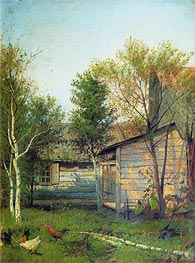
Sunny Day. Spring 1877
Oil Painting
$586
$586
Canvas Print
$63.85
$63.85
SKU: LEV-957
Isaac Ilyich Levitan
Original Size: unknown
Private Collection
Isaac Ilyich Levitan
Original Size: unknown
Private Collection
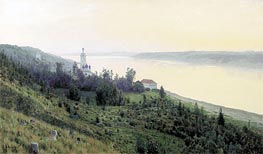
Evening. The Golden Pool 1889
Oil Painting
$953
$953
Canvas Print
$94.47
$94.47
SKU: LEV-958
Isaac Ilyich Levitan
Original Size: 84.2 x 142 cm
The Tretyakov Gallery, Moscow, Russia
Isaac Ilyich Levitan
Original Size: 84.2 x 142 cm
The Tretyakov Gallery, Moscow, Russia
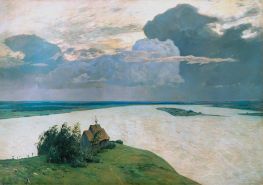
Above the Eternal Peace 1894
Oil Painting
$1438
$1438
Canvas Print
$68.25
$68.25
SKU: LEV-959
Isaac Ilyich Levitan
Original Size: 150 x 206 cm
The Tretyakov Gallery, Moscow, Russia
Isaac Ilyich Levitan
Original Size: 150 x 206 cm
The Tretyakov Gallery, Moscow, Russia
The Lake. Russia 1895
Oil Painting
$1131
$1131
Canvas Print
$68.61
$68.61
SKU: LEV-960
Isaac Ilyich Levitan
Original Size: 149 x 208 cm
State Russian Museum, St. Petersburg, Russia
Isaac Ilyich Levitan
Original Size: 149 x 208 cm
State Russian Museum, St. Petersburg, Russia
March 1895
Oil Painting
$953
$953
Canvas Print
$78.81
$78.81
SKU: LEV-961
Isaac Ilyich Levitan
Original Size: 60 x 75 cm
The Tretyakov Gallery, Moscow, Russia
Isaac Ilyich Levitan
Original Size: 60 x 75 cm
The Tretyakov Gallery, Moscow, Russia
Twilight. Haystacks 1899
Oil Painting
$727
$727
Canvas Print
$76.35
$76.35
SKU: LEV-962
Isaac Ilyich Levitan
Original Size: 59.8 x 74.6 cm
The Tretyakov Gallery, Moscow, Russia
Isaac Ilyich Levitan
Original Size: 59.8 x 74.6 cm
The Tretyakov Gallery, Moscow, Russia
The Quiet Abode 1890
Oil Painting
$863
$863
Canvas Print
$75.82
$75.82
SKU: LEV-963
Isaac Ilyich Levitan
Original Size: 88 x 108 cm
The Tretyakov Gallery, Moscow, Russia
Isaac Ilyich Levitan
Original Size: 88 x 108 cm
The Tretyakov Gallery, Moscow, Russia
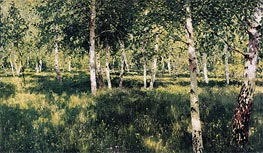
Birch Grove 1889
Oil Painting
$717
$717
Canvas Print
$63.85
$63.85
SKU: LEV-8009
Isaac Ilyich Levitan
Original Size: 28 x 50 cm
The Tretyakov Gallery, Moscow, Russia
Isaac Ilyich Levitan
Original Size: 28 x 50 cm
The Tretyakov Gallery, Moscow, Russia
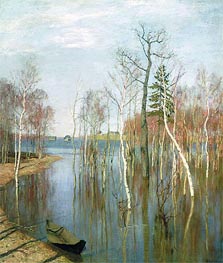
Spring, High Water 1897
Oil Painting
$833
$833
Canvas Print
$83.21
$83.21
SKU: LEV-8010
Isaac Ilyich Levitan
Original Size: 64.2 x 57.5 cm
The Tretyakov Gallery, Moscow, Russia
Isaac Ilyich Levitan
Original Size: 64.2 x 57.5 cm
The Tretyakov Gallery, Moscow, Russia
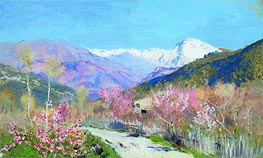
Spring in Italy 1890
Oil Painting
$704
$704
Canvas Print
$63.85
$63.85
SKU: LEV-8011
Isaac Ilyich Levitan
Original Size: 19.5 x 32.5 cm
Private Collection
Isaac Ilyich Levitan
Original Size: 19.5 x 32.5 cm
Private Collection
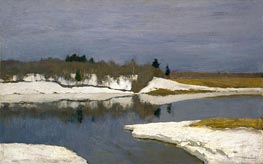
Early Spring 1898
Oil Painting
$616
$616
Canvas Print
$63.85
$63.85
SKU: LEV-8012
Isaac Ilyich Levitan
Original Size: 41.5 x 66.3 cm
State Russian Museum, St. Petersburg, Russia
Isaac Ilyich Levitan
Original Size: 41.5 x 66.3 cm
State Russian Museum, St. Petersburg, Russia
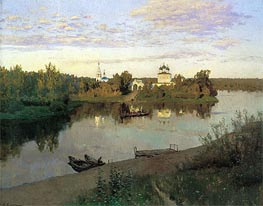
The Evening Bell Tolls 1892
Oil Painting
$953
$953
Canvas Print
$75.82
$75.82
SKU: LEV-8013
Isaac Ilyich Levitan
Original Size: 87 x 108 cm
State Russian Museum, St. Petersburg, Russia
Isaac Ilyich Levitan
Original Size: 87 x 108 cm
State Russian Museum, St. Petersburg, Russia
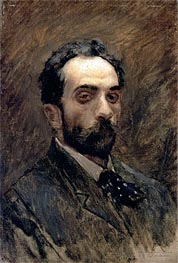
Self Portrait c.1880/90
Oil Painting
$527
$527
Canvas Print
$72.35
$72.35
SKU: LEV-8014
Isaac Ilyich Levitan
Original Size: 58 x 39 cm
The Tretyakov Gallery, Moscow, Russia
Isaac Ilyich Levitan
Original Size: 58 x 39 cm
The Tretyakov Gallery, Moscow, Russia
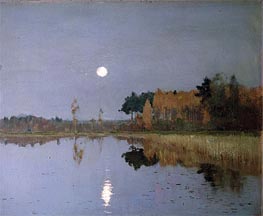
The Twilight Moon 1899
Oil Painting
$802
$802
Canvas Print
$74.42
$74.42
SKU: LEV-8015
Isaac Ilyich Levitan
Original Size: 49.5 x 61.3 cm
State Russian Museum, St. Petersburg, Russia
Isaac Ilyich Levitan
Original Size: 49.5 x 61.3 cm
State Russian Museum, St. Petersburg, Russia
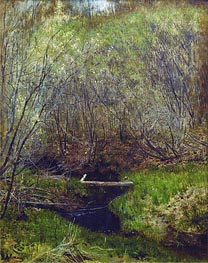
Spring in the Forest 1882
Oil Painting
$607
$607
Canvas Print
$63.85
$63.85
SKU: LEV-8016
Isaac Ilyich Levitan
Original Size: 43.4 x 35.7 cm
The Tretyakov Gallery, Moscow, Russia
Isaac Ilyich Levitan
Original Size: 43.4 x 35.7 cm
The Tretyakov Gallery, Moscow, Russia
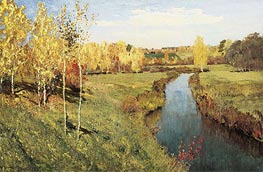
Golden Autumn 1895
Oil Painting
$929
$929
Canvas Print
$63.85
$63.85
SKU: LEV-8017
Isaac Ilyich Levitan
Original Size: 82 x 126 cm
The Tretyakov Gallery, Moscow, Russia
Isaac Ilyich Levitan
Original Size: 82 x 126 cm
The Tretyakov Gallery, Moscow, Russia
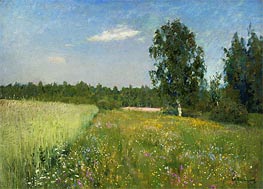
June. Summer c.1890/00
Oil Painting
$831
$831
Canvas Print
$69.66
$69.66
SKU: LEV-8018
Isaac Ilyich Levitan
Original Size: 43.5 x 61 cm
The Tretyakov Gallery, Moscow, Russia
Isaac Ilyich Levitan
Original Size: 43.5 x 61 cm
The Tretyakov Gallery, Moscow, Russia
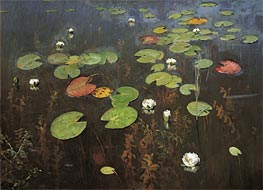
Water Lilies 1895
Oil Painting
$895
$895
Canvas Print
$69.85
$69.85
SKU: LEV-8019
Isaac Ilyich Levitan
Original Size: 92 x 128 cm
Astrakhan State Gallery B.M. Kustodiev, Astrakhan, Russia
Isaac Ilyich Levitan
Original Size: 92 x 128 cm
Astrakhan State Gallery B.M. Kustodiev, Astrakhan, Russia
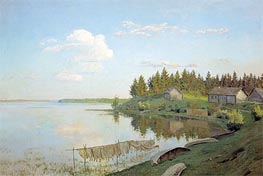
On Lake (The Tver Province) 1893
Oil Painting
$981
$981
Canvas Print
$64.92
$64.92
SKU: LEV-8020
Isaac Ilyich Levitan
Original Size: 109 x 163 cm
The Saratov State Art Museum A. N. Radishchev, Saratov, Russia
Isaac Ilyich Levitan
Original Size: 109 x 163 cm
The Saratov State Art Museum A. N. Radishchev, Saratov, Russia
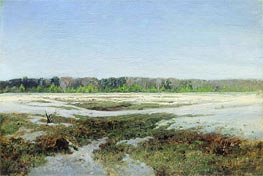
Early Spring c.1890
Oil Painting
$675
$675
Canvas Print
$63.85
$63.85
SKU: LEV-8021
Isaac Ilyich Levitan
Original Size: 49 x 72 cm
Art Gallery, Taganrog, Russia
Isaac Ilyich Levitan
Original Size: 49 x 72 cm
Art Gallery, Taganrog, Russia
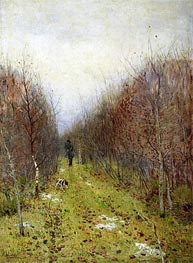
Autumn. Hunter 1880
Oil Painting
$848
$848
Canvas Print
$63.85
$63.85
SKU: LEV-8022
Isaac Ilyich Levitan
Original Size: 93.8 x 68 cm
Regional Art Gallery, Tver, Russia
Isaac Ilyich Levitan
Original Size: 93.8 x 68 cm
Regional Art Gallery, Tver, Russia
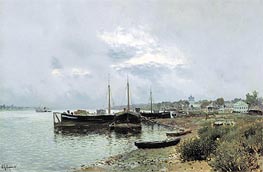
After Rain in Ples 1889
Oil Painting
$929
$929
Canvas Print
$63.85
$63.85
SKU: LEV-8023
Isaac Ilyich Levitan
Original Size: 80 x 125 cm
The Tretyakov Gallery, Moscow, Russia
Isaac Ilyich Levitan
Original Size: 80 x 125 cm
The Tretyakov Gallery, Moscow, Russia
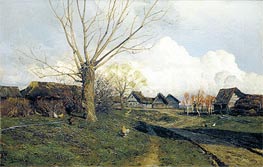
Savvinskaya Sloboda near Zvenigorod 1884
Oil Painting
$796
$796
Canvas Print
$94.30
$94.30
SKU: LEV-8024
Isaac Ilyich Levitan
Original Size: 44 x 67 cm
The Tretyakov Gallery, Moscow, Russia
Isaac Ilyich Levitan
Original Size: 44 x 67 cm
The Tretyakov Gallery, Moscow, Russia
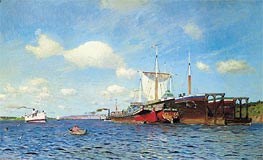
Fresh Wind on the Volga 1895
Oil Painting
$914
$914
Canvas Print
$98.10
$98.10
SKU: LEV-8025
Isaac Ilyich Levitan
Original Size: 72 x 123 cm
The Tretyakov Gallery, Moscow, Russia
Isaac Ilyich Levitan
Original Size: 72 x 123 cm
The Tretyakov Gallery, Moscow, Russia