
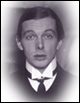
Ernst Ludwig Kirchner Painting Reproductions 1 of 16
1880-1938
German Expressionist Painter
In one self-portrait, Ernst Ludwig Kirchner stands in uniform, eyes fixed, the right hand seemingly cut away - a pictorial wound that makes the First World War feel less like history than a private catastrophe. Born on 6 May 1880 and dead by 15 June 1938, the German painter and printmaker helped found Die Brücke - “The Bridge” - and with it a sharpened, impatient form of Expressionism that refused polite distance.
Aschaffenburg in Bavaria was his starting point, but not his anchor. Because his father searched for secure work, the household shifted repeatedly, and school became a sequence of places - Frankfurt, Perlen, then Chemnitz, where his father obtained a post as Professor of Paper Sciences at the College of Technology. A sense of movement - of being made and unmade by circumstance - sits quietly behind the later art, where streets tilt, bodies angle, and space seems to press forward rather than recede. Huguenot ancestry on his mother’s side mattered to him, too; he returned to it as a story of identity and endurance rather than ornament.
Architecture brought him to Dresden in 1901, to the Königliche Technische Hochschule (now TU Dresden). It was not an artist’s academy, yet it trained his hand: freehand drawing, perspective, and the historical study of art were part of the curriculum, and those disciplines left traces even when he later attacked convention. Friendship helped, as it often does. In his first term he met Fritz Bleyl, and the two talked art with the seriousness of young men who believe the old language has failed. Munich followed in 1903 - 1904, then Dresden again in 1905 to complete the degree. A profession was being secured. Another was already taking over.
September 1905 became a hinge. With Bleyl and fellow architecture students Karl Schmidt-Rottluff and Erich Heckel, Kirchner founded Die Brücke. The name announced ambition: a bridge between past and present, and a route out of academic polish. They turned back to German forebears - Dürer, Grünewald, Cranach - without copying them, and they embraced what felt urgent in the international avant-garde without becoming dutiful followers. Old media returned with new bite, especially the woodcut, whose blunt contrasts suited a temperament that preferred the decisive mark. In a first studio that had once been a butcher’s shop, paintings lay about, drawings accumulated, and the “organised” life of an architecture student dissolved into something more volatile. Rules fell away - and the work quickened.
Look at the early Brücke years and you meet a deliberate push toward immediacy. Life-drawing sessions used models from their own circle rather than professionals, with brief poses that favoured speed and instinct over finish. A young neighbourhood model - Isabella, fifteen - appears in recollections as lively and uncorseted, “suitable” to their demands; the detail is uncomfortable and revealing, less about her than about the group’s hunger for a new candour. Kirchner wrote a manifesto in 1906 with a wide, almost recruiting generosity: anyone who makes directly what they feel compelled to create belongs. That same year, the first group exhibition took place in Dresden at the showroom of K.F.M. Seifert and Co., centred on the female nude. Also in 1906 he met Doris Große, who became a favoured model until 1911 - and the figure, in different guises, begins to carry the weight of a whole modern restlessness.
Summer opened another register. Between 1907 and 1911 the Moritzburg lakes became a seasonal studio, and the island of Fehmarn drew him back repeatedly until 1914. Nudes in nature appear there not as pastoral decoration but as a test of how a body belongs - or refuses to belong - in space. By 1909 - 1910 he painted Marzella (now in Stockholm’s Moderna Museet), and the portrait’s frankness feels both intimate and unsettled, as if identity were something one must invent under pressure. Standing Nude with Hat (1910, Städel Museum, Frankfurt) keeps that tension: pose and presence, exposure and performance. Meanwhile the group’s internal chemistry shifted, as such chemistries do, from common purpose toward competing self-definitions.
Berlin arrived in 1911, and with it a sharper urban pitch. Kirchner tried to institutionalise modernity by founding a private art school - the MIUM-Institut - with Max Pechstein, promising “Modern Teaching in Painting.” It failed quickly and closed the following year, an early lesson that pedagogy and practice are not the same appetite. In 1912 he began a relationship with Erna Schilling that lasted for the rest of his life, a partnership threaded through distance, illness, and the logistics of survival. By 1913 he wrote the Chronik der Brücke, a history that helped end the group - not through malice, but through the politics of memory and authorship. That year also marked his first solo exhibition, at the Folkwang Museum in Essen, and a more emphatically individual identity came into view. The Berlin “Straßenszenen” followed - street scenes where figures, often streetwalkers, occupy the centre like symptoms of a city that won’t sit still. Street, Berlin (1913) gives the theme its exacting chill: fashion becomes armour, proximity becomes threat, and linear perspective feels less like order than a corridor of unease.
War made the private crisis explicit. In September 1914 Kirchner volunteered for military service; by July 1915 he was training as a driver with a reserve unit in Halle an der Saale. A breakdown came swiftly, and the riding instructor Hans Fehr intervened to secure his discharge. Back in Berlin, he worked anyway, producing Self-Portrait as a Soldier (1915) - a painting that does not dramatise heroism so much as depict a self in partial collapse. In December 1915 he entered Dr. Oskar Kohnstamm’s sanatorium in Königstein (Taunus), diagnosed with alcoholism and addiction to Veronal. Work and seclusion became his opposing needs. In a letter to Karl Hagemann he admitted that “theories” were pale beside “work and life” - a sentence that reads like a creed hammered out under strain. Despite periods in Berlin during 1916, the pattern was precarious: financial success after an October 1916 exhibition at Ludwig Schames’s gallery in Frankfurt am Main, then another nervous breakdown and admission to Dr. Edel’s sanatorium in Berlin-Charlottenburg that December.
Switzerland offered a different kind of discipline. In January 1917, invited by Helene Spengler at the suggestion of Eberhard Grisebach, he arrived in Davos, only to retreat to Berlin after ten days of extreme cold. Yet Davos kept calling, and after the death of his friend and mentor Botho Graef in April 1917, he returned for treatment. Dr. Lucius Spengler imposed strict routine; Kirchner resented the control and tried to evade it, a small drama of resistance inside a medical regimen. To escape constant watch, he moved in summer to the Reusch Hut on the Stafelalp. Productivity surged despite depression and physical pain. View of the Church in Monstein and Rising Moon in the Stafelalp, alongside eleven woodcuts, marked the beginning of his Alpine life - a shift in subject that was also a shift in breath. Perhaps the mountains did not cure him so much as give his nervous system a new scale to measure itself against.
Recovery, when it came, was negotiated rather than granted. After time at the Bellevue Sanatorium in Kreuzlingen, he obtained a residence permit in 1918 and settled in Frauenkirch Davos, in a house called “In den Lärchen.” He carved furniture for it and decorated the rooms, finding dignity in making a world by hand. Morphine dependence lingered, though doses were reduced. Erna Schilling visited periodically while maintaining a base in Berlin and managing his affairs, a practical devotion that rarely fits the romantic myths told about artists. In the early 1920s, exhibitions in Germany and Switzerland improved his standing, and local farmers became subjects as he learned the rhythms of the area - even the novelty of his gramophone. Unusually, he also tried to steer his own reputation by writing critiques under the pseudonym Louis de Marsalle, a manoeuvre both defensive and shrewd: if critics shape the artist, why not answer back from behind a mask?
The mid-1920s brought consolidation and fresh entanglements. In 1921 Berlin saw a major display of his work with favourable reviews, and that same year his father died on 14 February. Zurich in May 1921 introduced him to the dancer Nina Hard, whom he invited to Frauenkirch despite Erna’s objections; Hard became an important model, recurring across works. Design expanded his practice as he created carpet patterns woven by Lise Gujer, a reminder that the hand can think in textiles as well as paint. A move in 1923 to the Wildboden house - “a turning point,” he called it - gave him a clearer domestic order and sweeping views over Frauenkirch, Stafelalp, and Davos, motifs that reappear in landscapes such as Sertig Valley in Autumn (1925) and Davos in Summer (1925), both held by the Kirchner Museum Davos. Meanwhile he formed friendships with Swiss artists, notably Albert Müller, and became a magnetic presence for the Basel group Rot-Blau - though he later recoiled when they claimed allegiance too loudly. An open letter in Das Kunstblatt in 1929 insisted he was not their patron, a firm correction to the easy story of master and disciples.
Honours arrived late and proved fragile. Health troubles increased around 1930, linked to smoking, and in 1931 Erna underwent surgery in Berlin for a suspected growth. That same year Kirchner was elected to the Prussian Academy of Arts in Berlin, an institutional recognition that might have felt like stability. Politics erased it. After the Nazi rise to power in 1933, selling became nearly impossible; in 1937 he resigned under pressure, and the Academy expelled him. The “Degenerate Art” campaign struck brutally: 639 of his works were removed from museums, with twenty-five shown in the infamous 1937 exhibition, and more than 600 were sold or destroyed. From Davos he heard rumours of torture of Jews and feared what was coming, writing with weary disbelief at the destruction of cultural gains his generation had fought to build. Even so, he continued to work, producing late paintings such as Archers (1935 - 1937) and pursuing sculpture - including a relief made for a schoolhouse in Frauenkirch after plans for a mural were dropped. Doctors prescribed Ovaltine and Eukodal in 1936 - 1937, small details that show how the artist’s body had become a managed instrument.
In 1938 anxiety turned acute. After Austria’s annexation in the Anschluss, he feared Germany might invade Switzerland; the dread feels less abstract when one remembers how systematically his art had been targeted. On 15 June 1938, Ernst Ludwig Kirchner died by gunshot in front of his home in Frauenkirch - though doubts about suicide have persisted. He was buried three days later in the Waldfriedhof cemetery. Erna remained in the house until her death in 1945, keeping the remnants of a shared life intact as Europe broke itself open.
Reception has moved in waves, as it does with art that is both specific and abrasive. Kirchner’s work appeared publicly in the United States as early as 1913 at the Armory Show; American museums began acquiring him from 1921 onward, and the Detroit Institute of Arts mounted his first solo museum show in the US in 1937. Later retrospectives - including the 1969 travelling exhibition to Seattle, Pasadena, and Boston, and monographic shows at the National Gallery of Art in 1992 and again internationally in 2003 with the Royal Academy in London - kept adjusting the focus. Recent exhibitions have returned to themes that feel urgently current: the Berlin street, the Swiss years, the moral and political weight of “degenerate” labelling, and even the psychological weather of prints, as in Yale’s 2024 pairing of Munch and Kirchner. Today, what lingers is not a tidy “style” but a sustained argument that vision is inseparable from nervous life. He made a modern portrait of the self under pressure - and the pressure, unfortunately, is recognisable.
Aschaffenburg in Bavaria was his starting point, but not his anchor. Because his father searched for secure work, the household shifted repeatedly, and school became a sequence of places - Frankfurt, Perlen, then Chemnitz, where his father obtained a post as Professor of Paper Sciences at the College of Technology. A sense of movement - of being made and unmade by circumstance - sits quietly behind the later art, where streets tilt, bodies angle, and space seems to press forward rather than recede. Huguenot ancestry on his mother’s side mattered to him, too; he returned to it as a story of identity and endurance rather than ornament.
Architecture brought him to Dresden in 1901, to the Königliche Technische Hochschule (now TU Dresden). It was not an artist’s academy, yet it trained his hand: freehand drawing, perspective, and the historical study of art were part of the curriculum, and those disciplines left traces even when he later attacked convention. Friendship helped, as it often does. In his first term he met Fritz Bleyl, and the two talked art with the seriousness of young men who believe the old language has failed. Munich followed in 1903 - 1904, then Dresden again in 1905 to complete the degree. A profession was being secured. Another was already taking over.
September 1905 became a hinge. With Bleyl and fellow architecture students Karl Schmidt-Rottluff and Erich Heckel, Kirchner founded Die Brücke. The name announced ambition: a bridge between past and present, and a route out of academic polish. They turned back to German forebears - Dürer, Grünewald, Cranach - without copying them, and they embraced what felt urgent in the international avant-garde without becoming dutiful followers. Old media returned with new bite, especially the woodcut, whose blunt contrasts suited a temperament that preferred the decisive mark. In a first studio that had once been a butcher’s shop, paintings lay about, drawings accumulated, and the “organised” life of an architecture student dissolved into something more volatile. Rules fell away - and the work quickened.
Look at the early Brücke years and you meet a deliberate push toward immediacy. Life-drawing sessions used models from their own circle rather than professionals, with brief poses that favoured speed and instinct over finish. A young neighbourhood model - Isabella, fifteen - appears in recollections as lively and uncorseted, “suitable” to their demands; the detail is uncomfortable and revealing, less about her than about the group’s hunger for a new candour. Kirchner wrote a manifesto in 1906 with a wide, almost recruiting generosity: anyone who makes directly what they feel compelled to create belongs. That same year, the first group exhibition took place in Dresden at the showroom of K.F.M. Seifert and Co., centred on the female nude. Also in 1906 he met Doris Große, who became a favoured model until 1911 - and the figure, in different guises, begins to carry the weight of a whole modern restlessness.
Summer opened another register. Between 1907 and 1911 the Moritzburg lakes became a seasonal studio, and the island of Fehmarn drew him back repeatedly until 1914. Nudes in nature appear there not as pastoral decoration but as a test of how a body belongs - or refuses to belong - in space. By 1909 - 1910 he painted Marzella (now in Stockholm’s Moderna Museet), and the portrait’s frankness feels both intimate and unsettled, as if identity were something one must invent under pressure. Standing Nude with Hat (1910, Städel Museum, Frankfurt) keeps that tension: pose and presence, exposure and performance. Meanwhile the group’s internal chemistry shifted, as such chemistries do, from common purpose toward competing self-definitions.
Berlin arrived in 1911, and with it a sharper urban pitch. Kirchner tried to institutionalise modernity by founding a private art school - the MIUM-Institut - with Max Pechstein, promising “Modern Teaching in Painting.” It failed quickly and closed the following year, an early lesson that pedagogy and practice are not the same appetite. In 1912 he began a relationship with Erna Schilling that lasted for the rest of his life, a partnership threaded through distance, illness, and the logistics of survival. By 1913 he wrote the Chronik der Brücke, a history that helped end the group - not through malice, but through the politics of memory and authorship. That year also marked his first solo exhibition, at the Folkwang Museum in Essen, and a more emphatically individual identity came into view. The Berlin “Straßenszenen” followed - street scenes where figures, often streetwalkers, occupy the centre like symptoms of a city that won’t sit still. Street, Berlin (1913) gives the theme its exacting chill: fashion becomes armour, proximity becomes threat, and linear perspective feels less like order than a corridor of unease.
War made the private crisis explicit. In September 1914 Kirchner volunteered for military service; by July 1915 he was training as a driver with a reserve unit in Halle an der Saale. A breakdown came swiftly, and the riding instructor Hans Fehr intervened to secure his discharge. Back in Berlin, he worked anyway, producing Self-Portrait as a Soldier (1915) - a painting that does not dramatise heroism so much as depict a self in partial collapse. In December 1915 he entered Dr. Oskar Kohnstamm’s sanatorium in Königstein (Taunus), diagnosed with alcoholism and addiction to Veronal. Work and seclusion became his opposing needs. In a letter to Karl Hagemann he admitted that “theories” were pale beside “work and life” - a sentence that reads like a creed hammered out under strain. Despite periods in Berlin during 1916, the pattern was precarious: financial success after an October 1916 exhibition at Ludwig Schames’s gallery in Frankfurt am Main, then another nervous breakdown and admission to Dr. Edel’s sanatorium in Berlin-Charlottenburg that December.
Switzerland offered a different kind of discipline. In January 1917, invited by Helene Spengler at the suggestion of Eberhard Grisebach, he arrived in Davos, only to retreat to Berlin after ten days of extreme cold. Yet Davos kept calling, and after the death of his friend and mentor Botho Graef in April 1917, he returned for treatment. Dr. Lucius Spengler imposed strict routine; Kirchner resented the control and tried to evade it, a small drama of resistance inside a medical regimen. To escape constant watch, he moved in summer to the Reusch Hut on the Stafelalp. Productivity surged despite depression and physical pain. View of the Church in Monstein and Rising Moon in the Stafelalp, alongside eleven woodcuts, marked the beginning of his Alpine life - a shift in subject that was also a shift in breath. Perhaps the mountains did not cure him so much as give his nervous system a new scale to measure itself against.
Recovery, when it came, was negotiated rather than granted. After time at the Bellevue Sanatorium in Kreuzlingen, he obtained a residence permit in 1918 and settled in Frauenkirch Davos, in a house called “In den Lärchen.” He carved furniture for it and decorated the rooms, finding dignity in making a world by hand. Morphine dependence lingered, though doses were reduced. Erna Schilling visited periodically while maintaining a base in Berlin and managing his affairs, a practical devotion that rarely fits the romantic myths told about artists. In the early 1920s, exhibitions in Germany and Switzerland improved his standing, and local farmers became subjects as he learned the rhythms of the area - even the novelty of his gramophone. Unusually, he also tried to steer his own reputation by writing critiques under the pseudonym Louis de Marsalle, a manoeuvre both defensive and shrewd: if critics shape the artist, why not answer back from behind a mask?
The mid-1920s brought consolidation and fresh entanglements. In 1921 Berlin saw a major display of his work with favourable reviews, and that same year his father died on 14 February. Zurich in May 1921 introduced him to the dancer Nina Hard, whom he invited to Frauenkirch despite Erna’s objections; Hard became an important model, recurring across works. Design expanded his practice as he created carpet patterns woven by Lise Gujer, a reminder that the hand can think in textiles as well as paint. A move in 1923 to the Wildboden house - “a turning point,” he called it - gave him a clearer domestic order and sweeping views over Frauenkirch, Stafelalp, and Davos, motifs that reappear in landscapes such as Sertig Valley in Autumn (1925) and Davos in Summer (1925), both held by the Kirchner Museum Davos. Meanwhile he formed friendships with Swiss artists, notably Albert Müller, and became a magnetic presence for the Basel group Rot-Blau - though he later recoiled when they claimed allegiance too loudly. An open letter in Das Kunstblatt in 1929 insisted he was not their patron, a firm correction to the easy story of master and disciples.
Honours arrived late and proved fragile. Health troubles increased around 1930, linked to smoking, and in 1931 Erna underwent surgery in Berlin for a suspected growth. That same year Kirchner was elected to the Prussian Academy of Arts in Berlin, an institutional recognition that might have felt like stability. Politics erased it. After the Nazi rise to power in 1933, selling became nearly impossible; in 1937 he resigned under pressure, and the Academy expelled him. The “Degenerate Art” campaign struck brutally: 639 of his works were removed from museums, with twenty-five shown in the infamous 1937 exhibition, and more than 600 were sold or destroyed. From Davos he heard rumours of torture of Jews and feared what was coming, writing with weary disbelief at the destruction of cultural gains his generation had fought to build. Even so, he continued to work, producing late paintings such as Archers (1935 - 1937) and pursuing sculpture - including a relief made for a schoolhouse in Frauenkirch after plans for a mural were dropped. Doctors prescribed Ovaltine and Eukodal in 1936 - 1937, small details that show how the artist’s body had become a managed instrument.
In 1938 anxiety turned acute. After Austria’s annexation in the Anschluss, he feared Germany might invade Switzerland; the dread feels less abstract when one remembers how systematically his art had been targeted. On 15 June 1938, Ernst Ludwig Kirchner died by gunshot in front of his home in Frauenkirch - though doubts about suicide have persisted. He was buried three days later in the Waldfriedhof cemetery. Erna remained in the house until her death in 1945, keeping the remnants of a shared life intact as Europe broke itself open.
Reception has moved in waves, as it does with art that is both specific and abrasive. Kirchner’s work appeared publicly in the United States as early as 1913 at the Armory Show; American museums began acquiring him from 1921 onward, and the Detroit Institute of Arts mounted his first solo museum show in the US in 1937. Later retrospectives - including the 1969 travelling exhibition to Seattle, Pasadena, and Boston, and monographic shows at the National Gallery of Art in 1992 and again internationally in 2003 with the Royal Academy in London - kept adjusting the focus. Recent exhibitions have returned to themes that feel urgently current: the Berlin street, the Swiss years, the moral and political weight of “degenerate” labelling, and even the psychological weather of prints, as in Yale’s 2024 pairing of Munch and Kirchner. Today, what lingers is not a tidy “style” but a sustained argument that vision is inseparable from nervous life. He made a modern portrait of the self under pressure - and the pressure, unfortunately, is recognisable.
366 Ernst Ludwig Kirchner Paintings
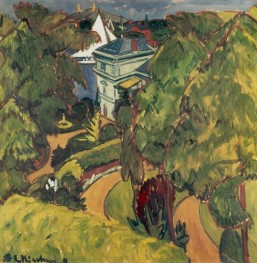
Landscape (Villa at Guenau) 1911
Oil Painting
$1537
$1537
Canvas Print
$95.99
$95.99
SKU: KEL-20956
Ernst Ludwig Kirchner
Original Size: 95 x 95 cm
Public Collection
Ernst Ludwig Kirchner
Original Size: 95 x 95 cm
Public Collection
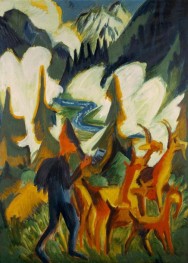
Shepherd with Goats in the Morning 1910
Oil Painting
$1445
$1445
Canvas Print
$72.09
$72.09
SKU: KEL-20957
Ernst Ludwig Kirchner
Original Size: 120.5 x 90.5 cm
Public Collection
Ernst Ludwig Kirchner
Original Size: 120.5 x 90.5 cm
Public Collection
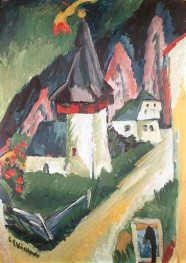
View of the Church at Monstein 1917
Oil Painting
$1169
$1169
Canvas Print
$68.24
$68.24
SKU: KEL-20958
Ernst Ludwig Kirchner
Original Size: 78 x 55.5 cm
Public Collection
Ernst Ludwig Kirchner
Original Size: 78 x 55.5 cm
Public Collection
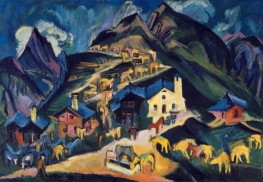
Driving Cattle to Alpine Pastures 1919
Oil Painting
$1404
$1404
Canvas Print
$67.02
$67.02
SKU: KEL-20959
Ernst Ludwig Kirchner
Original Size: 139 x 199 cm
Public Collection
Ernst Ludwig Kirchner
Original Size: 139 x 199 cm
Public Collection
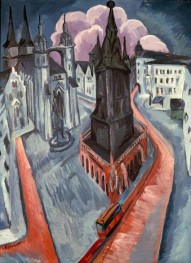
The Red Tower in Halle 1915
Oil Painting
$1446
$1446
Canvas Print
$72.43
$72.43
SKU: KEL-20960
Ernst Ludwig Kirchner
Original Size: 120 x 90.5 cm
Museum Folkwang, Essen, Germany
Ernst Ludwig Kirchner
Original Size: 120 x 90.5 cm
Museum Folkwang, Essen, Germany
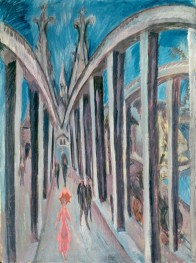
Rhine Bridge 1914
Oil Painting
$1446
$1446
Canvas Print
$72.43
$72.43
SKU: KEL-20961
Ernst Ludwig Kirchner
Original Size: 120.5 x 91 cm
Alte Nationalgalerie, Berlin, Germany
Ernst Ludwig Kirchner
Original Size: 120.5 x 91 cm
Alte Nationalgalerie, Berlin, Germany
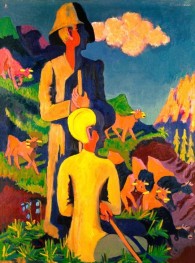
Shepherds at Night 1937
Oil Painting
$935
$935
Canvas Print
$71.21
$71.21
SKU: KEL-20962
Ernst Ludwig Kirchner
Original Size: unknown
Public Collection
Ernst Ludwig Kirchner
Original Size: unknown
Public Collection
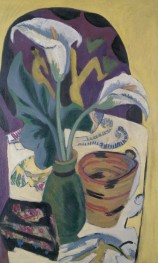
Stilleben with Kalla 1920
Oil Painting
$888
$888
Canvas Print
$63.34
$63.34
SKU: KEL-20963
Ernst Ludwig Kirchner
Original Size: unknown
Public Collection
Ernst Ludwig Kirchner
Original Size: unknown
Public Collection
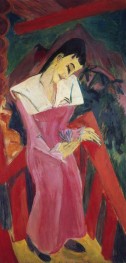
Lady in Pink 1910
Oil Painting
$830
$830
Canvas Print
$63.34
$63.34
SKU: KEL-20964
Ernst Ludwig Kirchner
Original Size: unknown
Public Collection
Ernst Ludwig Kirchner
Original Size: unknown
Public Collection
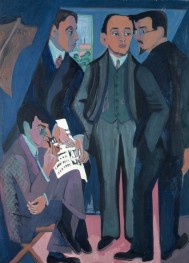
An Artists' Community 1925
Oil Painting
$1441
$1441
Canvas Print
$71.90
$71.90
SKU: KEL-20965
Ernst Ludwig Kirchner
Original Size: 167 x 125 cm
Museum Ludwig, Köln, Germany
Ernst Ludwig Kirchner
Original Size: 167 x 125 cm
Museum Ludwig, Köln, Germany
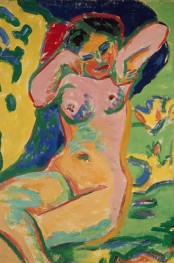
Nude Girl on a Meadow in Bloom 1910
Oil Painting
$1283
$1283
Canvas Print
$67.90
$67.90
SKU: KEL-20966
Ernst Ludwig Kirchner
Original Size: 89 x 63 cm
Public Collection
Ernst Ludwig Kirchner
Original Size: 89 x 63 cm
Public Collection
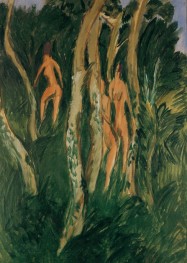
Nude under Trees 1913
Oil Painting
$1424
$1424
Canvas Print
$69.64
$69.64
SKU: KEL-20967
Ernst Ludwig Kirchner
Original Size: 124 x 90 cm
Public Collection
Ernst Ludwig Kirchner
Original Size: 124 x 90 cm
Public Collection
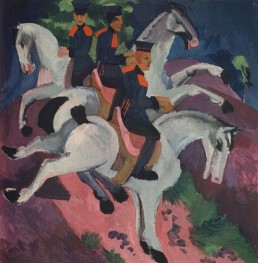
The Reitschule 1910
Oil Painting
$1614
$1614
Canvas Print
$95.99
$95.99
SKU: KEL-20968
Ernst Ludwig Kirchner
Original Size: 113 x 113 cm
Public Collection
Ernst Ludwig Kirchner
Original Size: 113 x 113 cm
Public Collection
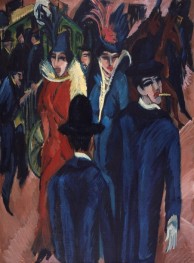
Berlin Street Scene 1913
Oil Painting
$1468
$1468
Canvas Print
$75.40
$75.40
SKU: KEL-20969
Ernst Ludwig Kirchner
Original Size: 121 x 95 cm
Public Collection
Ernst Ludwig Kirchner
Original Size: 121 x 95 cm
Public Collection
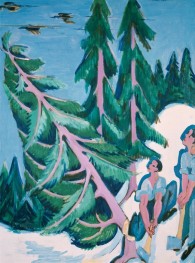
Woodcutters 1910
Oil Painting
$1442
$1442
Canvas Print
$71.90
$71.90
SKU: KEL-20970
Ernst Ludwig Kirchner
Original Size: 120 x 90 cm
Hamburger Kunsthalle, Hamburg, Germany
Ernst Ludwig Kirchner
Original Size: 120 x 90 cm
Hamburger Kunsthalle, Hamburg, Germany
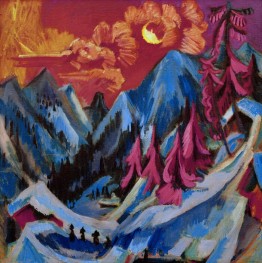
Winter landscape in moonlight. 1919
Oil Painting
$1608
$1608
Canvas Print
$95.12
$95.12
SKU: KEL-20971
Ernst Ludwig Kirchner
Original Size: 120 x 121 cm
Public Collection
Ernst Ludwig Kirchner
Original Size: 120 x 121 cm
Public Collection
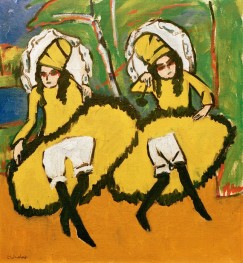
Two Dancers 1910
Oil Painting
$1123
$1123
Canvas Print
$88.31
$88.31
SKU: KEL-20972
Ernst Ludwig Kirchner
Original Size: 64.8 x 59.6 cm
Private Collection
Ernst Ludwig Kirchner
Original Size: 64.8 x 59.6 cm
Private Collection
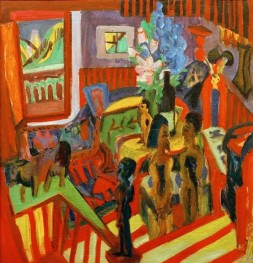
Corner of the studio 1920
Oil Painting
$1019
$1019
Canvas Print
$92.33
$92.33
SKU: KEL-20973
Ernst Ludwig Kirchner
Original Size: unknown
Alte Nationalgalerie, Berlin, Germany
Ernst Ludwig Kirchner
Original Size: unknown
Alte Nationalgalerie, Berlin, Germany
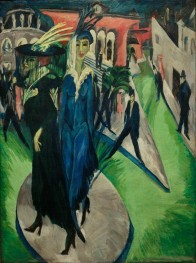
Pariser Platz 1914
Oil Painting
$1442
$1442
Canvas Print
$71.90
$71.90
SKU: KEL-20974
Ernst Ludwig Kirchner
Original Size: 200 x 150 cm
Alte Nationalgalerie, Berlin, Germany
Ernst Ludwig Kirchner
Original Size: 200 x 150 cm
Alte Nationalgalerie, Berlin, Germany
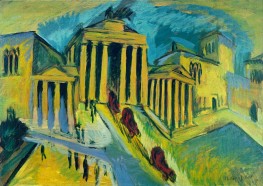
Brandenburg Gate, Berlin 1915
Oil Painting
$1085
$1085
Canvas Print
$68.60
$68.60
SKU: KEL-20975
Ernst Ludwig Kirchner
Original Size: 50 x 70 cm
Private Collection
Ernst Ludwig Kirchner
Original Size: 50 x 70 cm
Private Collection
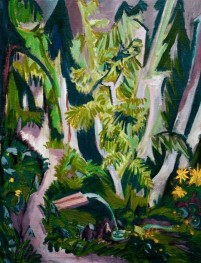
Inside a forest 1919
Oil Painting
$1442
$1442
Canvas Print
$71.90
$71.90
SKU: KEL-20976
Ernst Ludwig Kirchner
Original Size: 90 x 120 cm
Alte Nationalgalerie, Berlin, Germany
Ernst Ludwig Kirchner
Original Size: 90 x 120 cm
Alte Nationalgalerie, Berlin, Germany
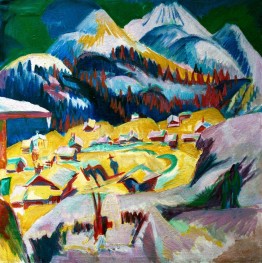
Frauenkirch in winter. 1917
Oil Painting
$1608
$1608
Canvas Print
$95.12
$95.12
SKU: KEL-20977
Ernst Ludwig Kirchner
Original Size: 120 x 121 cm
Alte Nationalgalerie, Berlin, Germany
Ernst Ludwig Kirchner
Original Size: 120 x 121 cm
Alte Nationalgalerie, Berlin, Germany
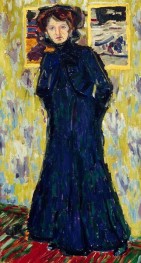
Doris, Standing 1906
Oil Painting
$1236
$1236
Canvas Print
$63.34
$63.34
SKU: KEL-20978
Ernst Ludwig Kirchner
Original Size: 96.5 x 52.5 cm
Public Collection
Ernst Ludwig Kirchner
Original Size: 96.5 x 52.5 cm
Public Collection
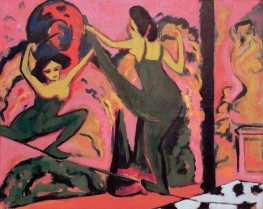
Tightrope Dance 1909
Oil Painting
$1483
$1483
Canvas Print
$77.32
$77.32
SKU: KEL-20979
Ernst Ludwig Kirchner
Original Size: 120 x 149 cm
Public Collection
Ernst Ludwig Kirchner
Original Size: 120 x 149 cm
Public Collection